The laser welding process is a high-precision method used to join metal components using a focused laser beam. Compared to traditional welding, it offers better accuracy, lower heat distortion, and faster production speeds. This article explains how laser welding works, explores different techniques such as laser beam welding, and helps you understand how to choose the right solution for industrial applications.
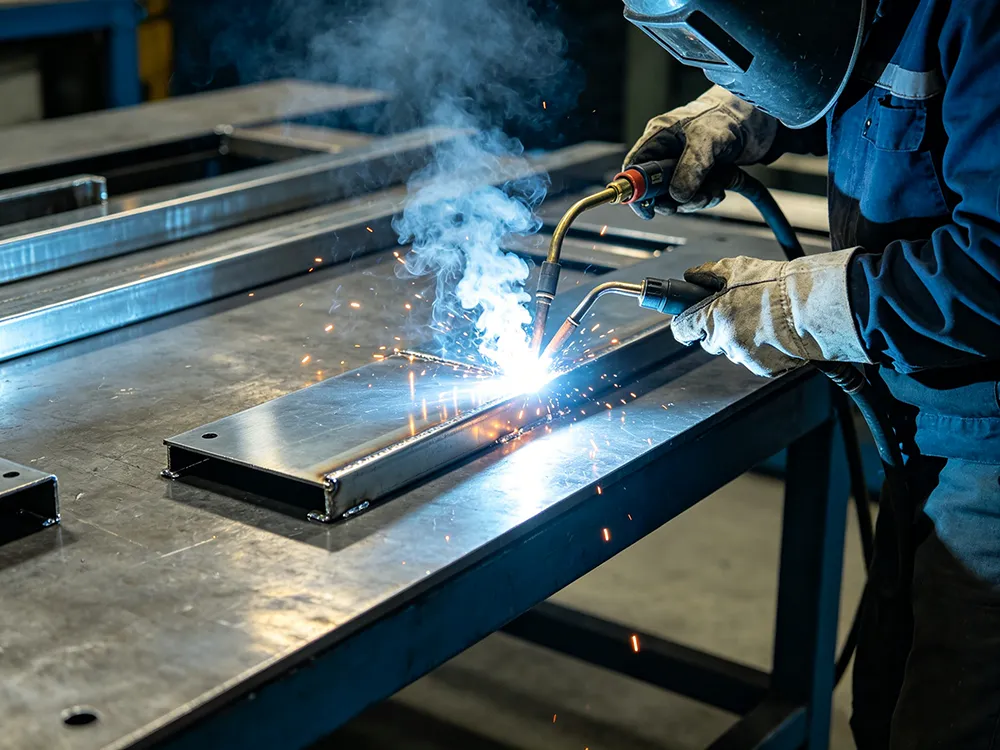
What Is the Laser Welding Process?
Laser welding is a joining process that uses a high-energy laser beam to melt and fuse materials together, as explained in laser welding fundamentals. The laser beam welding method is widely used in modern manufacturing due to its ability to create clean, strong welds with minimal heat input.
Unlike traditional welding methods like TIG or MIG welding, laser welding is a non-contact process. This reduces mechanical stress and allows for precise control, especially in small or complex parts.
How the Laser Welding Process Works
Basic Working Principle
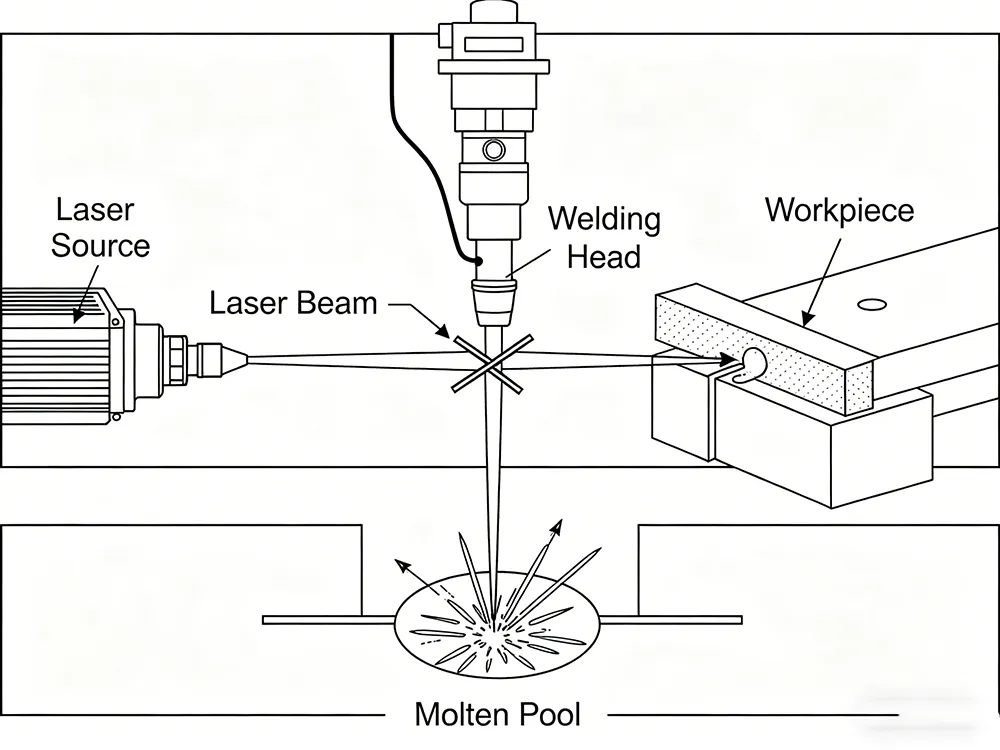
The laser welding process begins with generating a concentrated laser beam, following principles described in engineering resources like laser welding principles, typically from a fiber laser or CO₂ laser source. The beam is directed and focused onto a small area of the material, often integrated with advanced 5-axis CNC machining systems, where it rapidly heats and melts the surface.
In laser beam welding, this focused energy creates a molten pool that solidifies quickly, forming a strong bond between materials.
Key Process Steps
The process generally includes:
- Laser generation
- Beam transmission
- Focusing on the workpiece
- Formation of a molten pool
- Rapid cooling and solidification
Each step must be carefully controlled to ensure consistent weld quality.
Types of Welding Modes
There are two main modes in laser beam welding:
- Heat conduction welding: shallow penetration, smooth surface
- Keyhole welding: deep penetration, suitable for thicker materials
These modes determine the weld depth and overall performance.
Types of Laser Welding Techniques
Laser Beam Welding
Laser beam welding is the most common technique. It uses a highly focused beam to achieve precise and narrow weld seams, making it ideal for high-precision industries.
Fiber Laser Welding
Fiber laser welding offers high efficiency and excellent beam quality. It is widely used in industrial production due to its speed and reliability.
Pulsed Laser Welding
Pulsed laser welding is suitable for thin materials and delicate components. It provides better control over heat input.
Continuous Wave Laser Welding
Continuous wave laser welding delivers a constant beam, making it ideal for high-speed and large-scale production.
Advantages of Laser Welding
Laser welding offers several benefits compared to traditional welding methods:
- High precision and accuracy
- Minimal heat-affected zone
- Reduced material distortion
- High-speed processing
- Easy integration with automation systems
Laser beam welding, in particular, is preferred for applications that require tight tolerances and clean finishes.
Limitations of Laser Welding
Despite its advantages, laser welding has some limitations:
- High initial equipment cost
- Requires precise alignment
- Reflective materials like aluminum can be challenging
Understanding these limitations helps manufacturers choose the right process.
Materials Suitable for Laser Welding
Laser welding can be used with a wide range of metals:
- Stainless steel: excellent weldability and corrosion resistance
- Aluminum: lightweight but requires careful parameter control
- Titanium: high strength and used in aerospace
- Carbon steel: widely used in industrial applications
Laser beam welding is especially effective when working with thin to medium-thickness metal components.
Industrial Uses of Laser Welding
Automotive Industry
Laser welding is used in car body structures, battery components, and precision assemblies.
Aerospace Industry
It is applied in lightweight structural components where strength and precision are critical.
Electronics Industry
Laser beam welding is widely used for small, delicate components requiring high accuracy.
Medical Devices
Laser welding enables clean and precise joining of medical instruments and implants.
Laser Welding vs Traditional Welding
| Feature | Laser Welding | Traditional Welding |
|---|---|---|
| Precision | High | Medium |
| Heat Input | Low | High |
| Speed | Fast | Moderate |
| Automation | High | Low |
Laser beam welding stands out for its precision and efficiency, especially in automated manufacturing environments.
Cost Factors in Laser Welding
Several factors influence the cost of laser welding:
- Equipment investment
- Production volume
- Labor and automation level
- Material type
While the initial setup cost may be high, laser beam welding often reduces long-term costs by improving efficiency and minimizing waste.
How to Choose the Right Laser Welding Process
Selecting the right laser welding process depends on several factors:
- Material type and thickness
- Required precision
- Production volume
- Budget constraints
For example, fiber laser welding is ideal for high-speed production, while pulsed laser welding is better for delicate parts.
Why Choose Professional Laser Welding Services
Working with an experienced manufacturer ensures better results.
Professional services provide:
- Advanced laser welding equipment
- Expertise in laser beam welding techniques
- Strict quality control
- Fast turnaround times
If your project requires high precision and reliability, choosing a professional custom metal parts manufacturer.
Future Trends in Laser Welding
Laser welding technology continues to evolve:
- Increased automation
- Integration with AI systems
- Improved laser efficiency
- Expansion into new materials
These advancements are making laser beam welding more accessible and cost-effective across industries.
Conclusion
The laser welding process is a powerful and efficient solution for modern manufacturing. Its ability to deliver high precision, speed, and reliability makes it ideal for a wide range of industries.
By understanding how laser beam welding works and selecting the right technique, manufacturers can improve product quality while reducing overall production costs.
FAQ
What is laser welding used for?
Laser welding is used to join metal components in industries such as automotive, aerospace, electronics, and medical manufacturing. It is ideal for applications requiring precision and clean welds.
Is laser welding better than TIG welding?
Laser welding offers higher precision, faster speed, and less heat distortion compared to TIG welding. However, TIG welding may still be suitable for certain manual or low-cost applications.
What materials can be laser welded?
Common materials include stainless steel, aluminum, titanium, and carbon steel. The choice depends on the application and required performance.
How strong is laser welding?
Laser welds can be extremely strong and often match or exceed the strength of the base material when properly executed.
Is laser welding expensive?
While the initial equipment cost is high, laser welding can reduce long-term costs through efficiency, automation, and reduced material waste.