Black oxide coating is a widely used surface treatment for metal parts, especially in precision manufacturing industries such as CNC machining, automotive, and industrial equipment. Known for its matte black appearance, dimensional stability, and cost efficiency, it is often the preferred finishing option for engineers who need functional performance without altering part tolerances.
In this comprehensive guide, we’ll explore how black oxide coating works, its key benefits and limitations, and where it’s most commonly applied. If you are sourcing precision CNC machined parts, this guide will also help you determine whether black oxide is the right finish for your project.

What Is Black Oxide Coating
Black oxide coating is a chemical conversion process that transforms the surface of a metal into a black oxide layer, typically magnetite (Fe₃O₄), as explained in this detailed overview of black oxide treatment processes. Unlike painting or plating, this process does not deposit an additional layer on top of the material. Instead, it chemically reacts with the surface itself.
This distinction is important. Because there is no buildup, black oxide coating does not significantly change the dimensions of the part. This makes it especially suitable for precision CNC machined components where tight tolerances must be maintained.
Common Materials for Black Oxide
Black oxide can be applied to a variety of metals, including:
- Carbon steel
- Stainless steel
- Copper
- Brass
- Sintered metals
Black Oxide vs Other Finishes (Quick Insight)
Compared with coatings like zinc plating or powder coating, black oxide offers:
- Minimal dimensional change
- Lower cost
- A uniform matte black finish
- Moderate corrosion resistance (with post-treatment)
However, it does not provide the same level of long-term corrosion protection as thicker coatings.
How Black Oxide Coating Works
Understanding the process behind black oxide helps explain both its strengths and its limitations.
The Chemical Reaction Behind Black Oxide
The black oxide layer forms through a controlled oxidation process. Iron on the surface reacts with oxidizing agents to form magnetite (Fe₃O₄), which is more stable than red rust (Fe₂O₃).
Unlike rust, which flakes off and damages the material, magnetite forms a dense, adherent layer that protects the underlying metal.
Step-by-Step Black Oxide Process
The process typically involves several controlled steps:
- Cleaning (Degreasing)
The part is thoroughly cleaned to remove oils, dirt, and contaminants. - Rinsing
Ensures no residues interfere with the chemical reaction. - Pickling (Acid Treatment)
Removes surface oxides and prepares the metal for coating. - Black Oxide Bath
The part is immersed in a heated alkaline solution (typically 135–150°C for hot processes). - Final Rinse
Removes excess chemicals. - Post-Treatment (Sealing)
Oil, wax, or other sealants are applied to improve corrosion resistance.
Types of Black Oxide Processes
There are three main variations of black oxide coating:
Hot Black Oxide
- Most common and widely used
- Provides the best durability and uniformity
- Suitable for industrial applications
Mid-Temperature Black Oxide
- Operates at lower temperatures
- Safer and more energy-efficient
- Slightly less robust than hot processes
Cold Black Oxide
- Applied at room temperature
- Ideal for touch-ups or small-scale use
- Less durable and more cosmetic in nature
Key Benefits of Black Oxide Coating

Black oxide remains popular because it offers a balanced combination of performance, aesthetics, and cost.
1. Minimal Dimensional Change
Since it is a conversion coating, it does not build thickness. This is critical for:
- Tight-tolerance CNC parts
- Precision assemblies
- Threaded components
2. Enhanced Corrosion Resistance (With Sealant)
The coating itself provides limited protection, but when combined with oil or wax, it significantly improves resistance to rust, which is also noted in industrial guidelines for black oxide finishes.
3. Attractive Matte Black Finish
The deep black color reduces light reflection, making it ideal for:
- Optical equipment
- Tools
- Decorative components
4. Cost-Effective Solution
Compared to plating or painting, black oxide is:
- Faster to apply
- Less material-intensive
- Suitable for high-volume production
5. No Risk of Hydrogen Embrittlement
Unlike some electroplating processes, black oxide does not introduce hydrogen into the material. This makes it safer for high-strength steel parts.
6. Maintains Conductivity
Because the coating is thin and integral, it does not significantly affect electrical conductivity, which is important in electronic components.
Limitations and Considerations
While black oxide offers many advantages, it is not suitable for every application.
Limited Corrosion Resistance
Without oil or wax sealing, black oxide provides minimal protection. It is not ideal for:
- Outdoor environments
- Marine applications
- High-humidity conditions
Surface Preparation Is Critical
Any contamination or uneven surface condition will affect the final finish. Proper cleaning is essential.
Not a Decorative Heavy Coating
If you need thick, colorful, or highly durable coatings, alternatives like powder coating or anodizing may be better.
Common Applications of Black Oxide Coating
Black oxide is widely used across industries due to its versatility.
Industrial and Machinery Parts
- Gears
- Shafts
- Fasteners
- CNC machined components
Its dimensional stability makes it ideal for precision mechanical systems.
Automotive and Aerospace Components
- Bolts and nuts
- Engine components
- Structural connectors
These industries value its anti-reflective properties and consistent performance.
Tools and Cutting Equipment
- Drill bits
- End mills
- Hand tools
Black oxide reduces glare and helps retain lubricants on tool surfaces.
Consumer and Decorative Products
- Hardware fittings
- Furniture components
- Electronic housings
It offers a sleek, professional appearance at a low cost.
Black Oxide vs Other Surface Finishes
Below is a comparison of black oxide with other common finishes:
| Finish Type | Corrosion Resistance | Cost | Dimensional Impact | Appearance | Typical Use |
|---|---|---|---|---|---|
| Black Oxide | Moderate (with oil) | Low | Minimal | Matte black | Precision parts |
| Zinc Plating | High | Medium | Slight | Silver/blue | Outdoor fasteners |
| Anodizing | High | Medium | Moderate | Colored | Aluminum components |
| Powder Coating | High | Medium | High | Thick coating | Structural parts |
Black Oxide Coating for CNC Machined Parts
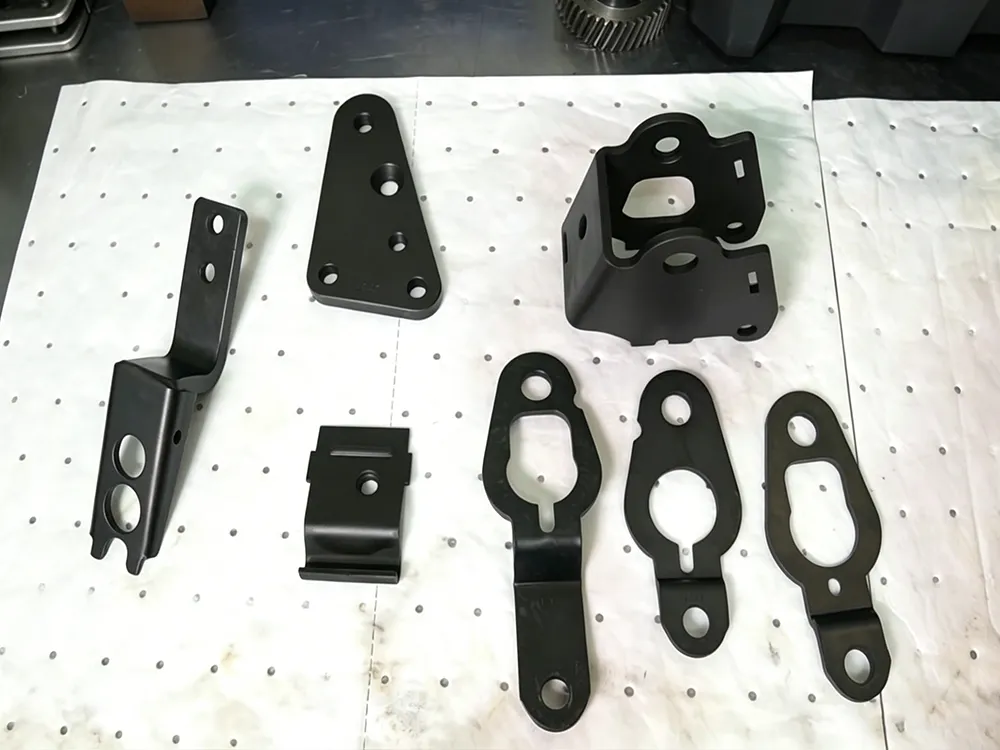
For CNC machining processes, black oxide is often the finishing of choice.
Why It Works Well
- Does not affect tolerances
- Preserves surface detail
- Compatible with complex geometries
Ideal Use Cases
- Precision brackets
- Custom enclosures
- Functional prototypes
- Small-batch production
Relationship with Surface Finish
Black oxide does not hide machining marks. Therefore:
- Better surface finish → better visual result
- Rough surfaces → uneven appearance
Maintenance and Post-Treatment Tips
To maximize performance, proper maintenance is essential.
Use Protective Oils or Waxes
These enhance corrosion resistance and extend service life.
Store in Controlled Environments
Avoid high humidity and direct exposure to moisture.
Regular Inspection
For critical parts, periodic checks ensure coating integrity.
How to Choose a Black Oxide Service Provider
Selecting the right supplier is just as important as choosing the coating itself. A reliable partner ensures consistent quality, proper processing, and faster delivery.
1. Quality Control and Process Consistency
Look for providers that offer:
- Uniform coating thickness and color
- Strict process control
- Inspection and testing procedures
2. Experience with Precision Parts
If your project involves CNC machining, ensure the supplier understands:
- Tight tolerances (±0.01 mm or better)
- Complex geometries
- Surface finish requirements
3. Production Capabilities
Evaluate whether the supplier can handle:
- Prototyping and small batches
- Scalable production runs
- Fast turnaround times
4. Certifications and Standards
Reliable manufacturers often hold:
- ISO 9001 certification
- Industry-specific quality standards
These indicate consistent manufacturing practices and quality assurance.
5. Integrated Services (Highly Recommended)
Working with a supplier that provides both CNC machining and surface finishing can:
- Reduce lead times
- Improve quality control
- Simplify communication
👉 Request a Quote or Technical Support
If you are sourcing black oxide coated CNC machined parts, it’s important to work with a supplier who understands both machining precision and finishing processes.
You can:
- Send your drawings (2D/3D files)
- Specify material and quantity
- Share tolerance and surface finish requirements
Our engineering team can review your project and provide:
- Fast quotation
- Process recommendations
- Cost optimization suggestions
👉 Contact us today to get a quote or technical advice for your project.
Even if you are in the early design stage, we can help you choose the most suitable finishing solution.
FAQ
What is black oxide coating used for?
It is used for improving corrosion resistance, appearance, and wear performance of metal parts without changing dimensions.
Does black oxide prevent rust?
It provides limited protection on its own, but significantly improves corrosion resistance when combined with oil or wax.
How long does black oxide coating last?
With proper maintenance and sealing, it can last for years in controlled environments.
Is black oxide better than zinc plating?
It depends on the application. Black oxide is better for precision parts, while zinc plating offers stronger corrosion protection.
Does black oxide change dimensions?
No, it has negligible thickness, making it ideal for tight-tolerance components.
Can stainless steel be black oxidized?
Yes, but the process differs slightly and requires specialized treatments.
Is black oxide coating expensive?
No, it is one of the most cost-effective surface finishing options available.