If you’ve ever compared brass, bronze, and copper side by side, you’ve probably noticed how similar they look at first glance. They all share that familiar “copper-like” appearance, and in many cases, they even get used in overlapping applications. But once you start working with them—especially in machining, fabrication, or product design—the differences become much more important.
Choosing the wrong material doesn’t just affect performance, but also impacts quality control in CNC machining. It can impact machining time, tool wear, corrosion resistance, and ultimately cost. This guide breaks things down in a practical way, focusing on how these metals behave in real-world applications, not just textbook definitions.

What Are Brass, Bronze, and Copper
Copper is the starting point. It’s a pure metal, known for its excellent electrical and thermal conductivity, as explained in this overview of copper material properties. It’s soft, ductile, and easy to form, which is why it’s been used for thousands of years in wiring, piping, and industrial components.
Brass and bronze are both copper alloys, but they’re not interchangeable.
Brass is made by combining copper with zinc. Changing the zinc content changes its properties—some brasses are softer and easier to machine, while others are stronger and more durable. In general, brass is known for being easy to work with and relatively cost-effective.
Bronze is typically made by adding tin to copper, although modern bronze alloys may include aluminum, silicon, or phosphorus. Compared to brass, bronze is usually harder, more wear-resistant, and better suited for demanding mechanical environments.
One reason these metals get confused is their color. Copper has a reddish tone, brass looks yellow or gold-like, and bronze has a darker, more muted brown appearance. But in industrial settings, surface finishes and coatings can make them look even more similar.
Key Differences Between Brass, Bronze, and Copper
Composition and Alloying Elements
The biggest difference starts with composition.
Copper is pure, usually above 99% copper content. That purity is what gives it such high conductivity.
Brass is a copper-zinc alloy. The zinc content typically ranges from 5% to 40%, depending on the grade. More zinc generally increases strength but reduces corrosion resistance.
Bronze is traditionally copper and tin, but modern bronzes can vary quite a bit. For example, aluminum bronze offers excellent corrosion resistance, while phosphor bronze is known for wear resistance and fatigue strength.
In practice, this means you’re not just choosing between three metals—You’re often choosing between dozens of CNC machining materials and alloy variations.
Mechanical Properties
From a strength perspective, copper is the softest of the three. It’s easy to bend and form, but it’s not ideal for structural or load-bearing parts.
Brass sits in the middle. It’s stronger than copper and still relatively easy to machine. That balance is why it’s commonly used for fittings, valves, and hardware components.
Bronze is generally the strongest and most wear-resistant. It holds up well under friction and repeated motion, which is why it’s often used for bushings, bearings, and gears.
In real applications, if you need durability and resistance to wear, bronze is usually the safer choice. If you need machinability and cost efficiency, brass often wins.
Corrosion Resistance
All three metals resist corrosion better than plain steel, but they behave differently depending on the environment.
Copper develops a natural patina over time, which actually protects it from further corrosion. This is why you see copper used in roofing and outdoor applications.
Brass performs well in general environments but can be vulnerable to dezincification in certain conditions, especially in water systems.
Bronze is the standout here, particularly in marine environments, which is also highlighted in marine corrosion resistance of copper alloys. It resists saltwater corrosion better than both copper and brass, which is why it’s widely used in ship components and offshore equipment.
If your parts will be exposed to moisture, chemicals, or outdoor conditions, bronze is often worth the extra cost.
Electrical and Thermal Conductivity
Copper is the clear winner in conductivity. That’s why it’s used in electrical wiring, connectors, and heat exchangers.
Brass and bronze both have lower conductivity because of the alloying elements. They’re still conductive, but not at the level needed for high-performance electrical applications.
If conductivity is your priority, the decision is simple—use copper.
Appearance and Color Differences
While appearance isn’t always the main factor, it does matter in many applications.
Copper has a distinct reddish color that darkens over time.
Brass has a bright yellow or gold-like appearance, which makes it popular for decorative hardware and architectural components.
Bronze has a darker, more subdued tone, often associated with a more industrial or antique look.
In practice, surface finishing can change the appearance of all three, so visual differences may not always be obvious in finished parts.
Brass vs Bronze vs Copper Comparison Table
| Property | Copper | Brass | Bronze |
|---|---|---|---|
| Composition | Pure copper | Copper + zinc | Copper + tin/other elements |
| Strength | Low | Medium | High |
| Corrosion Resistance | Good | Moderate | Excellent |
| Conductivity | Excellent | Moderate | Lower |
| Machinability | Difficult | Excellent | Moderate |
| Typical Color | Reddish | Yellow | Brown |
Common Applications of Each Metal
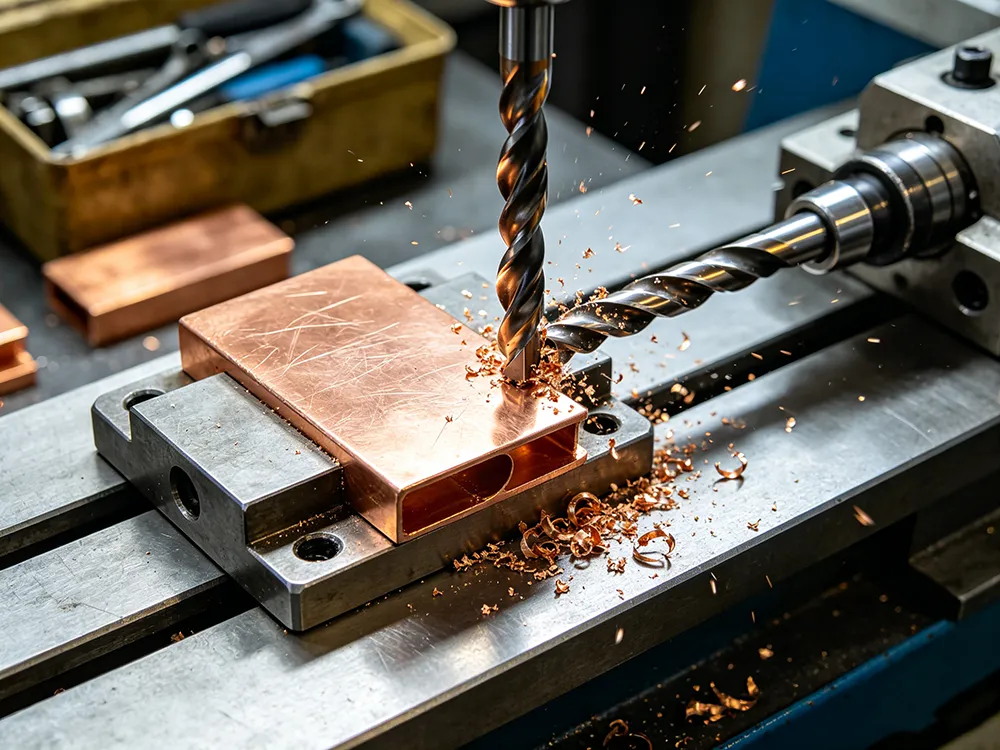
Copper Applications
Copper is primarily used where conductivity matters.
You’ll see it in electrical wiring, power transmission systems, and electronic components. It’s also widely used in heat exchangers because of its ability to transfer heat efficiently.
In some cases, copper is used in plumbing systems, although modern systems often replace it with more cost-effective materials.
Brass Applications
Brass is one of the most commonly machined metals, especially in CNC machining.
It’s widely used for valves, fittings, connectors, and fasteners. One reason is its excellent machinability—it cuts cleanly, produces minimal tool wear, and allows for high-speed production.
You’ll also see brass in decorative parts, musical instruments, and consumer hardware because of its appearance.
From a manufacturing standpoint, brass is often the “go-to” choice when you need reliable machining performance without pushing costs too high.
Bronze Applications
Bronze is typically used in more demanding environments.
Common applications include bushings, bearings, gears, and marine components. It performs well under friction and resists wear better than brass.
In heavy machinery, bronze parts are often used where long service life is critical. For example, bronze bushings can operate for extended periods without significant wear.
If your application involves movement, load, or harsh environments, bronze is usually worth considering.
Which Metal Is Best for CNC Machining
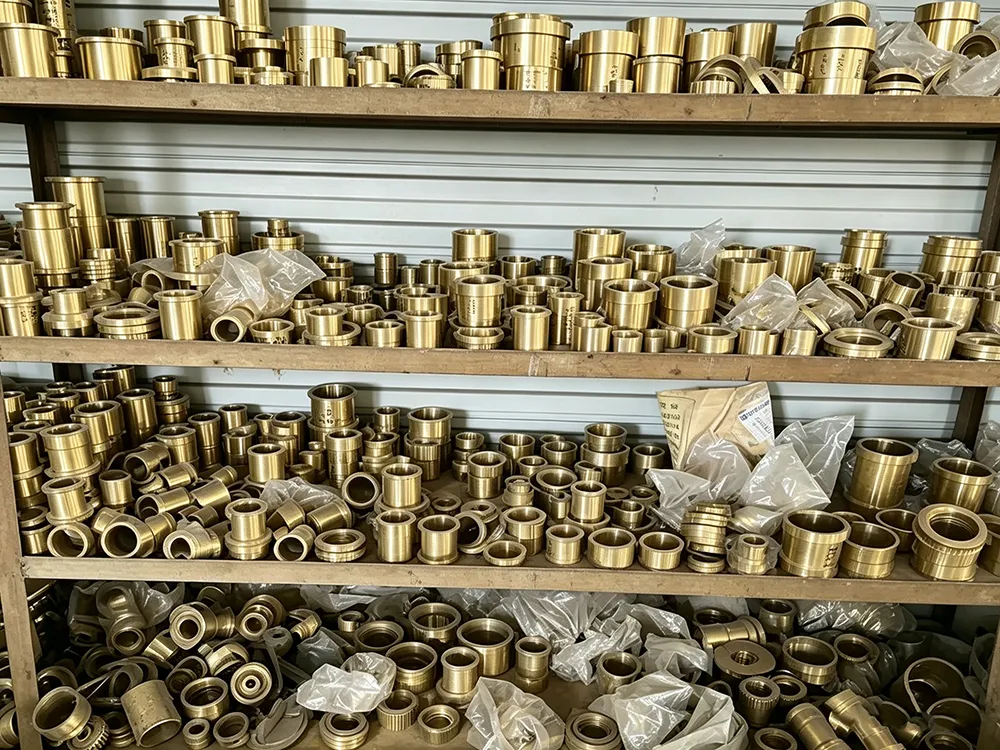
From a machining perspective, these three metals behave very differently.
Brass is widely considered one of the easiest materials to machine. It produces short chips, requires less cutting force, and allows for high feed rates. This makes it ideal for high-volume production and precision components.
Copper, on the other hand, can be challenging. It’s soft and tends to stick to cutting tools, which can lead to built-up edge and poor surface finish if not handled properly. Machining copper often requires sharper tools and more careful parameter control.
Bronze falls somewhere in between. Some bronze alloys machine well, while others are more abrasive and can increase tool wear.
In real production environments, many manufacturers prefer brass when possible because it reduces machining time and cost.
Brass vs Bronze vs Copper Cost Comparison
Cost is always part of the decision.
Copper is generally the most expensive due to its high purity and demand in electrical industries.
Brass is usually more affordable because zinc is cheaper than copper, making it a cost-effective alloy.
Bronze can vary in cost depending on its composition. Some high-performance bronze alloys are more expensive than brass but offer better durability.
If you’re working on a budget-sensitive project, brass often provides the best balance between performance and cost.
How to Choose Between Brass, Bronze, and Copper
There’s no single “best” material. The right choice depends on your application.
If you need high electrical or thermal conductivity, copper is the obvious choice.
If you’re machining parts and want efficiency, consistency, and lower cost, brass is often the most practical option.
If your parts will face wear, friction, or harsh environments, bronze is usually the better investment.
It also helps to think about the full production process. For example, even if bronze offers better performance, the increased machining difficulty and cost may not be justified for simpler parts.
In many real-world projects, the decision comes down to balancing performance requirements with manufacturing efficiency.
FAQ
What is the main difference between brass, bronze, and copper
The main difference lies in composition. Copper is pure, brass is copper with zinc, and bronze is copper with tin or other elements.
Is brass stronger than copper
Yes, brass is generally stronger and more durable than copper.
Why is bronze used in marine applications
Bronze offers excellent resistance to saltwater corrosion, making it ideal for marine environments.
Which metal is best for electrical use
Copper is the best choice due to its superior electrical conductivity.
Is brass or bronze better for machining
Brass is easier to machine and more suitable for high-volume production.
Which is more expensive, brass or copper
Copper is usually more expensive, while brass is more cost-effective.