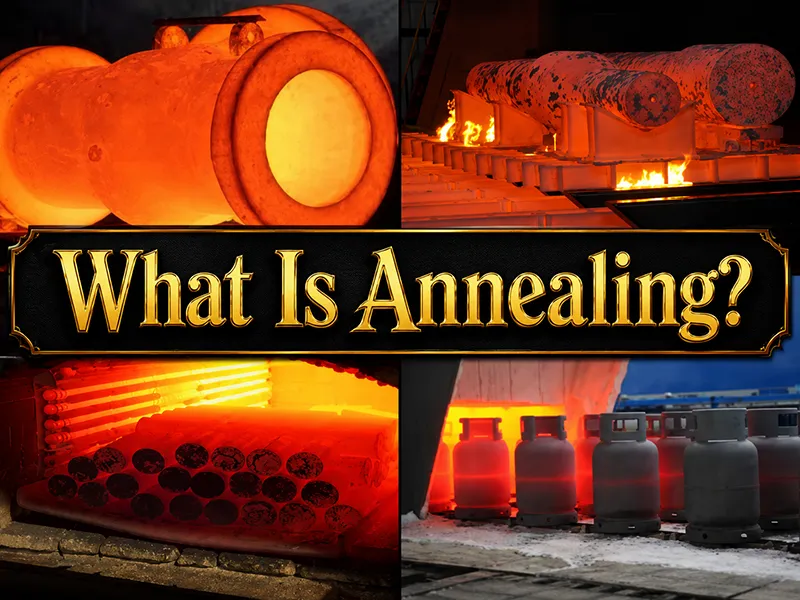
What is annealing? In simple terms, annealing is a heat treatment process used to soften metal, relieve internal stress, and make a material easier to machine, bend, stamp, or form. In most cases, the annealing process involves heating a metal or alloy to a controlled temperature, holding it there long enough for the internal structure to change, and then cooling it in a controlled way so the material becomes more ductile and less hard.
That basic definition matters because annealing is not just “heating metal.” It is a controlled thermal cycle designed to change microstructure and, with it, the way a part behaves in production and in service. Metallurgy references treat annealing as a broad family of treatments rather than a single one-size-fits-all recipe, which is why the exact cycle depends heavily on alloy, section size, prior processing, and the property you need at the end.
What Annealing Means in Manufacturing
In day-to-day manufacturing, annealing is mainly used when a metal has become too hard, too stressed, or too unpredictable for the next step. A cold-worked sheet may need annealing before it can be bent again without cracking. A machined or ground part may need annealing to reduce residual stress and lower the risk of distortion later. A welded component may need stress relief because solidification and uneven cooling leave internal stress behind.
That is why annealing shows up across machining, forming, bending, stamping, drawing, welding, casting, and forging. For technical buyers and engineers, it is often less about “adding heat treatment” and more about making the next manufacturing step stable, repeatable, and less risky. In steel, for example, ASM notes that annealing may be selected to facilitate cold working or machining, to improve mechanical or electrical properties, or to promote dimensional stability.
Annealing also differs from a simple stress relief or a strengthening treatment. Its usual direction is toward softness, ductility, and workability. If the design goal is maximum hardness, wear resistance, or high strength, other thermal routes such as quenching and tempering are usually more appropriate.
Why Annealing Is Used
The main purpose of annealing is to reset the material enough that manufacturing becomes easier and safer. In steels, common goals include reducing hardness, increasing ductility, and eliminating internal stresses, as explained in Bodycote’s overview of the annealing heat treatment process. In cold-worked materials, annealing restores ductility so additional processing can continue without cracking. In practical terms, that means easier bending, more reliable deep drawing, lower forming loads, and fewer surprises during downstream operations.
Machinability is another major reason. Softer, more stable stock is often easier to cut, especially when the original condition is too hard or too stressed for efficient machining. Industry references on steel specifically describe annealing as a way to facilitate machining, and soft annealing is commonly used on higher-carbon steels and tool steels to create a softer, easier-to-machine structure.
Annealing is also widely used to reverse work hardening. During processes such as cold rolling, drawing, bending, and stamping, metals accumulate dislocations and residual stress; strength and hardness go up, while ductility falls. Annealing reduces that strain-hardened condition and helps restore the material’s ability to deform without splitting or tearing.
For welded, cast, or forged parts, the value is slightly different. Here, annealing or related stress-relief cycles are often used to reduce locked-in stress, create a more uniform structure, and improve dimensional stability before finish machining or service. That is especially important for parts where distortion, cracking, or inconsistent hardness would create scrap or rework.
How the Annealing Process Works
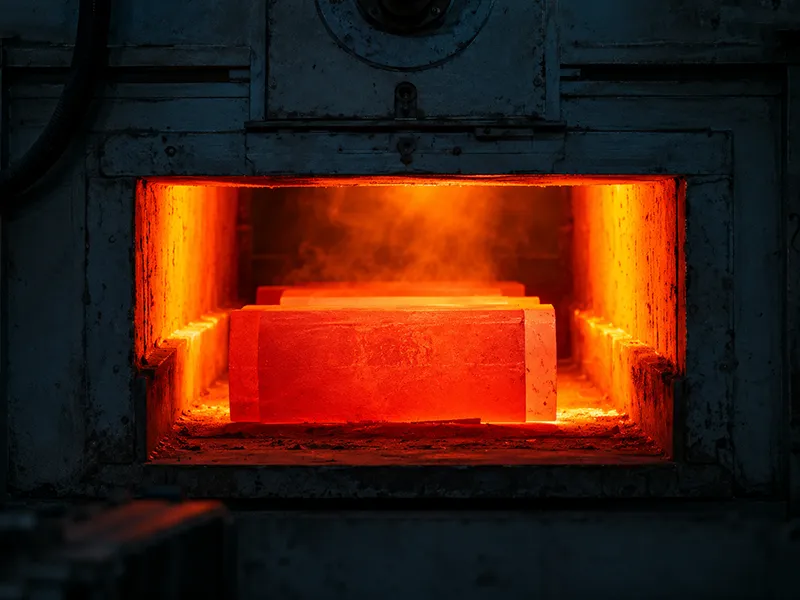
The annealing process usually follows three basic steps: heating, holding, and controlled cooling. Those three steps sound simple, but they determine whether the metal finishes the cycle slightly stress-relieved, fully softened, spheroidized for better cutting, or solution annealed for corrosion performance.
Heating the metal
First, the workpiece is heated to a target temperature suited to the alloy and the desired result. That temperature may be below, near, or above a critical transformation point depending on the type of annealing being used. The goal is not merely to make the part hot; it is to reach a range where recovery, recrystallization, phase transformation, or carbide redistribution can occur in a controlled way.
Holding at temperature
Once the metal reaches the target temperature, it is held there for a defined soak period. This holding stage allows the temperature to equalize through the section and gives the microstructure time to respond. If the soak is too short, the part may not transform uniformly. If it is too long, grain growth or unwanted softening can become a problem.
Cooling in a controlled way
Cooling is what separates classical annealing from many other heat treatments. In standard full or process annealing, the metal is usually cooled slowly and deliberately so the structure can relax and form the intended microstructure. That slow cooling is one reason annealed metal is often softer and more workable than normalized or quenched metal.
At the microstructural level, the process is often described in three stages: recovery, recrystallization, and grain growth, which ASM discusses in its annealing of metals and normalizing of steel reference. In recovery, internal stress is reduced. In recrystallization, new strain-free grains form and replace the deformed structure created by prior work. In grain growth, those grains continue to grow, which can further soften the material but may also reduce strength if taken too far.
One useful nuance: “annealing” is a broad term, and not every annealing cycle ends with classic slow furnace cooling. Solution annealing in stainless steels is a good example. It softens the material and restores corrosion-related properties, but cooling after the soak may need to be relatively fast to preserve the desired structure. In other words, slow cooling is central to many annealing routes, but specialized annealing treatments can behave differently.
Types of Annealing and Common Materials
There is no single annealing method that fits every material or every job. The right cycle depends on whether the priority is softness, stress relief, formability, machinability, corrosion performance, or structural uniformity. ASM’s steel references and industrial heat-treatment guidance both describe annealing as a family that includes full, process, subcritical, recrystallization, soft or spheroidizing, and solution-related treatments.
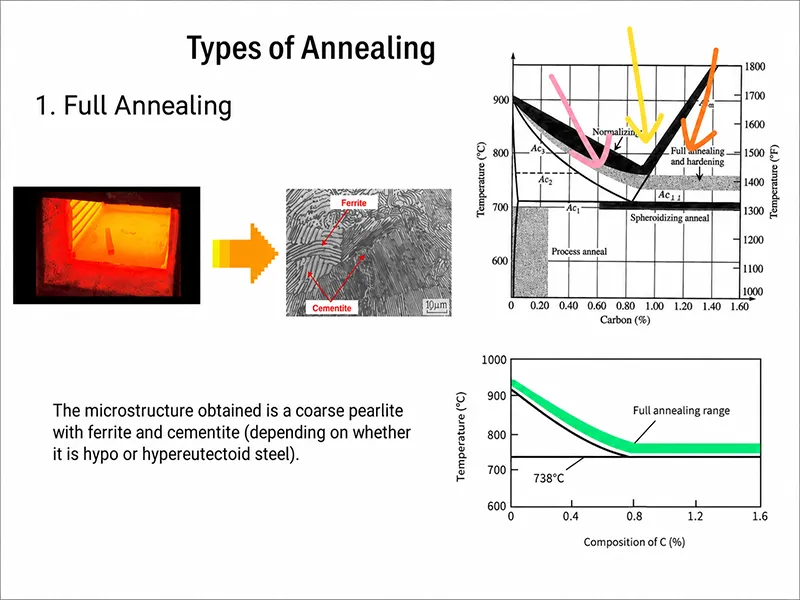
Full annealing is the classic route used when a steel part needs maximum softness and improved machinability. It typically involves heating above the critical range and then cooling slowly in a controlled way so the final structure is soft and stable. For many steel parts, full annealing is selected before machining or cold working.
Process annealing is commonly used after cold work. Its job is not necessarily to produce the softest possible condition, but to restore enough ductility that the material can be worked again. That makes it especially useful between stages of rolling, drawing, bending, or stamping.
Stress-relief annealing is aimed more at reducing residual stress than at radically changing hardness. It is often selected after welding, heavy machining, or severe forming when distortion or cracking risk matters more than full softening.
Recrystallization annealing is used for cold-worked metals that need a fresh, strain-free grain structure. Bodycote describes it as an annealing process applied to cold-worked metal to obtain nucleation and growth of new grains without a phase change, restoring ductility and removing the effects of heavy plastic deformation.
Spheroidizing or soft annealing is especially important for higher-carbon steels and tool steels. Its purpose is to form spheroidal carbides in a ferrite matrix, making the steel softer, tougher, and often easier to machine or cold form. This is one of the most practical annealing routes for steels that would otherwise be difficult to cut efficiently.
Solution annealing is commonly associated with stainless steels and certain corrosion-resistant alloys. In stainless, it softens the material after cold work and helps restore corrosion performance, but the cooling step is typically much faster than in classical full annealing. That makes it a good reminder that the word “annealing” covers more than one thermal strategy.
The materials most often associated with annealing are broad rather than narrow. Steel is the most common example, including carbon steel, alloy steel, tool steel, and cast steel grades that need easier machining, better formability, or lower residual stress. Stainless steel is frequently annealed after cold rolling or fabrication to recover and recrystallize the deformed structure.
Aluminum is also annealed, especially when the aim is to decrease strength and hardness and increase ductility after cold work, which is also discussed in NIST’s heat treating of aluminum alloys reference. NIST’s aluminum heat-treatment reference notes that annealing is used with both heat-treatable and non-heat-treatable aluminum alloys to decrease strength and increase ductility, while ASM identifies the fully annealed O condition as the soft, ductile, highly formable state.
Copper and brass are classic annealing materials as well. Copper-industry guidance describes annealing as a heating-and-cooling process used to soften cold-worked structures by recrystallization or grain growth and to relieve residual stress; industrial heat-treatment references also note that soft annealing can eliminate the hardening introduced during cold forming of copper and brass parts.
Titanium can also be annealed, although the process window is tighter and the controls are more demanding. Titanium guidance notes that annealing may be needed after severe cold work when restoration of ductility or improved machinability is desired, and stress-relief treatment may be used after severe forming or welding to avoid cracking or distortion.
Annealing Temperature and Process Variables
There is no universal annealing temperature. The right value depends on the material grade, alloy chemistry, prior processing history, section thickness, and the property you are trying to achieve. Even within one material family, such as stainless steel or carbon steel, the correct temperature range can vary significantly by grade and by purpose.
In practice, the most important variables are material type, alloy composition, initial hardness, amount of prior cold work, part size and wall thickness, soak time, furnace uniformity, atmosphere control, and cooling route. A thick forged section behaves differently from a thin stampings coil; a lightly bent sheet behaves differently from a heavily cold-drawn bar. That is why production-grade annealing cycles are developed around the part, not just around the metal name.
Poor control creates predictable problems. Over-annealing can allow excessive grain growth, which may reduce strength more than intended. Oxidation and scale can appear when high-temperature cycles are run in air instead of a protective atmosphere. In steels, decarburization can occur when carbon is drawn out of the surface during heating, changing surface properties and sometimes hurting performance in later hardening or wear applications.
Dimensional change is another practical issue, especially in thin, long, or uneven sections. Annealing is often used to reduce distortion risk later, but the annealing cycle itself can still shift dimensions if heating or cooling is not uniform. Precision parts therefore need careful support, atmosphere control, and cycle design.
Annealing Compared With Other Heat Treatments
Annealing is often searched alongside tempering, normalizing, and quenching because all four processes involve controlled heating and cooling, but they do not aim at the same result. The simplified comparison below reflects standard distinctions used in steel heat treatment.
| Process | Cooling method | Main purpose | Common result |
|---|---|---|---|
| Annealing | Slow, controlled cooling | Soften metal and relieve stress | Higher ductility and machinability |
| Normalizing | Air cooling | Refine and homogenize steel structure | More uniform structure and usually greater hardness than annealed steel |
| Tempering | Reheating after hardening, then controlled cooling | Reduce brittleness after quenching | Better balance of hardness and toughness |
| Quenching | Rapid cooling | Increase hardness and strength | Harder structure that is typically less ductile until tempered |
In plain English, annealing pushes material toward softness and workability. Normalizing also improves uniformity, but it cools faster and generally leaves steel harder than a full anneal. Tempering is usually performed after hardening to reduce brittleness, not to create the softest state. Quenching is the opposite direction from annealing: it uses rapid cooling to lock in a hard structure, often martensite in steels.
Benefits, Limitations, and Manufacturing Applications
The benefits of annealing are straightforward but significant: better ductility, lower hardness, improved formability, reduced internal stress, better structural uniformity, and often better machinability. In stainless and other cold-worked metals, annealing can also restore the material’s ability to be bent, stamped, or deep drawn without cracking. Those are exactly the reasons annealing remains one of the most widely used metal heat-treatment steps in production.
The limitations are just as practical. Annealing takes time, especially in the cooling phase. It can add energy use, process cost, and lead time compared with faster routes such as normalizing. If temperatures, soak times, or atmospheres are not well controlled, you can also get oxidation, scale, decarburization, uneven softness, or dimensional change. And if a material is softened too much, machining does not always improve automatically; some low-carbon steels can become overly soft and “sticky” in cutting.
In CNC machining, annealing is often valuable because it lowers hardness, relieves stress, and can reduce the risk of movement after material removal. That can help with tool life, surface finish, and dimensional stability, especially on parts that will be finish-machined to tighter tolerances. But the relationship is not perfectly linear: a structure that is ideal for one alloy may be too soft for another, so the best machining condition still depends on grade and cutting strategy.
In sheet metal forming, annealing restores ductility after cold work and allows additional bending, stamping, deep drawing, or roll-forming without cracks. That is why annealing-and-pickling lines are standard in stainless strip production and why process or recrystallization anneals are common between cold-working stages.
In welding and fabrication, annealing or stress-relief treatment may be used to reduce the residual stresses that develop as welds solidify and cool. Those stresses can contribute to distortion, cracking, or fatigue issues if they are left unmanaged. Titanium fabrication guidance makes the point clearly, but the same principle applies broadly across welded metal assemblies.
In casting and forging, annealing and normalizing are common because as-cast or as-forged structures are often too coarse, too uneven, or too hard for reliable downstream machining. Normalizing is widely used after forging, hot rolling, or casting to create a finer, more homogeneous structure, while annealing can be selected when a softer condition is needed before machining or deep forming.
In tooling and mold-related components, especially high-carbon steels and tool steels, soft or spheroidizing anneals are often used to create a machineable condition before the hardening sequence that gives the part its final performance. That route helps shops cut complex geometry first and harden later.
Choosing the Right Annealing Process
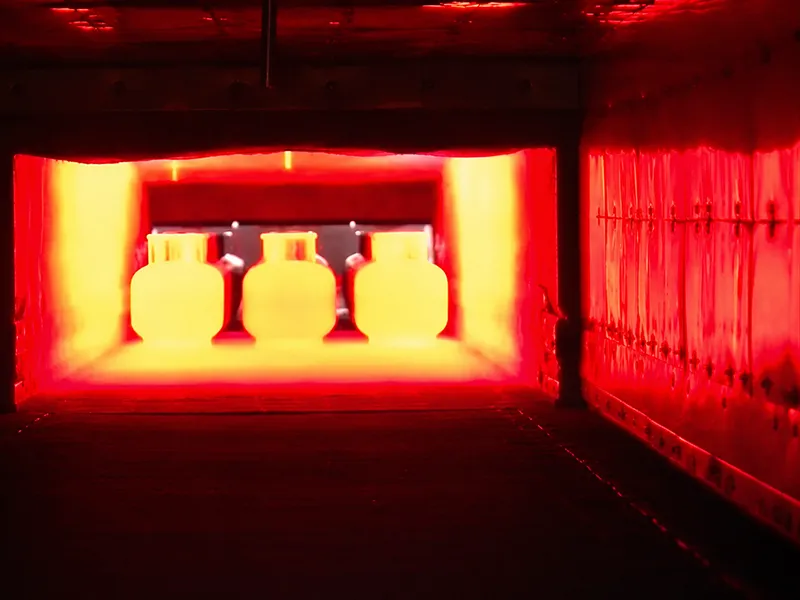
Selecting the right annealing process starts with the property you actually need, not with the broad instruction to “anneal the part.” The same material might be full annealed for machining, process annealed between forming steps, stress relieved after welding, or solution annealed to restore corrosion performance. The right choice depends on material grade, required hardness, required ductility, part geometry, wall thickness, prior cold work, downstream manufacturing step, surface requirements, atmosphere control, and dimensional tolerance demands.
A useful rule is this: if the next step is heavy cutting, look closely at machinability and structure; if the next step is bending or stamping, prioritize ductility and cracking resistance; if the part has been welded or heavily machined, focus on residual stress and distortion; if the alloy is stainless or corrosion-critical, make sure the annealing route also protects the final corrosion behavior. That approach is far more reliable than choosing a generic furnace cycle from the material family alone.
Annealing is one of those processes that seems simple until tolerances, tool life, formability, and scrap rate are on the line. At its best, it gives metal a more workable structure: softer where it needs to be softer, more ductile where it needs to bend, and more stable where distortion would hurt the part. That is why annealing remains a core heat treatment in CNC machining, sheet metal forming, welded fabrications, castings, forgings, and custom metal parts. Used well, it does not just change the metal; it makes the whole manufacturing route more predictable.
FAQ About Annealing
What is annealing in simple terms?
Annealing is a heat treatment that heats metal to a controlled temperature, holds it there, and cools it in a controlled way so the material becomes softer, less stressed, and easier to work. The usual result is better ductility and lower hardness, which helps with machining and forming.
What is the purpose of annealing?
The main purpose of annealing is to reduce hardness, relieve internal stress, and restore ductility. Manufacturers use it to recover formability after cold work, improve machinability before cutting, and lower the risk of cracking or distortion in later production steps.
What are the three stages of annealing?
On the process side, people usually describe annealing as heating, soaking, and controlled cooling. On the microstructural side, the changes are often described as recovery, recrystallization, and grain growth. Both descriptions are useful, and both are talking about the same overall thermal cycle from different angles.
Does annealing make metal stronger or softer?
In most cases, annealing makes metal softer, more ductile, and easier to form or machine. Strength and hardness generally fall while ductility rises. The exact result still depends on the alloy and the type of annealing used, especially in specialized routes such as solution annealing.
What metals can be annealed?
Many metals and alloys can be annealed, including carbon steel, alloy steel, tool steel, stainless steel, aluminum, copper, brass, and titanium. The details vary by alloy, but the general goals are the same: soften the structure, restore ductility, or relieve residual stress.
What is the difference between annealing and tempering?
Annealing is mainly used to soften metal and relieve stress, often after cold work or machining. Tempering is usually used after quenching or hardening to reduce brittleness while keeping a useful level of hardness and strength. They are related heat treatments, but they are solving different problems.
Why is annealing important before CNC machining?
Annealing can make stock easier to cut, lower internal stress, and reduce the risk that a part will move after roughing or finish machining. That can help with tool life, surface quality, and dimensional stability. The best condition still depends on the alloy, because some very soft structures can become gummy in cutting.
Can annealing cause warping?
Yes, it can. Annealing is often used to reduce later distortion, but the annealing cycle itself can still cause dimensional change or uneven results if heating, soak time, support, atmosphere, or cooling are poorly controlled. Thin sections and non-uniform geometries are especially sensitive.