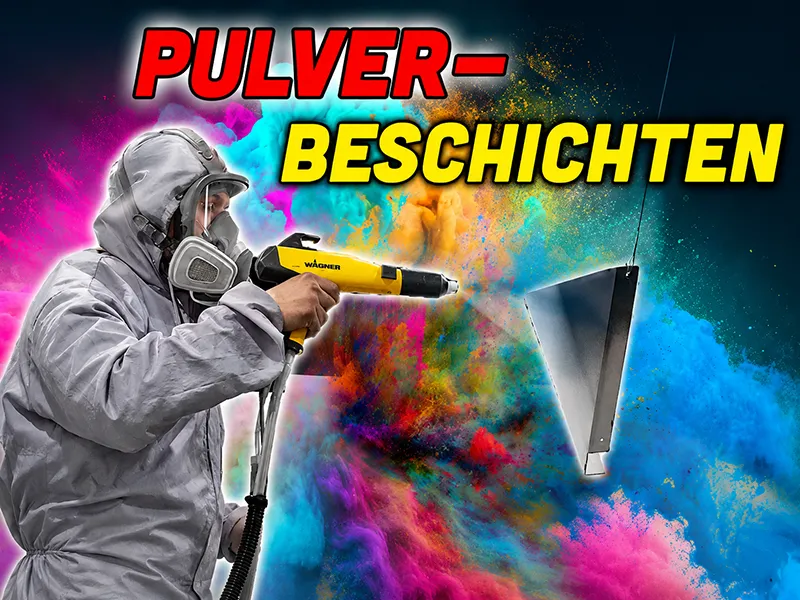
Powder coating is a common dry surface finishing process for metal surfaces. Fine polymer powder (epoxy, polyester, etc.) is electrostatically sprayed onto a grounded metal part and then baked in an oven. The powder melts and cures into a hard, durable layer. This coating provides excellent corrosion and wear resistance, a uniform appearance, and is available in hundreds of colors and textures. Because powder coatings contain no solvents or VOCs, the process is environmentally friendly. In the sections below, we explain how powder coating works, what materials it suits, its pros and cons, how it compares to wet paint and anodizing, typical uses, design guidelines, cost factors, and quality checks.
What Is Powder Coating?
Powder coating is a dry coating process that uses finely ground polymer powder; Nordson’s powder coating guide explains that electrostatic guns apply dry powder before the coating is cured at high temperature. The powder consists of resin, pigments, and additives. An electrostatic spray gun charges the powder particles, which stick to the grounded metal surface. After spraying, the coated part is heated (cured) in an oven (typically 160–200 °C for 10–30 minutes). The heat causes the powder to melt, flow out, and chemically crosslink into a tough, uniform film. The result is a smooth, even finish with no drips or sags. Powder coatings bond well to conductive metals like steel, aluminum, stainless steel or galvanized steel. Common substrates include steel (frame structures, appliances, automotive parts), aluminum (extrusions, enclosures, bike parts), stainless steel (kitchen equipment, railings, trim), and zinc‑coated steel (outdoor frames, sign posts). In each case, the metal is first cleaned and pretreated to ensure good adhesion.
How Does the Powder Coating Process Work?
The powder coating process generally follows these key steps:
- Cleaning & Pretreatment: Metal parts are thoroughly cleaned, degreased and blasted to remove oil, rust, mill scale, etc.. Often a chemical pretreatment (e.g. iron-phosphating or chrome-free conversion) is applied to enhance corrosion resistance and powder adhesion. The cleaner and more uniform the pretreated surface, the better the coating will bond and look.
- Powder Application: The dried part is taken into a spray booth, and the powder is applied. In the booth, the powder is electrostatically charged and sprayed with a special gun onto the grounded metal. The charged powder particles attach evenly to the part, even coating recesses, corners and edges. A typical film thickness is about 60–120 μm (2–5 mil). Excess powder that doesn’t stick is captured and can be recycled (up to 90–95% recovery), making the process very material‑efficient.
- Curing: After spraying, the part goes into a cure oven. The part is held at 160–200 °C for 10–30 minutes. During this time, the powder melts and flows into a continuous film, then chemically crosslinks (cures). The result is a hard, dense coating with excellent mechanical and chemical resistance. Proper curing is critical; under‑ or over‑curing can weaken the coating.
- Cooling & Inspection: Once cured, parts are cooled to room temperature. They are visually inspected for uniform color, gloss and defects. Thickness gauges may be used to verify film weight, and adhesion tests (crosshatch tape) may be performed for critical parts. If required by spec, corrosion tests (salt spray) or coating-elasticity tests can be done. Finally, parts are packed for delivery.
Each of these steps—cleaning, powder application and curing—must be done correctly to achieve a durable finish.
Which Metals Can Be Powder Coated?
Most common engineering metals can be powder coated, provided they can withstand the curing temperature and are conductive. Typical substrates include:
- Steel: Carbon steel is by far the most common powder-coated material. It’s used for frames, brackets, housings, chassis and many structural parts. For best results, steel must be well-degreased and free of rust before coating. Proper phosphating or spray blasting will maximize corrosion resistance under the powder coat.
- Aluminum: Powder coating works very well on aluminum parts (extruded profiles, panels, brackets, bike and auto parts). Aluminum is valued for light weight and natural corrosion resistance, and powder coating adds color and extra durability. Because aluminum oxides easily, thorough surface preparation (etching or conversion coating) is critical for adhesion and long life of the coating.
- Stainless Steel: Stainless is corrosion-resistant on its own, but powder coating can provide additional protection, color and scratch resistance. Since stainless has a very smooth, non‑porous surface, it must be cleaned and often roughened (e.g. bead blasted or sanded) before coating to ensure the paint bonds well. Sometimes a special primer is used for stainless before powder coat. In the end, powder can make stainless parts look more decorative and resist wear and graffiti.
- Galvanized Steel: Zinc-coated (galvanized) steel can also be powder coated. The zinc provides excellent corrosion protection, and adding powder coat on top (a “duplex system”) extends the life of the finish. However, extra care is needed: any moisture or gases trapped under the zinc can outgas during curing and cause pinholes. Proper cleaning (light sweep blasting) and sometimes a pre-bake cycle are used to vent trapped gases before applying powder. If done correctly, galvanized frames, fencing or posts can receive a high-build powder coat for maximum outdoor durability.
In summary, steel, aluminum and stainless steel, and zinc-plated steel are all suitable for powder coating. Metals must simply be clean and heat-resistant; for example, many plastics and thin alloys can’t handle the 180 °C bake.
Advantages of Powder Coating
Powder coating is chosen for metal parts when you need a durable, protective and attractive finish. Its main advantages include:
- High Corrosion Resistance: The cured polymer film provides excellent resistance to moisture and chemicals. For outdoor parts, a properly pretreated and powdered metal often outlasts wet-painted equivalents.
- Excellent Durability: Powder coatings are very tough. They resist chipping, scratching, abrasion and impact better than most liquid paints. The oven cure creates strong molecular bonds, so the coating holds up under heavy use (e.g. machinery parts, automotive components).
- Uniform Finish: Electrostatic spraying yields an even, pinhole-free coating with no drips or brush marks. Edge coverage is very good, and thick films (60–150 µm) can be achieved in one pass. This makes powder coating ideal for parts that need full coverage and a consistent look.
- Wide Color & Texture Range: A huge variety of powders are available. Standard RAL or Pantone colors are common, plus many special effect finishes. Gloss levels from matte through satin to high-gloss are possible, as are textured or “wrinkle” finishes. Metallic powders (with aluminum flakes) and UV-stable outdoor formulations are also available. Custom colors are possible but usually require large minimum orders.
- Environmentally Friendly: Powder coatings contain no solvents, so there are virtually no VOC emissions; the Powder Coating Institute also highlights the low environmental impact of powder coatings compared with many solvent-based finishes. Overspray can be recovered (often >90%) and reused, minimizing waste. This makes powder processes cleaner and safer for workers compared to solvent paints.
- Cost-Effective for Volume: Although the equipment costs more, powder coating is often cheaper per part on medium-to-large production runs. The high material utilization (95% vs ~30% for liquid paint) and lack of disposal fees for solvents yield savings. It also cures quickly in a single bake cycle, speeding up throughput.
In practice, powder coating is frequently selected when metal parts need a long-lasting, decorative and corrosion-resistant surface. It improves appearance and life span significantly compared to bare metal or conventional paint.
Disadvantages and Limitations of Powder Coating
Despite its strengths, powder coating has some drawbacks:
- Substrate Restrictions: Only heat-stable, conductive materials can be powder coated. Metals that warp or melt at 180–200 °C (some plastics, thin sheets) are not suitable. Very small or delicate parts may not fit on standard racks either.
- Less Flexible for Small Runs: Changing colors in a powder line usually requires cleaning the equipment, so extremely short runs or frequent color changes are less economical. For one-off prototypes or multiple hues on one part, wet paint might be more convenient.
- Thickness Control: Powder films tend to be thicker on average. Fine micro-thin coatings (a few microns) are harder to achieve uniformly by powder. There is “minimum thickness” for good coverage, and very intricate or fine-pitch patterns (like fine graphics) are challenging. In general, powder coating offers less precise thickness control than spray painting.
- Masking Required: Any holes, threads or bearing surfaces that must remain bare need to be masked or unplugged before coating. This adds extra labor and cost. Omitted masking can lead to blocked threads or interference fits.
- Touch-Up Challenges: Powder-coated surfaces cannot easily be spot‑repaired like paint. Repairing damage usually means re-coating the entire part or panel to avoid visible seams.
- Curing Limitations: If the part has very tight tolerances or glued assemblies, the high bake temperature might not be compatible. Holes and fits must account for the film thickness, or parts may need post-coating machining.
These limitations mean powder coating isn’t ideal for every scenario. Laserhub notes that it’s only for heat-resistant materials, and “for very small quantities or frequent color changes, wet painting is often more economical”. Also, tight‑tolerance or functional surfaces must be protected during coating or re-machined.
Powder Coating vs. Wet (Liquid) Paint
The table below summarizes how powder coating compares to conventional liquid painting for metal parts:
| Factor | Powder Coating | Wet (Liquid) Paint |
|---|---|---|
| Coating Type | Dry polymer powder | Liquid paint (solvent or water-based) |
| Solvent | None (solvent-free) | Usually contains solvents (VOC emissions) |
| Durability | Very high (resists chipping/scratching) | Moderate (varies with type; more prone to wear) |
| Color Range | Very large (standard RAL, metallics, textures) | Very large (easily custom-mixed on-site) |
| Film Thickness | Typically thicker (60–150 μm); great coverage | Can be very thin and smooth (good for fine finishes) |
| Environmental | Better (no VOCs, high overspray recovery) | Worse (emits VOCs; more waste) |
| Repair | Harder (partial touch-up difficult) | Easier (spot repairs with brush/spray) |
| Typical Use | Robust metal parts (frames, housings) | Wide range (including wood, plastics, fine finishes) |
In general, powder coating yields a thicker, tougher, solvent-free finish that excels in durability, especially for outdoor or heavy-use items. Wet paint is more versatile (can coat non-conductive materials) and simpler for custom colors or quick touch-ups. For example, powder coatings emit virtually zero VOCs, while liquid paints release solvents. But paint can achieve ultra-smooth high-gloss surfaces more easily.
Powder Coating vs. Anodizing
Anodizing (especially on aluminum) is another common metal finishing method. How do they compare?
- Metal Type: Anodizing works only on aluminum (and similar metals like titanium). It is an electrochemical conversion that grows the natural oxide layer on the metal. Powder coating, by contrast, can be applied to aluminum, steel, stainless, etc..
- Layer Formation: Anodizing creates an integral oxide layer on the surface of aluminum, which is very hard and durable. This oxide layer is clear by nature (though it can be dyed to many colors). Powder coating adds a polymer film on top of the metal. It is an external layer, usually opaque and colored.
- Thickness & Appearance: Anodized finishes are very thin (microns) and maintain the metal’s underlying look and feel. They can be matte or dyed transparent. Powder coatings are much thicker (tens of microns), and fully hide the metal. Powders also offer more freedom in color (including any opaque hue, metallic flake, textured finishes) than anodizing.
- Durability: An anodic film is harder than aluminum itself, providing excellent wear resistance. However, it can scratch off if hit hard. Powder coatings are somewhat softer than metal, but the film resists chemicals and UV very well. Keystone Koating notes that anodizing generally has the edge in mechanical wear, while powder coating often wins in chemical/corrosion resistance.
- Environmental/Cost: Anodizing uses acid baths and generates chemical waste, so it has environmental downsides. Powder coating is solvent-free (but does require oven energy). In large batches, powder coating is typically more cost-effective, while anodizing can be more expensive (yet justified for certain high-end or interior use).
In summary: Anodizing is great for aluminum parts that need a thin, hard, transparent finish (with subtle coloring). Powder coating is better when you want a thick, opaque, decorative, and colorful coating on any metal. Both finishes are durable, but each has its niche: anodizing for hard, integrated films on aluminum, powder coating for versatile, high-build finishes on many metals. For outdoor or industrial parts, either can be used (e.g. anodized or powder-coated aluminum), but design requirements and material should guide the choice.
Typical Applications of Powder Coating
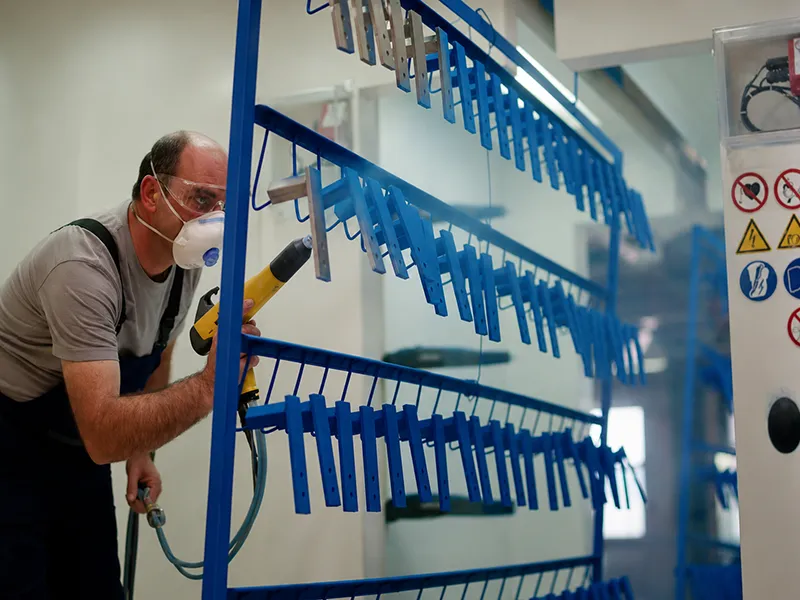
Powder coating is used in many industries wherever metal parts need a tough, attractive finish. Common examples include:
- Industrial & Structural Parts: Powder-coated machinery and equipment such as agricultural implements, construction equipment, HVAC housings, pumps and machinery covers. Architectural and structural elements like handrails, fencing, gate frames, window frames and structural steel components are frequently powder coated.
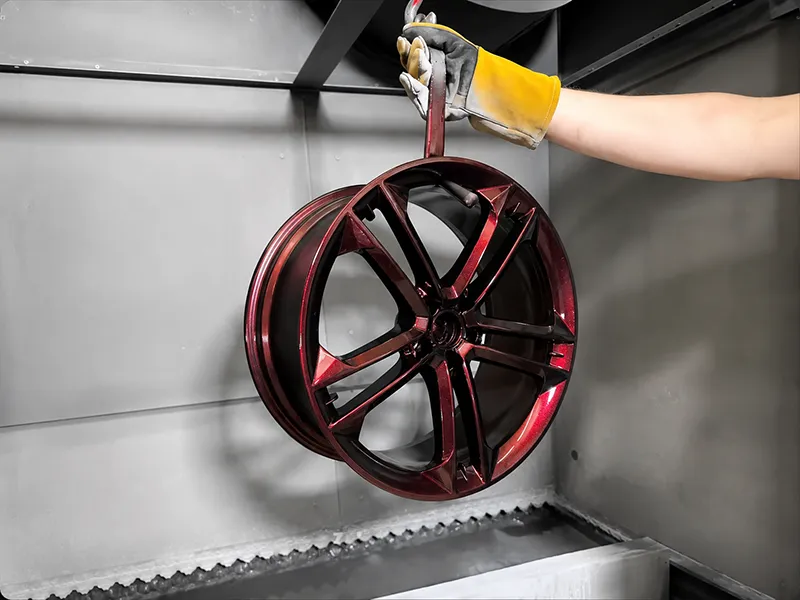
- Automotive & Transportation: Many vehicle parts receive powder coatings – for example wheel rims, chassis and frame components, bumpers and brackets. Motorcycles, ATVs and bicycles often use powder-coated parts (exhaust pipes, frames, handlebars) since the finish resists chipping and weathering.
- Furniture & Consumer Goods: Powder coating is popular for metal furniture (office chairs, patio furniture, shelving, bed frames) and home appliances (washer/dryer panels, stove hoods, lamp bases). It is also used on metal cabinets, lockers, toolboxes and carts for durability.
- Electronics & Fixtures: Items like electrical enclosures, server racks, switchgear panels and light poles/sign frames are often powder coated to protect against corrosion. Outdoor fixtures (benches, playground equipment, bike racks, streetlights) also commonly use outdoor-grade powder finishes.
In short, any metal part that needs a durable, corrosion‑resistant and decorative surface finish is a candidate for powder coating. From industrial machinery to consumer products, powder coating is prized for high-traffic and outdoor applications.
Powder Coating for CNC-Machined Parts
CNC-machined metal parts (such as aluminum housings, steel brackets or plate components) are often powder coated after machining. However, special care is needed in design and preparation:
- Post-Machining Prep: After CNC machining, parts must be thoroughly cleaned. Any burrs, chips or oils must be removed before powder coating. Bead blasting or light sanding is common to ensure the surface is even and the coating can adhere uniformly.
- Masking Threads and Fits: Powder coating adds film thickness (~0.003–0.004 inch or ~0.07–0.10 mm), which can interfere with threads and mating parts. All threaded holes, bearing surfaces or precision bores should be masked or plugged during coating. Silicone thread plugs or high-temperature masking tape are typically used to keep threads free of powder. Uncoated “witness surfaces” can be specified if critical dimensions must be maintained.
- Accounting for Build-Up: Designers should include extra tolerance in holes and slots. For example, increase hole diameters by at least the expected coating thickness (0.1–0.15 mm) to compensate. Alternatively, parts can be reamed or tapped after coating, though this adds cost.
- Holding Holes/Hanging Features: Since parts are hung by hooks during coating, it’s helpful to include small hanging holes or tabs in the design. (These holes will remain after coating.) This ensures the part can be suspended freely for an even finish.
- Ensure Proper Drainage: If the part has deep cavities, include small drain or vent holes so trapped air/powder can escape. Without venting, powder can accumulate inside cavities or cause blisters on cure.
By considering powder coating early in the design of CNC parts, one avoids issues. The image above shows a machined aluminum part that has been powder coated black – note how all holes are clearly masked so the coating only covers intended surfaces.
Design Tips for Powder-Coated Parts
When designing metal parts to be powder coated, keep the following guidelines in mind:
- Round Edges and Corners: Sharp corners and edges tend to build up extra coating. To ensure even coverage and prevent cracks, use a minimum 1–2 mm radius on sharp corners.
- Drain/Vent Holes: For enclosed or hollow sections, add small drain or vent holes (about 3–5 mm diameter) so trapped powder and air can escape during curing. Without holes, powder may accumulate and cause defects or stress.
- Mask Critical Features: Identify any threads, holes or precision surfaces that must remain uncoated. Specify to have these masked or protected before coating. Remember that powder can reach edges, but will not enter a hole if properly plugged. Plan masking (tape, plugs) in advance.
- Tolerance Accounting: Add clearance for coating thickness. For tight fits, assume the powder layer will add ~0.003–0.004″ (~0.08–0.10 mm) each side. Tight tolerance holes (especially bearing/pin holes) may need to be oversized or post‑coating machined.
- Use Hanging Features: If possible, design the part with mounting or hanging holes (even small ones) that can be used to suspend the part in the coating booth. This allows all surfaces to be coated. Remove hanging hardware after coating and touch-up if necessary.
- Specify Finish Requirements: On the drawing, clearly indicate the desired color (e.g. RAL or Pantone code), finish (matte/gloss) and any texture. This avoids ambiguity. For critical matches, ask for a sample or certificate.
- Corrosion Class: If the part is for outdoor or harsh use, consider a higher grade powder (UV/chemical resistant) and specify a phosphate or chromate pretreatment to meet the required corrosion class.
- Surface Quality: Ensure the uncoated part surface quality is good (no scratches or dents) because powder will make the surface finish permanent. Deburr all edges, and if the part was sanded or polished, clean it carefully to remove residue.
In short, design for powder coating by providing adequate drainage, rounding features, planning for masking, and allowing for film thickness. This will yield a high-quality, robust finish.
Available Colors and Textures
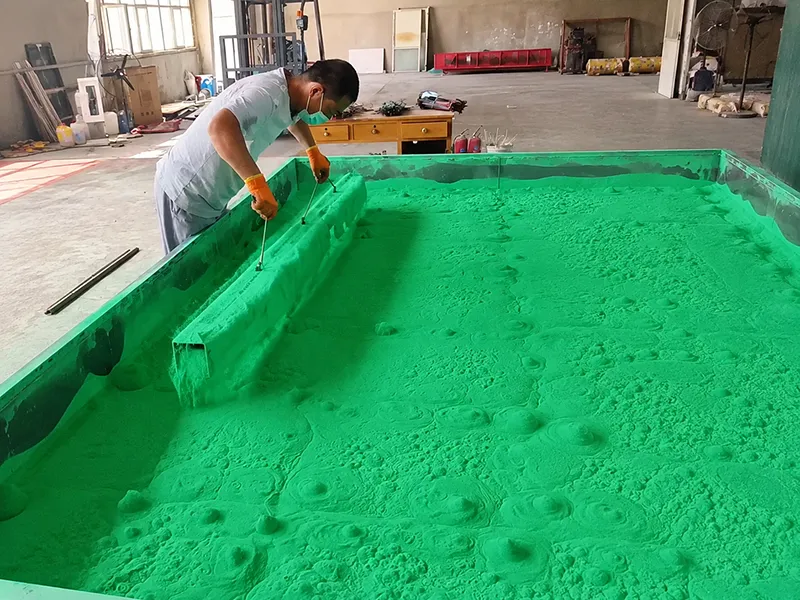
Powder coatings are available in a huge spectrum of colors and textures. Most powder coaters stock the full set of RAL (or comparable) solid colors in several gloss levels (matte, satin, semi-gloss, high-gloss). Beyond solids, you can choose:
- Matte or Glossy Finishes: From flat/matte finishes (low reflectivity) to shiny high-gloss. Satin (semi-gloss) is very common for a smooth but not mirror-like look.
- Textured Finishes: Many powders create a fine “wrinkle” or textured surface. These can hide fingerprints or minor surface imperfections. Hammer-tone or other specialty textures (fine sand, crackle, etc.) are also available.
- Metallic and Special Effects: Powders with metallic flakes can mimic metal or sparkle; there are also fluorescent, glow-in-the-dark, and anti-graffiti or anti-microbial powder types for special uses.
- Outdoor/UV-Resistant: Some powders (especially super-durable polyester types) are formulated for excellent UV stability and weather resistance, suited for outdoor applications.
The finish choice can affect cost and availability – unusual textures or custom colors may require larger batch orders or longer lead times. Always confirm with your supplier which powders they have in stock or what minimum quantities apply.
Powder Coating Cost Factors
Powder coating cost factors vary based on part size, geometry, powder type, masking, pretreatment, quantity, and inspection requirements. Major cost drivers include:
- Part Size & Geometry: Larger parts need more powder and longer oven time. Complex shapes (deep recesses, tight angles) require slower spraying or even multiple guns to coat fully, adding labor. Very large or heavy parts may need special racks or ovens.
- Powder Type & Finish: Standard interior-grade powders are less expensive. Specialty powders (UV‑stabilized outdoor grade, chemical-resistant, high-temp resins) cost more. Premium textures or metallics often carry a price premium. Custom colors (non-stock) typically require extra setup.
- Masking & Preparation: If the part needs masking of threads, holes or critical areas, this adds labor/material. Simple tape plugs are cheap; custom silicone plugs or extensive taping will increase cost. Likewise, extra surface prep (hard-to-remove coatings, heavy rust) can raise costs.
- Material & Pretreatment: Some substrates need special pretreatments. For example, aluminum often gets a chromate or conversion coat before powder – a small extra step. Galvanized steel may require a phosphate wash to prevent outgassing. Inform your coater of the material so they can apply the optimal pretreatment.
- Quantity & Scheduling: Higher volumes allow lower per-part pricing. Many coaters have tiered pricing: small batches or prototypes can be very expensive per piece due to setup time. Bulk orders let them spread fixed costs. Also, rush or expedited jobs may incur a premium.
- Quality & Inspection: Tight specification requirements (strict color match, thickness tolerances, or zero-defect finish) may require more costly controls or testing. For high‑cosmetic parts, insist on final inspection and packaging carefully to avoid damage.
In summary, Powder Coating Cost = Pretreatment + Powder + Oven Time + Inspection + Packaging. While we won’t list exact prices (they vary widely), planning your part design and batch size carefully can optimize the cost. Discuss your exact needs (material, finish, volume, lead time) with the coater for a realistic quote.
Quality Inspection After Powder Coating
After coating, a thorough quality check ensures the finish is correct and durable. Typical inspections include:
- Visual Check: Examine each part for uniform color and gloss. Look for surface defects such as drips, thin spots, bubbles or orange-peel texture. Ensure all areas intended to be coated have full coverage.
- Film Thickness: Use a powder coating thickness gauge (magnetic or ultrasonic) to verify the coating meets specifications. This ensures the film is neither too thin (weak) nor excessively thick (may crack).
- Adhesion Test: A cross-cut or crosshatch adhesion test such as ASTM D3359 is often used to evaluate whether the coating remains properly bonded to the metal substrate.. A lattice pattern is cut through the coating to the metal, then taped. If the coating stays intact, adhesion is good.
- Cure Test: A solvent rub test (ASTM D5402) can verify the coating is fully cured. A cloth saturated with a solvent (e.g. MEK) is rubbed on the film. If no coating comes off, the cure is sufficient.
- Corrosion Resistance (Salt Spray): For outdoor or marine parts, a salt spray (fog) test (ASTM B117) can be done on sample panels to check long-term corrosion protection.
- Flexibility/Impact: Bend or impact tests may be used if the part will flex or take hits. For example, an impact tester drops a weighted ball; the powder film should not crack at the impact site.
- Packaging Inspection: Finally, check that painted parts are packed properly to avoid scratches or dents in transit. Each piece should be free of handling damage.
High-quality shops follow industry standards (ASTM, AAMA) for these tests. In practice, most industrial parts get visual and thickness checks at minimum. Critical parts (automotive, structural) may require full lab testing. Always agree on the inspection level with the coater upfront.
Common Powder Coating Defects
Even with care, defects can occur. Here are some frequent issues and their causes:
- “Orange Peel” Texture: The surface looks bumpy or uneven. Often due to improper cure temperature or too high powder flow rate. Fix by ensuring oven reaches the correct setpoint and adjusting gun settings.
- Poor Adhesion/Peeling: Coating peels or chips off easily. Usually caused by contamination (oil, grease, rust) or inadequate cure. Solution: improve cleaning and pretreatment, verify cure cycle.
- Pinholes/Blisters (Outgassing): Tiny holes or blisters on the surface, often from gases trapped in the metal or residual moisture. Common on porous castings or galvanized parts. Prevent by thorough pre-bake (to drive out moisture/air) and using powders designed for outgassing.
- Uneven Coverage/Thin Spots: Dull areas where the coating is too thin. Caused by complex shapes (Faraday cage effect), poor grounding or inconsistent spray technique. Use proper setup (multiple spray passes, adjust gun angles) to improve coverage.
- Faraday Cage Effect: Difficult-to-reach recesses or holes stay uncoated because the electrostatic field repels powder. Lowering the spray voltage, shooting from different angles, or adding temporary discharge rods can help.
- Color or Gloss Variations: Slight differences in color or finish sheen across panels. Often due to batch variations or insufficient mixing of the powder. Always use the same powder batch for a single job and check gloss with a meter if critical.
Identifying these problems early (during process development or initial production) allows correction before full-scale manufacturing. Working with an experienced powder coater will minimize these common defects through proper procedure.
Choosing the Right Powder Coating Partner
Picking a reliable powder coating vendor is crucial. Key considerations include:
- Experience and Expertise: Look for a coater with a proven track record in your industry and material. A firm that has coated your type of part (e.g. steel frames vs. precision aluminum housings) will understand the special requirements. “Select your powder coating partner based on their experience with meeting your specific needs,” advises industry experts.
- Quality System: Ensure the shop follows recognized standards (ISO, AAMA, military specs, etc.) if applicable. Check that they have the appropriate prep lines (sandblasting, phosphating) and ovens for your parts. Ask for references or sample certifications – a list of satisfied customers is a good sign.
- Color and Finish Capability: Verify that they stock (or can obtain) the powders, colors and textures you need. If you require strict color matching or specialty textures, ask about their process for custom colors and consistency.
- Batch Size & Lead Time: Make sure their production capacity and throughput match your volume and schedule. A coater geared toward high volumes may not be competitive on small jobs, and vice versa. Confirm typical lead times and whether they offer rush options.
- Masking and DFM Support: A good coater will review your drawings and advise on design for coating. They should be willing to work with you on masking strategies or adjusting tolerances. As one source notes, communication is key – your coater should “confirm receipt of materials, due dates” and adapt to real-world issues.
- Additional Services: If you need complete part finishing, consider a vendor that also handles CNC machining or assembly. For example, Laserhub integrates metal cutting and powder coating in one network, delivering finished parts ready to assemble. Such turnkey services can save time and reduce handling damage.
- Cost vs Value: The lowest price isn’t always best. A slightly higher quote from a specialist with better process control can save money in the long run by avoiding reworks. Evaluate the total value: quality, on-time delivery and service. “Select your powder coating partner based on their ability to adapt to real world situations,” recommends one expert.
In summary, choose a powder coater that understands your materials and requirements, maintains high quality standards, and communicates clearly. A true partner will take the time to ensure your parts come out right on schedule.
Conclusion
Powder coating is a proven, durable and environmentally friendly surface treatment for metal parts. It is especially well-suited to steel, aluminum and stainless steel components that require long-lasting corrosion protection, wear resistance and an attractive finish. The main benefits are high scratch/abrasion resistance, uniform coverage and a wide choice of colors and textures. When designing parts, engineers must plan for proper surface pretreatment, film thickness, and masking of threads or mating surfaces. Overall, a good powder-coated finish can greatly enhance a part’s appearance, lifespan and reliability. With the right design and coating partner, powder coating can efficiently produce robust, high-quality metal parts.
FAQ
What is powder coating?
Powder coating is a dry finishing process where an electrostatically charged powder (usually a polymer resin with pigment) is sprayed onto a metal surface. The part is then heated to melt and cure the powder into a hard, continuous coating. The result is a protective decorative layer that bonds to the metal. Unlike liquid paint, powder coatings contain no solvents.
Which metals can be powder coated?
Common materials are steel, stainless steel, aluminum and galvanized (zinc-coated) steel. These metals conduct electricity and withstand the 160–200 °C cure. The metal should be cleaned and pretreated before coating. Powder coating is not used on non-conductive plastics or on soft metals that warp in the oven.
Is powder coating better than liquid paint?
For metal parts, powder coatings generally give a tougher, more durable finish with zero solvent emissions. Powder-coated parts resist chipping, scratching and fading very well, making them ideal for outdoor and heavy-use applications. However, liquid paints can achieve ultra-thin films, special effects and are easier to touch up. Powder coating is typically more cost-effective for medium-to-large batches, while wet paint can be better for very small quantities or complex color patterns.
How long does a powder coating last?
A properly applied powder coat is extremely long-lasting. In outdoor conditions, typical powder coatings can last 15–20 years or more with minimal maintenance. The exact lifespan depends on the quality of pretreatment, the coating formulation and the service environment (UV exposure, humidity, chemicals, etc.). In any case, a good powder coating will usually outlast a similar paint finish.
Does powder coating affect part dimensions?
Yes – powder coatings add a finite thickness (commonly about 0.05–0.15 mm, i.e. 0.002–0.006″) to the part surface. This can interfere with tight tolerances, threads and press-fits. Designers should account for this buildup (or have the coater mask critical surfaces). For example, holes and shafts may need to be made slightly larger to accommodate the coating layer.