Short-run production refers to manufacturing small batches of parts (often only a few to a few hundred units) without committing to full-scale mass production. This approach is widely used for prototypes, pilot runs, market testing, replacement parts, bridge tooling, and customized components. Modern digital tools and manufacturing methods—such as CNC machining, 3D printing (additive manufacturing), rapid tooling, and integrated CAD/CAM workflows—have dramatically reduced lead times and costs for short runs. These technologies eliminate the need for costly molds or long setup times, making low-volume production faster, more affordable, and more flexible than traditional methods. This article explores the four key technologies enabling today’s efficient short-run manufacturing.
What Is Short Run Production?
Short-run production means making a limited quantity of parts—typically from just one unit up to around a few hundred. It sits between prototyping and full-scale production. The goal is to validate a design and test the market with minimal risk. By producing only what’s needed, companies can quickly gather feedback, prove concepts, and adjust designs without the high investment of mass production tooling. This approach also avoids excess inventory, since parts are made just in time to meet demand. Short-run production is often called low-volume or “small-batch” manufacturing. Importantly, it isn’t limited to prototypes: short runs can also produce fully functional end-use components, from metal brackets to plastic enclosures, when only a small quantity is needed.
Why Short Run Production Is Becoming More Popular
Short-run production offers several business and manufacturing advantages in today’s market. Manufacturers can bring products to market faster by iterating designs quickly (known as agile development). Because there are no expensive tooling molds to build for every change, design updates can be made on the fly, shortening development cycles. This flexibility also supports more customized products and niche applications. Engineers can tailor parts to unique customer requirements without the constraints of large-scale processes.
Another benefit is lower inventory pressure. With short runs you produce just what is needed, often on a “just-in-time” basis, which minimizes storage costs and the risk of unsold stock. If market demand shifts, companies can adapt by changing a small batch run rather than scrapping an entire production line. In fact, studies note that modern setups have greatly reduced setup time and cost, making short-run runs much more affordable and agile than in the past.
Short-run methods are ideal for testing products and markets before mass production. They allow companies to trial new designs, gather customer feedback, and prove production processes at low cost. This approach is especially valuable in industries with rapidly changing trends or specialized needs. For example, automotive custom components, aerospace brackets and housings, medical device prototypes, electronic enclosures, industrial replacement parts, and custom CNC-machined fixtures are commonly produced in low volumes. Short-run production is becoming more popular because it blends speed, flexibility, and cost control in a way that mass production cannot.
Technology 1: CNC Machining
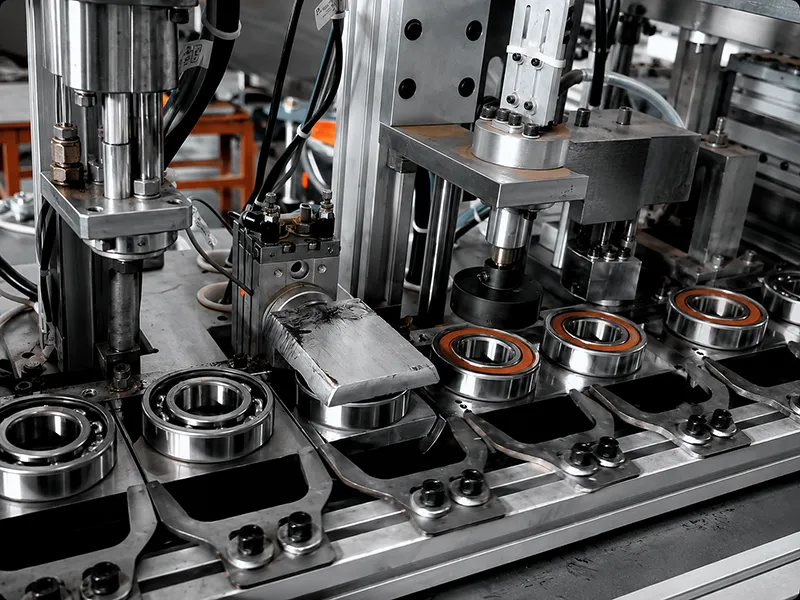
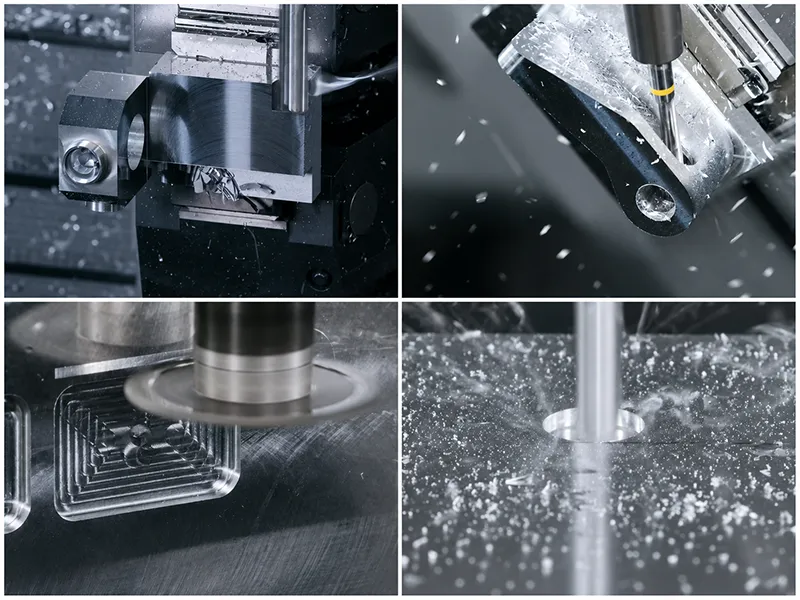
CNC machining is one of the most important technologies for short-run production. In CNC machining, parts are carved from solid blocks of material using computer-guided mills and lathes. This process does not require expensive molds or tooling; parts can be made directly from a CAD model or engineering drawing. Modern CNC machines work with a wide range of metals (aluminum, steel, titanium, etc.) and plastics, producing production-grade components with excellent accuracy. Because no dedicated tooling is needed, short CNC runs are very cost-effective. One guide notes that CNC “wins in the low volume range specifically because there’s no tooling cost”, meaning the only expenses are materials and machine time.
CNC machining is suitable for functional end-use parts and prototypes with tight tolerances. It can achieve very fine dimensions and smooth finishes comparable to high-volume processes. In short-run work, CNC is often used for precision metal and plastic parts such as custom brackets, housings, shafts, and small assemblies. It is also valuable for “bridge” production (making parts while mass-production tools are being finalized) or for replacement components of legacy equipment.
Advantages of CNC machining:
- High accuracy and precision: CNC machines can hold very tight tolerances, producing parts that match design specifications.
- Wide material compatibility: Metals like aluminum, stainless steel, titanium, brass, and engineering plastics can all be machined, giving designers strong material choices.
- Good surface finish: CNC parts often have smooth, finished surfaces straight off the machine.
- Suitable for end-use parts: Parts are production-grade and can go directly into service without extra tooling.
- Fast setup for small batches: Programming and fixturing are relatively quick, and several parts can be machined in one setup.
- No mold or tooling cost: Unlike injection molding or casting, CNC doesn’t require any specialized molds or dies.
Limitations:
- Higher unit cost at very low volumes: Because each part is machined individually, the cost per piece is higher than for high-volume production. (However, total project cost may still be lower overall since no mold is needed.)
- Complex internal geometries: Deep cavities, undercuts, or very complex internal shapes can be difficult or time-consuming to machine, since the cutting tool must have access.
- Material removal time: Machining large amounts of material can take longer for complex shapes, which can increase lead time.
Overall, CNC machining offers the precision and material strength needed for most short-run metal and plastic parts. It is often the default choice when precision, material properties, or small quantities rule out other methods.
Figure: A small batch of precision metal parts being measured with calipers after CNC machining. This illustrates how CNC machining produces highly accurate, end-use components without the need for expensive tooling (source: JLC Precision Manufacturing).
Technology 2: Additive Manufacturing (3D Printing)
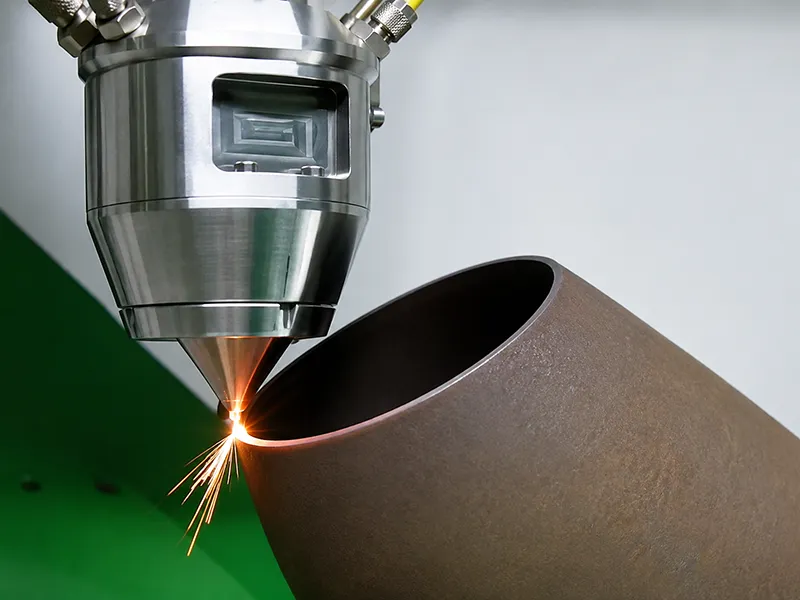
Additive manufacturing, commonly known as 3D printing, builds parts layer by layer from digital designs. This technology has revolutionized short-run production by enabling designers to create complex shapes without tooling. For very fast prototyping and low-volume parts, 3D printing is ideal. Because it requires no hard tooling, a designer can go from CAD to a physical part in hours rather than weeks. In practice, 3D printing is used for quick prototypes, design validation, and small production runs of components that may have intricate geometries. For example, one manufacturer notes that with 3D printing “you can create intricate geometries and detailed designs that would be impossible with traditional methods”. Typical short-run uses include plastic models, fixture components, custom housings, and even functional testing parts. Metal 3D printing (such as laser sintering) can also support limited production runs of simple metal parts.
Advantages of additive manufacturing:
- No tooling required: Parts are “printed” directly from digital files, eliminating mold costs and long lead times. A CAD design can be sent to a printer and made immediately.
- Fast design iteration: Because setup is minimal, designers can quickly revise a model and print an updated version, shortening development cycles.
- Complex geometries: 3D printing excels at producing shapes that are difficult or impossible to machine, such as internal channels or organic forms.
- Rapid prototyping and testing: It’s easy to make one or two prototypes for form/fit testing, or to create functional prototypes for early validation.
- Small-batch production: For very small quantities (often under 10–25 parts), 3D printing can be more cost-effective than any other process, since there is no tooling overhead.
Limitations:
- Material properties: 3D-printed parts (especially FDM plastics or metal sintered parts) often have lower strength or different material characteristics than wrought or machined parts. For example, a CNC-machined aluminum part has the full strength of the metal billet, but a 3D-printed aluminum part may only have 80–90% of that strength due to porosity. This can limit 3D printing to non-structural or lighter-duty parts.
- Surface finish and tolerances: Additive parts usually have rougher surfaces and looser tolerances. Typical FDM plastic prints have tolerances around ±0.010″ or worse, and often require sanding or plating to smooth surfaces. Even metal printed parts (DMLS) might need machining for fine tolerances.
- Part consistency: The precision and quality can vary with printer type and settings. Without post-processing, parts may not meet the tightest spec requirements.
- Economies of scale: While 3D printing is cheap for a few prototypes, its per-part cost doesn’t drop with higher volume. Above roughly 10–25 units, CNC machining or low-cost molding typically becomes more economical.
In short, additive manufacturing is a powerful short-run tool for rapid prototyping, complex shapes, and fast turnarounds without tooling. It is most cost-effective for one-off models or small batches, but material and finish constraints mean it often complements, rather than replaces, processes like CNC machining.
Technology 3: Rapid Tooling
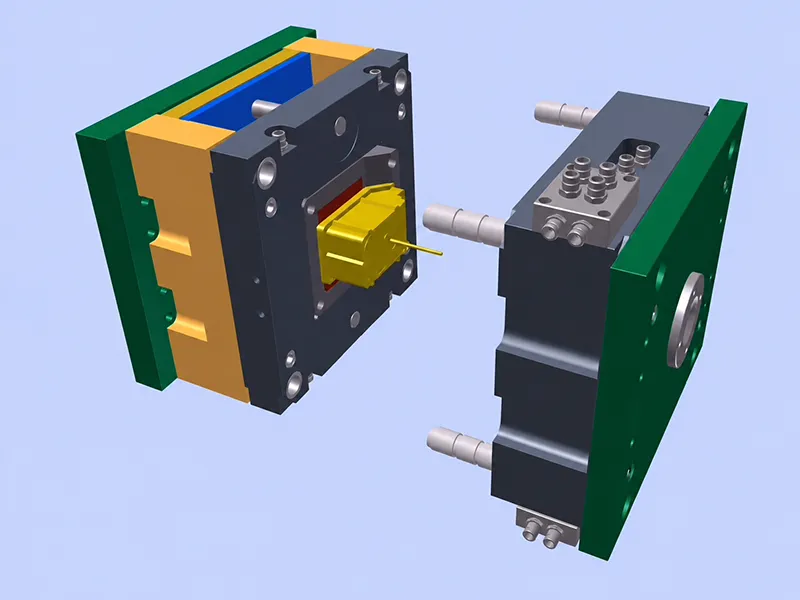
Rapid tooling bridges the gap between prototyping and full production by providing quick, low-cost molds or patterns for molding/casting processes. Unlike traditional tooling (expensive machined steel molds), rapid tooling uses faster methods—often 3D-printed patterns, silicone molds (soft tooling), or aluminum plates—to make small batches of injection-molded or cast parts. This lets manufacturers produce parts with production-like processes without the full investment. For example, one guide explains that rapid tooling is “used to fabricate tooling fast, at low cost… to create parts on a slim timeline or in lower quantities”. It is commonly applied when a customer needs limited quantities of molded/cast parts, such as pilot runs, design validation parts, or custom components.
How it works: In practice, rapid tooling might involve 3D printing a master pattern and then casting silicone molds for urethane parts, or using aluminum 3D-printed molds for a few dozen thermoplastic parts. The result is a working mold that can produce real polymer or metal parts, without the 6–12 week wait for hardened steel tooling. The Formlabs guide to rapid tooling highlights that this process “enables manufacturers to validate design and material choices prior to transitioning to mass production”. In other words, engineers can test end-use materials and processes in small scale before committing to a large injection mold or die.
Advantages of rapid tooling:
- Lower tooling cost: Rapid tooling typically costs a fraction of traditional tooling. For example, using 3D-printed molds can cut mold lead time to days and tooling expenses to a few thousand dollars instead of tens of thousands.
- Faster lead time: Molds can be made in hours or days (sometimes in-house) rather than the weeks needed for steel tooling. This greatly accelerates time-to-part for small batches.
- Realistic materials: Because the molds produce real plastic or metal parts, engineers see true production material behavior. This provides better validation than printing prototypes.
- Good for bridge runs: Rapid tooling is ideal as a “bridge” to full production. It lets companies offer a limited run of saleable parts (10–1,000 parts) while permanent tooling is being developed.
- Design flexibility: If a mold needs changes, it can be remade quickly at low cost, unlike an expensive hardened mold.
Limitations:
- Shorter tool life: Rapid molds (especially soft or aluminum molds) wear out faster than hardened steel. They are not meant for very high-volume production.
- Limited materials: Some production plastics or casting alloys may require specialized molds that rapid tooling cannot match.
- Complexity limits: Very intricate part geometries may still require conventional tooling or expensive inserts, adding complexity to rapid tooling.
- Scale: While ideal for up to a few thousand parts, beyond that conventional tooling becomes more economical.
In sum, rapid tooling provides a low-risk, low-cost way to get small batches of molded or cast parts. It combines some of the speed of prototyping with the material properties of production, effectively acting as a transition stage between prototypes and mass production.
Figure: Rapid tooling examples, including a clear 3D-printed mold and cast parts. Rapid tooling (using 3D-printed or aluminum molds) lets manufacturers produce short runs of injection-molded or cast parts without full steel tooling.
Technology 4: Digital Manufacturing and CAD/CAM Automation
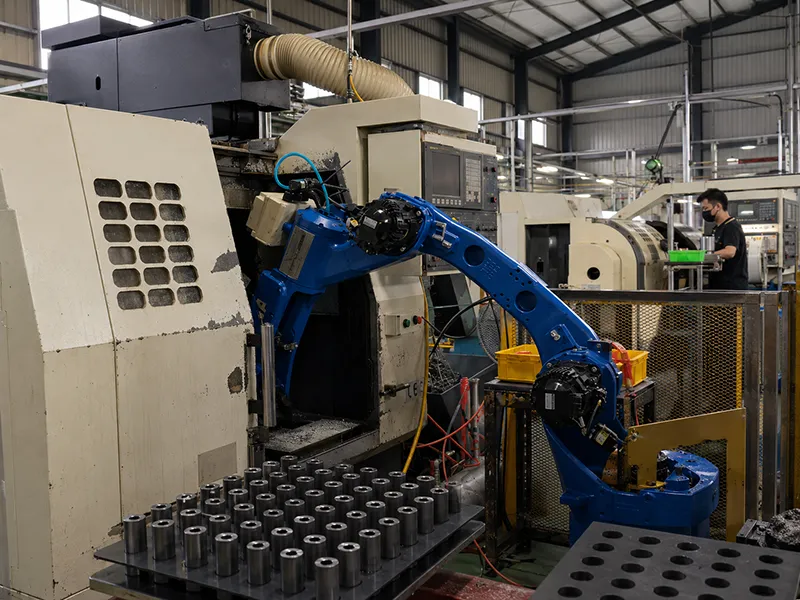
Modern digital manufacturing encompasses the software and connected systems that streamline every step of production, from design to the finished part. This includes CAD/CAM software that automates toolpath generation, DFM (design-for-manufacturing) analysis tools, digital quoting and job tracking, as well as integration with shop-floor machines and inspection equipment. By creating an end-to-end digital workflow, manufacturers reduce manual errors and dramatically speed up short-run production.
For example, advanced CAD/CAM software allows engineers to take a CAD model directly into CAM software, apply workholding and tooling data, and automatically generate CNC programs. According to Tebis software, “the advantage of a CAD/CAM system is: your manufacturing process is already represented in the digital world”. One key benefit is that changes made in the CAD model automatically update the CAM programming. This means a revision can instantly flow through to toolpaths and work instructions, with no need for back-and-forth between design and manufacturing. Such automation saves massive setup time. Tebis notes that automation and virtual setups “save a tremendous amount of employee time in setup” by eliminating manual programming steps.
Beyond CAM programming, digital manufacturing often includes: automated Design for Manufacturing (DFM) feedback, quoting tools, and connected measurement systems. For instance, a completed CAM program might automatically drive an on-machine inspection or generate a digital inspection report, ensuring parts meet specs. In general, digital workflows enhance short-run production by enabling faster quoting, easier design reviews, and consistent quality control. As one source explains, digital manufacturing uses IoT, cloud, and analytics to “automate repetitive tasks, cut downtime, and make sure equipment runs at peak levels,” and it “uses real-time data and predictive analytics to catch issues early”. This translates to shorter lead times, fewer mistakes, and more efficient small-batch runs. In practice, manufacturers can track each batch digitally for traceability and quickly reroute jobs to another machine if issues arise.
Key elements of digital short-run workflows include:
- CAD model review and DFM: Software checks models for manufacturability before any machine time is spent.
- CAM programming automation: Toolpaths are generated automatically from CAD, often with templates for common setups.
- Automated toolpath planning: CAM software can optimize cutting strategies and sequence operations to minimize time.
- Digital inspection and CMM integration: Measurement plans can be derived from the CAD and CAM data, and results can feed back to the system.
- Production traceability: Lot numbers, machine data, and inspection results are recorded digitally for each batch.
Advantages: Digital manufacturing greatly speeds up production preparation and improves consistency. It means design revisions only need to be made once in CAD, with machine programs updating automatically. Quality and process checks become part of the digital workflow, reducing scrap. Overall, digital workflows allow companies to execute short runs more reliably and with fewer engineer-hours. They are especially helpful for smaller shops where an automated CAD/CAM process can replace what used to be lengthy manual programming.
Comparison of the 4 Technologies
| Technology | Best For | Main Advantage | Limitation | Typical Short-Run Use |
|---|---|---|---|---|
| CNC Machining | Precision metal/plastic parts | High accuracy and material flexibility | Higher per-part cost, difficult deep cuts | Metal brackets, plastic enclosures, shaft couplers |
| Additive Manufacturing | Fast prototypes, complex shapes | No tooling, fast iteration, complex parts | Lower strength, rough finish, poor scalability | 3D printed prototypes, custom housings, internal fluid channels |
| Rapid Tooling | Small batches of molded/cast parts | Low-cost, fast molds bridge to production | Short mold life, limited volume | Short-run injection molding, urethane casting, pilot molded parts |
| Digital Manufacturing | Faster setup and consistency | Speeds programming, quality control | Requires digital infrastructure | Any short-run process requiring quick turnaround and high accuracy |
How to Choose the Right Technology for Short Run Production
The best technology depends on your specific project requirements:
- Tight-tolerance metal parts: Choose CNC machining for precision and full-strength materials. CNC excels when you need tight dimensions and robust metals.
- Very fast concept prototypes: Use 3D printing when speed and complex geometry are paramount. A 3D printer can produce a one-off model or part in hours, making it ideal for design iteration.
- Small batch molded parts: Use rapid tooling (soft or aluminum molds) if you need real molded plastic or cast parts in moderate volume. This is the quickest way to get injection-like parts before full molds are made.
- Process optimization and quality control: Employ digital workflows (CAD/CAM automation) to streamline engineering and ensure consistency. Even when using CNC or 3D printing, a good digital process will make short-run production more efficient.
Below is a simple guide to match project needs:
| Project Requirement | Recommended Technology | Reason |
|---|---|---|
| Very tight tolerance metal parts | CNC machining | Gives precision, strong material, no mold needed |
| Fast-turnaround concept model | 3D printing (additive) | No tooling, fastest for 1-2 units |
| Small batch of molded plastics | Rapid tooling | Quick, low-cost molds produce real plastic parts |
| Production planning/optimization | Digital CAD/CAM & DFM tools | Automates programming, reduces errors, speeds setup |
Materials Used in Short Run Production
A wide range of materials is used in short-run work. Common metals include aluminum, stainless steel, carbon steel, brass, copper, and titanium. Aluminum (e.g. 6061, 7075) is very popular for its machinability and strength-to-weight ratio, while stainless steels (303, 316) are chosen for corrosion resistance. Brass and copper are soft alloys that machine easily and are used for fittings and electrical components. High-end parts may use titanium or tool steels for aerospace and medical applications.
On the plastic side, short runs often use engineering plastics like ABS, Nylon, PEEK, or Delrin, and 3D printing resins and nylons. For example, ABS is a common prototyping plastic, and one source notes small-batch CNC is preferred for ABS since it avoids costly injection mold tooling. In additive processes, photocurable resins, PLA/ABS filaments, and nylon powders are typical.
Material choice affects cost, lead time, and method compatibility. Harder or exotic alloys (titanium, PEEK) tend to increase machining time and cost, while softer materials (aluminum, brass, nylon) are quicker to cut. Surface finish requirements (polished, anodized, etc.) also influence processing steps. Overall, CNC machining offers the widest material flexibility for short runs, handling nearly all metals and many plastics.
Design Tips for Short Run Production
To keep costs and lead times down, apply good design-for-manufacturing (DFM) practices for short runs:
- Keep geometry simple: Avoid unnecessary complexity. Use symmetrical shapes when possible, as asymmetric parts require more setups.
- Limit tight tolerances: Don’t over-specify dimensions. Over-tolerance (making tolerances much tighter than needed) drives up cost and time. Specify only realistic, functional tolerances.
- Use radii on internal corners: Sharp internal corners force smaller tooling. Instead, provide a fillet or radius (at least 1/3 of pocket depth) to allow standard end mills to pass.
- Avoid very deep pockets: Rule of thumb: pocket depth should not exceed about 4× its width to stay machinable. Deep cavities greatly slow machining.
- Choose standard materials and stock sizes: Use common material grades and plate/bar sizes so material sourcing and machining are easiest.
- Employ standard tooling: Design to use common drill, tap, and endmill sizes. For example, use standard hole diameters for threads and hardware.
- Specify finishes early: If you need anodize or painting, mark those requirements on the drawing. High-quality finishes add processing time.
- Clearly mark critical features: Call out functional surfaces, threads, and tolerances on drawings so manufacturers know what matters.
- Review quantity vs method: Remember that very small batches are cheaper with additive prototyping, while mid-size short runs may favor CNC or rapid tooling. Plan the process according to the intended volume.
By simplifying features, easing tolerances, and aligning designs with available tooling, you can significantly reduce short-run cost and lead time.
Cost Factors in Short Run Production
Several factors drive the cost of short-run projects:
- Quantity: Smaller batch sizes have higher per-part costs because fixed programming/setup costs are spread over fewer parts.
- Material choice: Exotic or hard-to-machine materials increase cost. More expensive alloys (titanium, specialty plastics) and larger material blanks raise costs.
- Part complexity: More intricate shapes require longer machine times and multiple setups, raising labor cost. Undercuts or fine features may need custom tooling or EDM.
- Tolerances: Tighter tolerances require slower machining and more inspection. Very small tolerances add fabrication time (and cost).
- Surface finish: High-quality surface finish (smooth, polished, anodized) adds extra operations. Each additional finishing process increases lead time and cost.
- Setup time: Initial programming, fixturing, and tooling setup consume time. Short-run runs must account for this setup cost on each batch.
- Tooling requirement: Processes that require new tools or soft tooling (e.g. rapid tooling molds) will incur additional expense.
- Inspection and QA: Low-volume runs often need more inspection per part (since one bad part is more critical), which adds labor and time.
- Lead time urgency: Rushed jobs or expedited shipping can incur premiums.
- Design revisions: Iterating designs mid-project adds cost through remakes of parts or additional setups.
Although short-run production lowers upfront investment (no big mold to pay for), the unit cost typically remains higher than for mass production. The goal often is not the cheapest per-piece price but rather speed, flexibility, and minimizing risk. Manufacturers and customers of short runs accept higher unit costs in exchange for reduced development expense and agility.
Short Run Production vs Mass Production
| Factor | Short Run Production | Mass Production |
|---|---|---|
| Quantity | Low (dozens to thousands of parts) | High (thousands to millions) |
| Tooling cost | Low or zero (no molds, 3D-printed molds) | Very high (steel molds/dies) |
| Lead time | Short (days to weeks) | Long (weeks to months for tooling) |
| Flexibility | High (easy to change design) | Low (design locked in after tooling) |
| Unit cost | High (setup cost over few units) | Low (spread cost over many units) |
| Best use case | Prototype, pilot runs, custom/niche parts | Stable, high-demand products |
Short-run production excels at flexibility and low upfront risk, while mass production achieves economies of scale for stable, high-volume demand. For example, CNC machining or 3D printing (short-run) have little or no tooling costs, whereas injection molding (mass) requires expensive molds that only pay off after many parts. The table above summarizes these differences.
Applications of Short Run Production
Short-run manufacturing is commonly used for:
- Prototype validation: Making a few test articles to validate form, fit, and function.
- Pilot production: Producing limited units for field trials or early market launch.
- Bridge production: Fulfilling orders while primary tooling is being made.
- Replacement parts: Fabricating small quantities of legacy or service parts for machinery and equipment.
- Custom and low-volume products: Serving specialized markets like medical device components, aerospace brackets, automotive prototypes, and electronics housings.
- Industrial parts: Custom fixtures, jigs, or specialized machine parts that are needed in limited numbers.
For instance, short-run production is “particularly advantageous in industries where customization plays a crucial role, such as aerospace, automotive, and electronics”. It is also widely used in medical and semiconductor fields, where unique or complex components must be made in small batches. In general, any situation requiring quality parts quickly, in quantities too small for traditional mass processes, is an ideal application for short-run production.
Conclusion
Advances in manufacturing have made short-run production increasingly practical and efficient. Technologies like CNC machining, additive manufacturing (3D printing), rapid tooling, and digital CAD/CAM workflows eliminate much of the traditional dependence on expensive tooling and long lead times. Together, they enable companies to produce small batches quickly and accurately, respond to design changes on the fly, and test new products in the market without heavy investment. Each technology plays a role: CNC machining and rapid tooling deliver parts in metals and plastics with production-grade quality and low upfront cost, while 3D printing empowers rapid prototyping and complex designs. Integrated digital systems then tie it all together by automating setup and ensuring consistency. The result is a more flexible manufacturing landscape where short-run production can thrive. When choosing a process, companies should consider material, quantity, tolerance, finish, lead time, and budget. In many cases—especially for precision custom parts—CNC machining combined with good DFM and digital workflow management delivers the optimal balance of speed and quality for short-run projects.
FAQs About Short Run Production
What is short run production?
Short run production means manufacturing a limited batch of parts rather than a full mass-run. It typically covers anything from a handful of units up to a few hundred or thousand parts. Such small batches are often used for prototypes, pilot runs, market testing, bridge production, replacement parts, or custom components. Essentially, it’s producing only the quantity needed to meet an immediate requirement without committing to high-volume tooling.
What technologies are used in short run production?
Q:
A: The most important technologies are CNC machining, additive manufacturing (3D printing), rapid (soft or direct) tooling, and advanced CAD/CAM automation. CNC machining is used for precision parts from metals and plastics. Additive manufacturing enables fast prototypes and complex shapes. Rapid tooling lets you produce small batches of molded or cast parts. Digital manufacturing (CAD/CAM) ties it all together by speeding up programming, quoting, and quality control.
Is short run production the same as low-volume production?
Yes, the terms “short run,” “low-volume,” and “small-batch” production are generally used interchangeably. They all refer to manufacturing in quantities much smaller than mass production. The exact number that constitutes “low volume” can vary by industry—for example, one source cites short runs from a few units up to around 1,000 units, while another uses 50–100,000 as a broad low-volume range. But the key idea is minimal quantities without large-scale tooling.
What is the best process for short run metal parts?
CNC machining is often the preferred method for short-run metal parts. CNC-machined parts have the same strength as the original metal and meet tight tolerances, which is critical for functional metal components. It also requires no molds, so small quantities can be done economically. 3D metal printing is an option for complex geometries, but for most metals where strength and finish matter, CNC gives better results at low volumes.
Why is short run production more expensive per part?
The unit cost is higher because fixed costs (machine setup, programming, tooling, etc.) are spread over fewer parts. For example, each CNC machined part has to cover the same setup time whether you make 10 parts or 1000. The JLC guide notes that unit cost is generally higher than mass production because the setup and programming expenses are distributed across fewer parts. In mass production, those costs are amortized over thousands of units, greatly lowering the per-part price. In short runs, you pay for flexibility and speed rather than sheer volume discounts.
When should I choose short run production instead of mass production?
Short-run methods are best when you only need a small quantity, or when the design is still evolving. Examples include early product validation, custom parts with uncertain demand, or when tooling costs for high volume would be unjustified. If demand is low or prototype testing is required, short-run allows you to respond quickly and affordably. As the JLC guide explains, low-volume CNC (a type of short run) is typically used for runs that are too small to justify dedicated molds or tooling. In contrast, if the part design is locked and you need large quantities (thousands+), traditional mass-production methods become more cost-effective.