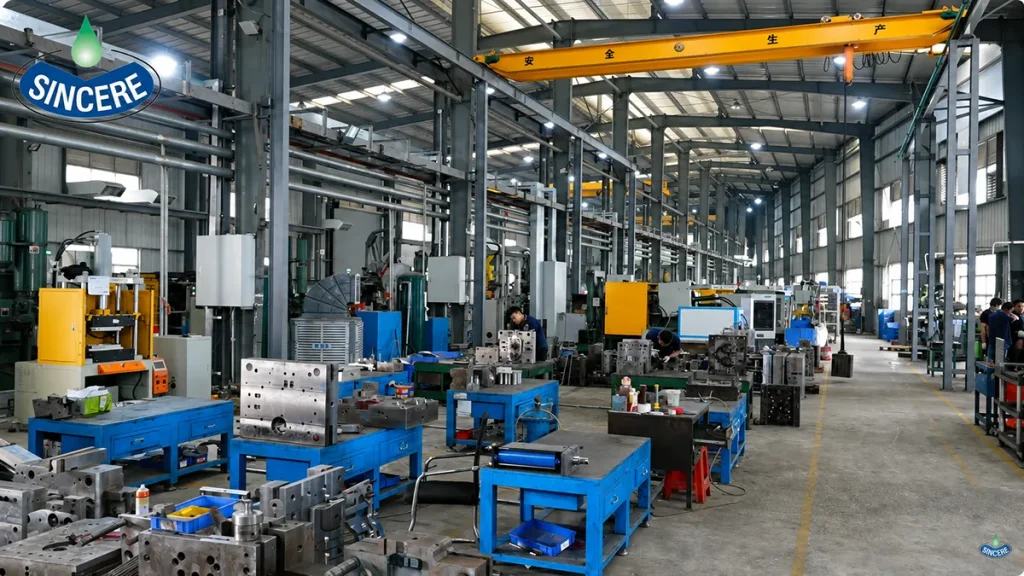
Choosing a reliable CNC machining supplier in China is not simply about finding the lowest quotation. For custom machined parts, your supplier can influence dimensional accuracy, surface quality, lead time, assembly performance, and consistency between production batches.
The right supplier should do more than operate CNC machines. It should understand engineering drawings, identify manufacturing risks, recommend practical solutions, control quality throughout production, and communicate clearly from RFQ to shipment.
This guide explains what overseas buyers should evaluate when selecting a China CNC machining manufacturer and what information to provide when requesting an accurate CNC machining quote.
What Makes a Reliable CNC Machining Supplier in China?
Start with a basic question: Can the supplier manufacture your actual part at the required tolerance, quality level, and volume?
Ask which machining processes are available, including CNC milling, CNC turning, 3-axis, 4-axis and 5-axis machining, drilling, tapping, boring, reaming, thread machining, secondary operations, surface finishing, and assembly.
For complex components, also confirm the machine work envelope, maximum turning diameter, spindle capacity, tooling options, fixture capability, and access to difficult features. Parts with multiple angled surfaces, deep features or complex geometries may benefit from 5-axis CNC machining to reduce setups and improve feature accessibility.
Do not evaluate capability from a machine list alone. Send the supplier your drawing and 3D model and ask its engineering team to review the part before confirming manufacturability.
At Sincere, our CNC machining services support milling, turning, drilling, tapping and other precision machining processes for prototypes and production parts. Our engineering team reviews the actual geometry, material, tolerances and production requirements before confirming the manufacturing approach.
You should also understand which operations are completed in-house. Heat treatment, anodizing, plating, grinding, and other specialized processes may be subcontracted. Outsourcing is not necessarily a problem, but the CNC supplier should clearly identify outsourced processes, define quality requirements, and maintain control over the finished component.
Material experience matters as well. Aluminum, stainless steel, tool steel, titanium, brass, copper, and engineering plastics require different machining approaches. For example, thin-wall components require careful workholding, while some stainless steels are susceptible to work hardening during machining. The supplier should therefore have practical experience with the exact material or material family specified for your project.
Before ordering, ask:
- What materials do you regularly machine?
- What part sizes can your equipment handle?
- Which processes are completed in-house?
- What tolerances can you realistically maintain on this specific part?
- Can you support prototypes as well as repeat production?
A reliable supplier should answer these questions based on your drawing rather than giving a generic tolerance claim.
Check Drawing Review, DFM Support and Quality Control
For precision CNC machining, the engineering drawing is a critical technical communication document.
Although a 3D model defines geometry, the controlled 2D drawing can communicate information such as dimensional tolerances, datums, threads, surface finish, heat treatment, coating requirements, and inspection notes.
If your drawings contain GD&T, confirm that both the engineering and inspection teams can interpret it correctly. The ASME Y14.5 Dimensioning and Tolerancing standard establishes symbols, rules, definitions and recommended practices for stating and interpreting GD&T requirements.
A strong CNC machining supplier should also provide DFM, or Design for Manufacturability, support.
Typical issues worth reviewing before production include unnecessarily tight tolerances, deep narrow pockets, small internal radii, thin walls, inaccessible threads, deep blind holes, difficult tool access, and features requiring multiple setups.
Useful DFM feedback should explain both the problem and the possible solution. For example, the supplier may recommend increasing an internal radius, changing hole depth, adjusting wall thickness, or relaxing a non-critical tolerance. During prototyping, resolving these issues before machining can prevent unnecessary manufacturing complexity later.
Sincere provides a DFM review before production when appropriate, helping customers identify machining risks, difficult features, unnecessary tolerances and potential cost-saving opportunities before the part reaches the machine.
Quality control should also be evaluated as a complete process rather than only a final inspection.
A practical CNC quality-control workflow may include incoming material checks, first-piece inspection, in-process measurement, final dimensional inspection, surface inspection, packaging checks, and shipment approval.
For precision parts, ask what equipment will be used to inspect your critical features. Depending on the component, this may involve micrometers, height gauges, thread gauges, pin gauges, optical measurement systems, surface roughness testers, or coordinate measuring machines.
For projects requiring high measurement confidence, also ask how inspection instruments are calibrated. ISO/IEC 17025 is the international standard covering the competence, impartiality, and consistent operation of testing and calibration laboratories. Accredited calibration services can therefore be relevant when measurement traceability is important.
If quality documentation is required, specify it before placing the order. Depending on your application, you may request dimensional inspection reports, CMM reports, material certificates, first-article inspection records, surface-treatment certificates, or batch records.
For production-lot inspection, buyers may also define an agreed sampling method. ISO 2859-1:2026 provides a current international framework for acceptance sampling by attributes.
ISO 9001 certification can be another useful supplier-screening factor because the standard addresses documented quality-management processes, operational control, performance evaluation, and continual improvement. However, certification should complement rather than replace part-specific supplier evaluation. ISO also makes clear that ISO itself does not certify organizations; certification is performed by external certification bodies.

Compare CNC Machining Quotes Beyond the Unit Price
When comparing CNC machining suppliers in China, treat each quotation as a complete manufacturing proposal, not just a unit price.
Check whether each quote uses the same:
| Item | What to Compare |
|---|---|
| Material | Exact grade and specification |
| Quantity | Prototype or production quantity |
| Machining | Included manufacturing processes |
| Tolerances | Drawing requirements and assumptions |
| Surface finish | Treatment and specification |
| Inspection | Standard or additional inspection |
| Tooling | Fixture or special-tool charges |
| Packaging | Standard or custom packaging |
| Lead time | Manufacturing and finishing schedule |
| Shipping | Included or excluded |
| Payment | Deposit and balance terms |
A cheaper quotation may not represent a lower total cost when inspection, surface finishing, fixtures, packaging, or other requirements are excluded.
When several suppliers quote substantially different prices, ask why. Differences often come from different assumptions about material, machining strategy, tolerances, inspection, surface treatment, tooling, or order quantity.
Lead time deserves the same attention. Do not ask only, “How many days?” Confirm what the quoted schedule includes: raw-material procurement, fixture preparation, first-piece approval, machining, outsourced finishing, final inspection, and packaging.
For projects expected to grow, evaluate prototype and production capability separately.
A supplier capable of manufacturing five prototypes is not automatically the best supplier for thousands of repeat components. Ask how it controls CNC programs, fixtures, tool offsets, inspection plans, and drawing revisions between production batches.
Good revision control is particularly important. Every order should clearly identify the approved drawing revision, CAD revision, purchase order, material specification, and other applicable documents.
Verify the Factory and Start With a Trial Order
Before committing to an important program, verify who will actually manufacture your components.
You may be working directly with a CNC factory, a trading company, or a sourcing intermediary. None of these business models is automatically unsuitable, but buyers should understand who controls machining, inspection, subcontractors, delivery, and corrective actions.
Check the supplier’s legal company name, registered information, factory address, production equipment, inspection area, and quality-control personnel.
China maintains the National Enterprise Credit Information Publicity System, which publicly discloses information on registered enterprises and can be useful when checking the identity of a potential supplier.
For higher-value projects, consider requesting a live video factory tour or an independent third-party audit. Rather than relying only on promotional photographs, ask to see the machines relevant to your parts, measuring equipment, inspection area, sample quality records, material storage, and actual production environment.
For a new CNC machining supplier in China, starting with a prototype or small production batch is usually a practical qualification strategy.
Use the trial order to evaluate:
- Dimensional accuracy and assembly fit
- Surface quality
- Inspection documentation
- Packaging
- Delivery performance
- Technical communication
- Response to design changes
Also observe how the supplier handles problems.
Manufacturing issues can occur even in capable factories. More important is whether the supplier communicates the problem, investigates the root cause, proposes corrective action, and changes the process to reduce recurrence.
Prepare a Complete CNC Machining RFQ
The accuracy of a CNC machining quote depends partly on the quality of the RFQ information you provide.
For most custom-machining projects, send both a 3D CAD model and a controlled 2D engineering drawing.
STEP/STP is commonly useful for neutral product-data exchange. The ISO 10303 family provides international standards for the computer-interpretable representation and exchange of product information.
A complete CNC machining RFQ should normally include:
3D CAD model: STEP, STP, IGES, X_T, SLDPRT, or another format agreed with the supplier.
Controlled 2D drawing: Include the correct drawing number and revision.
Material: Specify the exact material grade rather than only writing “aluminum” or “stainless steel.”
Quantity: Include prototype quantity, production quantity, and expected repeat demand where relevant.
Tolerances and GD&T: Clearly identify critical dimensions, datum structures, positional tolerances, flatness, runout, profile, and other functional requirements.
Surface requirements: Specify roughness, cosmetic requirements, anodizing, plating, passivation, polishing, painting, or other finishing.
Special processes: Include heat treatment, hardness, welding, grinding, or other secondary requirements where applicable.
Inspection requirements: State whether dimensional reports, CMM reports, material certificates, first-article records, or other documents are required.
Packaging: Identify any special protection needed for cosmetic surfaces, precision threads, sharp edges, or sensitive features.
Delivery and shipping: Provide your required delivery date and agreed shipping terms.
Most importantly, make sure the 2D drawing, 3D CAD model, purchase order, and revision level do not conflict.
A complete RFQ makes it easier to compare several China CNC machining suppliers on the same technical basis instead of comparing quotations built on different assumptions.
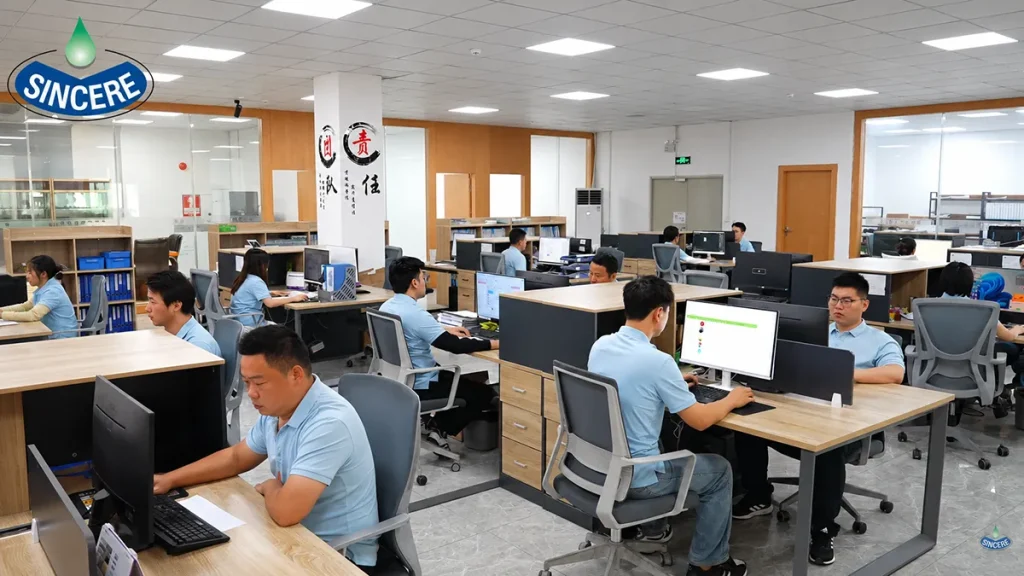
Why Work With Sincere for Custom CNC Parts?
Choosing a CNC machining supplier should be based on manufacturing fit, engineering support, quality control, and communication—not price alone.
At Sincere, the goal is to help customers move from engineering drawings to finished custom parts through a clear and practical manufacturing process.
Before quotation, our team can review key project requirements, including:
part geometry, material requirements, machining feasibility, critical tolerances, tool accessibility, surface-finishing requirements, inspection needs, and production quantity.
Where appropriate, we can also provide DFM suggestions intended to reduce unnecessary machining complexity, identify manufacturing risks, and improve cost efficiency while maintaining the functional requirements of the design.
Whether you need a prototype, a low-volume production batch, or repeat CNC machined parts, the best starting point is a complete technical package.
Ready to Request a CNC Machining Quote?
Send Sincere your 2D drawing, 3D CAD model, material, quantity, tolerances, surface finish and inspection requirements. Our engineering team can review your project before quotation.
Already Have a Drawing? Let Sincere Review Your CNC Project.
Send us your 2D drawing or 3D CAD model. Our engineering team can review manufacturability, material, tolerances, machining risks, surface finishing and inspection requirements before quotation.
FAQs About Choosing a CNC Machining Supplier in China
How do I find a reliable CNC machining supplier in China?
Evaluate the supplier’s actual machining capability, experience with your materials, drawing and GD&T knowledge, DFM support, inspection process, revision control, production capacity, and communication. Verify the business and consider beginning with a prototype or small production run before scaling.
Is CNC machining cheaper in China?
China can be cost-competitive for many custom-machining projects, but unit price should not be evaluated separately from material, tolerances, finishing, inspection, packaging, freight, duties, lead time, and potential quality costs. Compare the total manufacturing proposal.
What files should I send for a CNC machining quote?
Ideally, send a 3D CAD model and revision-controlled 2D engineering drawing together with the material grade, quantity, tolerances, GD&T, surface finish, special-process requirements, inspection requirements, and delivery target.
How can I check CNC part quality before shipment?
Define your acceptance criteria before production. Depending on the project, request first-piece inspection, dimensional reports, CMM measurement data, material certificates, surface-treatment certificates, or agreed batch-inspection records.
Should I choose the cheapest CNC machining supplier?
Not automatically. A very low quotation may be based on different assumptions about material, tolerance, inspection, finishing, tooling, or packaging. The stronger choice is the supplier that demonstrates a controlled and repeatable method for meeting your drawing requirements.
Can a Chinese CNC manufacturer produce both prototypes and production parts?
Many suppliers can support both, but their production controls should be evaluated separately from prototype capability. For repeat manufacturing, confirm how the supplier manages fixtures, CNC programs, inspection plans, process records, and engineering revisions.