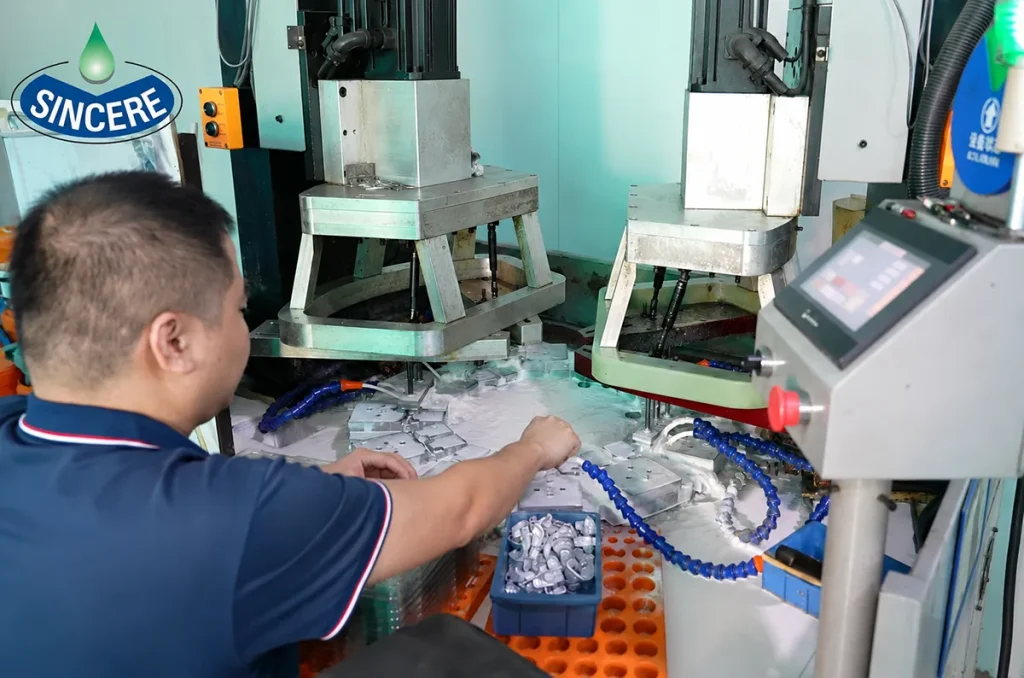
Many manufacturing projects fall into an awkward middle ground: the design has moved beyond the prototype stage, but demand is not high or predictable enough to justify full-scale production.
You may need 50 parts for engineering validation, 300 units for a pilot launch, 1,000 components while production tooling is being built, or a few hundred replacement parts for legacy equipment. In these situations, producing one prototype at a time can be expensive, while investing in molds, dies, or dedicated high-volume tooling may create unnecessary financial risk.
This is where low-volume CNC machining becomes valuable. CNC machining is widely used for low-volume production because it can manufacture functional metal and plastic parts directly from digital designs without the preparatory tooling required by many casting and molding processes. Industry guidance commonly places suitable CNC quantities anywhere from dozens to several thousand parts, although the economical range depends heavily on the individual component.
So, when does low-volume CNC machining make more sense than prototyping or mass production?
What Is Low-Volume CNC Machining?
Low-volume CNC machining is the production of a limited quantity of custom parts using processes such as CNC milling and CNC turning. CAD geometry is converted through CAM into toolpaths and machine instructions, allowing CNC equipment to manufacture parts directly from metal or engineering-plastic stock.
Unlike injection molding or die casting, CNC machining generally does not require a dedicated mold for every part design. This reduces upfront tooling commitment and makes design revisions considerably easier before large-scale production begins.
There is no universal quantity that defines “low volume.” Dozens to several thousand parts is a useful general range for many CNC projects, but it should not be treated as a fixed rule. A supplier optimized for production machining may find hundreds or thousands of pieces economical, while a highly complex component may already represent a significant production run at 100 pieces.
In other words, low volume is a manufacturing strategy, not simply a quantity.
When Does Low-Volume CNC Machining Make Sense?
When you need more parts than prototyping. Once a prototype has passed initial form, fit, and functional testing, companies often need additional parts for engineering validation, field testing, customer trials, assembly testing, or pilot production. Low-volume manufacturing provides this intermediate step without immediately committing to full-scale production.
When demand is uncertain. A new product may have promising forecasts without proven market demand. Producing smaller batches lets buyers replenish according to actual requirements rather than committing immediately to a large inventory. On-demand manufacturing is specifically used to match changing demand, test market acceptance, and reduce the risk associated with high-volume investment.
When tooling costs are difficult to justify. Injection molding and die casting can deliver excellent economics at sufficient scale, but tooling adds upfront cost. Hard production tooling also takes longer to create and becomes more economical as production volume increases. CNC machining avoids much of this dedicated mold investment, making it attractive before the tooling cost can be spread over enough parts.
When the design may still change. With CNC manufacturing, design updates can often be implemented by revising the CAD/CAM data and machining strategy rather than rebuilding a production mold. Integrated CAD/CAM workflows connect digital design data with manufacturing toolpaths, making design iterations easier to manage before the product reaches stable production.
When you need bridge production. A common product-development path is:
Prototype → Low-Volume CNC → Mass Production
Low-volume CNC parts can keep a launch moving while production tooling, suppliers, or high-volume lines are being prepared. CNC machining is also used to make parts temporarily while tooling for casting or other high-volume processes is under development.
When you need replacement or legacy parts. Obsolete machinery, discontinued components, maintenance equipment, and MRO applications may require only 10, 50, 100, or several hundred replacement pieces. Low-volume digital manufacturing is particularly useful where conventional suppliers no longer stock the component or holding years of replacement inventory would be inefficient.
Low-Volume CNC Machining vs. Prototyping vs. Mass Production
The cheapest unit price does not necessarily produce the lowest overall project cost. Buyers should consider tooling investment, design risk, inventory exposure, lead time, inspection requirements, and the likelihood of future revisions alongside price per part. Low-volume production is often used specifically to postpone major tooling investment until the product and demand are better understood.
| Factor | Prototype | Low-Volume CNC | Mass Production |
|---|---|---|---|
| Typical purpose | Design validation | Pilot, bridge or market production | Large-scale production |
| Quantity | Very low | Low to medium | High |
| Tooling investment | Low | Usually low | May be high |
| Design flexibility | Very high | High | Lower after tooling |
| Unit cost | Usually higher | Moderate | Often lowest at scale |
| Setup | Minimal | Moderate | Higher initial preparation |
| Inventory risk | Very low | Relatively low | Can be higher |
| Best fit | Testing concepts | Flexible production | Stable, sustained demand |
Production-oriented CNC can also achieve lower piece prices as order quantities rise because programming, setup, inspection planning, and other fixed costs are distributed across more parts.
What Quantity and Cost Are Best for Low-Volume CNC Machining?
There is no reliable answer such as “500 pieces is always the ideal CNC quantity.”
Consider two components. A complex titanium aerospace-style component requiring long machining cycles, multiple tools, demanding tolerances, and extensive inspection may represent a substantial production order at only 100 pieces. A simple aluminum spacer or turned bushing, by contrast, may remain economical at several thousand units.
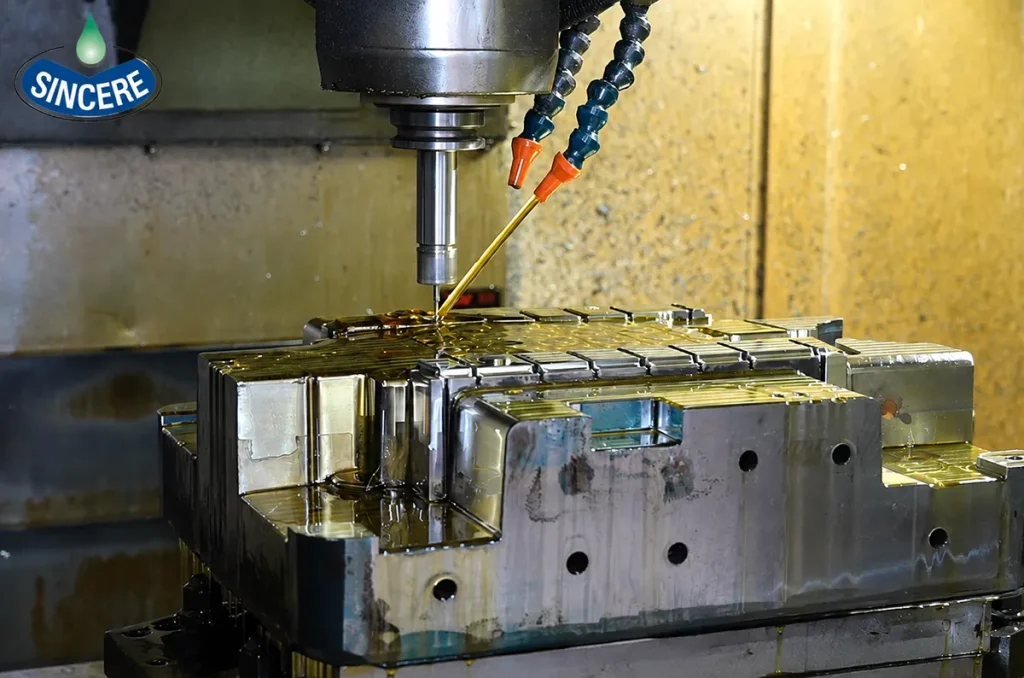
The break-even point depends on part geometry, material, tolerances, machining time, setup count, fixturing, surface finishing, inspection requirements, and repeat demand. Machining time is particularly important because longer cutting cycles consume additional machine capacity, while difficult-to-machine materials can require slower parameters and greater tooling consumption.
Material selection also matters. Common CNC materials include aluminum, stainless steel, titanium, brass, copper, and engineering plastics, but each has different raw-material prices and machining behavior.
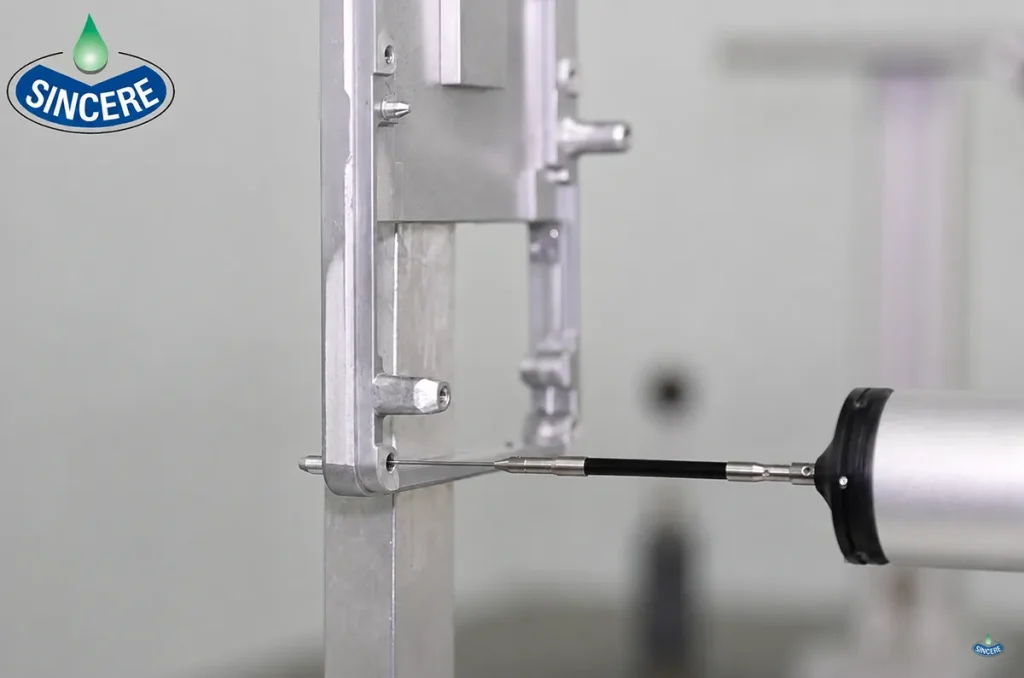
Secondary operations can further affect the quotation. Anodizing, plating, passivation, polishing, powder coating, and other finishes add processing steps, while dimensional reports, CMM inspection, first-article requirements, and certification documentation can increase inspection effort.
For a more detailed pricing breakdown, see our CNC Machining Cost guide.
The key principle is simple:
The economic production quantity depends more on manufacturing economics than on a fixed number of parts.
How Can You Reduce Low-Volume CNC Machining Costs?
Cost reduction should begin with DFM—Design for Manufacturability—before production starts. A good DFM review identifies features that create unnecessary machine time, difficult setups, special tooling, inspection challenges, or manufacturing risk.
Start by avoiding unnecessarily tight tolerances. Tighter tolerances can require additional process control and inspection, so they should generally be reserved for dimensions that affect fit, function, sealing, alignment, or performance. Where geometric tolerances are required, drawings should clearly communicate design intent using an appropriate standard such as ASME Y14.5.
Also consider larger internal corner radii, shallower pockets, standard hole and thread sizes, thicker walls where possible, and geometries that can be reached without excessive repositioning. Deep pockets and thin walls can increase machining difficulty and time.
Standardizing materials and finishes can simplify sourcing, while reducing the number of machining setups can shorten both handling and machine time. Where repeat demand is expected, ask the supplier to quote several batch quantities—for example, 50, 100, 250, and 500 pieces—to identify where setup-cost amortization produces meaningful savings.
At Sincere, our DFM review can be used before quotation to evaluate manufacturability, tolerances, material choice, finishing requirements, machining risks, and potential cost-reduction opportunities. Our engineering team can identify features that may increase setup time, require special tooling, or create unnecessary manufacturing complexity before production begins.
Suitable Parts, Industries, and CNC Suppliers
Low-volume CNC machining is especially attractive for custom, high-value, complex, or precision components rather than inexpensive standardized commodity hardware.
Typical applications include housings, brackets, shafts, bushings, manifolds, mounting plates, fixtures, enclosures, heat sinks, precision pins, motor components, and robotic components. CNC milling handles features such as pockets, contours, holes, and complex surfaces, while turning is well suited to rotational components such as shafts, pins, and bushings.
Low-volume manufacturing is used across aerospace, automotive, medical devices, robotics and automation, electronics, and industrial equipment, including development components, test parts, fixtures, enclosures, service parts, and bridge-production requirements.
Choosing the right supplier is therefore about more than whether a machine shop can make the part. Buyers should evaluate prototype-to-production capability, milling and turning resources, multi-axis machining, material experience, DFM support, quality control, inspection equipment, finishing options, revision control, lead time, and—critically—repeat-order consistency.
Before placing an order, ask: What batch quantity is most economical? Can the supplier handle both prototypes and repeat production? Which tolerances are practical? What materials are routinely machined? Is DFM feedback available? Which inspection reports can be supplied? What finishes are available? How are engineering revisions controlled? Can the same process be reproduced for future batches? And can capacity increase if demand grows?
Why Sincere? Sincere supports custom projects from prototyping through low-volume production and lists CNC milling, turning, multi-axis machining, DFM support, engineering materials, surface-finishing services, and inspection capabilities among its manufacturing resources.
Conclusion: When Does Low-Volume CNC Machining Make Sense?
Low-volume CNC machining makes the most sense when you need production-quality custom parts without committing prematurely to high-volume tooling or inventory.
Need Low-Volume Custom CNC Parts?
Send Sincere your 2D drawings or 3D CAD files together with your material, quantity, tolerances, surface finish and inspection requirements. Our engineering team can review your project, provide DFM feedback and recommend a practical manufacturing approach before quotation.
Provide your CAD files and production requirements for a more accurate project review and quotation.
It is particularly useful when demand is uncertain, designs may still change, production tooling is not ready, replacement parts are required, or the project needs dozens to several thousand precision components. It provides a practical bridge between prototype validation and stable production while preserving flexibility in quantity, design, material, and scheduling.
Low-Volume CNC Machining FAQ
What is considered low-volume CNC machining?
There is no universal definition. For many machining projects, dozens to a few thousand parts is a practical reference range, but geometry, material, cycle time, and supplier capacity determine the real economic range.
How many parts are suitable for low-volume CNC production?
Potentially anything from a few dozen to several thousand. Compare quotations at multiple quantities rather than choosing a volume based on an arbitrary industry threshold.
Is low-volume CNC machining cheaper than injection molding?
It can be at lower quantities because CNC avoids dedicated mold investment. At sufficiently high and stable volumes, injection molding can achieve much lower part costs, so the correct choice depends on the tooling cost, quantity, design, material, and expected lifetime demand.
How can I reduce the cost of low-volume CNC parts?
Use realistic tolerances, simplify difficult geometry, reduce setups, standardize materials and features, avoid unnecessary deep pockets, simplify finishing, and request a DFM review before production.
Can low-volume CNC production scale to mass production?
Yes, CNC production can scale considerably when the geometry is suitable and the supplier has sufficient capacity. For very high volumes, however, a different process such as molding, casting, forging, or another automated manufacturing method may eventually provide better economics.