If you have ever sourced custom parts, you probably noticed something interesting: CNC machining cost can vary a lot. Two parts that look quite similar may end up with very different quotes. Sometimes the price difference is small. Other times it can be surprisingly large.
So what exactly drives the price of CNC machining?
In simple terms, CNC machining cost is influenced by several key factors—material selection, machining time, part complexity, tolerance requirements, and production quantity. Even small design details can affect how long a machine needs to run, which tools are required, and how many setup steps are involved.
That’s why understanding how CNC pricing works can be extremely helpful, especially for engineers, product designers, and procurement teams who need to control manufacturing budgets.
In this guide, we’ll walk through the main factors that influence CNC machining pricing, explain typical hourly machine rates, and share practical tips that can help reduce production costs without sacrificing part quality.
If you’re new to CNC manufacturing, you may also want to start with a basic overview of CNC machining services to better understand how the process works before diving into cost details.
What Is CNC Machining Cost?
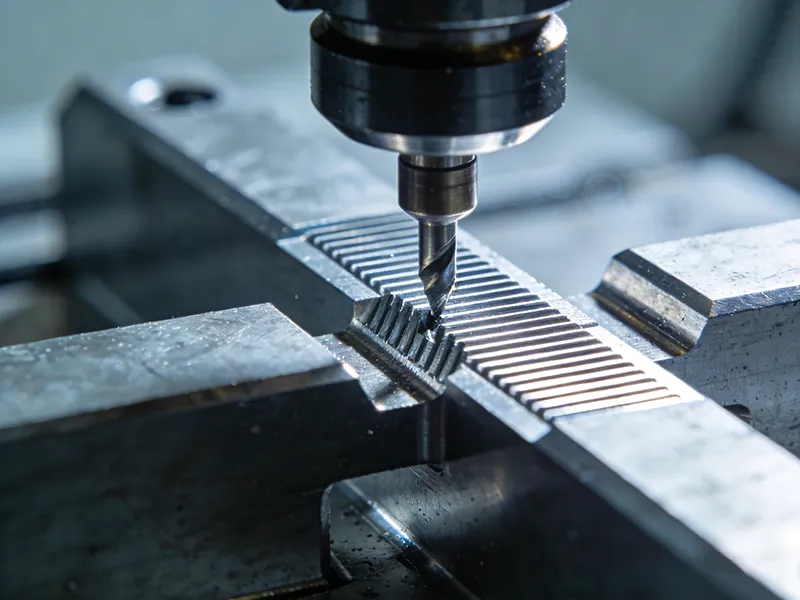
Simply put, CNC machining cost refers to the total expense required to manufacture a part using computer-controlled machining equipment.
A typical CNC quote usually includes several components:
Material cost
Machine setup cost
Machining time
Labor cost
Tool wear and tooling cost
Surface finishing or post-processing
Among these, machining time and material cost usually account for the largest portion of the total price.
Most CNC manufacturers estimate pricing based on an hourly machine rate. The longer a machine runs to produce your part, the higher the cost will be. This is why part design and manufacturing efficiency play such an important role in final pricing.
For readers unfamiliar with the machining process itself, our article on how CNC milling works explains the fundamentals of one of the most common CNC manufacturing methods.
Key Factors That Affect CNC Machining Cost
Material Selection
Material choice is often the first factor affecting CNC machining cost.
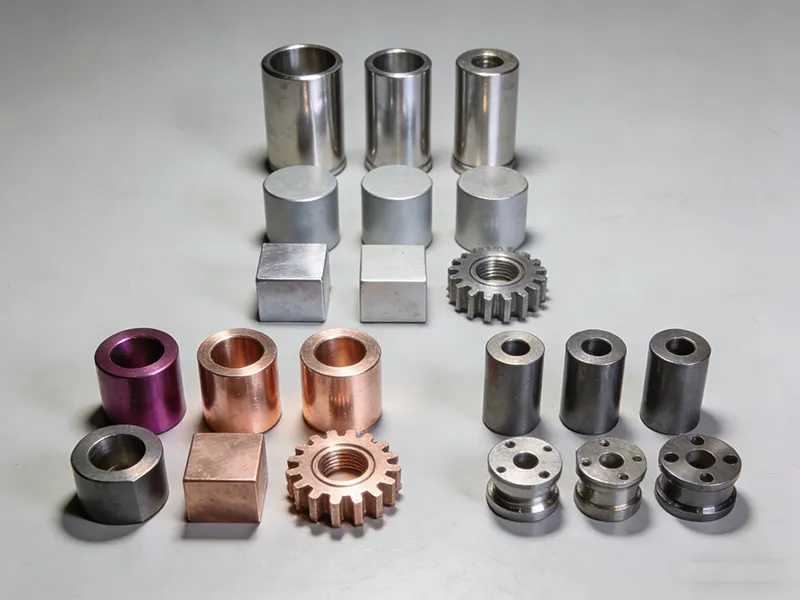
Different materials vary widely in both raw price and machinability. Some metals cut easily and allow faster machining speeds, while others are harder and require more time and specialized tooling.
Common CNC materials include:
Aluminum
Stainless steel
Titanium
Brass
Engineering plastics
Among these, aluminum is usually the most cost-efficient option for many projects because it machines quickly and causes less tool wear. According to data from The Aluminum Association, aluminum alloys are widely used in precision manufacturing due to their excellent machinability and strength-to-weight ratio.
On the other hand, materials like titanium are significantly more difficult to machine. They generate more heat, require slower cutting speeds, and often increase tool wear. As a result, the machining cost can rise considerably.
Machine Time
Machine time is one of the most important factors in CNC pricing.
Most machine shops calculate cost using an hourly machine rate. The longer it takes to manufacture a part, the higher the cost becomes.
Machine time usually includes:
Setup time
Programming time
Actual cutting time
Tool changes
For example, a simple bracket with basic holes might only take a few minutes to machine. A complex aerospace component, however, could require several hours of machining.
Reducing unnecessary features and simplifying geometry can significantly lower machining time. This is why design for manufacturability is such an important concept in modern engineering.
Part Complexity
Part complexity has a direct impact on CNC machining cost.
Simple parts with basic geometries are usually fast and inexpensive to machine. But as the design becomes more complex, manufacturing becomes more time-consuming.
Features that typically increase cost include:
Deep cavities
Thin walls
Tight internal corners
Complex curved surfaces
Multi-axis machining requirements
In some cases, producing a complex part may require 5-axis CNC machines, which are significantly more expensive to operate than standard 3-axis machines.
Engineering references such as Society of Manufacturing Engineers often emphasize that part geometry plays a major role in manufacturing efficiency and production cost.
Tolerance Requirements
Tolerance refers to the allowable variation in a part’s dimensions.
Standard CNC machining tolerances are usually around ±0.005 inches (±0.127 mm). Achieving tighter tolerances requires more precise machining processes, slower cutting speeds, and additional quality inspections.
For example:
Standard tolerance
→ faster machining
→ lower cost
Ultra-precision tolerance
→ slower machining
→ higher cost
In many designs, extremely tight tolerances are only necessary for certain critical features. Keeping non-critical dimensions within standard tolerances can help reduce overall machining cost.
Production Volume
Production quantity also plays an important role in determining CNC machining cost.
When producing only one or two prototype parts, the setup cost must be distributed across a very small number of units. This often results in a relatively high price per part.
However, when manufacturing larger quantities, the setup cost is spread over more pieces, significantly reducing the unit cost.
Typical scenarios include:
Prototype production
→ higher unit price
Low-volume production
→ moderate cost
Mass production
→ lower cost per part
Many manufacturers provide both CNC prototype machining and batch production services to accommodate different project needs.
CNC Machining Cost Factors Overview
| Cost Factor | How It Affects Cost | Example Impact |
|---|---|---|
| Material Selection | Different materials vary in price and machinability | Titanium is harder to machine than aluminum, increasing machining time |
| Machine Time | Longer machining time increases total cost | Complex parts require longer cutting time |
| Part Complexity | Complex geometry requires advanced machining processes | Deep cavities or curved surfaces may require 5-axis machining |
| Tolerance Requirements | Tighter tolerances require slower machining and more inspections | Precision aerospace parts require tighter tolerances |
| Production Volume | Larger quantities reduce cost per part | Setup cost is distributed across more units |
Average CNC Machining Cost Per Hour
CNC machining rates vary depending on machine type, location, and technical capability.
Below is a general estimate of typical CNC machining hourly rates.
3-Axis CNC machine
$40 – $100 per hour
4-Axis CNC machine
$60 – $120 per hour
5-Axis CNC machine
$100 – $200 per hour
These numbers can vary depending on the country and the level of automation in a facility. Shops with advanced equipment and highly skilled operators often charge higher rates but can also produce parts more efficiently.
For a broader overview of machining technologies and processes, the manufacturing resources published by MIT provide useful background information about modern machining methods.
CNC Machining Cost Example
To better understand how CNC machining pricing works, let’s look at a simplified example.
Part specification:
Material: Aluminum 6061
Part size: 100 mm × 50 mm × 20 mm
Quantity: 100 pieces
Estimated cost breakdown:
Material cost: $150
Setup cost: $120
Machining time: $350
Surface finishing: $80
Total manufacturing cost: $700
This means the average cost per part would be approximately $7 per unit.
Of course, real-world projects may involve additional factors such as quality inspection, packaging, and logistics.
How to Reduce CNC Machining Cost
Reducing CNC machining cost does not necessarily mean sacrificing quality. In many cases, smart design decisions can significantly improve manufacturing efficiency.
Here are several practical strategies.
Optimize part design
Reducing unnecessary features can shorten machining time and lower costs.
Use standard tools and hole sizes
Custom tooling often increases production expenses.
Choose machinable materials
Materials like aluminum and brass generally machine faster than harder alloys.
Avoid excessive tolerances
Apply tight tolerances only where they are truly required.
Increase production quantity
Batch manufacturing often lowers the cost per unit.
Even small design adjustments can make a noticeable difference in production efficiency.
CNC Machining vs Other Manufacturing Methods
CNC machining is widely used because it offers an excellent balance between precision, flexibility, and cost.
However, other manufacturing methods may be more suitable for certain applications.
For example:
3D printing
Ideal for rapid prototyping and complex shapes.
Injection molding
Best suited for very large production volumes.
CNC machining
Ideal for high-precision metal components and low-to-medium production runs.
Understanding the strengths of each process helps engineers choose the most cost-effective manufacturing method for their projects.
Conclusion
CNC machining cost is influenced by many factors, including material selection, machining time, part complexity, tolerance requirements, and production volume.
While it may seem difficult to estimate manufacturing expenses at first, understanding these key factors can make the process much more predictable.
With thoughtful design decisions and efficient manufacturing strategies, it’s often possible to significantly reduce CNC machining cost while maintaining high product quality.
If you are planning a new project and need expert support, working with an experienced machining supplier can help you obtain accurate quotes and optimize your part design for efficient production.