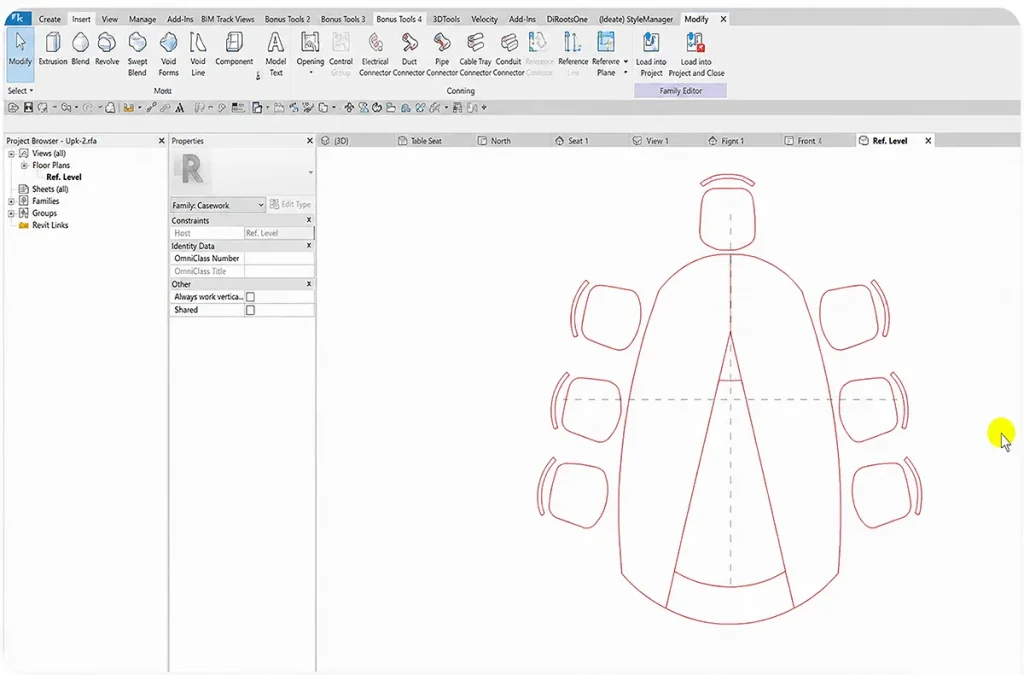
Many buyers assume that sending a STEP file to a CNC machine shop should be enough to receive an accurate CNC machining quote.
In reality, a 3D CAD model mainly communicates part geometry. It may show the overall shape, holes, pockets, bosses, curved surfaces, and other machinable features, but it does not necessarily communicate every requirement that determines how the part must be manufactured, inspected, finished, and delivered. STEP can also carry Product and Manufacturing Information in some workflows, but suppliers still need to know which requirements are authoritative for the RFQ.
If material grade, quantity, tolerances, threads, surface finish, heat treatment, inspection, or delivery requirements are missing, the supplier has to make assumptions. Different assumptions can produce very different quotations.
A CAD model defines geometry. A complete CNC machining RFQ defines how the part must actually be manufactured and accepted.
So, what should you send with your CAD files to get an accurate CNC machining quote?
Already have your CAD files? Send Sincere your drawing, material, quantity and tolerance requirements for an engineering review before quotation.
Why CAD Files Alone Are Not Enough
A 3D model is extremely useful for estimating machining complexity. Engineers can analyze features such as pockets, holes, wall thicknesses, internal radii, tool accessibility, and the number of machining orientations required.
However, nominal geometry is only part of manufacturing intent. Standards such as ASME Y14.5 exist specifically to communicate dimensioning, tolerancing, datums, and GD&T requirements consistently throughout manufacturing and inspection.
A complete RFQ should therefore establish requirements that may not be obvious from the geometry alone, including:
material, quantity, tolerances, GD&T, threads, surface roughness, coating or heat treatment, inspection documentation, and delivery requirements.
This is why two suppliers can receive the same CAD model and return different prices: they may not be quoting the same manufacturing assumptions.
The Best CAD Files and Why You Should Add a Drawing
For CNC quotation, STEP/STP is generally one of the safest neutral exchange formats. The ISO 10303 STEP standard defines mechanisms for representing and exchanging product information between computer systems throughout the product lifecycle.
Parasolid X_T is another strong option. Siemens describes Parasolid XT as a widely used format for representing, sharing and storing precise 3D digital product geometry.
IGES remains supported, but it is an older exchange approach focused primarily on geometric data. Autodesk notes that STEP generally provides richer product-data exchange capabilities, while IGES historically did not support solid modeling in the same way.
Native SolidWorks, Inventor, Creo, NX, or CATIA files can also be useful when the supplier has compatible software.
STL should normally not be your first choice for precision CNC quotation. STL describes a surface using a triangular mesh and became widely associated with rapid prototyping and 3D printing rather than precise B-rep solid-model exchange.
For precision parts, send a revision-controlled 2D PDF drawing together with the 3D model whenever possible. Technical drawings are especially important for identifying which features require tighter-than-standard tolerances. If you need help preparing or interpreting manufacturing drawings, see our Engineering Drawing Overview.
| Information | 3D CAD | 2D Drawing |
|---|---|---|
| Geometry | ✓ | ✓ |
| Nominal dimensions | ✓ | ✓ |
| Critical tolerances | Limited | ✓ |
| GD&T and datums | Limited/PMI-dependent | ✓ |
| Thread details | May be unclear | ✓ |
| Surface requirements | May be incomplete | ✓ |
| Inspection notes | May be incomplete | ✓ |
See also: Engineering Drawing Overview.
The Information Your CNC RFQ Should Include
Material and exact grade. Do not specify only “aluminum” or “stainless steel.” Write something such as Aluminum 6061-T6, Stainless Steel 304, or another exact specification. Material selection affects raw-material cost, cutting conditions, machinability, and the manufacturing process. CNC suppliers commonly support multiple alloys and grades for precisely this reason. See CNC Machining Materials.
Quantity. State prototype quantity, initial production quantity, and expected future volume when known—for example, 5 prototypes, 100 initial parts, and 2,000 pieces annual demand. Quantity influences setup allocation, programming, tooling, and piece price; machining services commonly offer lower piece-part pricing at higher quantities. For uncertain demand, request quantity breaks such as 10 / 50 / 100 / 500 pieces.
Dimensional tolerances. Specify general tolerances plus tighter tolerances only on functionally important features—for example, ±0.05 mm, ±0.01 mm, or Ø10 H7 where appropriate. Tighter tolerances typically require additional process control and can increase manufacturing cost. See CNC Machining Tolerances.
GD&T requirements. Clearly identify controls such as position, flatness, perpendicularity, parallelism, runout, or profile together with the correct datum references. GD&T communicates design intent and directly affects manufacturing and verification planning. Our GD&T Symbols guide explains the most common controls used on CNC machining drawings.
Threads and holes. Define thread system, size, pitch, depth, and whether a hole is through or blind. Call out tapped, reamed, counterbored, and countersunk holes rather than expecting the supplier to infer them from geometry.
Surface finish and treatment. Separate machined roughness requirements such as Ra 3.2 μm from secondary processes such as anodizing, hard anodizing, passivation, plating, powder coating, or polishing. Finishing choices are separate manufacturing operations and may change price and lead time. See Surface Finishing.
Inspection and documentation. State requirements such as dimensional reports, CMM inspection, material certificates, First Article Inspection, coating certificates, or PPAP where applicable. GD&T and dimensional requirements ultimately affect verification activities, so documentation expectations should be known before pricing. See CNC Quality Control Services.
Lead time and delivery. Provide the required delivery date, destination, prototype deadline, production schedule, and whether expedited manufacturing is required.
How Geometry, Tolerances, and Finishing Change the Quote
Two parts with similar overall dimensions can have very different CNC machining cost estimates.
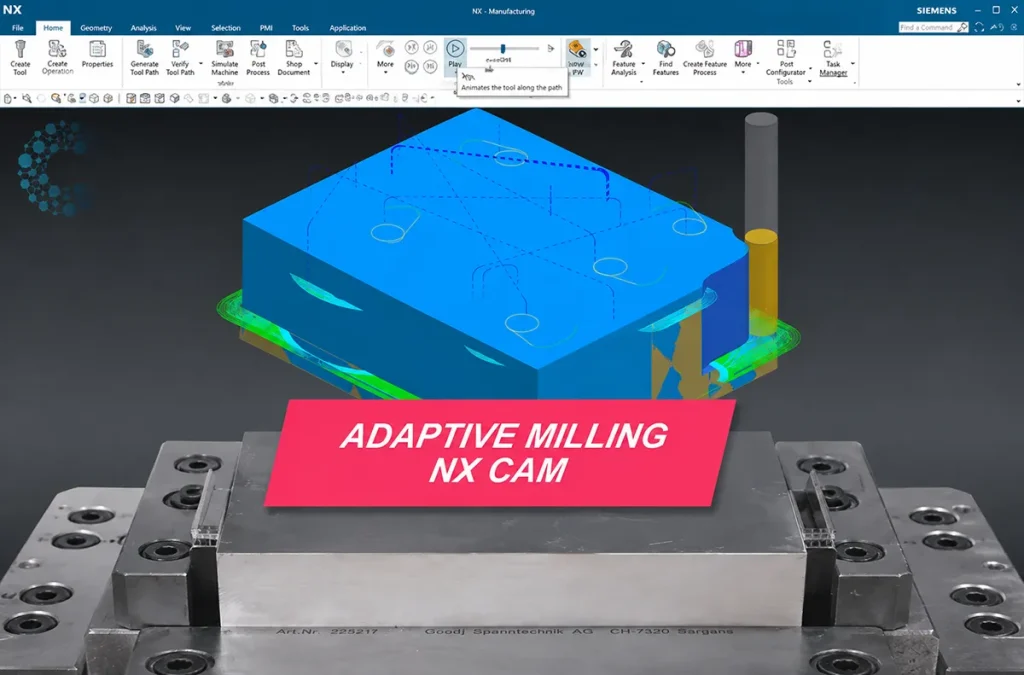
Deep pockets and deep holes require more material removal and can increase machining time. Thin walls can flex, vibrate, warp, or become difficult to hold within tolerance. Small internal radii require smaller cutting tools, while complex features may require additional setups or multi-axis machining. Protolabs’ CNC design guidance specifically identifies thin walls, deep pockets, holes, and complex geometries as features that can affect machinability and cost.
Over-tolerancing has a similar effect. If most dimensions function correctly at ±0.1 mm, specifying ±0.01 mm everywhere can add unnecessary machining and inspection effort. Apply tight tolerances only where function requires them.
Finishing can also transform a simple RFQ. “As machined aluminum” is not equivalent to “black anodized aluminum with masked holes, controlled coating dimensions, and cosmetic requirements.” Provide finish type, color, cosmetic expectations, masking, coating thickness when critical, and dimensions that must be controlled after finishing.
A DFM Review can identify these cost drivers before production. At Sincere, our engineering team can review tool access, tolerances, material selection, difficult geometry and other manufacturability issues before quotation, helping identify opportunities to simplify production without changing the intended function of the part.
Already Have Your CAD Files?
Send Sincere your 2D drawing and 3D CAD model together with your material, quantity, tolerances and finishing requirements. Our engineering team can review manufacturability and potential DFM issues before quotation.
Upload CAD Files & Get a QuoteCommon Mistakes That Lead to Inaccurate Quotes
The most common RFQ problems are surprisingly simple: sending only an STL mesh, specifying only “aluminum,” omitting quantity, leaving critical tolerances undefined, forgetting finishing requirements, or requesting inspection documentation only after the order has been placed.
Another major risk is revision mismatch. If the supplier receives Drawing Revision A but CAD Revision B, the quotation may be based on conflicting geometry and specifications. Use consistent filenames, part numbers, and revision levels.
Avoid asking a supplier to make everything “as tight as possible.” Precision should be driven by function, because unnecessarily restrictive tolerances can increase manufacturing complexity and cost.
A good DFM review goes beyond asking, “Can this part be machined?” It should also ask:
Can the part be machined more efficiently without changing its function?
What Happens After You Upload Your CAD Files
A professional CNC quotation typically begins with the supplier reviewing your CAD model, drawing, material, quantity, tolerances, finish, and inspection requirements. The engineering team then evaluates manufacturability, tool accessibility, setups, machining strategy, and potential DFM issues before estimating material, machining, setup, tooling, finishing, and inspection costs. Automated and engineer-assisted CNC quoting systems commonly analyze manufacturability and show the cost impact of materials, quantities, and production options.
When comparing suppliers, make sure every supplier receives the same RFQ package.
A useful CNC machining RFQ checklist is:
| Requirement | Information to Provide |
|---|---|
| 3D CAD | STEP / STP / X_T |
| 2D drawing | Revision-controlled PDF |
| Material | Exact alloy and grade |
| Quantity | Prototype + production |
| Tolerances | General + critical |
| GD&T | Controls + datums |
| Threads | Type, size, pitch, depth |
| Finish | Roughness + treatment |
| Inspection | Reports / certificates |
| Delivery | Date + destination |
Do not compare unit price alone. Compare the same material, revision, tolerances, finishing, inspection scope, quantity, and delivery terms.
Get an Accurate CNC Machining Quote From Sincere
At Sincere, we manufacture custom CNC parts using CNC milling, turning and multi-axis machining for prototype and production requirements. Our engineering team can review your CAD model and drawing before quotation to evaluate manufacturability, material, tolerances, machining strategy, finishing and inspection requirements.
For the most accurate custom CNC machining quote, send us your:
- 2D engineering drawing
- 3D CAD model
- Exact material grade
- Required quantity
- Tolerances and GD&T
- Surface-finishing requirements
- Inspection requirements
- Required delivery date
The more complete your RFQ package is, the fewer assumptions our engineering team needs to make before pricing.
CNC Machining Quote FAQ
What CAD file format is best for CNC machining quotes?
STEP/STP is an excellent default because it is an established product-data exchange format supported across CAD/CAM workflows. Parasolid X_T is also suitable for precise solid geometry exchange.
Is a STEP file enough for a CNC machining quote?
It may be enough for a preliminary estimate, but an accurate production quote also requires manufacturing requirements such as material, quantity, tolerances, finish, inspection, and delivery.
Do I need a 2D drawing if I already have a 3D CAD model?
For precision CNC parts, usually yes. The drawing provides an unambiguous place to communicate critical tolerances, GD&T, threads, finishes, and inspection notes.
What information should I send for a CNC machining quote?
Send the CAD model, drawing, exact material grade, quantity, tolerances, GD&T, thread specifications, surface requirements, inspection requirements, and required delivery date.
Why do CNC machining quotes from different suppliers vary so much?
Differences can come from manufacturing assumptions, material selection, quantity, tolerances, part geometry, required setups, finishing, inspection scope, and lead-time requirements. Using the same complete RFQ package makes supplier quotations much more comparable.