Copper is usually described as a non-magnetic metal, and for most practical purposes that answer is correct. In precise materials-science terms, pure copper is diamagnetic: it does respond to an applied magnetic field, but only very weakly and in the opposite direction of the applied field. That response is so small that a normal hand magnet will not stick to copper wire, copper pipe, or copper sheet, which is why copper is routinely treated as a “non-magnetic” and non-ferrous metal in workshops, factories, and scrap yards.
This guide draws on technical and educational material from the Copper Development Association, the National High Magnetic Field Laboratory, the U.S. Geological Survey, the British Stainless Steel Association, and the Nickel Institute to explain why people often misunderstand copper’s magnetic behavior, how copper really interacts with magnetic fields, how it compares with steel, stainless steel, and aluminum, and why its effectively non-magnetic behavior matters in engineering, manufacturing, electronics, and recycling.
Is Copper a Magnetic Material
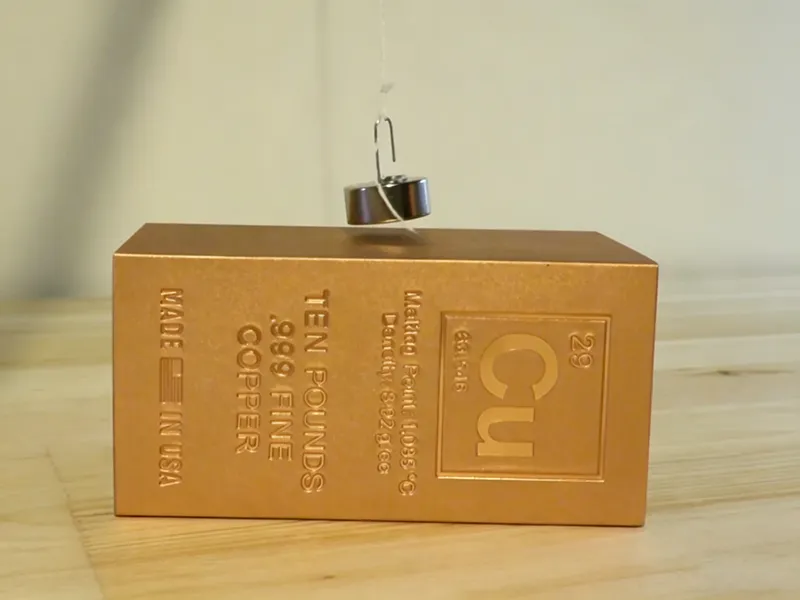
The direct answer to “is copper magnetic?” is no in the everyday sense, but not absolutely zero in the physics sense. If you place a household magnet against a piece of pure copper, the magnet will not snap onto it the way it would with iron or ordinary steel. That is because copper is not ferromagnetic. It does not develop the strong aligned magnetic domains that create the familiar “magnet sticks to metal” effect. Instead, copper falls into the diamagnetic class, which means its response to a magnetic field is weak and opposite to the field.
That distinction matters because everyday language and scientific language often use the word “magnetic” differently. In shop-floor conversation, “magnetic” usually means “strongly attracted by a magnet.” In physics, a material can still have a measurable magnetic response even if a hand magnet does not visibly attract it. Educational material on magnetic behavior explains that ferromagnetic materials such as iron, nickel, cobalt, and gadolinium respond strongly to a magnetic field, while diamagnetic materials have a weak, negative susceptibility. So when people call copper “non-magnetic,” what they usually mean is that it is not strongly magnet-attracted in normal use.
A big reason for the confusion is that copper shows up everywhere in electrical and magnetic equipment. Copper wire is used in motors, transformers, coils, speakers, electromagnets, and generators, which makes many people assume copper itself must be magnetic. But the magnetic effect in those systems comes from electric current moving through a conductor, not from copper behaving like iron. Educational demonstrations on electromagnetism show that when current travels through a conductor, a magnetic field is generated, and when a magnet moves inside a copper wire coil, electrical current can be induced in the wire. Copper is the medium carrying current efficiently; it is not becoming a ferromagnet.
This also helps explain a common workshop puzzle: if a copper-colored object sticks to a magnet, the attraction is probably coming from some other material in the object or assembly rather than from pure copper itself. That is an inference from the fact that pure copper is listed as diamagnetic and ordinarily shows no strong attraction to hand magnets.
Why Copper Is Usually Considered Non-Magnetic
The scientific reason copper is usually considered non-magnetic is straightforward: copper’s magnetic state is classified as diamagnetic in published copper property data. Diamagnetic materials oppose an applied magnetic field very slightly rather than aligning with it. Educational material on magnetism explains that in diamagnetism, electrons in a substance respond to the outside magnetic field in a way that generates forces resisting that field. In contrast, ferromagnetic materials line up strongly with a field and can remain magnetized.
Another way to say the same thing is that copper belongs to the class of materials whose magnetic susceptibility is weak and negative. That is why copper does not behave like iron, nickel, or cobalt. It has a real magnetic response, but the magnitude is so small that the effect is negligible in ordinary handling. That is exactly why so many practical references, inspection routines, and recycling processes simply group copper under “non-magnetic metals,” even though a more precise physics description would call it diamagnetic.
This weak response is also why a typical magnet test produces almost nothing visible. A fridge magnet or handheld shop magnet is very good at identifying strongly ferromagnetic metals, but it is not a sensitive scientific instrument for weak magnetic effects. In daily life, the force produced by copper’s diamagnetism is far too small to compete with the object’s weight, friction, and the geometry of the magnetic field. So the magnet neither “sticks” nor produces the kind of dramatic motion people associate with magnetism.
One of the most useful practical takeaways is this: “a magnet does not stick” is not the same as “the material has no magnetic behavior at all.” Copper is a perfect example. Its hand-magnet response is negligible, but its interaction with changing magnetic fields can still be very important in engineering, especially when conductivity and induced currents come into play.
Can Copper Interact With Magnets
Copper absolutely can interact with magnets. It just does not do so in the simple “magnet sticks to metal” way that people usually expect. One of the clearest demonstrations is electromagnetic induction: when a permanent magnet is moved inside a copper wire coil, electrical current flows in the wire. That is a fundamental electromagnetic effect, and it is the basis of generators, transformers, pickups, and countless electrical devices. The key point is that copper is interacting with the magnetic field because it is an excellent conductor, not because it is ferromagnetic.
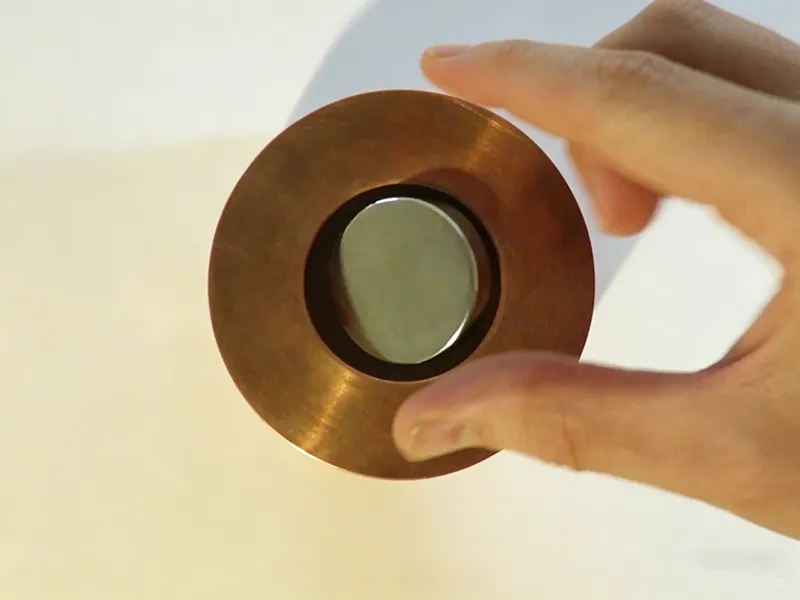
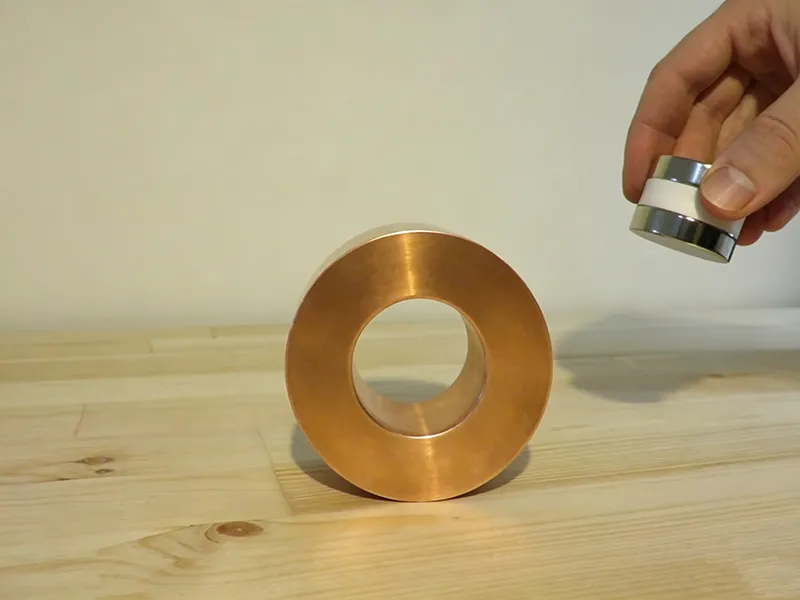
A second demonstration is eddy current behavior in solid copper. In the classic Foucault disk demonstration, a copper disk moving in an applied magnetic field develops circular induced currents inside the metal. Those currents oppose the motion, produce heating, and create a braking effect. The National MagLab demonstration explicitly notes that when the electromagnet is turned on, eddy currents are induced inside the copper disk, the disk slows down, and the temperature rises; it also notes that the same phenomenon has been used in train brakes and other practical applications. So while a hand magnet will not cling to copper, a changing magnetic field can still push, slow, or heat copper very effectively.
This is why common copper products behave the way they do in real life. Copper wire in a motor winding is not “magnetic metal wire” in the steel sense, but it is central to how the magnetic system works because current in the wire generates fields. Copper pipes in plumbing are not drawn to a hand magnet, because the bulk copper remains diamagnetic. Copper sheets and plates likewise do not attract magnets the way steel does, but in high-speed or rapidly changing magnetic environments they can develop significant eddy currents. In electronics, copper is often present precisely because it combines excellent electrical performance with effectively non-magnetic everyday behavior.
That distinction is the source of one of the most persistent myths about copper: people think “not attracted by a magnet” means “cannot interact with magnetism.” In reality, copper interacts very well with changing magnetic fields through induction and eddy currents. What it does not do is behave like a strongly magnetic structural metal.
Copper Versus Magnetic Metals
The easiest comparison is copper versus iron or ordinary steel. Iron is one of the textbook ferromagnetic metals, and conventional steels are widely treated as magnetic in practical use. Ferromagnetic materials respond strongly to magnetic fields, while copper does not. That is why a magnet grabs steel shelves, steel fasteners, and carbon-steel tools so easily, but ignores a nearby copper tube or cable. In applications where strong magnetic attraction, magnetic flux guidance, or magnetizable structure is required, engineers usually turn to iron or steel rather than copper.
The comparison with stainless steel is more complicated, and that is where a lot of sourcing and inspection mistakes happen. Stainless steel is not one single magnetic behavior. The British Stainless Steel Association notes that ferritic, martensitic, and duplex stainless steels are usually classified as magnetic, while austenitic stainless steels have low permeability and can be classed as non-magnetic or effectively non-magnetic in hand-magnet testing. The Nickel Institute similarly notes that nickel-containing stainless steels are non-magnetic, unlike conventional steel and many non-nickel stainless grades. So a material that does not attract a magnet might still be stainless steel rather than copper.
Copper versus aluminum is another instructive comparison. Aluminum is not ferromagnetic either, but it belongs on the paramagnetic side rather than the diamagnetic side. Educational materials on magnetism identify aluminum as a paramagnetic material. In practical terms, though, both aluminum and copper usually appear “non-magnetic” to a handheld magnet because both responses are weak compared with the ferromagnetism of iron and steel. The difference is real at the scientific level even if it is almost invisible in everyday sorting by hand magnet.
Where copper really distinguishes itself is in the way magnetic behavior intersects with other properties. Copper is a major engineering metal because of its high ductility, malleability, thermal and electrical conductivity, and corrosion resistance. The U.S. Geological Survey notes that electrical uses account for about three quarters of total copper use, and that building construction, electronics, transportation, industrial machinery, and consumer goods are all major markets. In other words, copper is often chosen not for magnetism, but because it offers a valuable package of conductivity plus effectively non-magnetic service behavior.
Why Copper’s Non-Magnetic Behavior Matters in Engineering
In engineering, magnetic behavior is not a trivia question. It affects product function, material selection, sensing, heating, braking, sorting, and sometimes even safety. A material that is strongly ferromagnetic can be ideal for magnetic cores, relays, motors, transformers, and magnetic holding systems. But in many other situations, engineers do not want a metal part to become a strongly attracted, flux-carrying component. In those cases, copper’s combination of high conductivity, corrosion resistance, and effectively non-magnetic service behavior can be beneficial. That conclusion is an engineering inference based on the copper property data and the way copper is used across electrical and industrial sectors.
This matters especially in electrical and electronic systems. Copper dominates conductors because it carries current efficiently, and the U.S. Geological Survey states that power transmission and generation, building wiring, telecommunication, and electrical and electronic products together account for about three quarters of copper use. In such systems, copper is valuable because it lets designers move electrical energy without turning the conductor itself into a strongly magnetic structural element the way steel would. That does not eliminate magnetic effects entirely, because current in the copper still generates magnetic fields, but it changes the design problem in a useful way.
Magnetic fields also matter in machining, inspection, and equipment layout because conductive copper can develop induced currents in changing fields. The Foucault disk example shows that copper can absorb energy through eddy currents, leading to drag and heating. In real machines, this means designers have to think about field changes, proximity to moving magnetic components, and whether copper masses might pick up unwanted induced-current losses. So “copper is non-magnetic” should never be interpreted as “magnetic fields are irrelevant.” In engineering, the better statement is that copper is not strongly magnet-attracted, but is highly relevant in electromagnetic systems because it conducts so well.
A final reason the distinction matters is material substitution. If a specification really requires a part that does not respond strongly to a hand magnet, copper may qualify, but so might brass, aluminum, or an austenitic stainless steel. If the requirement is instead about low eddy-current loss, high electrical conductivity, corrosion resistance, or magnetic permeability close to unity, then the correct choice depends on more than a quick magnet test. This is why engineers must treat “magnetic or not?” as the beginning of material selection, not the end of it.
Real-World Uses of Copper in Non-Magnetic Applications
Copper’s real-world uses show why its non-magnetic reputation persists. The U.S. Geological Survey describes copper as a major industrial metal and notes that electrical uses account for most total demand. In the 2026 U.S. copper summary, copper and copper-alloy products were reported as going into building construction, electrical and electronic products, transportation equipment, consumer and general products, and industrial machinery and equipment. Those are exactly the categories where people encounter copper every day: wiring, cables, bus bars, connectors, plumbing, HVAC components, electronics, and industrial hardware.
In wiring and power systems, copper is used because of superior electrical conductivity, heat transfer, and corrosion resistance. Copper facts published by industry sources emphasize those properties directly and note applications in electricity and electronics, plumbing, building construction, transportation, and consumer and health products. The important point for this article is that none of those markets requires copper to behave like magnetic steel. On the contrary, copper’s value usually comes from conductivity and durability while remaining effectively non-magnetic in routine use.
In electronics and instrumentation, copper alloys also matter. An especially useful example is brass. A technical overview of brasses states that they are essentially non-magnetic and that this property has gained them extensive use in electrical and electronic equipment as well as instrumentation such as geological and survey equipment. That is a practical reminder that copper’s “family” of materials often serves roles where conductivity, corrosion resistance, machinability, and low magnetic response all matter at once.
Copper also appears in health-related and consumer-facing applications. Copper facts note that copper has applications in consumer and health products and that more than 350 copper alloys have been acknowledged as antimicrobial. Copper-alloy hospital equipment has also been evaluated in clinical settings, with cited examples including IV poles, bedrails, overbed tables, room furniture, and medical equipment. In those settings, copper is not being chosen because it is “magnetic”; it is being chosen because it brings together antimicrobial potential, durability, conductivity, and non-ferrous service characteristics.
Seen this way, copper’s non-magnetic behavior is not usually the headline selling point by itself. Rather, it is one part of a broader materials package. Designers often choose copper because they want an excellent conductor that is corrosion resistant, formable, and not strongly magnet-attracted like ferrous metals. That combination is why copper remains one of the world’s foundational engineering materials.
Recycling, Alloys, and How to Identify Copper
Magnets do not directly “pick up” copper scrap the way they pick up ferrous scrap, which is why recycling systems treat copper differently. A technical overview of eddy current separation explains that in mixed shred streams, ferrous metals are attracted and removed magnetically, while non-ferrous metals are handled through eddy-current-based processes and other downstream techniques. The same source notes that eddy current separators induce currents in conducting particles and repel them from the field, allowing separation of non-ferrous metals from non-metallic material. In practical terms, that is why copper recycling lines rely on magnetic separation first for steel, then on eddy current and other sorting methods for the remaining non-ferrous stream.
Copper’s recycling importance is not theoretical. The 2026 U.S. copper summary states that old post-consumer scrap provided an estimated 160,000 tons of copper in 2025 and that about 760,000 tons of copper was recovered from new manufacturing scrap. It also notes that copper recovered from scrap contributed about 30% of the U.S. copper supply. Those figures underline a practical reality: copper’s weak magnetic response does not make it hard to recover, but it does mean the recovery route is different from ferrous scrap recovery.
Copper alloys add another layer of nuance. Many copper alloys remain effectively non-magnetic, but not all copper-alloy systems behave identically. Brasses are described as essentially non-magnetic. Certain copper-nickel alloys are also described as essentially non-magnetic or low permeability, with one copper-nickel reference noting that 70-30 Cu-Ni is essentially non-magnetic while 90-10 Cu-Ni can show somewhat higher permeability depending on heat treatment and iron content. At the more extreme end, a copper-nickel alloy reference explains that as nickel content rises, alloys can move from diamagnetic through paramagnetic to ferromagnetic behavior, and that Cu-Ni alloys containing 20% to 25% nickel plus about 20% iron or about 25% cobalt can become pronounced magnetic materials. So the statement “copper alloys are non-magnetic” is often useful, but it is not universally true without checking composition.
If you are trying to identify whether a metal is copper, a magnet test is only a first filter. Strong attraction is enough to rule out pure copper. But lack of attraction does not prove a metal is copper, because aluminum, many austenitic stainless steels, and brass can also appear non-magnetic in ordinary handling. Better clues are the metal’s color, use context, and known function: copper is characteristically reddish-orange and is heavily used in wiring, plumbing, electrical products, and many industrial components. For accurate identification in manufacturing or recycling, magnet testing should be combined with visual identification, alloy knowledge, or a formal material-verification method rather than used alone.
This section also resolves several common misunderstandings. First, non-magnetic does not mean “no magnetic interaction”; copper clearly interacts with changing magnetic fields through induction and eddy currents. Second, conductivity and magnetism are different material properties; copper is one of the best practical conductors even though it is diamagnetic. Third, copper and aluminum are both often treated as non-magnetic in daily work, but they are not the same magnetic type. Fourth, not all copper alloys behave identically, especially when alloying and microstructure change permeability.
Summary and FAQ
The core answer is simple: copper is usually considered non-magnetic because a normal magnet does not stick to it, but the deeper scientific answer is that copper is diamagnetic, not magnetically inert. That distinction explains why copper can be a poor target for simple magnet sorting yet still play a major role in electromagnetic induction, eddy-current braking, motors, generators, electronics, and recycling systems. It also explains why copper remains so useful in engineering: it combines conductivity, corrosion resistance, ductility, and effectively non-magnetic everyday behavior in a way few metals can match.
Is copper magnetic or non-magnetic
In everyday use, copper is treated as non-magnetic because a normal magnet will not stick to it. In scientific terms, pure copper is diamagnetic, meaning it has a weak magnetic response that opposes the applied field rather than producing strong attraction.
Why does a magnet not stick to copper
A magnet does not stick to copper because copper is not ferromagnetic like iron or ordinary steel. Its diamagnetic response is real but extremely weak, so the effect is usually too small to notice outside a laboratory or a carefully designed demonstration.
Can copper interact with a magnetic field
Yes. Copper interacts strongly with changing magnetic fields through electromagnetic induction and eddy currents. A moving magnet can induce current in a copper coil, and a magnetic field acting on a moving copper disk can create drag and heat.
Are copper alloys magnetic
Many copper alloys are effectively non-magnetic, but not all of them behave the same way. Brasses are essentially non-magnetic, many copper-nickel alloys are low-permeability, and some higher-nickel copper alloys with additional iron or cobalt can become distinctly magnetic.
Can magnets separate copper in recycling
Not directly in the way they separate steel. Recycling systems typically remove ferrous metals first with magnetic separation, then recover non-ferrous metals such as copper using eddy current separation and other downstream sorting methods.
Is copper a good choice for non-magnetic applications
Often, yes. Copper is widely used where designers want excellent electrical and thermal conductivity, corrosion resistance, and a material that is not strongly magnet-attracted in regular service. But the right choice still depends on the application, because aluminum, brass, and some stainless steels can also fill low-magnetic-response roles under different design constraints.