Stainless steel’s magnetism depends on its specific type and treatment. Some stainless alloys (ferritic, martensitic, duplex) are strongly magnetic, while others (austenitic) show little to no attraction to a magnet. It’s a common misconception that all stainless steel is non-magnetic; in reality many grades contain magnetic iron phases, and their response to magnets varies widely. This article explores why stainless steel may or may not be magnetic, how composition and processing affect its magnetism, which common grades are magnetic or not, and what this means for applications and material selection.
Stainless steel’s magnetic behavior arises from its internal crystal structure and alloying. We’ll cover the causes of magnetism, differences between grades, how forming or welding can change magnetic response, and how to choose steels for specific applications. By the end, you’ll understand which stainless steels attract magnets, which don’t, and why this matters for corrosion resistance and engineering design.

Is Stainless Steel Magnetic?
The direct answer is: It depends on the grade and treatment. Some stainless steels are magnetic, while others are essentially non-magnetic. Ferritic and martensitic stainless grades (400-series) contain mostly magnetic phases and will stick to a magnet strongly. Austenitic stainless steels (300-series, like 304 and 316) have a non-magnetic crystal structure and show almost no attraction to a magnet when annealed. Duplex grades (mixed austenite/ferrite) are partially magnetic.
Misconception: “Stainless steel means non-magnetic.” In truth, magnetism is unrelated to corrosion resistance. For example, the popular ferritic grade 430 is magnetic yet still “stainless” (it has 17–18% chromium). Conversely, highly corrosion-resistant austenitics like 316 have much nickel and no magnetism in the annealed state. Even austenitic alloys can become slightly magnetic after heavy cold work or welding (see below). In short, no general rule holds for all stainless steels – you must consider the alloy’s structure and processing.
Stainless steel is not inherently always non-magnetic or always magnetic. It’s best to ask, “What is the grade, and how has it been processed?” This article will explain the differences and how they affect magnetism.
Why Magnetism Varies in Stainless Steel
The Role of Crystal Structure
The crystal structure of the steel’s main phase is the primary reason magnetism varies, as explained in this magnetic properties of stainless steel reference. Austenitic stainless steels (e.g. 304, 316) have a face-centered cubic (FCC) structure. In this fully austenitic state they are essentially non-magnetic (paramagnetic). Their magnetic permeability is very close to 1 (the same as air), so a hand magnet barely responds.
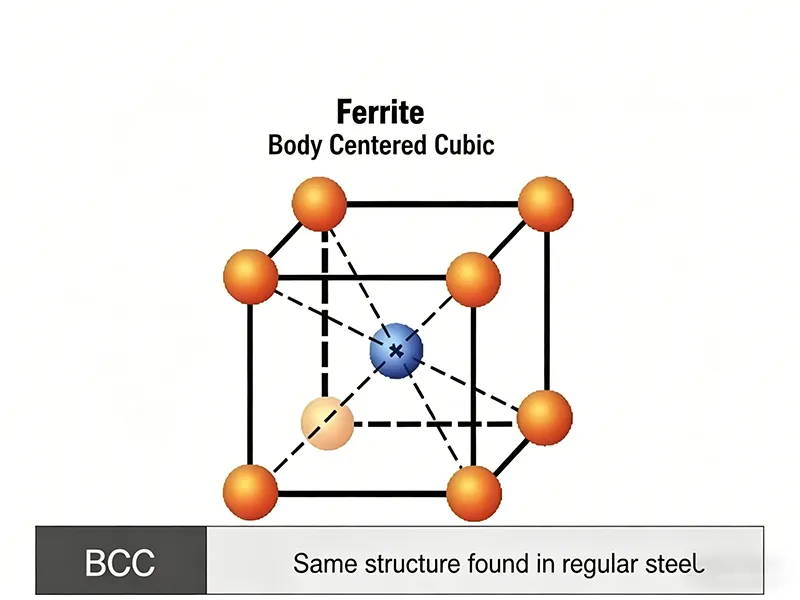
By contrast, ferritic stainless steels (e.g. 430, 409) have a body-centered cubic (BCC) ferrite structure. Martensitic stainless steels (e.g. 410, 420) also have BCC structure (martensite phase) after hardening. Both ferrite and martensite are ferromagnetic. Thus these steels are strongly attracted to magnets. In fact, all 400-series ferritic or martensitic grades will typically “pick up” a magnet easily. For example, grade 430 (a soft ferritic steel) is strongly magnetic, whereas grade 304 (austenitic) is not.
Duplex stainless steels combine both phases (~50% austenite, 50% ferrite) at room temperature. They do exhibit magnetism (because of the ferritic phase), but their overall magnetic response is intermediate. They are considered ferromagnetic (they are attracted to magnets) but with higher strength and hardness than pure ferritics. Martensitic stainless steels in the hardened condition are “hard” magnets; they will be permanently magnetized and difficult to demagnetize.
In summary, magnetism in stainless steel tracks its phase balance:
- Austenitic (FCC, stabilized by Ni/Mn/C/N): paramagnetic → usually non-magnetic.
- Ferritic (BCC, high Cr, no Ni): ferromagnetic → strongly magnetic.
- Martensitic (BCC martensite after hardening): ferromagnetic → strongly magnetic.
- Duplex (mixed): partially ferromagnetic (magnetic) due to ferrite content.
How Alloy Composition Affects Magnetism
Beyond crystal structure, the chemical composition (alloying elements) greatly influences magnetism by stabilizing one phase over another.
- Nickel (Ni) is a strong austenite stabilizer. High-Ni alloys (e.g. type 304, 316 austenitics) maintain FCC austenite even after cold work, so they remain non-magnetic unless severely deformed. Alloys with more nickel resist the formation of magnetic martensite during processing. Carpenter Technology notes that higher-Ni grades have lower magnetic permeability under deformation than low-Ni grades like 304. In other words, austenitic grades with extra Ni or nitrogen (304LN, 316LN, 310, etc.) can endure more cold work without becoming magnetic.
- Chromium (Cr) provides corrosion resistance but also affects phase balance. On its own Cr does not make steel magnetic; however, ferritic grades have high Cr but no Ni, so they form BCC ferrite and are magnetic. A classic example is 430 SS (~17–18% Cr, ~0% Ni): its high Cr forms ferrite and the steel is magnetic. (By contrast, 304 also has ~18% Cr but has ~8% Ni, which stabilizes austenite and renders it non-magnetic.)
- Carbon (C) and other elements (Mn, Mo, N) also play a role. Carbon is an austenite stabilizer, but in high-carbon austenitic steels or welds it can precipitate chromium carbides under poor heat treatment. These carbides deplete Cr locally and often lead to martensite formation around them – which is magnetic. Thus sensitization (Cr-carbide formation) during welding or slow cooling can induce local magnetism.
- Alloy balance: The interplay of all elements (Cr, Ni, Mo, Mn, N, etc.) determines phase percentages. Even small changes in Ni or N content in a 300-series alloy can shift the stability. For instance, a nitrogen-enhanced 316LN is less prone to magnetism than standard 316, because N further stabilizes austenite. Conversely, if the Ni content is on the low end of spec, the same grade might have a few percent ferrite and be slightly magnetic even in the annealed state.
In summary, higher austenite-stabilizers (Ni, C, N, Mn) → more austenite → less magnetism. Higher ferrite-stabilizers (Cr, Mo, Si) or carbon-carbides → more ferrite/martensite → more magnetism. Because of this, two heats of “304 stainless” can show different magnetism if their compositions differ slightly or if they’ve been processed differently.
Which Types of Stainless Steel Are Magnetic?
Ferritic Stainless Steel
Ferritic stainless steels (the 400-series marked as “430, 409, 441,” etc.) contain mostly ferrite (BCC iron) at room temperature. They are inherently magnetic. You can think of them as essentially magnetic stainless. For example, Type 430 SS (universal ferritic grade) remains strongly magnetic after any forming or annealing. Because ferrites cannot be hardened by heat treatment, they are soft magnetic materials.
Properties and uses: Ferritic steels offer good corrosion resistance for many applications and excellent formability, but lower strength and weldability than austenitics. Their high electrical resistivity also makes them useful in AC magnetic components (like transformers). Common uses include home appliances (oven doors, dishwasher and refrigerator panels) and automotive trim (exhaust components, decorative trim). Ferritic grades are magnetic alternatives to plating steel when some corrosion resistance is needed.
Martensitic Stainless Steel
Martensitic stainless steels (the 400-series such as Type 410, 420, 440C, etc.) contain a martensitic (hard, BCC) phase when heat-treated. They are strongly magnetic and can even become hard magnetic (retaining magnetization) when hardened. In the fully hardened condition, martensitic stainless steels behave much like tool steels – very strong and wear-resistant, but also ferromagnetic. (Note: if completely annealed, they still have ferrite and are magnetic.)
Properties and uses: Martensitic grades have the highest strength and hardness of stainless steels but only moderate corrosion resistance. They are often used where strength or wear resistance is critical: cutlery and knife blades, surgical instruments, pump shafts, valve components, turbine blades, and industrial pumps. For example, Grade 410 SS is used for bolts, shafts, and pump parts; Grade 420 SS is known for cutlery. These applications leverage the steel’s hardness, and their inherent magnetism is usually acceptable.
Duplex Stainless Steel
Duplex stainless steels (e.g. 2205, 2507) have a roughly 50/50 mix of austenite and ferrite in the microstructure. Because half the microstructure is ferrite, they are magnetic overall. In practice, duplex steels will strongly attract a magnet, but their mix of phases gives them higher yield strength (almost double that of austenitics) and very good corrosion resistance (often better pitting resistance than 316).
Properties and uses: Duplex grades balance strength, corrosion resistance, and weldability. They are widely used in chemical processing, oil & gas, and marine applications where austenitic steels might suffer stress corrosion cracking or pitting. For example, UNS S32205 (2205) is commonly used in oil & gas platform equipment, chemical tanks and pipes, and seawater heat exchangers. 2205’s magnetic property is a trade-off but usually not a problem in service; in fact, it aids magnetic detection inspections.
Which Types of Stainless Steel Are Usually Non-Magnetic?
Austenitic Stainless Steel
Austenitic stainless steels (notably the 300-series: 304, 316, 321, 310, etc.) are the classic “non-magnetic” stainless steels. In the fully annealed condition they are essentially non-magnetic. Their face-centered cubic structure has low magnetic permeability (close to 1.0), meaning a magnet will not stick appreciably. For example, Type 304 (18Cr–8Ni) and Type 316 (18Cr–12Ni–2Mo) stainless have long been used in applications specifically because they remain non-magnetic. 316 is even called “marine grade” stainless due to its performance in chloride environments and its negligible magnetic response in pure form.
Common uses: Austenitic steels dominate industries requiring both corrosion resistance and formability. Type 304 SS is widely used in architecture, kitchen equipment, appliances, and food processing, since it is durable, weldable, and hygienic (non-magnetic). Type 316 SS finds use in marine, chemical, and medical fields: boat fittings, surgical implants, and chemical processing equipment often use 316 for its superior corrosion resistance (especially to chlorides). Because 304 and 316 are (ideally) non-magnetic, they are also chosen for housings or components where magnetic interference must be minimized (e.g. magnetic sensors or MRI systems).
In summary, most austenitic grades (300-series) are non-magnetic in their annealed state. However, as detailed below, even these can gain some magnetism when cold-worked or welded.
Why Some 304 or 316 Stainless Steel Becomes Magnetic
Although 304 and 316 are designed as non-magnetic, processing can change that. Common factors include:
Cold Working and Forming
Cold deformation processes – bending, rolling, stamping, drawing, etc. – can induce a phase change in austenitic steel. When 304/316 SS is heavily cold-worked, some of the FCC austenite transforms into BCC α′-martensite, which is ferromagnetic. This means stamped or pressed 304/316 parts often show slight magnetic attraction. The effect is most noticeable at sharp corners, cut edges, or places of high strain (e.g. domed pressure vessel ends). For instance, cold-rolled 304 bar or heavily bent sheet may now pick up a small magnet.
The degree of magnetism from cold work varies with alloy stability. High-Ni, high-N austenitics (like 316L, 310, or specially stabilized grades) transform less readily, so they remain closer to non-magnetic under the same deformation. In contrast, standard 304 (with lower Ni) can become noticeably magnetic if strain is large. Notably, bending or denting a stainless pot can make its edges stick to a magnet even if the original mill condition was non-magnetic.
If the cold-work-induced martensite is undesirable, it can be removed by a proper solution anneal (typically ~1050–1120°C followed by rapid quenching) which reverts martensite back to austenite. However, this is rarely done on finished parts due to cost and distortion concerns.
Welding and Heat Effects
High heat input and improper heat treatment during welding can also introduce magnetic phases in austenitic steels. When 304/316 stainless is exposed to a high-temperature weld (or poor anneal), chromium carbides can form at grain boundaries (sensitization). These carbides deplete Cr from the matrix and often leave behind zones of ferrite or martensite. In effect, welded areas or heat-affected zones of austenitic stainless may develop small amounts of martensite and become weakly magnetic.
ASSDA notes that in austenitic welds, a few percent of ferrite is usually intentionally retained to prevent hot cracking. This intentional weld ferrite is typically too little to cause strong magnetic attraction overall. But “sensitization” martensite around carbides is magnetic, and worse sensitization gives stronger magnetism. In practice, quality welds on austenitic stainless (using the proper filler and cooling) minimize this effect. Still, if you magnet-test an austenitic stainless tube near the weld, you may feel a slightly stronger pull there than in the base metal.
Manufacturing Variations
Even without obvious cold work or welding, manufacturing differences can change magnetism. Different melt batches may have slightly different chemistry (Ni, N, Mn, etc.) leading to varying ferrite content in the “same” grade. Two coils of Type 304 could come from furnaces with different heat treatments or alloy levels. As Carpenter notes, the magnetic permeability of austenitic stainless steel can vary significantly depending on chemistry and cold work. For example, one lot of “304” might test non-magnetic on a magnet, while another might have a faint pull due to a small fraction of ferrite.
Likewise, products in different tempers (annealed vs work-hardened vs solution-treated) will differ. Cold-rolled sheet or pre-hardened bar will exhibit more magnetism than fully annealed sheet.
In summary, 304 and 316 stainless steel can become magnetic if they are cold-worked, welded with high heat, or otherwise processed. Such induced magnetism does not mean the material is “lower quality” stainless – it simply reflects extra ferrite/martensite introduced by processing. A strong magnet test can reveal this transformation, but remember it’s reversible (via annealing) and composition-dependent.
Is Magnetic Stainless Steel Still Stainless?
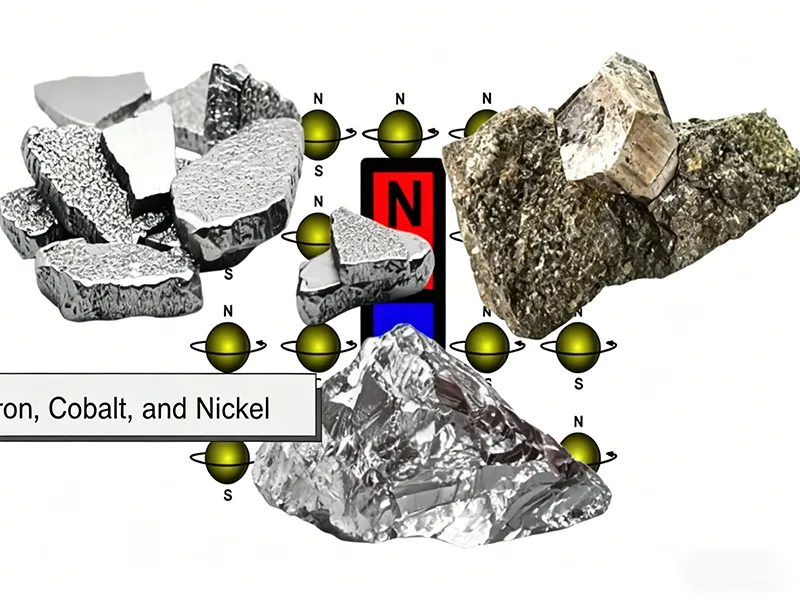
Yes – magnetism and “stainlessness” are separate attributes. A stainless steel being magnetic does not mean it rusts more easily by definition. “Stainless” refers to corrosion resistance (a function of chromium and other elements), whereas magnetism comes from phase structure. The presence of a magnetic phase does not inherently ruin the chromium-passive layer. For example, Type 430 stainless (magnetic ferritic) is still fully stainless with ~16–18% Cr. It will resist corrosion (albeit not as well as 304) despite being ferromagnetic.
In fact, metalsupermarkets.com explicitly states that “there is no correlation between magnetism and corrosion resistance”. A magnetic austenitic part (due to cold work) can be just as stainless as a non-magnetic one of the same chemistry, and vice versa. Conversely, a non-magnetic stainless steel is not automatically “better”; it may simply be higher Ni content or differently processed.
However, magnetism can serve as a hint about corrosion: many highly corrosion-resistant steels are austenitic (Ni-containing and thus non-magnetic). And many budget-friendly or moderate-corrosion steels are ferritic/martensitic (magnetic). For example, 304 (non-magnetic) is much more resistant to attack than 430 (magnetic) because of its nickel content. But the magnetism itself isn’t the cause – it’s just associated with the lack of nickel and the presence of ferrite.
Key point: Magnetic stainless steel is still stainless as long as it meets the chromium criterion. The magnetism only tells us about its structure, not its rust-resistance directly. Therefore, choose material based on both corrosion and magnetic needs separately.
Common Stainless Steel Grades and Their Magnetic Properties
Below is a summary of some common stainless steels, whether they are magnetic, and their typical structure and uses:
| Grade | Magnetic? | Structure | Common Uses |
|---|---|---|---|
| 304 | Usually non-magnetic (unless heavily cold-worked) | Austenitic (FCC) | Kitchenware, appliances, food processing, architecture, automotive trim |
| 316 | Usually non-magnetic (unless heavily cold-worked) | Austenitic (FCC) | Marine/chemical equipment, medical implants, pharmaceutical, heat exchangers |
| 430 | Magnetic (ferritic) | Ferritic (BCC) | Appliances (ovens, sinks, dishwashers), auto trim, architecture, cookware, exhaust headers |
| 410 | Magnetic (martensitic) | Martensitic (BCC) | Cutlery, knives, turbine blades, pump shafts, screws, bushings |
| 2205 (Duplex) | Magnetic (duplex ~50/50) | Duplex (mixed) | Oil & gas equipment, chemical processing, marine hardware, pulp & paper |
This table shows that 300-series austenitics (304, 316, etc.) are normally non-magnetic, thanks to their fully austenitic microstructure. 400-series ferritic/martensitic grades (430, 410, etc.) are magnetic, as their phases are ferromagnetic. Duplex 2205 is also magnetic because it contains ~50% ferrite. Note, though, any austenitic grade can become slightly magnetic if deformed (thus the “usually” qualifier for 304/316).
How to Test Whether Stainless Steel Is Magnetic
A simple magnet test is the quickest check: bring a strong rare-earth or other magnet close to the stainless part.
- If the magnet sticks firmly, the steel contains significant ferrite/martensite (ferritic, martensitic, or duplex).
- If the magnet barely responds or doesn’t stick, the steel is likely fully austenitic.
However, remember this test has limits. Weak magnetic attraction could mean austenitic steel that’s work-hardened or has minor ferrite. No attraction doesn’t confirm a grade on its own. For example, a very thin 430 might not hold a magnet strongly if the magnet is small, even though 430 is ferritic. Also, some “susceptible” austenitics (like low-Ni 304) may show a slight pull after handling.
In practice, the magnet test is an initial indicator. For critical applications, one should verify composition by analytical means (like XRF spectroscopy or chemical tests) to confirm the grade. ASTM standards (like ASTM A342) even exist for measuring the relative permeability of stainless steels. But for a quick field check, a magnet gives a useful clue about phase content.
What magnet strength means: A very strong pull usually means a high-permeability ferritic or martensitic steel (high ferrite content). A weak pull could mean lightly cold-worked austenitic or a duplex with moderate ferrite. No pull means nearly pure austenite (or very low ferrite).
Is Stainless Steel Magnetic in Different Applications?

Different industries have different preferences for magnetic vs non-magnetic stainless steels:
- Kitchen and Appliances: Many kitchen sinks, cookware, and appliances use 300-series (non-magnetic) for corrosion resistance and hygiene. However, induction cooking requires magnetic cookware – so some stainless cookware adds a magnetic base (often ferritic 430) to work on induction ranges. Refrigerator doors and dishwashers are often 430 SS (magnetic) for cost reasons and surface finish.
- Medical Devices: Non-magnetic austenitic grades (316L or 304L) are favored for surgical instruments and implants to avoid interference with imaging (MRI) and to maximize corrosion resistance against body fluids.
- Industrial Machinery: Many process vessels and piping use 304/316 (non-magnetic) for corrosion resistance. Magnetic grades (430/409) might be used for parts where corrosion is less severe or where magnetic properties (like core components) are needed.
- Automotive Parts: Stainless in cars often includes both. Ferritic alloys (e.g. 409, 430) are common for exhaust systems and trims (they are magnetic) because they are cheaper. Some performance or aftermarket parts may use 304 or 321 (non-magnetic) for higher corrosion resistance.
- Marine Hardware: In marine environments, non-magnetic 316 (or duplex 2205) is usually chosen to resist seawater corrosion. Rarely is magnetism a primary concern in such applications, but 316’s non-magnetic nature is a side benefit (e.g. anchor chain shackles).
In summary, the choice of magnetic vs non-magnetic stainless depends on the application’s corrosion environment, fabrication needs, and whether magnetic properties help or hinder. Architects and chefs often pick 304/316 (non-magnetic for looks and corrosion), while engineers may use 430/409 (magnetic) when cost or fabrication ease is paramount, or duplex (magnetic) when strength is needed.
Stainless Steel Magnetism vs Corrosion Resistance
Magnetism and corrosion resistance are independent: a stainless steel’s rust performance is dictated by its chemistry, not its magnetic phase. For instance, 304 SS is highly corrosion-resistant and (in the annealed state) non-magnetic. Grade 430 SS is also “stainless” (resists rust) but somewhat less so because it has no nickel. The fact that 430 is magnetic does not inherently make it corrode faster – its lower corrosion resistance is because it lacks Ni, not because it’s magnetic.
Consider 304 vs 430:
- 304 (18Cr–8Ni) has higher Ni and thus better overall corrosion resistance. It also remains non-magnetic as austenitic.
- 430 (17Cr–0Ni) has no Ni, so it fares worse in severe environments (e.g. chlorine). It is magnetic.
The key point is that all stainless steels resist corrosion through chromium content. Whether they are ferritic or austenitic is secondary. Many high-grade non-magnetic alloys (316, 904L) have superior corrosion performance because they have extra alloying (Mo, Ni) – not because of their magnetism per se.
In practice:
- If you need maximum corrosion resistance (especially in chlorides), you choose high-alloy austenitics (often also non-magnetic).
- If you need moderate corrosion resistance at low cost, ferritic grades may suffice.
- Duplex steels (magnetic) often offer corrosion resistance close to or better than 316, along with high strength.
Always evaluate corrosion needs first, then magnetism. A magnetic stainless (like 430 or duplex) can be stainless in moderate conditions, but an austenitic is generally better in harsh conditions.
How to Choose the Right Stainless Steel Grade
When selecting stainless steel, consider magnetic requirements alongside other factors:
- Magnetic Requirement: If your application demands a non-magnetic material (e.g. magnetic-sensitive equipment housings), choose fully austenitic grades with high Ni or N (e.g. 316LN, 304LN, 310). If magnetism is needed (e.g. core materials, induction cooktops), use ferritic or duplex grades (430, 409, 2205).
- Corrosion Resistance: For highly corrosive environments (marine, chemical), prefer 316/316L or duplex (2205), even though 316 is non-magnetic and duplex is magnetic. For mild conditions, 304 or ferritic 430 may be fine.
- Strength and Hardness: Martensitic grades (410, 420, 440C) are ideal when high strength/hardness is needed (cutting tools, shafts), but they are magnetic. Austenitic 300-series and duplex have good toughness and high yield (duplex especially strong).
- Forming and Welding: Austenitic steels (304/316) are very ductile and weld easily; ferritic steels are less ductile and harder to weld without distortion. If extensive forming is needed, austenitic is preferable, but watch for induced magnetism from work.
- Cost: Nickel adds cost. Ferritic stainless (430, 409) is much cheaper than 304/316. Duplex (2205) is also costlier than 304/430 but cheaper than high-Ni super austenitics. If budget is tight and corrosion environment is not extreme, a ferritic grade may be the most cost-effective.
Decision logic summary (for buyers/engineers):
- Define environment: If severe corrosion (chlorides, acids), lean to 316/duplex. If mild, 304 or 430 might suffice.
- Magnetic / Non: If non-magnetic is mandatory, specify austenitic (316L, 304L, or duplex with low ferrite). If magnetism is needed (e.g. for sensors or induction heating), choose a 400-series or duplex.
- Mechanical: If need high strength, consider duplex or martensitic. If need ductility and toughness, austenitic.
- Fabrication: For extensive forming/welding, austenitics are easiest.
- Budget: Nickel-containing steels cost more; ferritic is lowest cost among stainless; duplex middle. Balance needed performance vs budget.
By weighing these criteria – magnetic behavior, corrosion, mechanical needs, fabrication and cost – you can select an appropriate stainless grade. Consult corrosion charts and mechanical specs in tandem with magnetism.
Common Misunderstandings About Magnetic Stainless Steel
- “If a magnet sticks, it can’t be stainless.” False. Many stainless steels (ferritic 400-series and duplex) are intentionally magnetic. A stainless part can stick to a magnet and still resist corrosion if it has sufficient chromium.
- “304 SS is always non-magnetic.” False. While annealed 304 is non-magnetic, cold working 304 can induce a little magnetism. So a bent or worked 304 component might “ring a bell” with a magnet.
- “316 SS never becomes magnetic.” Generally true in annealed form, but heavy cold work or high-heat can cause slight magnetism in 316 too. (High-N 316 grades tolerate more abuse before this happens).
- “Just using a magnet can identify the grade.” No – a magnet test only reveals if ferrite/martensite is present. You can’t determine an exact grade by magnetism. Many grades share similar magnetic behavior. It’s a preliminary check at best.
- “Stronger magnetism means worse steel.” Incorrect. Strong magnetism simply means more ferrite/martensite phase. A highly magnetic stainless (e.g. 430) can have good corrosion resistance for its class. Conversely, a non-magnetic steel might have been made with expensive alloying; its lack of magnetism is a byproduct of design, not a quality indicator.
Understanding these points avoids confusion in material selection and quality checks.
Summary
In summary, some stainless steels are magnetic and some are not. The magnetic behavior depends on the crystal structure and composition: ferritic and martensitic grades (400-series) are magnetic, duplex steels are moderately magnetic, and fully austenitic 300-series grades are essentially non-magnetic in the annealed state. However, processing matters: cold working or welding can introduce magnetic phases into otherwise non-magnetic alloys.
Key takeaways:
- Austenitic (304/316): normally non-magnetic; excellent corrosion resistance; used in kitchens, medicine, architecture.
- Ferritic (430, 409): magnetic; good corrosion resistance; used in appliances, automotive, moderate environments.
- Martensitic (410, 420): strongly magnetic; very strong/hard but only moderate corrosion resistance; used in cutlery and shafts.
- Duplex (2205): magnetic (due to ~50% ferrite); very strong and highly corrosion-resistant; used in harsh chemical/marine environments.
When choosing a grade, consider both magnetic requirements and corrosion. Use a magnet test as a quick check: strong pull means ferritic/martensitic; no pull means likely austenitic. But always confirm with material certs or composition analysis for critical applications.
Understanding stainless steel magnetism helps avoid costly mistakes (e.g. buying a ferritic cover when you needed austenitic corrosion performance) and ensures the material suits the application. The myth “stainless = non-magnetic” is dispelled: rather, “stainless” refers to alloy chemistry (Cr content), and magnetism refers to crystal phase. Keep these separate in mind when working with stainless steels.
FAQ
Q: Is stainless steel magnetic or non-magnetic?
A: It can be either. Ferritic, martensitic, and duplex stainless steels are generally magnetic (attracted to magnets), whereas annealed austenitic stainless steels (like 304 and 316) are essentially non-magnetic.
Q: Why is 304 stainless steel sometimes magnetic?
A: Standard 304 has moderate nickel. When it’s cold-worked (bent, stamped, rolled), some austenite transforms to ferromagnetic martensite. This makes the steel weakly magnetic after heavy forming. Annealing 304 reverses this effect.
Q: Is 316 stainless steel magnetic?
A: Like 304, annealed 316 is normally non-magnetic (high Ni content). However, heavy cold work or improper heat input can cause slight magnetic regions. For most uses, 316 is treated as non-magnetic.
Q: Does magnetic stainless steel rust more easily?
A: No, magnetism itself doesn’t cause rust. Stainless corrosion resistance depends on chemistry. For example, 430 SS is magnetic and has good rust resistance (thanks to chromium), just not as high as 304 or 316. A stainless steel can be magnetic and still “stainless” if it has enough chromium.
Q: How can you tell if stainless steel is real?
A: There’s no simple home test for authenticity. A magnet test can tell if it’s ferritic/martensitic or not, but not grade. For verification, metallurgical analysis (e.g. spark testing, XRF spectroscopy, or certified mill test reports) is needed. Always buy from reputable suppliers.
Q: Which stainless steel grade is best if non-magnetic properties are needed?
A: High-nickel austenitic grades are best for truly non-magnetic performance. Standard 316L or 304L are common; for extra assurance, use nitrogen-bearing or high-Ni grades like 316LN, 310, or even “super austenitics” (904L, 254SMO). These remain fully austenitic after cold work, ensuring a magnet will not stick.