Washers are thin, flat discs with a central hole that fit under bolt heads, nuts, or screws. They distribute clamping loads, protect surfaces, prevent loosening, and even provide sealing or insulation. Though small, washers play a vital role in fastened assemblies across industries like machinery, automotive, electronics, construction, and CNC machining. This article explains common washer types, materials, and how to choose the right washer for any application.
What Are Washers?
Washers are simple fastener accessories – flat discs with a hole for a bolt or screw – that serve important functions in bolted assemblies. Their core job is load distribution: spreading the clamping force over a wider area to protect the material underneath. This prevents the bolt head or nut from digging into softer materials. Washers also help prevent loosening, as they improve alignment and friction contact. Additionally, washers can protect surfaces from damage, act as spacers, insulators, or even create seals. In short, washers, though small, greatly enhance assembly reliability by stabilizing connections and preserving component surfaces.
Why Are Washers Used in Manufacturing?
Washers may look insignificant, but they perform key roles:
- Distribute Load: By spreading force over a larger area, washers prevent dents or cracks in the materials under bolt heads or nuts.
- Protect Surfaces: A washer acts as a sacrificial barrier, so harder fastener parts don’t scratch or gouge the workpiece.
- Prevent Loosening: In vibrating environments, tightening a washer under the nut helps keep the fastener from backing out.
- Improve Stability: Washers add rigidity and alignment to joints, reducing movement in the assembly.
- Spacing & Alignment: They can serve as shims to adjust fit or height between parts.
- Sealing: Specialized washers can create a leak-tight seal against fluids or dust.
Washers are simple components, but they often play an important role in load distribution, surface protection, and assembly reliability. Leaving out a needed washer may work initially, but over time the joint can fail from concentrated stress or loosen due to vibration.
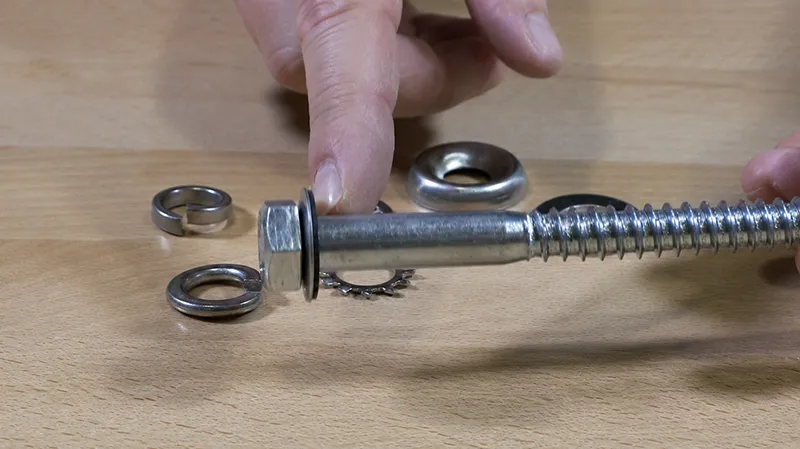
Common Types of Washers
Below is an overview of common washer types, their main functions, and where they’re used:
| Washer Type | Main Function | Common Use |
|---|---|---|
| Flat Washer | Distributes load; protects surfaces | General fastening on metal or wood |
| Lock Washer | Resists loosening under vibration | Machinery, vehicles, vibrating assemblies |
| Spring Washer | Provides spring tension (preload) | Dynamic joints; shock/vibration control |
| Fender Washer | Spreads load over a larger area | Thin sheets, plastics, wood structures |
| Countersunk Washer | Seats countersunk screws flush | Furniture, panels, electronics housings |
| Sealing Washer | Prevents leakage (water, air, dust) | Plumbing, hydraulic fittings, outdoor use |
| Shoulder Washer | Insulates or spaces; prevents contact | Electronics, PCB assemblies, insulations |
| Belleville Washer | High spring force in small space | High-load bolts, thermal compensation |
| Wave Washer | Light spring pressure, take-up play | Bearings, shafts, compact assemblies |
| Split Washer | Simplest lock washer, adds tension | General fastenings requiring anti-loosening |
Each washer type is engineered for a particular role in a fastening system. The sections below describe them in more detail.
Flat Washers
Standard flat washers (also called plain washers) are the most common washers. They are simply flat metal discs with a center hole. Their job is to distribute the bolt’s load over a wider area. This prevents the fastener from embedding into or damaging the workpiece. Flat washers also protect surfaces from scratches and wear during tightening. You’ll find them under bolt heads or nuts in everything from steel machinery and metal structures to CNC-machined parts. In summary, flat washers offer a basic but vital load-bearing and protective function in almost all bolted assemblies.
Lock Washers
Lock washers are designed to resist vibration and prevent fasteners from backing out. They come in various forms (split, tooth, star, etc.), but all use mechanical interference to “lock” the fastener. For example, a split lock washer has a helical shape with a cut end that bites into the nut and surface under tension. As the bolt is tightened, the washer flattens slightly and exerts a spring force, which plus its sharp edges increase friction on the assembly. Tooth or star lock washers have serrated teeth that dig into the mating surfaces for extra grip. In practice, lock washers are often used in vibrating equipment or machinery to enhance fastener retention, while wedge-locking washers are another option for severe vibration and dynamic loads. (For critical joints, they’re sometimes used along with thread-locking fluids or locking nuts.) In short, lock washers rely on their special shape and bite to counteract loosening under vibration.
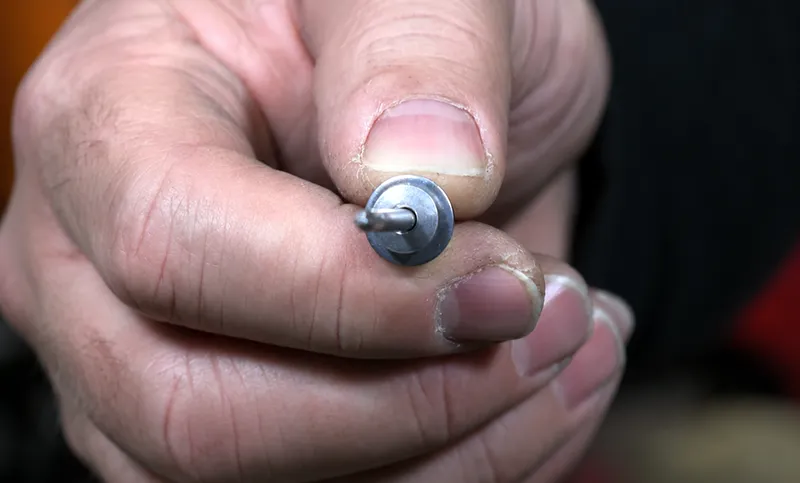
Spring Washers
Spring washers introduce a spring-like elasticity into the joint. The term is often used interchangeably with split lock washers, but it also encompasses Belleville and wave washers (see below). Split spring washers (a type of lock washer) use tension to hold the nut in place: as they flatten under load, their ends grip the nut and mating surface. This tension helps maintain clamp force and resist unintentional loosening. More generally, disc spring washers like Belleville washers (conical springs) or wave washers (wavy rings) store elastic energy and exert a steady load when compressed. Spring washers are chosen when vibration, thermal expansion, or dynamic loads might cause loosening – they keep constant pressure on the assembly to compensate for such changes.
Fender Washers
Fender washers have a much larger outer diameter relative to their inner hole than standard flat washers. This larger “fender” spreads the load over a wider area. They are ideal for thin, fragile, or soft materials where a standard washer might not provide enough support. For example, fender washers are often used on sheet metal panels, plastic parts, or automotive fenders to prevent the bolt head or nut from tearing through. In other words, when you need to protect a broad area or cover an oversized hole, a fender washer is a good choice.
Countersunk Washers
Countersunk finishing washers are beveled washers designed for use with countersunk (flat-head) screws or bolts. They provide a flush, neat finish when a fastener is driven in. The washer’s angled surface matches the screw head’s cone angle, allowing the head to sit level with or below the material’s surface. Countersunk washers distribute load and protect the edges of the countersunk hole, preventing the fastener from pulling through. They’re commonly used in woodworking, cabinetry, panel assemblies, and electronics housing where a smooth, flush exterior is desired.
Sealing Washers
Sealing washers (or bonded washers) incorporate a rubber or elastomeric element bonded to a metal washer. When a bolt is tightened, the soft seal compresses, creating a fluid-tight barrier. As one source explains, rubber-bonded sealing washers have “a stainless steel base with a built-in rubber seal” that provides a leak-proof seal and vibration resistance. These washers are used in plumbing, hydraulic fittings, roofing, and outdoor fixtures where moisture or gas ingress must be prevented. When choosing a sealing washer, consider the media (water, air, oil), pressure, temperature, and material compatibility to ensure the seal remains effective.
Shoulder Washers
Shoulder washers (also called insulating washers or step washers) provide spacing, insulation, or wear protection. They typically have a raised shoulder or insulator on one side. Many shoulder washers are made of nylon, plastic, or other dielectric materials. This allows them to electrically insulate screws or shafts from the surrounding metal and prevent metal-to-metal contact. In electronics and PCB assemblies, shoulder washers keep components isolated and aligned. In precision mechanical assemblies, they act as spacers or shims where a specific gap is needed. In essence, shoulder washers add a built-in spacer or insulator to the fastener assembly.
Belleville Washers
Belleville washers (also called disc springs or conical washers) are conical-shaped springs stamped into washers. They behave like powerful springs: as an axial load flattens the cone, they store and release elastic energy. The key feature of a Belleville washer is its high spring rate – it can generate very large clamping forces with only a small deflection. This makes Belleville washers excellent for high-load bolted joints, bearing preloads, and assemblies that must maintain tension under thermal expansion. For example, they’re used to compensate for bolt stretch in pump and valve assemblies. Because of their design, Belleville washers can produce high forces in tight spaces and can be stacked in series or parallel to tune the load-deflection behavior.
Wave Washers
Wave washers are thin, flat rings that are corrugated into a wave shape around the circumference. When compressed, the waves flatten out, providing a light and consistent spring force. They are relatively flexible, offering moderate preload over a larger deflection range than Belleville washers. Wave washers are ideal for taking up slack or providing light bearing preload. For instance, they are used to eliminate end-play (axial play) in bearing assemblies, shafts, and motors. They absorb small amounts of vibration and help keep parts aligned without requiring much space. In short, wave washers give a gentle spring pressure to maintain tension in compact, low-load applications.
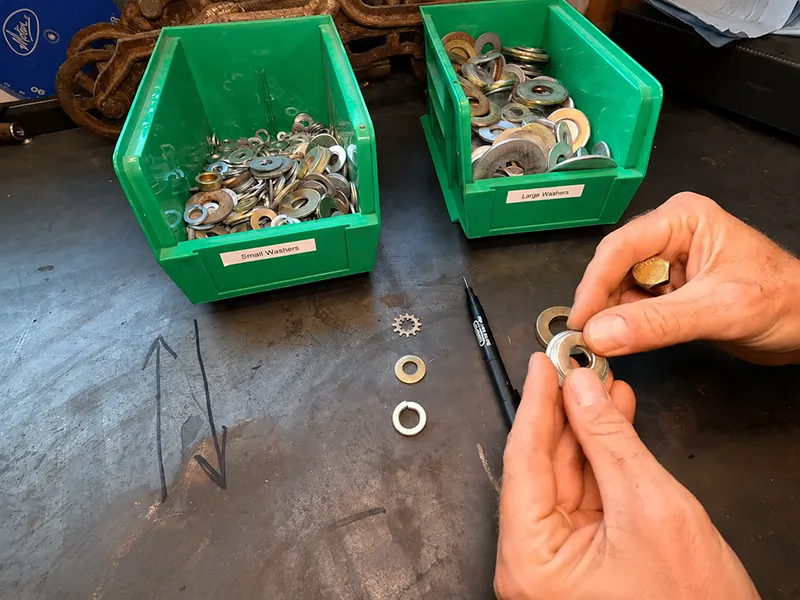
Common Washer Materials
Washers can be made from many materials to suit their function:
- Stainless Steel: Excellent corrosion resistance for outdoor, marine, food, or medical environments. Common for machinery exposed to weather or moisture.
- Carbon Steel: Strong and cost-effective, often used in general industrial and structural applications. Typically coated (galvanized, black oxide) for rust protection.
- Aluminum: Lightweight and corrosion-resistant, used where weight savings are important (e.g. aerospace, automotive). Not as strong as steel but sufficient for lighter-duty assemblies.
- Brass and copper washers offer good electrical conductivity and corrosion resistance. Common in electrical, electronics, and marine hardware. Softness allows them to deform slightly for sealing on plumbing or fuel connections.
- Plastic/Nylon: Non-conductive, corrosion-proof, and lightweight. Ideal for electrical insulation, noise damping, and soft assemblies. They also prevent galvanic corrosion between dissimilar metals.
- Rubber/Bonded: Used for sealing washers. They provide flexibility and sealing against fluids.
Material choice depends on strength, corrosion resistance, and the working environment. As one guide notes, “steel washers are widely popular due to their strength… stainless steel washers offer enhanced corrosion resistance… brass washers provide electrical insulation… plastic and rubber washers add sealing capabilities”. Choose material based on load, exposure (humidity, chemicals), and any electrical or insulation needs.
How to Choose the Right Washer
Selecting the right washer involves considering multiple factors:
- Fastener Size: Match the washer’s inner hole to the bolt or screw size.
- Load Requirements: Heavy loads may need larger or harder washers (e.g. hardened steel, Belleville) to avoid crushing or deformation.
- For demanding fastener design, NASA’s Fastener Design Manual is a useful reference for material selection, platings, lubricants, corrosion, locking methods, washers, thread types, fatigue loading, and torque.
- Environment: Use corrosion-resistant materials (stainless, plated, or plastic) for wet or outdoor conditions.
- Vibration: For vibrations, use locking or spring washers to maintain tension.
- Temperature/Chemicals: Ensure the material can handle the temperature range and any chemicals it may contact.
- Function: Decide if you need sealing, electrical insulation, spacing, or aesthetic flushness.
- Dimensions: Ensure the washer’s outer diameter is large enough to distribute load, but not so large that it interferes with surrounding parts.
- Standards and Availability: For inch-series washers, ASME B18.21.1 covers dimensional requirements, physical properties, and test methods for helical spring-lock, tooth-lock, and plain washers.
- Cost and Volume: For large volumes, inexpensive standard washers may be best; for precision needs, custom washers might be justified.
Checklist: Before ordering washers, confirm the fastener diameter, required load distribution area, material, surface finish, and any special functions (insulation, sealing, etc.). As one expert suggests, consider the environment and load first, then match materials and functions accordingly.
Washer Size and Fit Considerations
Proper fit is crucial. The inner diameter (ID) of the washer must closely fit the bolt or screw (too large and the washer won’t center, too small and it won’t fit). The outer diameter (OD) determines how much area is covered: a small OD may not spread load sufficiently, whereas an excessively large OD might not fit in tight spaces. Washer thickness affects strength and spacing – a thin washer might deform under high loads, while a thick washer could increase stack height or be unnecessary for light loads. Industry standards (ANSI, DIN, ISO) define the normal OD and thickness for a given bolt size. In critical or unusual assemblies (e.g. fine machinery, custom parts), custom washers with precise ID/OD/thickness may be machined to spec to ensure perfect fit.
Custom Washers in CNC Machining
Standard washers are often adequate, but some projects require custom washers. CNC machining allows making washers in special sizes, shapes, or materials when off-the-shelf parts won’t do. For example, custom washers might be needed for odd bolt patterns, thicker gauges, unique materials, or precision tolerances. Precision CNC machining is often used for washers in aerospace, automotive, electronics, medical devices, and industrial equipment where specifications are strict. A precision machine shop can turn washers from steel, aluminum, brass, plastic, or other materials to your exact dimensions. This flexibility ensures the washer perfectly matches the assembly requirements, even for small batches or prototype runs.
Common Washer Applications in Manufacturing
Washers are ubiquitous in manufacturing. Some typical applications include:
- Automotive & Aerospace: Fastening engine parts, body panels, and structural components (use flat, lock, Belleville washers for engines, suspension, etc.).
- Industrial Machinery: Bolted joints in machines and structures (flat and lock washers on heavy equipment).
- Electronics & Electrical: Mounting PCBs or electrical panels (nylon shoulder washers for insulation, brass flat washers for electrical connections).
- Plumbing & HVAC: Leak-resistant joints (sealing washers in plumbing, gasket washers in HVAC).
- Construction & Structures: Securing beams, brackets, and panels (large steel flat washers or fender washers on wood/metal joints).
- CNC Machined Assemblies: Precision components often use custom flat or spring washers to meet tight tolerances.
- Medical & Instruments: Stainless or plastic washers in equipment requiring corrosion resistance and biocompatibility.
In short, you’ll find washers anywhere threaded fasteners are used – from furniture and electronics to heavy-duty equipment. They are essential in any bolted assembly across industries.
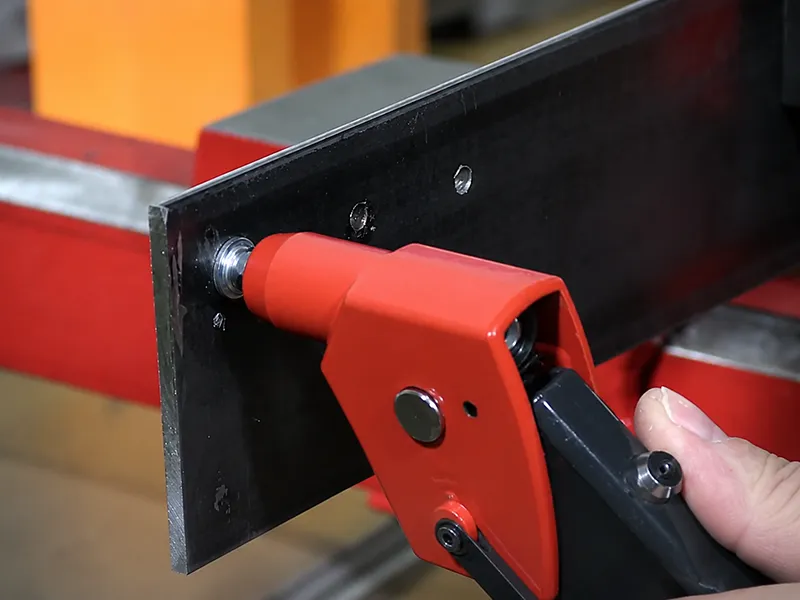
Common Mistakes When Using Washers
Avoid these pitfalls:
- Wrong Type: Using a plain flat washer where a lock or spring washer is needed (e.g. no lock washer in a vibration-prone joint).
- Incorrect Size: ID too large (washer shifts) or OD too small (insufficient load spread). Using a washer that is too thin for the load.
- Wrong Material: Using mild steel washers in a corrosive or electrical environment. For example, not using stainless steel outdoors.
- Skipping Insulation: Forgetting a shoulder or nylon washer when preventing electrical contact.
- No Seal When Needed: Using a flat washer where a sealing washer is required for fluids or moisture.
- Over-torquing Lock Washers: Flattening out a spring washer completely, which defeats its locking action.
- Ignoring Standards: Choosing custom sizes when a standard size exists, complicating installation or maintenance.
- Surface Finish Issues: Not deburring or smoothing contact surfaces, causing uneven seating or damage to washers.
Recognizing these mistakes helps ensure washers perform their roles effectively in the assembly.
Conclusion
Washers may seem like small hardware, but they are critical to reliable manufacturing assemblies. The core differences among washers are in their shapes and materials, which tailor them to specific functions. Flat washers handle basic load distribution, lock and spring washers enhance fastener security under vibration, and fender/countersunk washers adapt to special surfaces. Sealing washers prevent leaks, and shoulder washers provide insulation or spacing. Specialty types like Belleville and wave washers act as compact springs to maintain preload or eliminate play. By choosing the right washer – considering size, material, load, and environment – engineers ensure better load distribution, reduced loosening, proper sealing, and longer-lasting joints. In custom or precision applications, CNC-machined washers can meet exacting requirements. Ultimately, when washers are selected and installed correctly, they significantly improve the durability and performance of any fastened assembly.
FAQ About Washers
What are washers used for?
Washers are used to spread out the force of a bolt or nut over a larger area, protecting the material being fastened. They prevent surface damage, reduce loosening from vibration, provide spacing/alignment, and can even seal or insulate joints. In short, washers improve load distribution and assembly reliability in every bolted joint.
What are the most common types of washers?
The most common washer types include flat washers (load distribution), lock washers (prevent loosening), spring washers (add tension or preload), fender washers (large OD for thin materials), countersunk washers (for flush screw heads), sealing washers (rubber-bonded for leak resistance), shoulder (insulating) washers, Belleville (disc spring) washers, and wave washers. Each serves a specific purpose in fastening.
What is the difference between a flat washer and a lock washer?
A flat washer is a simple disc that spreads load and protects the surface. A lock washer has a special shape (split, toothed, etc.) that adds friction or tension to resist the fastener rotating loose. Flat washers distribute force; lock washers help keep nuts/bolts tight under vibration.
What materials are washers made from?
Washers come in many materials. Steel or carbon steel is common for strength and cost-effectiveness; often plated for corrosion resistance. Stainless steel resists rust and is used outdoors or in harsh environments. Aluminum washers are light-weight for low-load applications. Brass/copper washers conduct electricity and resist corrosion, useful in electrical/plumbing assemblies. Nylon/plastic washers insulate and seal, ideal for electronics or noise damping. Rubber is used in sealing washers. Choose the material to match strength, conductivity, and environmental needs.
Can washers be custom machined?
Yes. When standard washers won’t fit an application, washers can be custom-made via CNC machining. Custom washers can have special dimensions (inner/outer diameter, thickness), unique materials (specific alloys or plastics), or extra features. CNC-machined washers are common in aerospace, medical, and other precision fields where exact sizes and tight tolerances are required.