The melting point of pure titanium is approximately 1,668°C (3,034°F or 1,941 K). That high melting temperature matters because it shapes how titanium is melted, cast, welded, additively manufactured, and selected for demanding parts. Titanium is also valued for its high strength-to-weight ratio, strong corrosion resistance of titanium, and dependable performance in aerospace, medical, chemical, marine, and other high-performance manufacturing environments.
What Is the Melting Point of Titanium
According to PubChem’s titanium element data, pure titanium melts at approximately 1,668°C, which is about 3,034°F or 1,941 K. In materials science terms, the melting point is the temperature at which the solid-to-liquid phase change occurs. When people search for the melting point of titanium, titanium melting point, or titanium melting temperature, this is usually the value they mean.
The quick reference below restates the standard elemental values reported by major chemistry references. Some references round the number to 1,670°C and 1,943 K, but that is effectively the same engineering answer for most practical discussions of pure titanium.
| Measurement Unit | Melting Point of Pure Titanium |
|---|---|
| Celsius | Approximately 1,668°C |
| Fahrenheit | Approximately 3,034°F |
| Kelvin | Approximately 1,941 K |
This figure refers to pure titanium, not every titanium alloy used in manufacturing. Once alloying elements are added, engineers usually describe melting behavior with a melting range rather than one exact temperature. That distinction becomes important when discussing aerospace parts, medical components, castings, and machined titanium parts.
It is also worth noting that published numbers can vary slightly by source and method. Standard chemistry references list titanium at about 1,668–1,670°C, a NIST pulse-heating study on high-purity titanium reported about 1,945 K, and some older titanium-processing references round commercially pure titanium to about 1,675°C. In practice, those small differences do not change the core takeaway: titanium melts at a much higher temperature than many common engineering metals.
Why Does the Melting Point of Titanium Matter
Titanium’s melting point matters because it directly affects how the material is processed. High melting temperature influences melting and refining, investment casting, welding, powder-bed additive manufacturing, and heat-intensive production routes. Compared with lower-melting metals, titanium requires hotter process windows, more careful heat management, and stricter contamination control.
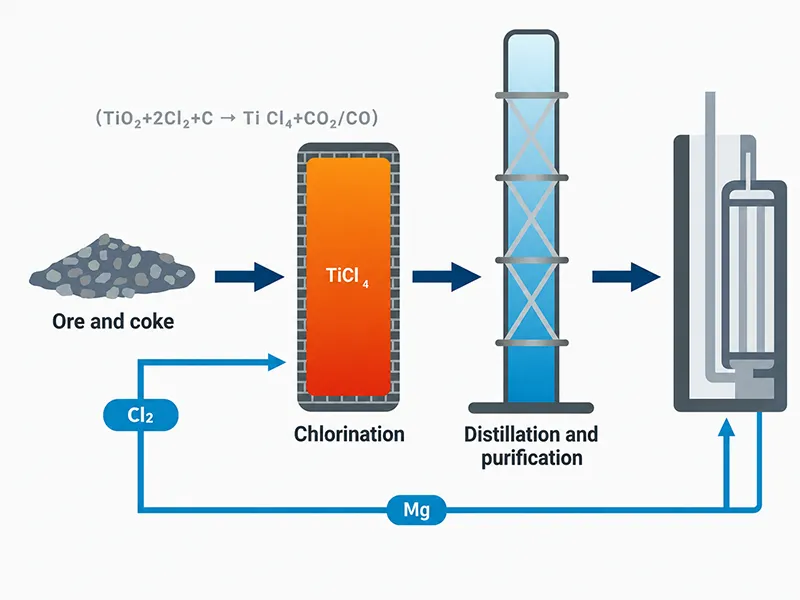
The second reason it matters is chemical reactivity. TWI notes that above about 500°C titanium has a very high affinity for oxygen, nitrogen, and hydrogen, and titanium-casting literature likewise emphasizes that molten titanium must be handled in very high vacuum or inert gas to avoid contamination. If this is not controlled, oxygen and nitrogen can dissolve into the metal and form brittle reaction products or contaminated surface layers such as alpha case.
For aerospace, medical, and chemical equipment, this combination of high melting temperature and high hot-gas reactivity affects both manufacturing method and final reliability. Titanium is attractive because it is light, strong, corrosion resistant, seawater resistant, and biocompatible, but those benefits only translate into reliable parts when melting, welding, and heat processing are tightly controlled.
A final caution is critical for designers: a high melting point does not mean titanium can be used continuously at temperatures anywhere close to its melting point. Conventional Ti-6Al-4V is commonly recommended only to around 300–350°C in service, while other titanium alloy families are selected when higher-temperature strength, creep resistance, or oxidation performance are needed. Actual service temperature always depends on alloy grade, retained strength, oxidation behavior, environment, and design margin.
Pure Titanium vs Titanium Alloy Melting Point
Pure titanium is usually described by a single approximate melting point. Titanium alloys are different because alloying additions change phase stability and melting behavior, so engineers typically use solidus and liquidus temperatures instead. The solidus is the temperature where melting begins, and the liquidus is the temperature where the alloy becomes fully liquid.
Representative values for common titanium materials are shown below. The ASM Material Data Sheet for Ti-6Al-4V Grade 5 reports a melting range of approximately 1,604–1,660°C for annealed titanium alloy, with the solidus and liquidus temperatures defining when melting begins and ends. That is why it is important to identify the exact grade before quoting a titanium melting temperature in manufacturing discussions.
| Material | Melting Description | Typical Value or Range | Common Use |
|---|---|---|---|
| Pure titanium | Single approximate melting point | Approximately 1,668°C | Chemical service, corrosion-resistant parts, general pure-metal reference |
| Ti-6Al-4V / Grade 5 | Melting range | Commonly cited around 1,604–1,660°C | Aerospace, medical, high-performance machined parts |
| Other titanium alloys | Grade-dependent melting range | Varies by alloy chemistry | Specialized industrial and high-performance applications |
What Affects the Melting Point of Titanium Alloys
The biggest variable is alloy composition. Ti-6Al-4V contains aluminum and vanadium, so its melting behavior is not identical to elemental titanium. Carpenter’s datasheet shows explicit solidus and liquidus temperatures for this alloy, and TIMET’s data also show a distinct alloy liquidus rather than a pure-metal single-point value.
Purity and interstitial content also matter. Commercially pure titanium grades are separated largely by allowed levels of iron, oxygen, nitrogen, and carbon. Carpenter states that Grades 1 through 4 are classified according to yield strength and allowable impurity levels, while TIMET notes that small additions of oxygen and iron progressively raise strength and reduce formability across the commercially pure grade family. In other words, interstitial chemistry strongly affects titanium properties, and it can also contribute to small practical differences between published thermal values.
The extra-low-interstitial version of Ti-6Al-4V, Grade 23, shows why chemistry matters so much. TIMET’s composition limits show lower oxygen and iron for Grade 23 than for standard Grade 5, and Carpenter’s medical datasheet shows that the ELI grade is favored where toughness and implant performance matter. That is why “titanium alloy” is too broad a term for precise quoting: the exact grade changes the behavior that engineers care about.
Finally, data source and measurement method can change the reported number slightly. Chemistry references, product datasheets, and laboratory measurement studies do not always use the same purity level, sample history, or temperature scale. For practical SEO and engineering communication, the safest phrasing is usually: pure titanium melts at about 1,668°C, while titanium alloys melt over grade-specific ranges.
Titanium Melting Point Compared with Other Metals
Approximate values below are compiled from Royal Society of Chemistry element data, British Stainless Steel Association guidance, and Copper Development Association alloy records. Brass is shown as a representative range rather than one universal number because brass is an alloy family, not a single material; the temperature shown reflects typical CDA examples converted from published solidus and liquidus values.
| Metal | Approximate Melting Point | Manufacturing Perspective |
|---|---|---|
| Aluminum | 660°C | Easy to melt and cast; common lightweight production metal |
| Zinc | 420°C | Very low melting, useful in die casting and coatings |
| Brass | Roughly 855–941°C for representative alloys | Lower than titanium; common in fittings and connectors |
| Copper | 1,085°C | Higher than light metals, but still far below titanium |
| Stainless steel | Roughly 1,325–1,530°C depending on grade | High-temperature structural alloy family, but still generally below titanium |
| Titanium | Approximately 1,668–1,670°C | High-performance lightweight and corrosion-resistant metal |
| Tungsten | 3,414°C | Far above titanium; specialist extreme-temperature material |
Titanium therefore melts at a much higher temperature than aluminum, zinc, brass, and copper, and it is generally above many common stainless steel grades as well. At the same time, titanium is not the highest-melting engineering metal; tungsten is dramatically higher. When comparing different types of metals, material selection cannot be based on melting point alone. Density, specific strength, corrosion resistance, oxidation behavior, machinability, availability, and manufacturing cost all matter too.
Is Titanium Heat Resistant Because of Its High Melting Point
Titanium’s high melting point and heat resistance are related, but they are not the same thing. Melting point tells you when the material liquefies. Heat resistance is about how well a material keeps strength, dimensional stability, oxidation resistance, creep performance, and fatigue resistance during real service.
A useful analogy comes from stainless steel. The British Stainless Steel Association notes that 304 and 310 stainless steels can share the same 1,400–1,450°C melting range, yet their maximum service temperatures in air differ substantially because service behavior depends on more than melting. Titanium follows the same logic. Conventional Ti-6Al-4V may melt above 1,600°C, but common service recommendations are still only around 300–350°C, while more heat-resistant titanium alloys are used for hotter compressor and creep-sensitive environments.
So yes, titanium can be a strong choice for demanding thermal environments, but engineers still have to evaluate oxidation, creep, fatigue, alloy grade, atmosphere, loading, and design life before calling it a true high-temperature solution. That is especially important in aerospace engines, exhaust-adjacent hardware, and long-life industrial equipment.
How Titanium’s Melting Point Affects Manufacturing
Titanium’s melting temperature is not just a catalog property. It influences how the metal is melted, how contamination is prevented, how welds are protected, how powder-bed processes are qualified, and how hot working windows are chosen. In real production, thermal behavior and chemical reactivity have to be managed together.
Titanium Melting and Casting
Titanium casting requires high-temperature equipment, but the more difficult issue is reactivity. Investment-casting literature shows that molten titanium readily reacts with oxygen, nitrogen, and many ceramic oxides, so titanium alloys are commonly melted and cast under very high vacuum or inert gas. If not controlled, oxygen pickup can create an oxygen-enriched brittle reaction layer known as alpha case, which hurts mechanical performance and often has to be removed.
Casting remains valuable because it can produce complex shapes, but titanium foundry work is more demanding than for lower-melting metals. Furnace design, shell material selection, atmosphere control, and contamination prevention all become major process variables. That is one reason titanium castings often carry higher process complexity and cost than aluminum or many copper alloys.
Titanium Welding
Titanium welding does not melt the whole part, but local weld-zone temperatures are still high enough to create contamination risk. TWI notes that above about 500°C titanium has a strong affinity for oxygen, nitrogen, and hydrogen, and the weld pool, heat-affected zone, and cooling bead must therefore be protected with inert gas such as argon or helium. ATI and Carpenter datasheets likewise stress clean surfaces and adequate shielding during welding.
This is why titanium weld quality is so dependent on shielding technique and cleanliness. Poor shielding can produce embrittlement, discoloration, alpha-case formation, or degraded mechanical performance. In aerospace and medical work, where joints can be safety-critical or biocompatibility-critical, that process discipline is essential.
Titanium Additive Manufacturing
Titanium powders, especially Ti-6Al-4V and Ti-6Al-4V ELI, are widely used in powder-bed fusion additive manufacturing. Reviews of titanium additive manufacturing show strong use in aerospace, biomedical, and automotive sectors, especially where designers want complex geometries, near-net-shape production, and lightweight parts.
The melt-and-solidify cycle in additive manufacturing is extremely fast, so the process has a strong influence on microstructure and final properties. Published LPBF reviews identify ongoing challenges around porosity, anisotropy, poor surface quality, and difficulty tailoring microstructure, while NIST work highlights how oxygen pickup and powder reuse can affect feedstock and downstream performance. That is why titanium AM is powerful, but not “push-button.” Qualification, powder control, and post-processing matter.
Titanium Forging and Forming
Forging and forming usually take place well below the melting point, but still in elevated temperature windows where flow stress drops and formability improves. NASA’s Ti-6Al-4V handbook gives a normal forging temperature of about 954°C, which is below the beta-transus, and Carpenter’s Grade 23 datasheet describes hot working in the high alpha-beta range around 870–950°C. Those temperatures are far below melting, yet still critical to microstructure and final mechanical properties.
This is why titanium forging is really about controlled hot working, not about approaching the melting point. Manufacturers choose working windows to balance plasticity, grain structure, strength, fatigue performance, and alpha-case control, then often follow forging with finish machining to reach tight tolerances.
Does Titanium’s Melting Point Affect CNC Machining
The melting point of titanium helps explain overall thermal behavior, but in custom titanium CNC machining, the main difficulties are low thermal conductivity, concentrated cutting heat, material strength, and tool wear. Machining removes material; it does not require melting the whole workpiece. The bigger problem is that titanium has poor thermal conductivity, so cutting heat does not dissipate efficiently. Sandvik Coromant’s titanium machining guidance explains that titanium has poor thermal conductivity and retains strength at high temperatures, which creates high cutting forces and concentrated heat near the cutting edge.
That localized heat accelerates tool wear, can deform or chip the cutting edge, and limits cutting speed. Titanium also shows strong chemical affinity with tool materials and a tendency toward galling, adhesion, and built-up edge. In short, the machining challenge comes more from heat concentration, material strength, and chemical interaction than from the simple fact that titanium melts at a high temperature.
The practical machining implications are summarized below. The guidance is drawn from Sandvik, ISCAR, and Carpenter process recommendations for titanium machining and milling.
| Machining Issue | Why It Matters for Titanium Parts |
|---|---|
| Low thermal conductivity | Heat concentrates near the cutting tool instead of leaving with the workpiece |
| Tool wear | Localized heat and reactivity shorten tool life and can damage cutting edges |
| Cutting speed control | Excessive speed increases thermal and chemical attack on the tool |
| Coolant strategy | Coolant helps control edge temperature, improve chip removal, and prevent chip recutting |
| Rigidity and vibration | Stable setups are important for accuracy, surface finish, and tool life |
In practice, successful titanium CNC machining usually combines rigid setup, sharp cutting edges, positive geometry, carefully limited speed, and strong coolant delivery. Sandvik specifically recommends coolant in milling to control heat and avoid re-cutting chips, while Carpenter highlights the importance of sharp tools, rigid setups, heavy feeds, and ample cutting fluid.
For complex aerospace brackets, medical components, and multi-sided titanium geometries, 5-axis titanium machining can reduce setups while improving access to difficult features.
Common Titanium Grades, Applications, and Material Selection
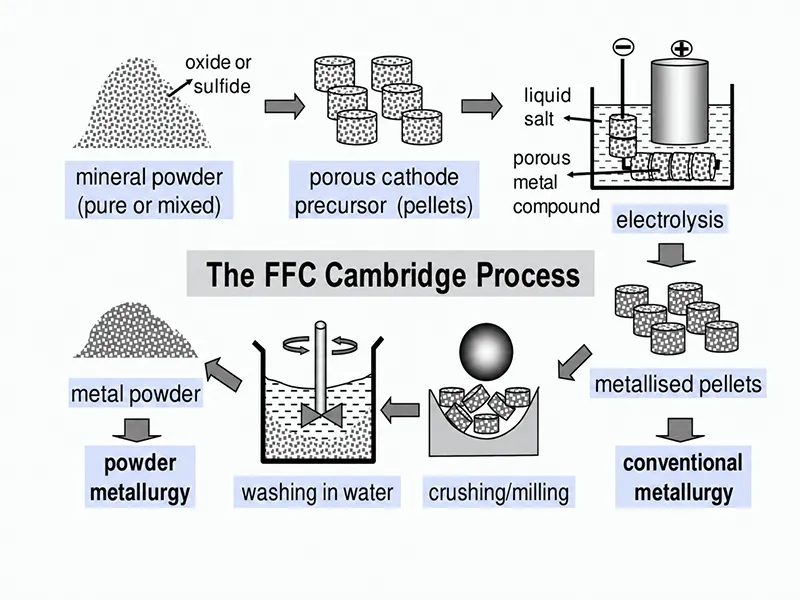
Titanium selection is never just about one melting point. In manufacturing, designers usually choose between commercially pure titanium and alloyed titanium based on strength, weight, corrosion exposure, hot-service requirements, certification needs, and machining difficulty. The grade decision often matters more than the simple fact that “titanium melts at 1,668°C.”
Common Titanium Grades and Their Manufacturing Uses
The summary below draws on TIMET and Carpenter datasheets, with medical-use context supported by titanium biomaterials literature.
| Titanium Grade or Alloy | Main Characteristics | Common Manufacturing Applications |
|---|---|---|
| Grade 1 | Highest ductility and formability among CP grades; excellent corrosion resistance | Heat exchangers, formed parts, chemical equipment |
| Grade 2 | Commercially pure “workhorse” grade; balanced formability, moderate strength, strong corrosion resistance | Marine, chemical, medical, aerospace warm structures |
| Grade 4 | Strongest commercially pure grade; good ductility, moderate formability | Medical devices, surgical tools, marine and chemical hardware, some airframe uses |
| Grade 5 / Ti-6Al-4V | High strength-to-weight ratio; most widely used titanium alloy; good corrosion resistance | Aerospace structures, fasteners, engine-related parts, precision machined parts, medical devices |
| Grade 23 / Ti-6Al-4V ELI | Lower interstitial version of Grade 5 with improved toughness and strong medical positioning | Implants, joint replacements, dental and other medical components, medical AM feedstock |
Grade 5 deserves special attention because it is the best-known titanium alloy in production work. Carpenter describes Ti-6Al-4V as the “workhorse” alloy and notes that it accounts for more than half of titanium usage, largely because it balances strength, light weight, formability, and corrosion resistance. When people ask about high-performance titanium machining or aerospace titanium, Grade 5 is often the grade they really mean.
Applications Where Titanium’s Thermal Properties Matter
Aerospace. Titanium is widely used in airframes, fasteners, compressor-related components, engine cases, ducts, and other structures where low weight, strength, corrosion resistance, and stable thermal behavior all matter. RSC, Carpenter, and Nippon Steel all identify aircraft and engine uses as core titanium applications.
Medical devices. Titanium and titanium alloys are widely used for implants, joint replacements, dental components, surgical devices, and other medical parts because of corrosion resistance, biocompatibility, and favorable mechanical behavior. Grade 23 in particular is a major implant alloy, and Carpenter notes its suitability for joint-replacement-type applications.
Chemical and marine equipment. Commercially pure titanium is heavily used in heat exchangers, condensers, desalination systems, chemical vessels, tubing, and seawater service because titanium forms a stable passive film and resists many chloride-rich environments. ATI, Carpenter, RSC, and Nippon Steel all emphasize this corrosion-driven application space.
Automotive and high-performance products. Titanium alloys also appear in high-performance automotive parts and premium sporting goods where low mass, corrosion resistance, and strength justify higher manufacturing complexity. Carpenter lists high-performance automotive parts and sports equipment among common Ti-6Al-4V uses.
Titanium vs Aluminum vs Stainless Steel for Manufacturing
The comparison below synthesizes melting, density, corrosion, and machinability information from RSC, Sandvik, Carpenter, ATI, and BSSA. It is a practical manufacturing comparison, not a substitute for a detailed part-specific engineering study.
| Factor | Titanium | Aluminum | Stainless Steel |
|---|---|---|---|
| Melting point | Very high | Much lower | High, but grade-dependent |
| Relative weight | Lighter than steel, heavier than aluminum | Lightest of the three | Heaviest of the three |
| Strength-to-weight ratio | Excellent | Good in many alloys | Good absolute strength, but heavier |
| Corrosion resistance | Excellent in many marine and chemical environments | Good, but environment-dependent | Very good, depending on grade |
| Machining difficulty | High | Low to moderate | Moderate |
| Best suited for | High-performance critical parts | Lightweight, cost-sensitive parts | Durable corrosion-resistant parts where weight matters less |
In many real projects, titanium is selected when higher performance justifies higher material and process burden. Aluminum is often preferred when low weight and lower manufacturing cost dominate. Stainless steel remains attractive when corrosion resistance and durability are needed but weight is less critical. Titanium can still outperform both in the right application, especially where specific strength and corrosion resistance must coexist.
How to Choose Titanium for a Manufacturing Project
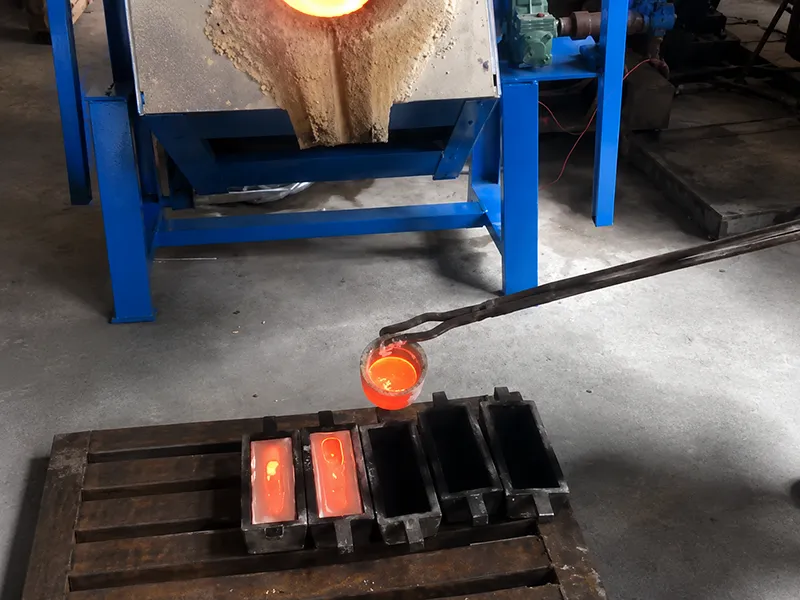
A good titanium decision usually starts with six questions: do you need commercially pure titanium or an alloy, how much strength is required, how important is weight reduction, what is the corrosion environment, will the part see significant heat, and how difficult will the final machining and certification path be. Those factors determine whether titanium is the right material at all, and if it is, which grade is the best starting point.
The table below is a practical selection shortcut synthesized from the grade and application data above. It is intentionally directional rather than code-binding.
| Project Need | Likely Material Direction |
|---|---|
| General corrosion-resistant titanium part | Commercially pure titanium, often Grade 1 or Grade 2 |
| High-strength, lightweight machined part | Ti-6Al-4V / Grade 5 |
| Medical implant-related precision component | Grade 23 / Ti-6Al-4V ELI |
| Lightweight part without extreme requirements | Compare aluminum first |
| Corrosion-resistant part where weight matters less | Compare titanium with stainless steel |
| Complex near-net-shape component with high value | Consider titanium additive manufacturing, often Ti-6Al-4V family |
Common Misunderstandings About the Melting Point of Titanium
A few myths come up again and again in manufacturing discussions. The table below corrects the most common ones using the data already discussed in this article.
| Common Misunderstanding | What Is More Accurate |
|---|---|
| All titanium grades melt at exactly 1,668°C | Pure titanium is quoted with a standard melting point, but alloys melt over grade-specific ranges |
| Titanium is hard to machine mainly because of its high melting point | Machining difficulty is more strongly tied to poor thermal conductivity, heat concentration, reactivity, and tool wear |
| A high melting point means titanium can operate indefinitely at very high temperature | Service temperature depends on oxidation, creep, alloy family, load, and environment |
| Titanium is always better than aluminum or stainless steel | Titanium is excellent for some high-performance parts, but cost, manufacturability, and actual design needs may favor other metals |
Conclusion
Pure titanium melts at approximately 1,668°C, 3,034°F, or 1,941 K, which explains why it is often grouped with high-performance engineering metals. But the right engineering answer rarely stops at that one number. Titanium alloys such as Ti-6Al-4V melt over ranges, not single points; manufacturing routes such as casting, welding, and additive manufacturing require careful atmosphere and temperature control; and CNC machining difficulty is driven more by low thermal conductivity, concentrated cutting heat, and fast tool wear than by melting point alone. For aerospace, medical, marine, chemical, and precision-machined components, the best results come from matching the correct titanium grade with the right process, tolerance strategy, surface finish, and service environment.
FAQ About the Melting Point of Titanium
What is the melting point of titanium
The melting point of pure titanium is approximately 1,668°C, which is about 3,034°F or 1,941 K. Some references round this to 1,670°C and 1,943 K, but they are describing essentially the same pure-metal property.
Does titanium have a higher melting point than steel
Generally, titanium has a higher melting point than many commonly used stainless steels. Pure titanium is about 1,668–1,670°C, while common stainless steels often melt over ranges around 1,325–1,530°C, depending on grade. Exact comparison always depends on which steel you mean.
Does Ti-6Al-4V have the same melting point as pure titanium
No. Ti-6Al-4V is a titanium alloy, so it is usually described by a melting range bounded by solidus and liquidus temperatures rather than the single melting point used for pure titanium. A commonly cited Grade 5 range is around 1,604–1,660°C, although nearby values also appear in supplier datasheets.
Why is titanium difficult to machine
Titanium is difficult to machine mainly because it conducts heat poorly, which causes heat to concentrate near the cutting edge. That concentrated heat accelerates tool wear, limits cutting speed, and increases the risk of adhesion, galling, and edge damage. Rigid setup, sharp tooling, controlled cutting parameters, and strong coolant delivery are therefore especially important.
Is titanium suitable for high-temperature parts
Sometimes, yes, but the answer depends on the alloy and the actual service environment. Titanium’s melting point is high, but conventional Ti-6Al-4V is typically recommended only around 300–350°C in service; hotter sections may require more heat-resistant titanium alloys or a different material family altogether. Engineers must check oxidation resistance, creep behavior, fatigue, and design stress before approving titanium for elevated-temperature duty.