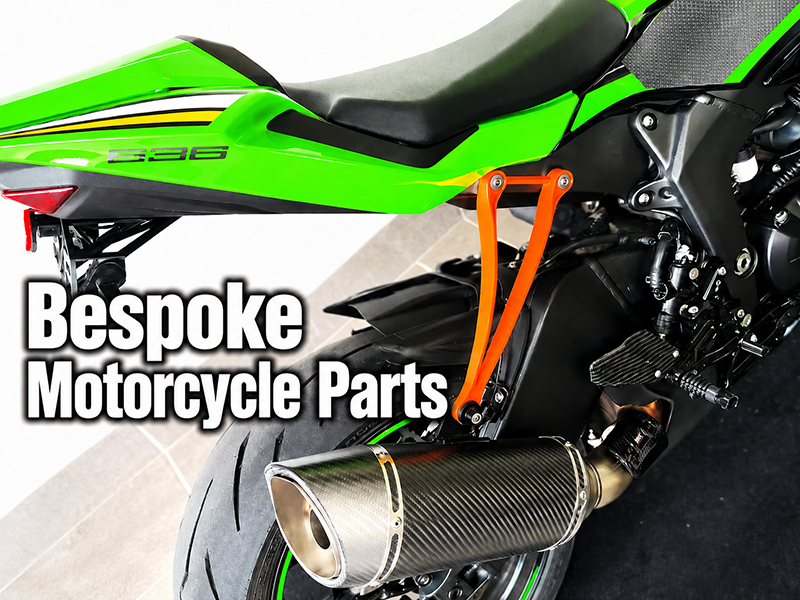
Bespoke motorcycle parts are custom components made for a specific bike, build concept, performance target, or visual identity rather than sold as one-size-fits-most aftermarket pieces. CNC machining is a strong fit for this work because it can turn CAD data into precise metal parts with repeatable dimensions, real engineering alloys, and production-ready finishes such as anodizing, bead blasting, polishing, and powder coating. That makes CNC machining ideal for custom motorcycle parts, including replacement components, performance upgrades, custom builds, and small-batch branded accessories.
What Are Bespoke Motorcycle Parts
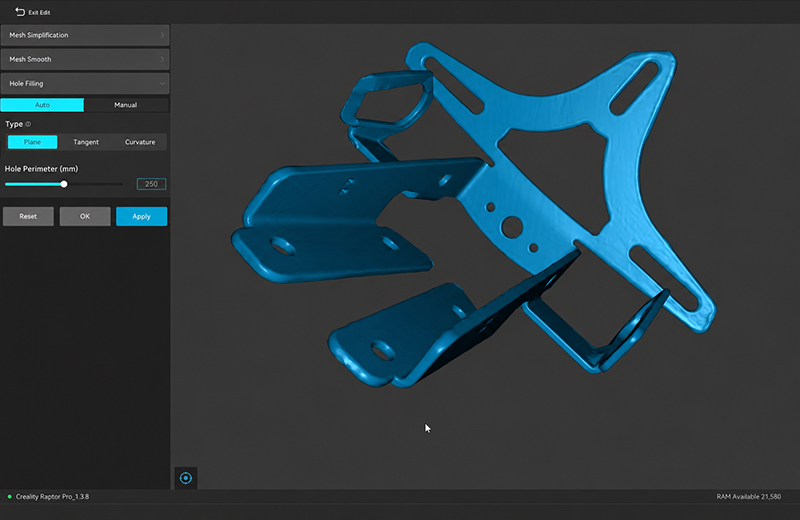
Bespoke motorcycle parts are components designed, reproduced, or modified for a particular motorcycle model, custom project, rider requirement, or brand aesthetic. In practice, they are often created when the original design is unavailable, when fit or function needs to change, or when builders want a more distinctive appearance than standard catalog parts can provide. Reverse-engineering workflows are widely used for obsolete or undocumented hardware, but the scan or sample still has to be converted into a usable CAD model before manufacturing starts.
| Part category | Why customers customize it |
|---|---|
| Replacement part | The OEM part is damaged, discontinued, rare, or no longer supported |
| Appearance part | The goal is a unique style, engraved branding, color, or bike theme |
| Functional part | The customer needs better fit, mounting, ergonomics, durability, or lower mass |
| Prototype part | A workshop or brand wants to validate a new design before wider release |
| Small-batch branded part | A builder or accessory label needs limited-run parts without investing in tooling |
These use cases match established reverse-engineering practice for legacy parts and the way premium motorcycle accessory brands position custom or model-specific components.
Unlike generic aftermarket parts, bespoke parts are usually built from a CAD model, a 2D drawing, a scanned mesh, or a physical sample. That is why CNC machining is especially attractive for metal custom motorcycle parts: it allows controlled hole locations, bores, threads, contours, engraved details, and mating surfaces, while also supporting one-off prototypes and low-volume production without molds or dedicated dies.
Which Motorcycle Parts Can Be CNC Machined
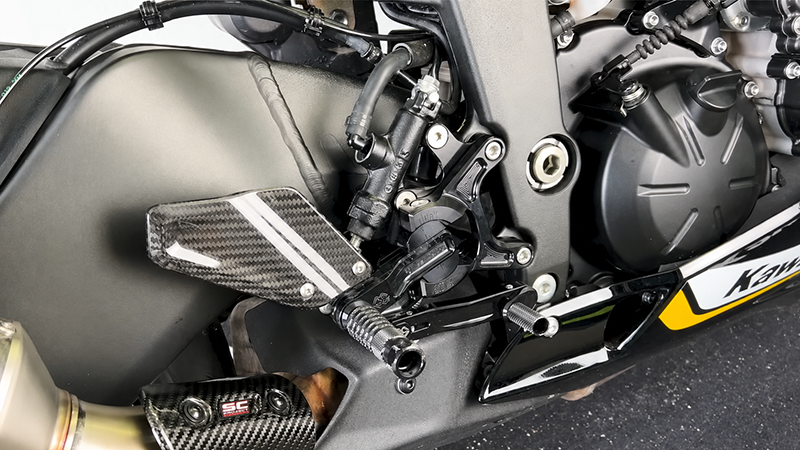
Many custom motorcycle parts are good candidates for CNC machining because their geometry is defined by bores, hole patterns, slots, pockets, profiles, threads, or turned diameters. Real-world accessory catalogs show that common categories include rearsets and foot controls, top triple clamps, clip-on parts, mirror block-offs, spacers, rearset brackets, heel guards, levers, engine covers, mirrors, floorboards, and other visible billet accessories. Brackets, covers, and clamp bodies are typically milled; spacers, bushings, caps, and some adapters are often turned and then finished with secondary milling or threading where needed.
| Component type | Typical CNC features | Common material direction |
|---|---|---|
| Rearsets, foot pegs, pedal parts | Grip grooves, mounting holes, pockets, replaceable pieces | Aluminum, stainless steel |
| Handlebar clamps, risers, top clamp parts | Bores, bolt patterns, contoured clamp faces | Aluminum |
| Levers and pedal assemblies | Curved profiles, pivot holes, ergonomic surfaces | Aluminum |
| Engine covers, clutch covers, caps | Pockets, logos, threads, cosmetic surfaces | Aluminum, titanium hardware in premium assemblies |
| Brackets, mirror mounts, block-offs, adapters | Threads, slots, locating faces, angled features | Aluminum, stainless steel |
| Spacers and bushings | Precise diameters, shoulders, grooves, threads | Aluminum, stainless steel, bronze |
The categories above reflect product ranges from established motorcycle accessory brands and standard CNC milling/turning capability for holes, grooves, flats, slots, bores, and cylindrical parts.
Safety-critical components require a different level of caution. Brake-system parts are subject to explicit motorcycle brake system requirements in U.S. regulation, so brake-related custom components should not be treated as safe solely because they were machined accurately. That is why brake caliper brackets, triple clamps, suspension linkage pieces, wheel hubs, axles, steering parts, and frame-related connectors should never be treated as “safe” merely because they were machined accurately. For these parts, dimensional accuracy is only one piece of the picture; engineering design, material suitability, inspection, certification, and functional validation remain essential.
Why Use CNC Machining for Custom Motorcycle Parts
The biggest advantage of CNC machining for bespoke motorcycle parts is precision fit. Custom parts often have to match existing bolt circles, shaft diameters, bearing seats, threaded interfaces, or surrounding bodywork, and CNC machining is built around controlled geometry taken directly from a 3D model or programmed toolpath. In practical terms, that makes it far better suited than hand fabrication for parts that must assemble cleanly onto an existing motorcycle platform.
It also fits the economics of custom bikes and accessory development. CNC machining works well for one-off builds, prototypes, and low-volume production because it does not require mold tooling, and it scales into mid-volume batches with good repeatability when a design stabilizes. This is especially important for custom workshops, race projects, boutique brands, and limited-run accessory programs where the demand may be dozens of parts rather than thousands.
Design freedom is another reason CNC machining is widely used in custom motorcycle work. Modern CNC milling can create engraved logos, sculpted pockets, contoured forms, lightweighting features, and precisely located cosmetic details, while turning can produce clean cylindrical features, caps, bushings, and spacers with secondary holes or flats added through live tooling. That combination of geometry control and visual refinement is a large part of why billet aluminum motorcycle parts remain a premium category in the market.
CNC machining also supports frequent design revision. When a first prototype exposes a clearance issue, a fastening problem, or an ergonomic change, the CAD model can be updated and the toolpath regenerated without the sunk cost of hard tooling. That design loop is especially valuable when reproducing older parts from samples or when creating new accessories that must fit multiple motorcycle variants.
Choosing Materials and Surface Finishes
CNC machining material selection for bespoke motorcycle parts should be driven by function first and style second. For many custom motorcycle accessories, 6061 aluminum is a practical starting point because it balances machinability, corrosion resistance, finishing flexibility, and useful strength; The Aluminum Association’s 6xxx alloy guidance identifies 6061 as the most widely used alloy in this versatile family. NIST’s aluminum reference also describes 6xxx alloys as having good formability, weldability, machinability, corrosion resistance, and medium strength rather than the very high strength associated with some 7xxx grades.
| Material | Best suited to | Main advantages | Main caution |
|---|---|---|---|
| Aluminum 6061 | Brackets, covers, clamps, adapters, visible billet parts | Good corrosion resistance, good machinability, finish-friendly, practical for many custom parts | Medium strength rather than maximum strength |
| Aluminum 7075 | Higher-stress lightweight parts where design is validated | Very high strength for an aluminum alloy | Lower corrosion resistance than 6061 and higher cost |
| Stainless steel | Brackets, exposed hardware, spacers, durable mounts | Good corrosion resistance, strength, durability | Significantly heavier than aluminum |
| Titanium | Premium fasteners and specialty performance parts | High strength-to-weight ratio and corrosion resistance | Poor machinability and higher cost |
| Brass | Decorative caps, fittings, custom detail parts | Good corrosion resistance and distinctive appearance | Heavier and usually more cosmetic than structural |
| Bronze | Bushings and wear-contact components | Low friction, anti-seizing behavior, wear resistance | Best for specific contact and bearing applications, not general lightweight accessories |
These material directions are consistent with ASM/MatWeb alloy data, NIST aluminum guidance, stainless-steel corrosion references, titanium machining guidance, and Copper Development Association references for brass and bearing bronzes.
For most non-structural or moderately loaded custom motorcycle accessories, aluminum remains the default because it balances weight, machinability, and finishing flexibility. Stainless steel is often the better choice when corrosion resistance and long-term durability matter more than mass. Titanium is usually reserved for premium applications where its strength-to-weight ratio justifies the extra machining cost and process difficulty.
Surface finish is equally important because motorcycle parts are visible products, not hidden machine internals. Anodizing is widely used on aluminum because it grows a corrosion-resistant oxide layer that preserves the metallic look and maintains relatively tight dimensions; Type III hard anodizing creates a thicker, denser layer with better wear resistance. Powder-coated motorcycle components can achieve bold colors and durable surface protection on multiple metals, although coating buildup must be considered on tight-fit surfaces. Brushing, bead blasting, and polishing are often used to tune the texture from satin to matte to mirror-like.
| Finish | Suitable materials | Main benefit | Typical custom-motorcycle use |
|---|---|---|---|
| Anodizing | Aluminum | Color plus corrosion protection with limited dimensional impact | Levers, clamps, covers, pegs |
| Hard anodizing | Aluminum | Better wear resistance and technical look | Functional aluminum parts with repeated contact |
| Powder coating | Aluminum, steel, stainless steel | Thick, durable colored coating | Brackets, guards, mounts |
| Brushing | Aluminum, stainless steel | Uniform satin grain | Visible panels, covers, trim pieces |
| Bead blasting | Aluminum, stainless steel | Uniform matte texture | Understated premium cosmetic parts |
| Polishing | Aluminum, stainless steel, brass | Reflective decorative finish | Caps, covers, visible show-bike details |
These finish categories and use cases are supported by official CNC post-processing and material-finish documentation from Protolabs and the Aluminum Anodizers Council.
A critical practical point is that finish thickness must be considered before final dimensions are frozen. The Aluminum Anodizers Council anodizing FAQ explains that anodizing changes part dimensions because aluminum is converted into oxide and some coating builds outward; holes, bores, and selected areas can be masked where buildup is unacceptable. Protolabs likewise notes that threaded holes may need plugging and that at least one thread may need to remain uncoated for processing. In other words, threads, bearing fits, sealing faces, and close-tolerance bores should be identified early rather than treated as an afterthought.
From Idea to Finished Part
For a new custom motorcycle part, the clearest input is a 3D CAD model plus a drawing or manufacturing notes that define critical dimensions, threads, tolerances, material, and finish. Neutral 3D formats such as STEP or STP are widely accepted, and Protolabs’ upload documentation explicitly lists STEP among standard accepted formats for quoting and production workflows. Once uploaded, the CAD model becomes the basis for manufacturability analysis, quoting, and machining preparation.
If the part must be reproduced from an existing sample, reverse engineering is the normal route. Siemens notes that reverse engineering starts with acquiring the object, analyzing and documenting its dimensions and materials, then reconstructing or replicating it in CAD. Autodesk adds an important caution: scan data and mesh data are not the same thing as a production-ready model, so the geometry still has to be refined into an editable CAD definition before machining.
For vehicle-specific parts, the exact motorcycle application matters more than many buyers expect. Aftermarket suppliers routinely organize fitment by make, model, and year, and some parts are explicitly model-specific rather than universal. As a result, customers requesting custom CNC motorcycle parts should provide the exact bike platform, mounting context, and surrounding interfaces whenever fit is important.
Prototype and fit-check stages should not be skipped, especially for first-time designs. Manufacturing-oriented DFM review is useful early because it catches issues such as sharp internal corners, deep narrow pockets, tall walls, thin sections, expensive engraved text, and difficult thread features before they become scrap or rework. Protolabs’ machining guidance repeatedly notes that deep narrow pockets, thin walls, and sharp internal corners increase cost, risk tool deflection, and can hurt tolerance capability.
| Validation stage | What to verify |
|---|---|
| CAD and DFM review | Tool access, wall thickness, internal radii, thread strategy, finish allowance |
| Prototype machining | Base geometry, visual quality, feature accessibility |
| Fit check | Bolt pattern alignment, surrounding clearance, interference, rider touch points |
| Finish confirmation | Color, texture, masking, visible cosmetic expectations |
| Functional validation | Load, vibration, heat, wear, weather exposure, assembly behavior |
| Batch release | Repeatability, inspection method, documentation, packaging protection |
This staged approach aligns with DFM practice, prototype evaluation, first article inspection logic, and production-quality documentation frameworks used in advanced manufacturing.
For safety-relevant or load-bearing parts, prototype fit is only the beginning. Brake-system regulation, motorcycle structural fatigue research, and first article/traceability frameworks all point to the same conclusion: reliable custom parts require more than correct shape. They may also require material certificates, dimensional inspection, documented revision control, and functional or fatigue validation before real-world use.
Cost, Lead Time, and Supplier Selection
The cost of bespoke motorcycle parts is driven less by the word “custom” than by the geometry and quality requirements underneath it. Official CNC cost guidance consistently points to three major buckets: raw material, machining time, and fixed or supporting costs such as fixturing, inspection, communication, and packaging. In practice, price rises when the part uses expensive material, requires multiple setups, contains small detailed features, needs tight tolerances, or includes premium finishing and documentation.
Material choice can change the quote dramatically. Aluminum is generally one of the more accessible options, while titanium costs more not only as a material but also because its machinability is poor compared with steels and stainless steels, placing greater demands on tooling and process control. Stainless steel often sits between them, offering corrosion resistance and strength but at a higher mass than aluminum.
Design choices can reduce cost without making the part feel cheap. Larger internal radii, fewer deep pockets, simpler setups, fewer tiny engraved details, standard threads, and avoiding unnecessary over-tolerancing all improve machinability. Protolabs’ own design guidance is explicit that sharp inside corners, deep pockets, tall walls, and excessive text drive time and cost upward.
When evaluating a CNC supplier for custom motorcycle parts, look beyond “can you machine this.” A suitable partner should be able to discuss material selection, milling and turning strategy, finish masking, DFM concerns, dimensional inspection, revision control, and the difference between a cosmetic custom part and a safety-critical structural component. Production-side quality offerings such as CMM inspection reports, dimensional inspection reports, material certificates, certificates of conformity, first article inspection, and traceability are all meaningful indicators that the supplier can support more than just basic shape creation.
For premium visible parts, packaging and finish handling also matter. Protolabs explicitly frames post-processing as a way to improve cosmetic appearance, provide customization, and strengthen parts, which is highly relevant for anodized, polished, or brushed motorcycle accessories that can be damaged by poor handling after machining. For bespoke motorcycle parts, the lowest unit price is rarely the best value if the part arrives with fit issues, finish damage, or no inspection support.
Conclusion
Bespoke motorcycle parts are valuable because they solve real problems that generic aftermarket parts often cannot: replacing unavailable originals, matching a specific style, improving fit, or supporting a performance-focused custom build. CNC machining makes that practical by producing accurate one-off and small-batch metal parts from CAD data with repeatable quality, real engineering materials, and production-grade finishes. The most reliable results come from combining machining with the right material choice, finish planning, DFM review, prototype fit checks, and—where safety-critical parts are involved—formal inspection and validation rather than relying on machining accuracy alone.
FAQ About Bespoke Motorcycle Parts
Can you manufacture a replacement motorcycle part from an existing sample?
Yes. Reverse engineering can start from a physical part, structured measurements, or 3D scan data, but the result still has to be reconstructed into a proper CAD model before controlled manufacturing begins. This is a common path for obsolete, rare, or undocumented parts.
What file format is best for custom CNC motorcycle parts?
A 3D CAD file in a neutral format such as STEP or STP is commonly preferred, ideally supported by a drawing or notes that define critical dimensions, threads, materials, finishes, and tolerances. Accepted upload workflows from Protolabs explicitly include STEP files for digital quoting and manufacturing analysis.
What material is best for bespoke motorcycle parts?
There is no universal best material. Aluminum 6061 is often the most practical starting point for brackets, covers, and clamps because it machines well and finishes well; 7075 offers higher strength at the cost of lower corrosion resistance; stainless steel prioritizes durability and corrosion resistance; titanium is a premium option when strength-to-weight matters enough to justify the machining cost; bronze is better reserved for wear-contact parts such as bushings.
Can CNC machining be used for brake, steering, or suspension components?
It can be used to manufacture them, but that does not mean a custom part is automatically safe to use. Brake systems are regulated for performance, and safety-relevant motorcycle structures are assessed against load spectra, durability, and fatigue. For those parts, machining must be paired with engineering analysis, inspection, and validation.
How much do custom CNC motorcycle parts cost?
Cost depends on material, stock size, machining time, setups, small detailed features, tolerances, finishes, inspection, and quantity. A simple aluminum bracket is usually far less expensive than a complex titanium part with tight fits, engraved branding, special masking, and certificate requirements. The fastest way to get an accurate quote is still a clear CAD model plus application details.