Introduction
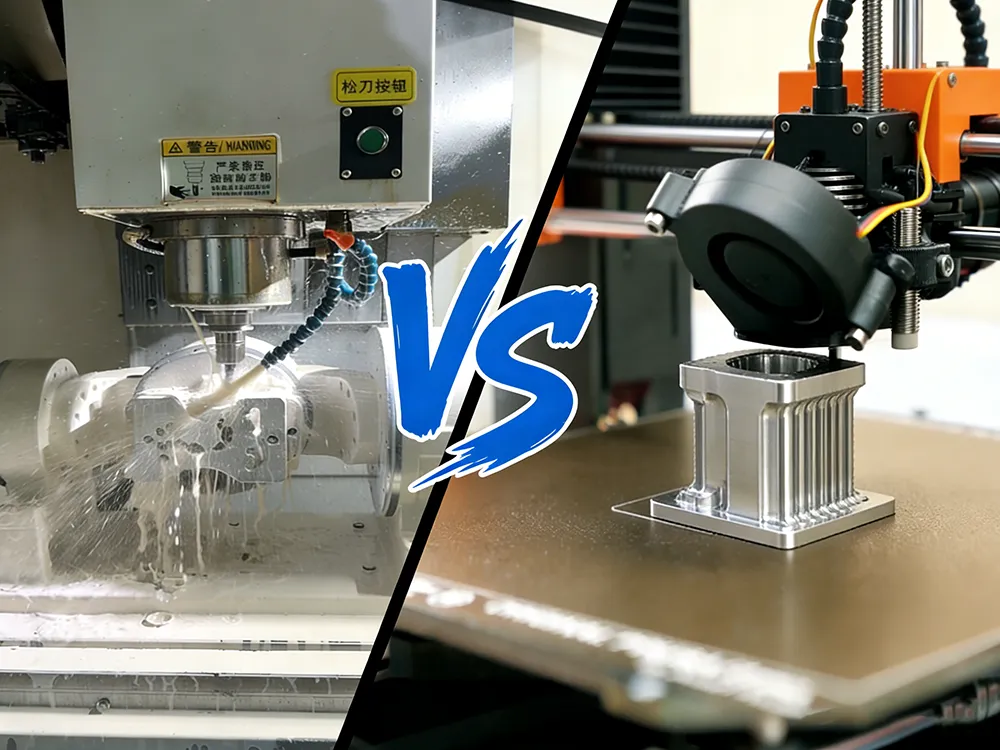
In modern manufacturing, companies have access to many advanced production technologies. Among them, CNC machining and 3D printing are two of the most widely used methods for producing custom parts and prototypes. Each technology offers unique advantages, and both play an important role in product development and industrial manufacturing.
CNC machining has been widely used for decades in industries such as aerospace, automotive, and industrial equipment. It is known for its high precision, excellent surface finish, and ability to process strong materials such as aluminum, steel, and titanium.
On the other hand, 3D printing has rapidly gained popularity in recent years. This technology allows manufacturers to create complex shapes by building parts layer by layer. It is especially useful for rapid prototyping and design testing.
Although both technologies can produce high-quality parts, they work in very different ways and are suitable for different applications. Understanding the differences between CNC machining and 3D printing can help engineers, designers, and procurement teams choose the right manufacturing method.
In this article, we will explore how these two technologies work, compare their advantages and limitations, examine their costs, and discuss when each method is the best choice.
What Is CNC Machining?
Definition of CNC Machining
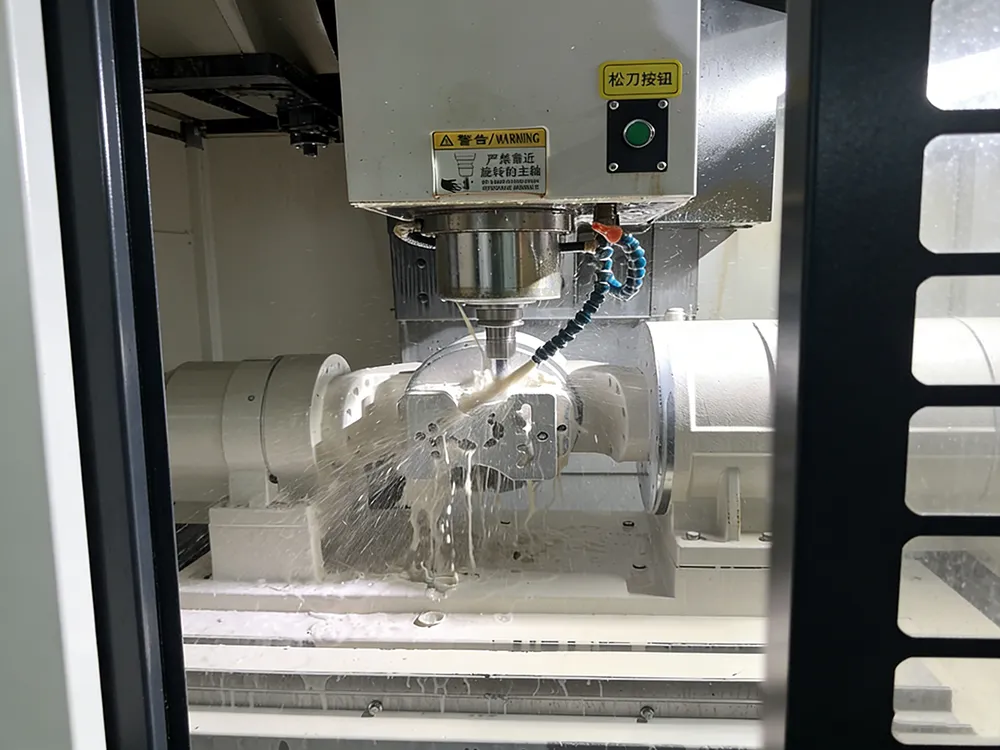
CNC machining stands for Computer Numerical Control machining, a manufacturing process in which computers control machine tools to produce precise parts. If you are new to the technology, you can also learn more about CNC machining services and how they are used to manufacture precision components in various industries. According to the National Institute of Standards and Technology, CNC technology plays a critical role in modern precision manufacturing. The machines follow programmed instructions that guide cutting tools to remove material from a workpiece.
Because of its accuracy and reliability, CNC machining has become a standard method for manufacturing high-precision components in modern industry.
How CNC Machining Works
CNC machining is known as a subtractive manufacturing process, which means material is removed from a solid block until the desired shape is achieved.
The process typically involves several common operations:
CNC milling – rotating cutting tools remove material from a stationary workpiece
CNC turning – the workpiece rotates while a cutting tool shapes it
Drilling – holes are created with precision cutting tools
These operations are controlled by computer programs, allowing machines to perform complex cutting movements with high consistency.
Advantages of CNC Machining
CNC machining offers several significant advantages in manufacturing:
High precision and tight tolerances
Excellent surface finish
Wide material compatibility, including metals and engineering plastics
Suitable for both prototyping and production
Because of these benefits, CNC machining is widely used in industries that require reliable and durable parts.
Limitations of CNC Machining
Despite its advantages, CNC machining also has certain limitations:
Material waste can be relatively high because material is removed during cutting
Complex internal geometries may be difficult or impossible to produce
For example, intricate hollow structures are often better suited for additive manufacturing technologies.
What Is 3D Printing?
Definition of 3D Printing
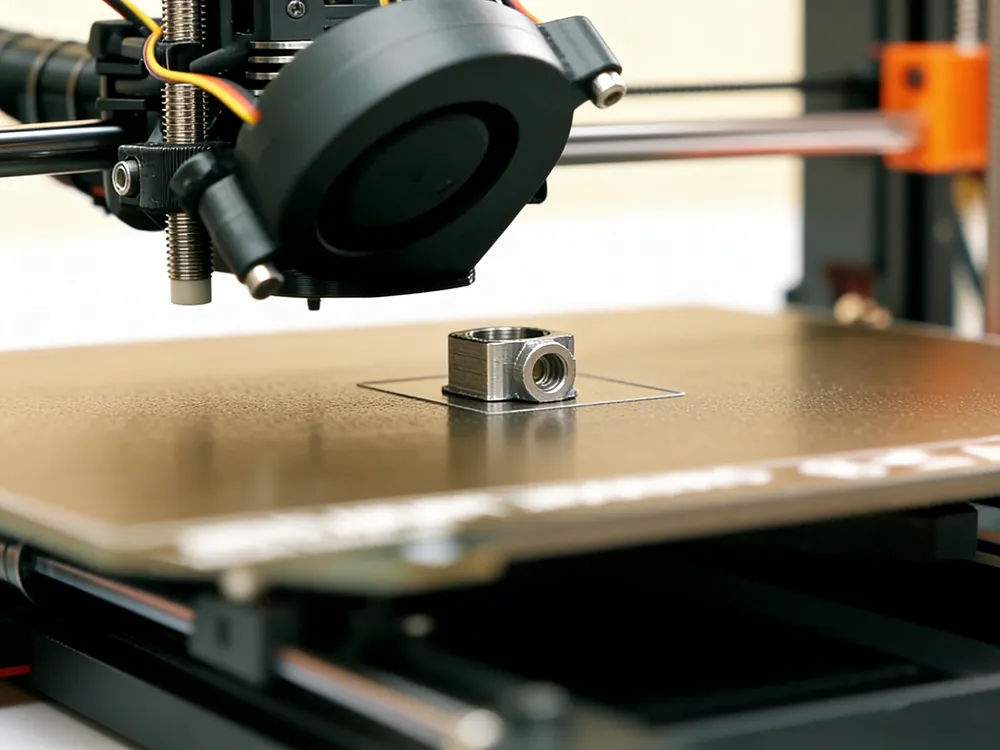
3D printing, also known as additive manufacturing, is a process in which parts are created by building material layer by layer. The technology has rapidly expanded in recent years and is widely discussed by organizations such as MIT’s Additive Manufacturing research programs. Instead of removing material like CNC machining, 3D printing adds material gradually until the final shape is formed.
This approach allows for the production of highly complex designs that would be difficult to achieve using traditional machining methods.
How 3D Printing Works
During 3D printing, a digital model is sliced into thin layers by specialized software. The printer then deposits material layer by layer according to the design.
Several different 3D printing technologies are commonly used:
FDM (Fused Deposition Modeling) – melts and deposits thermoplastic filament
SLA (Stereolithography) – uses liquid resin cured by ultraviolet light
SLS (Selective Laser Sintering) – fuses powder materials using a laser
Each method has its own advantages depending on the required material and part characteristics.
Advantages of 3D Printing
3D printing offers several unique benefits:
Ability to produce complex internal structures
Minimal material waste compared with subtractive processes
Fast prototyping and design iteration
These advantages make 3D printing particularly valuable in early product development stages.
Limitations of 3D Printing
However, 3D printing also has several drawbacks:
Printed parts often have lower mechanical strength than machined parts
Surface finish may be rougher and require post-processing
Production speed can be slow for large-scale manufacturing
Because of these factors, 3D printing is usually not the best option for mass production.
CNC vs 3D Printing: Key Differences
Although both methods are used to manufacture parts, they operate in fundamentally different ways.
| Feature | CNC Machining | 3D Printing |
|---|---|---|
| Manufacturing type | Subtractive manufacturing | Additive manufacturing |
| Material usage | Material removed | Material added layer by layer |
| Precision | Very high | Moderate |
| Surface finish | Smooth | Often rough |
| Best for | Metal parts and precision components | Prototypes and complex shapes |
| Production speed | Faster for production | Slower for large batches |
These differences highlight the strengths of each method. CNC machining excels in precision and durability, while 3D printing is ideal for complex geometries and rapid design testing.
Materials Used in CNC and 3D Printing
Common CNC Materials
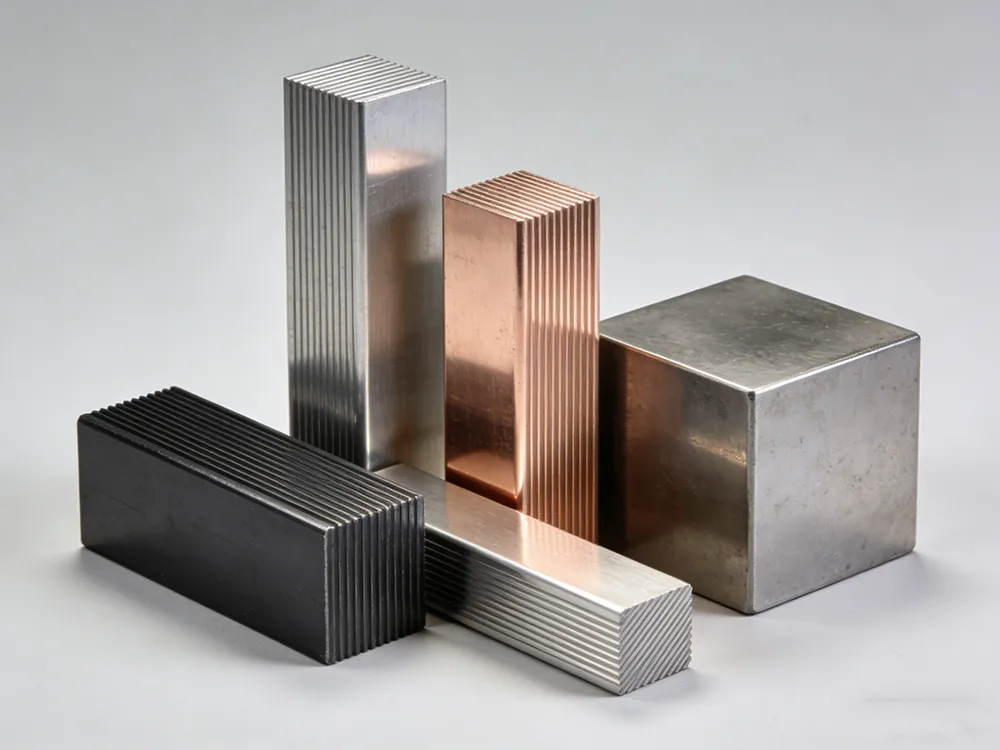
CNC machining can process a wide variety of materials, especially metals. Common examples include:
Aluminum
Stainless steel
Brass
Titanium
Engineering plastics such as POM and nylon
These materials are widely used because they offer strong mechanical properties and good machinability.
Common 3D Printing Materials
3D printing typically uses different materials, depending on the printing technology:
PLA
ABS
Nylon
Photopolymer resin
Metal powders
While some metal printing technologies exist, they are often more expensive and less common than plastic printing.
Cost Comparison: CNC vs 3D Printing
Manufacturing cost is often a major factor when choosing between CNC machining and 3D printing. Several factors influence the final price:
Material cost
Equipment and machine operation cost
Production time
Quantity of parts
In general, CNC machining is more cost-effective for medium to large production volumes, especially when strong materials and tight tolerances are required.
In contrast, 3D printing is often cheaper for rapid prototyping, particularly when only a few parts are needed during the design stage.
When to Choose CNC Machining
CNC machining is usually the best choice when:
Parts require high precision and tight tolerances
Metal materials are needed
Components must withstand high mechanical loads
Medium or large production volumes are required
Industries that commonly use CNC machining include:
Aerospace manufacturing
Automotive production
Industrial machinery
Electronics and robotics
These industries rely on CNC machining to produce reliable and durable components.
When to Choose 3D Printing
3D printing is typically preferred when:
Products are still in the design or development stage
Rapid prototyping is required
Parts contain complex internal geometries
Only small production quantities are needed
Common applications of 3D printing include:
Product design validation
Medical models and prototypes
Educational research and experimentation
Because of its flexibility, 3D printing allows engineers to quickly test and modify designs.
Can CNC and 3D Printing Work Together?
In many modern manufacturing workflows, CNC machining and 3D printing are not competing technologies but complementary ones.
For example:
A 3D printed prototype may be used to test a product design before final production using CNC machining.
CNC machining may be used to finish or refine parts that were initially produced using 3D printing.
This hybrid manufacturing approach combines the speed of 3D printing with the precision and strength of CNC machining, making it increasingly popular in many industries.
FAQ About CNC vs 3D Printing
What is the main difference between CNC and 3D printing?
The main difference lies in how parts are created. CNC machining is a subtractive manufacturing process, meaning material is removed from a solid block. In contrast, 3D printing is an additive manufacturing process that builds parts layer by layer.
Is CNC machining more precise than 3D printing?
Yes. CNC machining generally provides higher precision and better surface finish than most 3D printing technologies. This makes it more suitable for high-performance industrial components.
Which method is cheaper for prototyping?
3D printing is usually more cost-effective for rapid prototyping because it allows designers to produce parts quickly without expensive tooling or complex machining setups.
Can 3D printing replace CNC machining?
In most industrial applications, 3D printing cannot completely replace CNC machining. While 3D printing is excellent for prototypes and complex shapes, CNC machining remains the preferred method for high-strength materials, precision components, and large-scale production.