Introduction
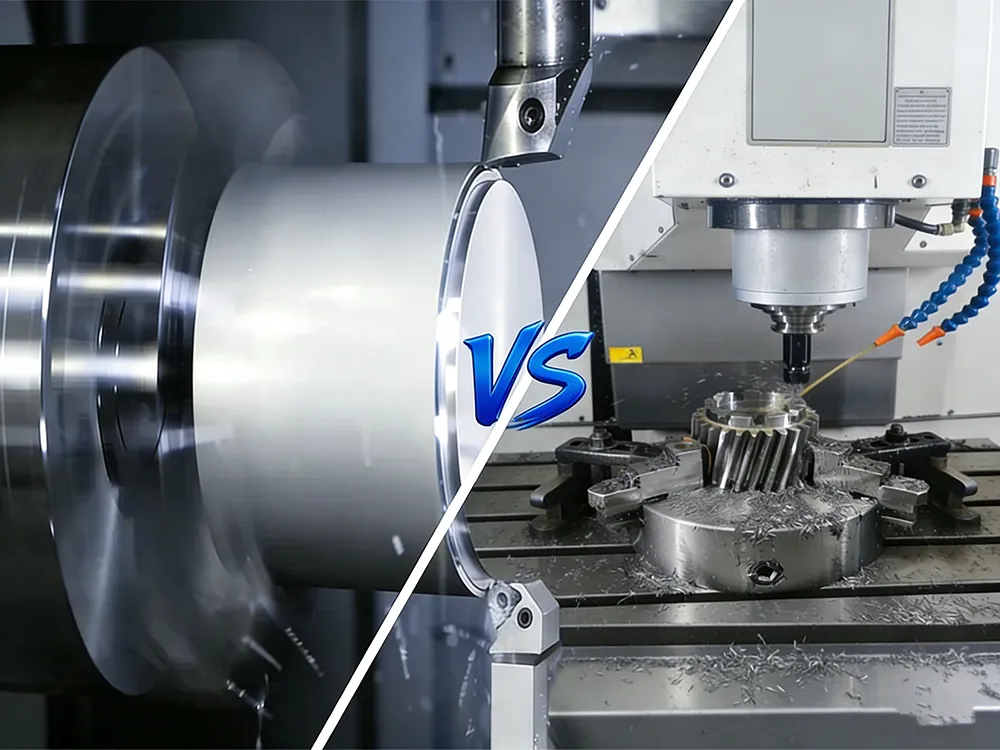
Modern manufacturing relies heavily on CNC machining because it delivers high precision, repeatability, and efficiency. Among the many machining processes available today, CNC milling and CNC turning are two of the most widely used methods for producing custom parts.
Both processes use computer-controlled machines to remove material from a workpiece. However, they operate in very different ways and are best suited for different types of parts. CNC milling is ideal for complex shapes and flat surfaces, while CNC turning is typically used for cylindrical components such as shafts and bushings.
Understanding the differences between these two machining methods is important for engineers, product designers, and procurement teams. Choosing the right process can improve manufacturing efficiency, reduce costs, and ensure better part performance.
In this guide, we will explain how CNC milling and turning work, highlight their key differences, and help you determine which method is best for your project.
What Is CNC Milling?
Definition of CNC Milling
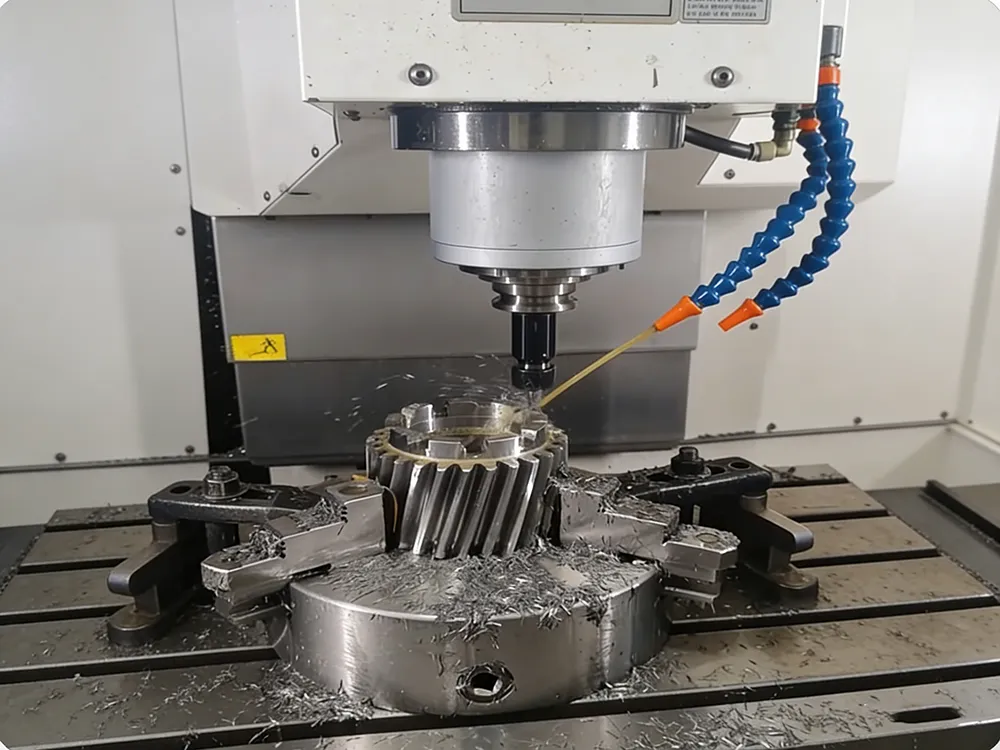
CNC milling is a machining process where a rotating cutting tool removes material from a stationary workpiece. The cutting tool moves along multiple axes to shape the material into the desired geometry.
This process is commonly performed on 3-axis, 4-axis, or 5-axis milling machines, which allow complex cutting paths and high-precision manufacturing.
How CNC Milling Works
During CNC milling, the workpiece is fixed on the machine table while the cutting tool rotates at high speed. The machine then moves the tool along programmed paths to remove material.
Typical CNC milling operations include:
Face milling
Slot milling
Drilling
Contour milling
Pocket milling
Because of this flexibility, milling machines can produce highly detailed and complex components.
Common CNC Milling Applications
CNC milling is commonly used to manufacture:
Electronic housings
Mechanical brackets
Aerospace components
Mold and tooling parts
Precision plates and frames
These parts often contain multiple features such as holes, slots, and complex surfaces.
Advantages of CNC Milling
Key benefits of CNC milling include:
Ability to produce complex geometries
High precision and tight tolerances
Multi-axis machining capability
Suitable for both prototypes and production
For a deeper overview of CNC manufacturing processes, the machining resources from the Massachusetts Institute of Technology provide useful technical insights.
What Is CNC Turning?
Definition of CNC Turning
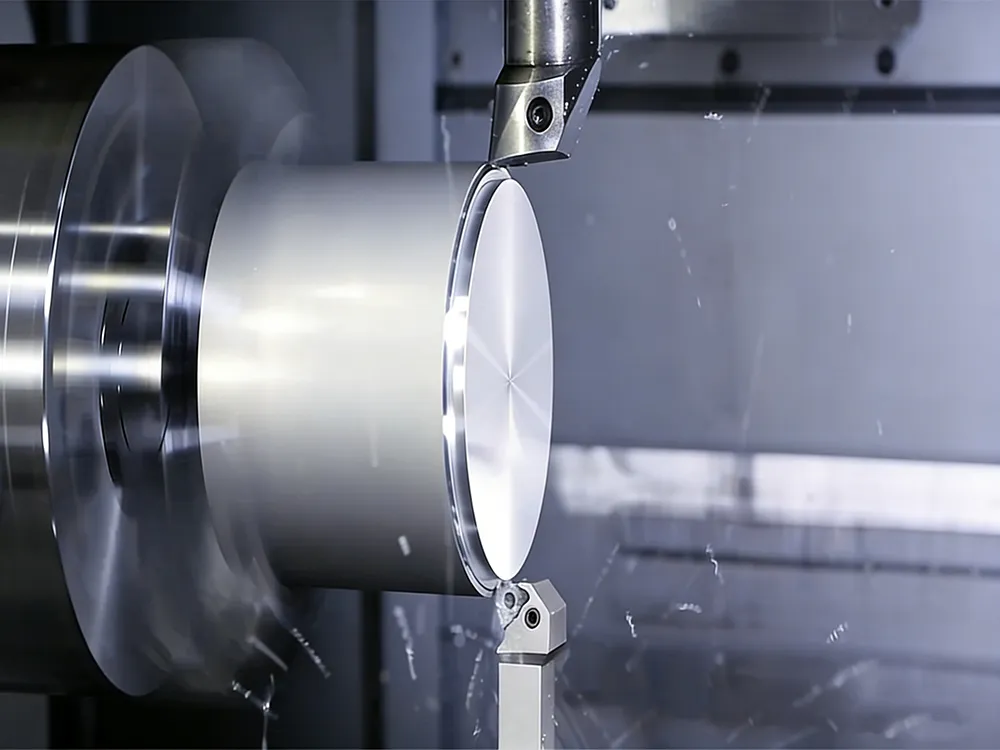
CNC turning is a machining process where the workpiece rotates while a cutting tool removes material. This process is usually performed on a CNC lathe.
Unlike milling, the cutting tool typically remains stationary while the rotating material is shaped into the required form.
How CNC Turning Works
In CNC turning:
The raw material is clamped in a chuck.
The spindle rotates the workpiece.
The cutting tool moves along programmed paths to remove material.
This method is extremely efficient for producing round parts.
Common CNC Turning Applications
CNC turning is widely used to manufacture:
Shafts
Bushings
Screws
Cylindrical connectors
Threaded components
These parts are common in mechanical equipment, automotive assemblies, and industrial machinery.
Advantages of CNC Turning
CNC turning offers several advantages:
High production efficiency
Excellent accuracy for round parts
Lower machining cost for cylindrical components
Ideal for batch production
Industry guidelines from the Society of Manufacturing Engineers also highlight turning as one of the most efficient processes for rotational components.
CNC Milling vs CNC Turning: Key Differences
Although both methods are subtractive manufacturing processes, their working principles differ significantly.
| Feature | CNC Milling | CNC Turning |
|---|---|---|
| Machine type | CNC milling machine | CNC lathe |
| Workpiece movement | Workpiece fixed | Workpiece rotates |
| Tool movement | Tool rotates and moves | Tool moves linearly |
| Best for | Complex shapes and flat parts | Cylindrical parts |
| Typical products | Housings, brackets, plates | Shafts, bushings, pins |
| Production efficiency | Medium | High for round parts |
In simple terms, CNC milling focuses on complex geometry, while CNC turning excels at producing round components quickly and efficiently.
Materials Used in CNC Milling and Turning
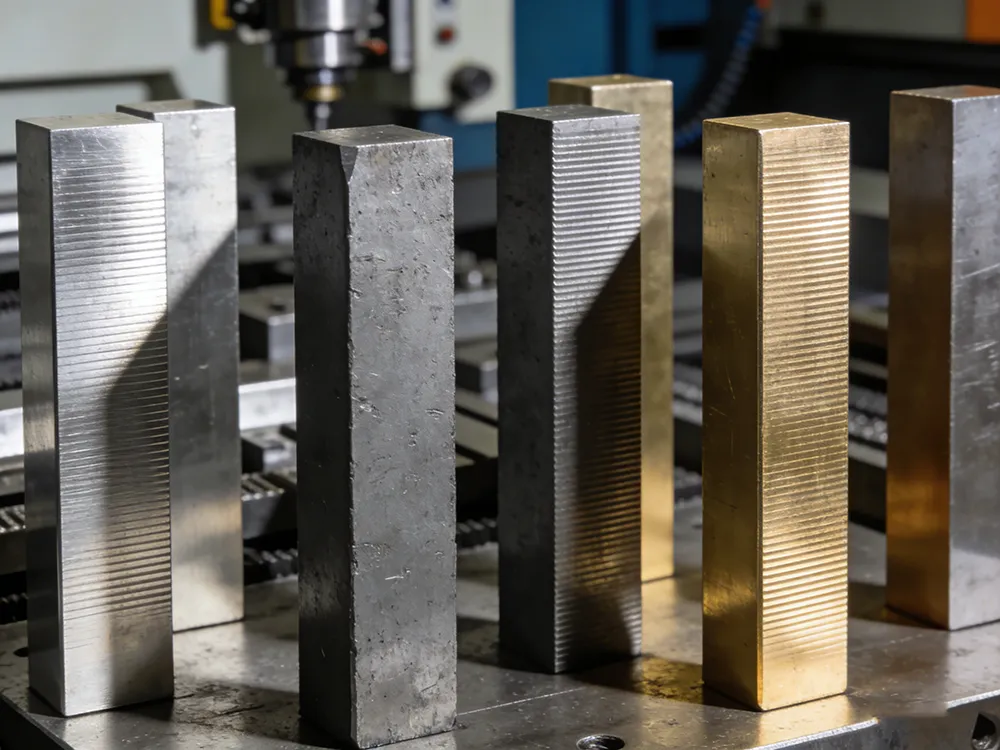
Both CNC milling and turning can process a wide range of materials.
Common Metals
Typical metals used in CNC machining include:
Aluminum
Stainless steel
Brass
Carbon steel
Titanium
Aluminum is particularly popular because it offers a good balance between strength, weight, and machinability.
Common Plastics
Engineering plastics are also frequently used:
ABS
Nylon
PEEK
Delrin (POM)
PTFE
These materials are widely used when lightweight components, insulation, or chemical resistance are required.
If you are selecting materials for a new project, you may also want to explore our guide on Precision CNC Machining Services to better understand available manufacturing options.
How to Choose Between CNC Milling and Turning
Selecting the right machining method depends on several key factors.
Part Geometry
Part shape is the most important factor.
Cylindrical parts → CNC turning
Complex shapes or flat surfaces → CNC milling
Production Volume
Turning is usually faster for large batches of round parts, while milling is more flexible for complex or low-volume components.
Precision Requirements
Both processes can achieve high precision, but milling is often preferred when parts contain multiple features or intricate geometries.
Cost Considerations
Machining cost depends on several variables:
machining time
material type
part complexity
tolerance requirements
Understanding these factors can significantly reduce production costs.
If you are interested in a deeper explanation of cost factors, you can also read our article on CNC machining cost factors, which explains how pricing is calculated in manufacturing projects.
Industries That Use CNC Milling and Turning
CNC machining is essential in many industries.
Aerospace
Aircraft components require lightweight materials and extremely tight tolerances.
Automotive
Automotive manufacturers rely on CNC machining to produce engine components, shafts, and structural parts.
Electronics
Precision aluminum housings and heat sinks are often manufactured through CNC milling.
Medical Devices
Medical implants and surgical equipment frequently use CNC turning and milling for high precision and reliability.
Combining CNC Milling and Turning
Modern manufacturing often combines both processes using turn-mill machines. These advanced machines allow milling and turning operations to be performed on a single setup.
Benefits include:
Reduced setup time
Higher accuracy
Faster production cycles
Lower overall manufacturing cost
This integrated approach is becoming increasingly common in high-precision industries.