Drilling holes is a fundamental operation in manufacturing, and the choice of drill bit can make or break a project. A range of bits – from twist drills to step bits – are used in industry, each tailored for specific materials and hole requirements. In manufacturing, picking the right drill bit for a part’s material, hole size, depth, and tolerance is critical for accuracy, speed, and tool life. This article will explain common drill bit types (twist, spade, gun, indexable, etc.), their applications, materials, and how to select the best bit for a job.
What Are Drill Bits?
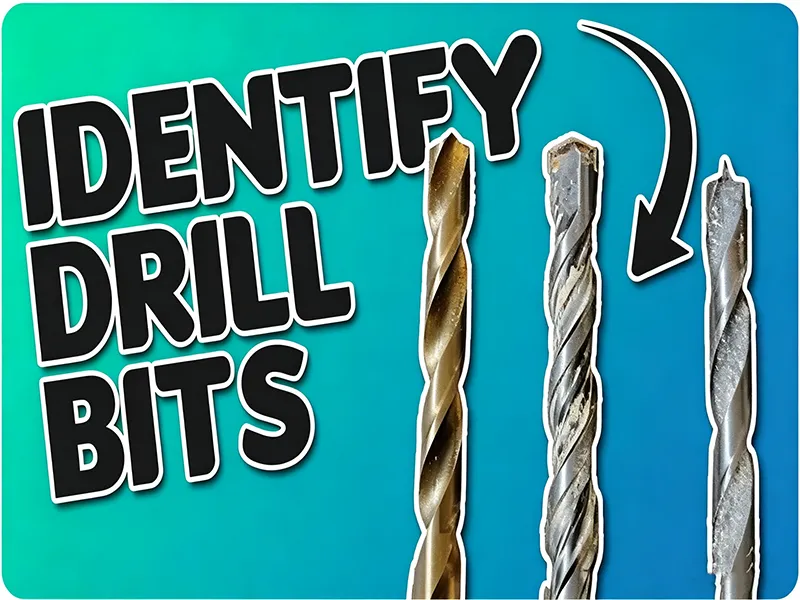
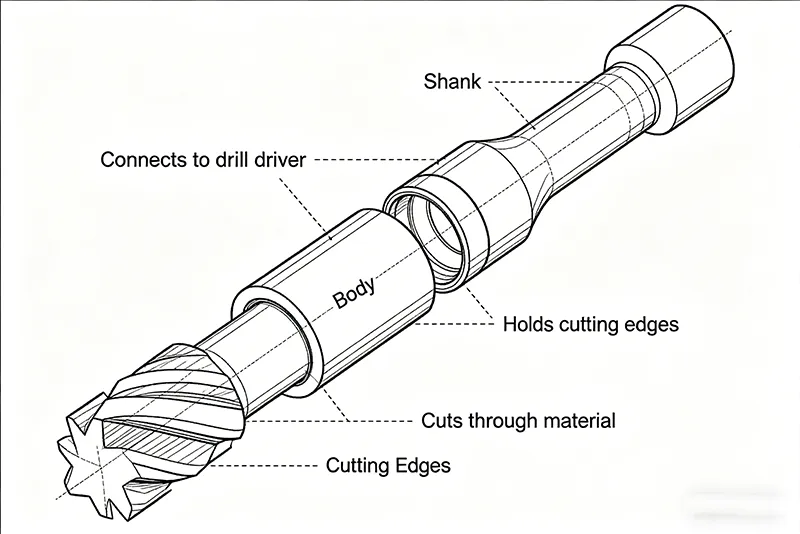
A drill bit is a cutting tool used to create holes by removing material as it rotates. Unlike boring or reaming tools, a drill bit forms the hole from solid metal, typically with a pointed tip that enters the material and helical flutes that eject chips. The geometry and material of the bit directly affect how well it cuts – wrong angles or material will cause wandering, excessive force, or rapid wear. In short, the drill bit’s design (point angle, flute shape, etc.) and its cutting speed/feed determine hole accuracy, surface finish, machining time, and tool lifespan.
Why Drill Bit Selection Matters in Part Manufacturing
Choosing the right drill bit is about more than just avoiding breakage. The correct bit and operating parameters determine hole precision and finish. For example, running a high-speed-steel (HSS) bit too fast can overheat it (above ~600 °C, it loses hardness). Proper coolant and speed must match the bit material to avoid blunting. A mis-matched bit can wander on entry (skewing the hole), produce heavy burrs, burnish the workpiece, or simply chip off. In production, the right bit means faster drilling rates and fewer tool changes, saving cycle time and reducing cost. Bits also have different stiffness; a thin bit in hard material can deflect, hurting accuracy. In sum, selecting a bit that fits the workpiece material, hole depth/diameter, and machine capabilities will improve quality, speed, and tool life.
Main Types Of Drill Bits Used in Manufacturing
Twist Drill Bits
The twist drill bit is the workhorse of machining. A helical flute winds up the bit’s shank, carrying chips up and out of the hole, while the sharpened tip shears material. HSS Twist bits are the most common: they cut everything from mild steel and aluminum to wood and plastics. (Rolled HSS bits are low-cost general-purpose tools; HSS-G ground bits are precision-sharpened for tighter tolerances and longer life; cobalt HSS bits (M35, M42 alloys) add toughness for tougher materials.) Standard jobber-length twist drills have point angles around 118° for soft metals and 135° (split-point) for harder metals to self-center. Drill bits normally should not be used on concrete, tile, or hardened steel – carbide-tipped bits are needed there. Tip: Always use the proper speed and cutting fluid for the bit/material – e.g. HSS bits in steel need coolant, since they lose hardness above ~600 °C.
Center Drill Bits
Center drills (or “wedding cake” drills) are short, rigid bits with a small pilot tip and a 60° countersink. They form a small conical hole for lathe centers or to start holes accurately. Their job is not to drill the full hole but to give a precise starting point. In lathe work, a center drill creates a perfect seat for a live/dead center to engage the workpiece. You’ll often see them used to begin a drilled hole before switching to a regular twist bit, or to align holes on rotary fixtures. They minimize deflection at entry. Because of their 60° angle, center drills are not interchangeable with spotting drills (explained next) – using a center drill to spot a hole can cause chipping or breakage.
Figure: Various sizes of high-speed steel center drills. These create precise pilot holes for lathe centers or to start a drill, minimizing bit walk.
Spot Drill Bits
Spot drills are short, rigid drill bits with a large point angle (usually 90° or more). Their sole purpose is to create a small dimple or chamfer to “spot” a hole before drilling the main hole. This prevents the full-length twist drill from wandering on entry – especially important on flat or angled surfaces. A spot drill’s angle is chosen slightly larger than the main drill’s tip angle so that the twist drill’s edges engage cleanly with the center of the dimple, as explained in this spot drilling guide.This improves hole accuracy and prolongs tool life by reducing axial loads at startup. In practice, use spot drilling (often with a 120°–135° point) for any hole requiring tight tolerances (±0.005″ or better), deep holes (beyond 3× diameter), or on hard materials to avoid walking. Unlike center drills, spot drills have no small pilot and are mostly used in milling/drilling ops, not lathe centers.
Step Drill Bits
Step drill bits (sometimes called “unibit” bits) are conical, stepped bits that can drill multiple diameters. As you drill deeper, progressively larger steps cut a wider hole. They are especially handy on thin materials like sheet metal, plastics, and laminated board. A single step bit can replace several drill sizes, saving bit changes. They leave a clean, beveled edge and can even enlarge an existing hole smoothly. For electricians and HVAC work, step bits are beloved: one bit drills a range of panel holes and deburrs them with its beveled steps. However, because of their taper, they can only penetrate material a few millimeters thick (typically under 5 mm). They’re great for clean holes in soft materials and thin metal, but are not intended for thick or hardened steel.
Brad Point Drill Bits
Brad-point bits (wood bits) are twist drills with a sharp center spur and spurs on the outer diameter. This geometry scores the wood fibers around the hole before the flutes lift them out, giving very clean entry/exit holes. They locate precisely on the center punch dimple so they don’t wander. In woodworking (and plastics), brad bits are the go-to for furniture, cabinetry, and finish work. However, in metalworking they are rarely used. The center spur will chip or break on metals. In machining, a standard twist bit (often with a split point) is used instead. In short: brad-point bits rule for wood and soft materials where tear-out must be avoided, but not for metal.
Spade Drill Bits
Spade (paddle) bits are flat, paddle-shaped wood bits with a small point. They drill very fast and roughly, but leave rough hole edges. Electricians and plumbers use them to bore large holes through wood framing or drywall quickly. Spade bits are cheap and cover large diameters (up to 1.5″ or more). The downside is the finish: holes are messy and splintered at the exit. They have no role in precision metal fabrication; instead, large-diameter metal holes would be done with hole saws, core drills, or boring.
Gun Drill Bits
Gun drills are specialized long, thin drills for deep-hole drilling (high depth-to-diameter ratio). They are used in automotive (camshafts, crankshafts), aerospace, medical devices, and mold-making – essentially anywhere precise, deep straight holes are needed. A gun drill has a single cutting edge, through-tool coolant supply, and a flush mechanism to remove chips continuously. This setup yields very straight, smooth holes with tight tolerances. Gun drilling differs from conventional drilling: feed is low and constant, and coolant pressure is high. These drills can reach aspect ratios of 100:1 or more, something a regular twist drill cannot. (Tip: Only rigid machines with precise alignment and plentiful coolant can effectively use gun drills.)
Core Drill Bits
Core drills (hollow drills) cut only the circumference of the hole, leaving a solid core of material. In metalworking, they are used for larger holes (like an annular cutter): rather than grinding away the entire hole, a core drill removes only a ring-shaped cut-out. This greatly reduces cutting volume and speeds up the operation while extending tool life. For example, a core drill with three carbide inserts will bore a 20 mm hole as fast as a solid bit of the same diameter, and with much less drill pressure. Core drills are typically used for moderate-size holes in steel, stainless, or even concrete. (In construction, “core bits” often refer to diamond-tipped bits for masonry, but in machining we mean metal-cutting annular cutters.) Because they leave the hole bottom flat, core drills produce good finishes and are efficient for repeated large-hole production.
Indexable Insert Drill Bits
Indexable drills are large-diameter drills that use replaceable carbide inserts. Instead of a solid cutting point, they hold square or round inserts that index (rotate) to a new edge when worn. These drills shine in high-volume or large-hole drilling, where tool change downtime matters. You can drill at faster speeds since you’re only replacing small inserts (not the whole bit). A well-tuned indexable system cuts aggressively in tough materials and is cost-effective in production. The tradeoff is complexity: setup must be precise (runout must be minimal) and these drills are typically limited to holes up to ~4× diameter deep. In CNC machining, indexable drills are common for holes above roughly 12–20 mm diameter, especially in steels, where each insert provides several edges before needing replacement.
Countersink and Counterbore Tools
While not used to make the initial hole, countersinks and counterbores are important companion tools. A countersink bit cuts a conical recess so that a flat-head (tapered) screw will sit flush or below the surface. A counterbore bit cuts a cylindrical, flat-bottomed pocket to recess a bolt head or socket cap. For example, to install a socket-head cap screw, you’d drill the pilot hole, then use a counterbore bit to leave a flat seat for the bolt head. In contrast, a countersink (often 82° or 90° point) is used when you have a flat-head screw. Choosing one depends on the fastener: countersinks for tapered screws; counterbores for cylindrical heads. They’re essential for machine assemblies where flush, protective, or aesthetic screw holes are needed.
Types Of Drill Bits by Material
Drill bits are also categorized by the material they’re made of. The common varieties are:
- High-Speed Steel (HSS): Basic, relatively tough and inexpensive. Works well on mild steel, aluminum, and other “soft” alloys. Entry-level HSS bits cut wood and softer metals, but they wear quickly on harder metals. They can be rolled (cheaper, less accurate) or fully ground (sharper, tighter tolerance).
- Cobalt Alloy (HSS-E): HSS bits alloyed with ~5–8% cobalt. The cobalt greatly increases heat resistance. These bits can maintain hardness at high temperatures, making them ideal for drilling stainless steel, cast iron, and tough alloys. M35 (5% Co) is a general workhorse for 304/316 stainless and tool steels, while M42 (8% Co) is for very hard alloys (up to ~45 HRC). They cost more but have much longer life in abrasive metals.
- Carbide-Tipped & Solid Carbide: Solid carbide bits are made entirely of tungsten carbide and are extremely hard. They cut at much higher speeds and are used for very hard materials (hardened steel, cast iron, superalloys). There are also carbide-tipped bits (carbide inserts brazed on steel). Carbide bits last significantly longer than steel but are brittle – they must be used on rigid machines and with care. For example, solid carbide is the top choice in CNC drilling for hardened stainless or titanium if cost is no object.
- Coated Drill Bits: Many HSS and carbide bits come with surface coatings. Black oxide coating adds corrosion resistance and some lubricity. Titanium nitride (TiN) (gold-colored) or TiAlN (purple-black) coatings reduce friction and heat buildup, extending bit life. Coatings are chosen based on material: TiN is general-purpose, TiAlN is better for high-speed/stainless, and other specialty coatings (TiCN, DLC) exist. Proper coating can make an HSS or carbide bit dramatically more productive in metal machining.
Drill Bits for Different Workpiece Materials

Different materials demand different bits and techniques. In general:
- Aluminum and Non-Ferrous: Soft metals like aluminum or copper drill easily. Use sharper bits with high helix angles (around 35°–38°) to quickly evacuate the continuous chips. TiN-coated HSS or even uncoated bits usually suffice if speeds are high and chip evacuation is good. Avoid slow feeds or excessive pressure – aluminum gums up bits. For plastics and laminates, brad-point or spade bits (from woodworking) often yield the cleanest holes.
- Mild Steel: Standard HSS twist drills (118° or 135° split points) work fine for routine drilling. For general fabrication, M2 HSS-G bits or TiN-coated bits are common. If drilling many holes or thicker/harder mild steel, upgrade to cobalt (M35) bits for longer life. Moderate spindle speeds and steady feed, plus lubrication (oil) will prevent work-hardening the steel.
- Stainless Steel: Use cobalt or carbide drills. Austenitic stainless tends to work-harden, so you need a robust bit and slow speed. A 135° split-point cobalt bit (M35/M42) is the workhorse. Solid carbide or carbide insert drills are used in high-production. Always use plenty of cutting fluid. (Do not try to drill stainless with ordinary HSS – it will glaze over or harden the surface.)
- Cast Iron: Cast iron chips are brittle (short chips). Regular HSS bits cut gray cast iron well, and cobalt isn’t strictly necessary unless alloys are hardened. For ductile cast irons, HSS may suffice. Drill speed is moderate (slower than for aluminum). A lower helix angle (around 15°) can help chip clearance in cast iron. Carbide can be used for abrasive cast irons.
- Titanium and Exotic Alloys: Extremely tough and heat-sensitive – use carbide drills at very low speeds with high pressure coolant. Cobalt HSS bits can work for small holes in softer titanium, but carbide inserts or solid carbide bits are preferred in production. Peck drilling (step drilling) is often used to clear chips.
- Plastics: Plastics and composites are prone to chip-welding and chipping, so use bits designed for them. Brad-point and step drill bits excel because they cut cleanly without grabbing. If using standard bits, a TiN coating and slow speed help cut without melting the plastic. Sharp flute geometry and pecking (lifting to clear chips) prevent gummy buildup. Often craftsmen use brad or spur bits (as in woodwork) to avoid tearing plastics.
Drill Bit Geometry and Why It Matters
Drill performance hinges on geometry: point angle, helix, web thickness, etc., which are covered in this drill geometry reference. Understanding these helps match the bit to the task.
- Point Angle: The included angle at the tip. Common values: 118° for general purpose (soft materials), 135° for harder steels (self-centering split point), 140°+ for very hard steels. A larger point angle (more obtuse) reduces thrust and helps prevent bit walking in tough materials. For example, a 135° point angle is often used in stainless or aluminum drilling, whereas 118° is used for mild steel. Spot drills and countersinks use much larger angles (like 90°–150°) to break the edge of a hole cleanly.
- Helix Angle: The spiral angle of the flutes. High helix (30°–38°) flutes have steep spirals, excellent for soft, continuous-chipping materials (aluminum, plastics) as they evacuate chips rapidly. Medium helix (around 28°–32°) is general-purpose. Low helix (12°–22°) is better for hard, short-chipping materials (cast iron, brass, hardened steel) where too-steep a flute might clog. For very deep holes, a low helix improves tool rigidity and chip ejection.
- Flute Design: Number and shape of flutes affect chip removal. Two-flute twist drills are most common. Parabolic (deep) flutes exist for deep-hole drills. More flutes increase strength but reduce space for chips.
- Web Thickness (Core): The web is the core cross-section between flutes. A thicker web means more strength (higher torsional rigidity), which is good for short holes in tough alloys. A thinner web gives more chip room and less torque, useful in deep-hole or ductile material drilling. For example, drills for aluminum or plastics may have thinner cores to maximize flute volume. Conversely, drills for cast iron can have a thicker web for extra durability.
- Cutting Edges and Margin: The cutting lip profile (how sharp or honed the edges are) and the margin (the cylindrical land behind each cutting edge) affect finish and stability. Some bits have a small chamfer or corner radius on each lip to strengthen it, or split points to reduce axial thrust. In general, geometry should be chosen to control chip flow, heat, and forces. For instance, adding a small corner radius can dramatically increase tool life by removing a sharp corner prone to chipping.
How to Choose the Right Drill Bit for Part Manufacturing
When selecting a bit, consider:
- Material Type: Soft materials (wood, aluminum) allow high-speed bits; hard alloys need tougher bits (cobalt or carbide). Match bit material to workpiece.
- Hole Diameter: Very large holes (>20 mm) often use core drills or indexable drills. Small holes (a few mm) use solid twist drills. Step bits cover a range of small holes in thin stock.
- Hole Depth (Aspect Ratio): Shallow holes (<3× diameter) can use any standard bit. Deep holes require specialized approaches: gun drills or peck drilling with extra coolant. Indexable drills are generally limited to 4×D depths. For deep holes, internal coolant channels or pecking is needed.
- Tolerance Requirements: Tight-diameter tolerance or excellent finish means the drill must be exact or followed by a reamer. If the hole needs precision (e.g. for dowel pins), consider pre-spotting (using a spot drill) and possibly reaming. Drill bit quality (fully ground vs rolled) also matters for hole accuracy.
- Production Volume: High-volume jobs favor indexable drills or carbide drills despite higher upfront cost, because inserts or bits last longer and cut faster. One-off jobs or low volume often use HSS or cobalt bits in a drill press.
- Machine Type: On a manual drill or press, general-purpose HSS drills are common. In CNC machining centers or lathes, carbide and indexable tools (with precise holders) are used for consistency. For lathe turning, center drills are crucial for initial centering (as noted above). CNC machines demand minimal runout, so high-precision ground bits or solid carbide are preferred.
Drill Bits in CNC Machining Applications
CNC machining often uses the same drill bit types as manual shops, but with extra emphasis on consistency and tool life. In CNCs, solid carbide drills and indexable drills are common because they tolerate high speeds and automatically repeat the process. Indexable drills allow quick insert changes for large-diameter, shallow holes, which is great for production. CNC drilling also commonly uses gun drills for deep holes, step drills for through-thin plates, and pre-spotted holes (center/spot drills) to align feeds. Key in CNC is eliminating runout (misalignment) – a drill bit wandering by even 0.005″ can ruin a hole or break an insert. Automatic tool changes and coolant control in CNCs mean that long-lasting, coated, or carbide bits can run at higher RPM/feeds for best throughput. In general, automation pushes shops to premium bits (coated HSS or carbide) to maximize time between regrinds and reduce cycle times.
Common Problems Caused by the Wrong Drill Bit
Using the wrong bit or technique causes familiar headaches:
- Poor Hole Accuracy: A bit that’s too dull or has the wrong point angle will wander or drill oversize. For example, using a 60° center drill to spot a hole (instead of a 118–135° spot drill) will cause the twist drill edges to rub and break.
- Excessive Burrs: If the exit edge isn’t supported or if the bit is dull, large burrs form. A drill with too steep a helix in cast iron (which chips poorly) can clog and cause tearing.
- Tool Breakage: Overfeed, too high RPM, or a weak/sharp bit in hard material leads to snap-offs. Also, letting a bit “dwell” (spin without penetrating) in stainless steel can work-harden the material and break the bit on the next pass.
- Poor Finish: Using a general-purpose bit on a finish-critical hole will leave chatter marks or rough walls. For example, drilling hardened steel with HSS instead of cobalt will quickly glaze the bit and leave a rough hole.
- Heat Buildup and Wear: Wrong speed or no coolant causes overheating. As noted, HSS bits soften if they reach ~600 °C. Even carbide can lose edge if not properly cooled. Over time, heat causes rapid wear and tool failure.
Often these issues can be resolved by switching to a bit better matched to the job – e.g. using a cobalt bit for stainless, reducing speed, adding coolant, peck-drilling a deep hole, or improving deburring and edge cleanup after drilling.
Best Practices for Using Drill Bits in Machining
- Right Speed and Feed: Always consult cutting data. Softer materials drill best at high RPM and light feed; hard alloys at low RPM, higher feed. For example, steel might run 200–400 SFM with cutting oil, whereas aluminum can go much faster with air or synthetic coolant.
- Use Coolant/Lubricant: Especially in metals, lubricant cools the bit and flushes chips. In deep-hole drilling (like with gun drills), high-pressure coolant directly to the tip is vital – it expels chips and removes heat effectively. A common mistake is dry drilling steels or stainless, which scorches the bit.
- Peck Drilling: For deep or through-holes, retract periodically to break and clear chips (peck drilling). This prevents chip nesting in the flutes. Many CNC controls have a “peck” cycle.
- Secure Setup: Clamp the workpiece well and ensure drill alignment. Vibration or flex will ruin hole quality and break bits. On a drill press, align the bit by raising it to a mark and confirming position.
- Avoid Chatter and Wander: Use a spotting drill first on flat surfaces and start feeds gently until the drill is cutting. Ensure the bit is sharp – a blunt bit will push itself around.
- Inspect and Replace: Check bits regularly. A small nick in a carbide tip or a chipped edge can double cycle time before full failure. Replace or regrind at the first sign of wear. Sharpening HSS/cobalt is easy; carbide usually requires a tool service.
Following these practices extends tool life and improves hole quality. Experience and common sense also play a role – for example, listening for sound changes (squeal or chatter) that signal trouble.
Drill Bits vs Other Hole-Making Tools
Drills are often just the first step in holemaking.
- Drills vs Reamers: A drill creates a new hole; a reamer slightly enlarges and finishes an existing hole to tight tolerance. Use a reamer after drilling for precise diameter and smooth finish.
- Drills vs Boring Tools: Boring bars (on lathes or machining centers) can enlarge holes and correct concentricity, used for very precise, large holes. Drills are used first for rough hole, boring refines it.
- Drills vs End Mills: End mills (especially center-cutting end mills) can also make holes by plunging or milling paths. They produce different shapes (e.g. square shoulders inside a hole if done by milling). Drills are faster for simple round holes, while end mills are used when the geometry of the hole or surrounding features demand it.
In process flow, you generally drill (or core) first, then ream or bore if necessary for final sizing. End mills and drills both spin, but drills remove the center material (useful for deep holes) whereas end mills can profile holes or pockets in 2½D work.
Common Applications of Different Types Of Drill Bits
- Automotive Parts: Deep cylinder head and block holes use gun drills and indexable drills. Assembly holes (bolts) use HSS or cobalt twist drills, often pre-spot drilled. Sheet-metal holes (body panels) are often done with step drills or CNC turret drills.
- Aerospace Components: High-strength alloys (titanium, Inconel) require carbide or cobalt bits. Precision coolant-through drilling is common for engine parts. CFRP composites get special bits (like brad-point or diamond-coated).
- Mold and Die Manufacturing: Gun drills and carbide drills for deep ejector pin holes; small drills for complex cavity holes; reaming for final finish; spot drills to avoid offset holes on angled mold surfaces.
- Medical Parts: Miniature carbide drills (often in Swiss machines) are used for tiny holes in stainless and titanium. Specialized coatings (diamond-like carbon) and extremely tight process control are common.
- General CNC Machining: All kinds of twist drills (HSS, TiN-coated, cobalt, carbide) appear. Indexable drills are popular for mid-sized holes in steel. Peck drilling canned cycles and through-tool coolant are standard techniques.
- Sheet Metal Fabrication: Step drills and tool bits in turret punches are used, since sheet is thin. Self-centering bits and thread-forming screws may be used on thin metal. Spade bits are used for big holes in wood sub-structures.
Each industry optimizes drill bit choice to its materials and volumes, but the underlying selection logic (match the bit to material, hole, and throughput needs) is the same.
Summary
In manufacturing, drill bits come in many shapes and materials, and picking the right one is crucial. The main types are twist drills (HSS, cobalt, carbide), plus specialty bits like spot drills, step drills, gun drills, and indexable drills. Twist bits are generalists, but for tough jobs (stainless, hardened alloys) you use cobalt or carbide. For large or deep holes, use core drills or gun drills. Geometry matters: point angle, helix, and web thickness must suit the material to get good chips and hole accuracy. Selecting a drill bit correctly – considering the workpiece material, hole size/depth, tolerances, and machine – will reduce drill wander, burrs and tool breakage. In practice, always lean toward a tougher bit (coated HSS or carbide) for harder materials, use coolant, and spot-drill if precision is needed. Doing so saves time and cost in production while ensuring holes are on-spec.
FAQ
What are the most common types of drill bits?
The workhorse is the twist drill (in HSS or carbide). Other common types include center drills (for setting up holes or lathe centers), spot drills (to start holes), step drills (for multiple diameters in thin stock), spade bits (for large wood holes), countersinks/counterbores (for fasteners), and indexable drills (for large production holes).
Which drill bit is best for stainless steel?
Stainless requires a heat-resistant bit. Cobalt alloy bits (M35 or M42 grades) are the usual choice. They cut stainless steel (and titanium/Inconel) effectively, whereas ordinary HSS dulls immediately. In high-production, you may use carbide drills with cutting fluid, but for hand drilling or moderate jobs, an M42 split-point cobalt bit is ideal.
What is the difference between a twist drill and a spot drill?
A twist drill is a standard drill bit that creates the full hole with helical flutes. A spot drill (or center drill) is very short and stiff with a large point angle; it’s only used to make a small starter dimple or conical pilot. A spot drill prevents the full drill from wandering by pre-cutting a precise entry. In contrast, using a center drill (60° tip) to spot a hole can cause the twist drill’s edges to break off. In short, twist drills make holes; spot drills just start them for accuracy.
When should you use a gun drill?
Use a gun drill when you need a very deep, straight hole (often depth several times the diameter) and high precision. Gun drills are specialized tools for deep-hole drilling – common in making engine blocks, molds, or long shafts. They have internal coolant feed and one or more cutting edges. If your hole depth exceeds 6–10× diameter or must be extremely straight, a gun drill (or similar deep-hole method) is the right choice.
Are carbide drill bits better than HSS?
Carbide bits are much harder and hold an edge far longer than HSS or cobalt bits. They excel in high-speed, high-volume machining and cutting very hard materials. However, carbide is expensive and brittle – it cannot flex and must be used in rigid setups. HSS (and cobalt) is more forgiving and cheaper. So carbide is “better” only in applications that exploit its hardness (like heavy CNC production on stainless or hardened steel); for general shop work, an HSS or cobalt bit might be more practical.
How do you choose the right drill bit for machining?
Match the bit to the material and hole. Identify the workpiece metal/alloy and hardness, then select a bit material: use HSS for mild steels and nonferrous, cobalt for hard stainless and tough alloys, carbide for very hard or high-production jobs. Next, consider size and depth: for small shallow holes a short bit is fine; for deep holes use a long drill or peck/coolant method. Tolerance matters: if the hole must be extremely accurate, use a fine-ground bit and even finish with a reamer. Finally, consider throughput: high volume favors long-life bits (coated or carbide, indexable) and automated processes. In practice, choosing the right bit means balancing cost, speed, and hole quality for your specific job.