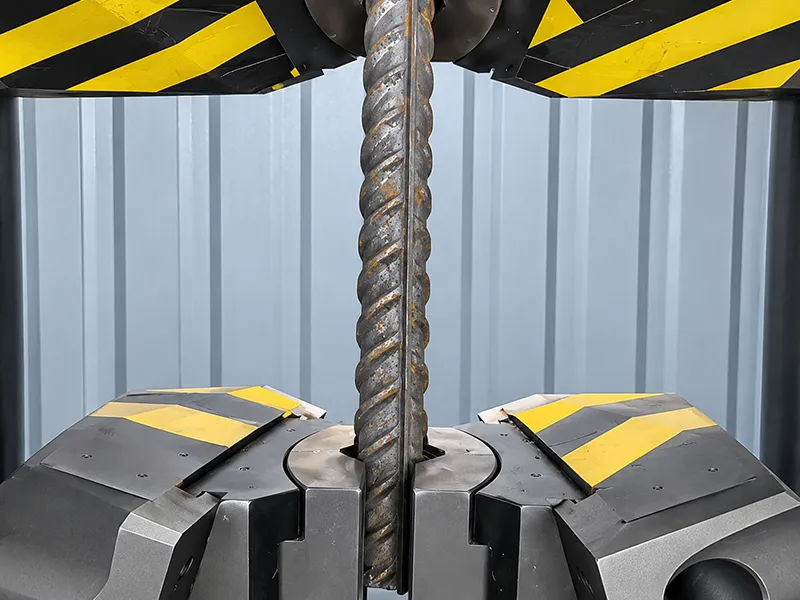
Mild steel (also called low-carbon steel) is a carbon steel alloy with a relatively small amount of carbon. Typically it contains about 0.05–0.25% carbon by weight, along with iron as the base metal. This low carbon level makes mild steel softer and more ductile than higher-carbon steels, so it can be easily formed, machined, and welded. Because of these characteristics and its low cost, mild steel is one of the most common metals used in manufacturing and construction. Its combination of moderate strength, good machinability, weldability, and affordability makes it ideal for a wide range of parts and structures. This article will cover the composition, key properties, advantages, limitations, and uses of mild steel, including how it compares to other steels and how it is used in CNC machining.
What Is Mild Steel?
Mild steel is a type of low-carbon steel. It generally has a carbon content in the range of about 0.04% to 0.25%. Compared to higher-carbon steels, mild steel is relatively soft and ductile, which means it can be easily bent, formed, and machined without cracking. For this reason, it is widely used for structural and general-purpose applications in engineering. In practice, mild steel is used to make everyday items like structural beams, automotive body panels, machine frames, and consumer products. As Thomasnet explains, mild steel “has adequate strength, softness, and malleability” and is often used for structural parts and auto-body components. In short, mild steel = low carbon steel, and it is the most common carbon steel for general manufacturing.
Mild Steel Composition
Mild steel is composed mainly of iron and a small percentage of carbon. In a typical mild steel, iron makes up over 98% of the alloy, while carbon is around 0.05–0.25%. The chart above shows a representative composition: mostly iron with tiny fractions of carbon and other elements. Aside from iron and carbon, mild steel contains trace amounts of manganese, silicon, phosphorus, and sulfur. For example, manganese may be present at about 0.25–1.65% and silicon around 0.10–0.30%. These elements serve functions like improving strength (manganese) or acting as deoxidizers (silicon) during steelmaking. Phosphorus and sulfur are usually kept very low (typically under 0.05%) to avoid brittleness. The precise composition varies by grade and standard, but in all cases the low carbon content is key to giving mild steel its easy weldability and formability. The small alloying elements fine-tune properties like hardness and machinability without greatly affecting ductility.
Key Properties of Mild Steel
Mild steel exhibits a balanced set of properties suited for general fabrication. It has moderate strength and a relatively low hardness, but it is very ductile and malleable. This means mild steel can bend and form under stress without cracking. Its machinability is excellent – it can be easily cut, drilled, milled, or turned with standard tools. Mild steel also has very good weldability; its low carbon minimizes weld cracking, allowing strong welds and easy fabrication. Compared to alloy and high-carbon steels, mild steel is inexpensive. However, one key drawback is its corrosion resistance, which is poor without coating or treatment. (Uncoated mild steel will rust quickly if exposed to moisture.)
| Property | Description |
|---|---|
| Strength | Moderate – suitable for general manufacturing |
| Ductility | High – easily bent, formed, and drawn |
| Machinability | Excellent – easy to cut, drill, and mill |
| Weldability | Excellent – very easy to weld and join |
| Cost | Low – more affordable than most alloy steels |
| Corrosion Resistance | Low – poor without protective coating |
| Hardness | Low – softer than high-carbon or tool steels |
These properties make mild steel a “workhorse” material. For example, it has “high ductility” and “excellent weldability” while remaining “relatively easy to machine”. This combination (moderate strength, ease of shaping, and low cost) is why mild steel is ubiquitous in construction, automotive, and general fabrication.
Advantages of Mild Steel
- Cost-effective: Mild steel is very affordable compared to many higher-alloy steels. It is generally less expensive than high-carbon or stainless steels, making it an economical choice for large projects.
- Easy to machine: Its softness and uniform composition mean mild steel machines cleanly. It is widely used for CNC milling, turning, drilling, and sawing because it can be cut and shaped with standard tooling.
- Easy to weld: The low carbon content prevents hard, brittle welds. As a result, mild steel can be welded with ordinary techniques without special preheating, producing strong, reliable joints.
- Good formability and ductility: Mild steel can be bent, stamped, or rolled into complex shapes without cracking. Its high elongation (on the order of 20% or more) allows deep drawing and forming operations.
- Widely available: Mild steel comes in many forms (sheet, plate, bar, tube) and is produced in huge volumes worldwide. Standard grades (like A36, 1018) are stocked by most suppliers.
- Versatile: It can undergo various manufacturing processes (stamping, cutting, forging, casting) and accepts many surface treatments (painting, powder-coating, plating) to enhance its appearance and corrosion resistance.
Together, these advantages make mild steel a practical choice for general machining and fabrication. It delivers a good balance of strength and workability, which is “practical and easy to work with, helping keep projects cost-effective and efficient”.
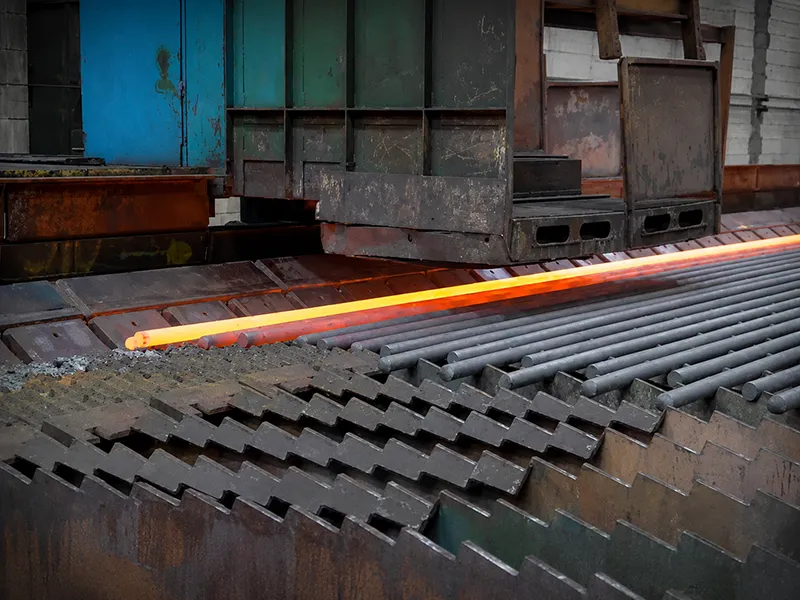
Limitations of Mild Steel
While mild steel is versatile, it also has some important drawbacks:
- Rust and corrosion: Unprotected mild steel will oxidize (rust) quickly in moist environments because it lacks protective alloying elements (like chromium). Its poor corrosion resistance is often cited as its main limitation. Therefore, mild steel parts used outdoors or in humid conditions usually require coatings (paint, galvanizing, etc.).
- Lower strength: Mild steel has moderate tensile strength, but it is not as strong or hard as higher-carbon or alloy steels. For applications that demand very high strength, wear resistance, or hardness (such as cutting tools or heavy-duty springs), mild steel is typically not suitable.
- Low hardness: Compared to tool steels or high-carbon steels, mild steel is relatively soft.
- This means it wears faster under abrasion or impact than hardened steels.
- Limited heat resistance: Mild steel cannot be used at very high temperatures where specialty alloys would be required.
- Not for extreme environments: In highly corrosive, marine, or high-temperature settings, stainless steels or other alloys are preferred. Mild steel’s cheapness comes at the cost of needing additional protection or replacement in severe environments.
- Requires finishing: Because of its low corrosion resistance, mild steel parts generally must be coated, painted, or plated if they will face moisture. (As one source notes, for parts “that need very high hardness or strong corrosion resistance, alloys or stainless steel work better” than mild steel.)
In summary, mild steel is not ideal where maximum strength, hardness, or corrosion resistance are needed. It shines in ordinary structural and machined parts, but can be a poor choice for precision tools, surgical devices, or outdoor hardware unless properly treated.
Common Mild Steel Grades
Several standard grades of mild (low-carbon) steel are commonly used:
- A36 (ASTM A36): This is a standard U.S. structural steel grade with a minimum yield strength of 36,000 psi. A36 steel is widely used for construction beams, angles, and plates. It is a workhorse grade for building frames and bridges.
- 1018 (SAE/AISI 1018): A widely used general-purpose low-carbon steel. 1018 has very good machinability and produces a smooth surface finish, making it ideal for shafts, pins, bolts, and general machined components. It is often cold-drawn for uniformity.
- 1020 (SAE/AISI 1020): Similar to 1018 but with slightly higher carbon (around 0.18–0.23%). This gives 1020 a bit more strength and hardness, while still remaining easily weldable and formable. It’s often chosen when a little extra strength is needed for machinery parts or structural components.
- S235 / S275: (European equivalent grades) These are low-carbon structural steels (approximately equal to A36) used widely in European construction and engineering projects.
- Q235: (Chinese standard) A common Chinese grade of mild steel with minimum yield around 235 MPa. It is roughly equivalent to EN S235 or A36 in properties, used for structural and welded applications.
- Other low-carbon steels: Various regional grades like EN1A (UK), EN3B, and Q345 (a higher-strength Chinese grade) are also used depending on local standards.
Each grade is formulated for a balance of strength, weldability, and formability. For example, A36/S235 are focused on structural strength, while 1018/1020 emphasize machinability and good surface finish. When choosing a grade, engineers consider factors like required strength, form factors, and processing needs.
Mild Steel vs Higher-Carbon Steels
Mild steel is actually a subset of carbon steels. Carbon steel ranges from very low carbon (<0.25%) up to high carbon (>0.6%). Mild steel refers specifically to the low-carbon end of this spectrum. In comparison:
| Factor | Mild Steel (Low Carbon) | Higher-Carbon Steel |
|---|---|---|
| Carbon Content | Low (~0.05–0.25%) | Medium to high (≈0.3–1.2% or more) |
| Hardness | Relatively low | Higher (much harder in treated steels) |
| Ductility | High (very ductile) | Lower (more brittle as carbon increases) |
| Weldability | Excellent | More difficult (risk of cracking) |
| Machinability | Very good | Generally lower (harder, tool wear) |
| Common Uses | Structures, frames, brackets, machined parts | Tools, springs, wear-resistant parts |
Because mild steel has less carbon, it is easier to form and weld. For example, mild steel “contains less carbon than medium- or high-carbon steel, which makes it much easier to weld and form”. On the other hand, higher-carbon steels can be hardened to much higher strength and edge retention (important for cutting tools), but they sacrifice ductility and weldability. As Xometry notes, higher carbon grades “offer more strength but suffer from reduced ductility and increased brittleness”. In practice, mild steel is chosen for general fabrication where cost and ease of use matter, whereas medium/high-carbon steels are reserved for applications like knives, springs, or hardened machine parts where wear resistance is critical.
Mild Steel vs Stainless Steel
Another common comparison is between mild steel and stainless steel:
| Factor | Mild Steel | Stainless Steel |
|---|---|---|
| Cost | Low | High (significantly more expensive) |
| Corrosion Resistance | Low (rusts easily without coating) | High (forms protective chromium oxide) |
| Machinability | Excellent | Good (but often slightly harder to machine) |
| Weldability | Excellent | Good (varies by alloy, but generally weldable) |
| Common Use | Structural parts, brackets, general components | Medical, food, marine, or decorative parts |
Mild steel is far less expensive than stainless steel. However, stainless steel contains significant chromium (≥10.5%) and other alloying elements, so it is much more corrosion-resistant (it does not rust in normal conditions). As one source notes, “Stainless steel provides superior corrosion resistance due to high chromium content, but costs more than low-carbon options”. Conversely, mild steel is often the better choice when cost is critical and corrosion is not severe (such as for indoor steel frames or machined parts). In practice, mild steel components are often painted, powder-coated, or zinc-plated to protect against rust, whereas stainless parts can be used uncoated in humid or wet environments.
Mild Steel in CNC Machining
Mild steel is a popular material for CNC machining. Its ease of cutting and low tool wear make it well-suited for both CNC milling and turning. Shops frequently machine mild steel into parts like brackets, shafts, spacers, fixtures, housings, and mounting plates. For example, common machined parts include shafts, gears, bolts, pins, and fixtures made from mild steel. Because mild steel cuts cleanly, manufacturers prefer it for precision parts; one source notes that machinists find mild steel “easy to cut, drill, and shape without the need for specialized or expensive tooling”.
Compared to materials like stainless steel, mild steel generally allows faster feed rates and less cutting force for a given hardness. This can lead to higher removal rates and lower cost per part. When machining mild steel, shops select appropriate tooling, speeds, and coolant to optimize the surface finish and tool life. After machining, mild steel parts usually receive a protective finish (painting or plating) to prevent rust. Overall, mild steel’s workability and affordability make it a go-to choice for custom CNC parts, prototypes, brackets, and general mechanical components.
Surface Finishing Options for Mild Steel
Since mild steel rusts easily, surface finishing is important when durability is needed. Common finishing methods for mild steel include:
- Painting: Applying a paint or primer is an inexpensive way to protect mild steel from corrosion. Many commercial paints are formulated to adhere to steel and block moisture.
- Powder coating: A dry powder (usually epoxy or polyester) is electrostatically applied and then cured under heat. Powder coating provides a hard, uniform colored finish that resists scratches and corrosion.
- Zinc plating (electroplating): A thin layer of zinc can be electroplated onto mild steel for rust protection. It is often used for hardware and indoor applications.
- Hot-dip galvanizing: Dipping steel into molten zinc creates a thick, durable zinc layer. Galvanizing is widely regarded as the most effective way to prevent rust on mild steel. It is commonly used for outdoor structures like fences, beams, and poles.
- Black oxide: A chemical conversion coating that creates a thin black film on the steel surface. Black oxide gives mild steel a dark appearance and slightly improved corrosion resistance.
- Phosphate coating: A zinc or iron phosphate treatment provides a crystalline coating that improves paint adhesion and provides moderate corrosion resistance as a primer layer.
- Polishing/buffing: While polishing (to a bright finish) does not prevent corrosion by itself, it can be used on mild steel followed by protective wax or lacquer. Polishing can also produce a decorative or hygienic finish for indoor parts.
In practice, the choice of finish depends on the end-use environment. For outdoor or marine exposure, galvanizing or powder coating is often used. In indoor or low-corrosion settings, painting or oiling may be sufficient. As Metal Supermarkets notes, galvanizing is considered the most effective treatment for mild steel to prevent corrosion. Regardless of method, adding a protective finish dramatically extends the life of mild steel parts.
Common Uses of Mild Steel
Mild steel’s combination of properties makes it suitable for many applications. It is especially common in:
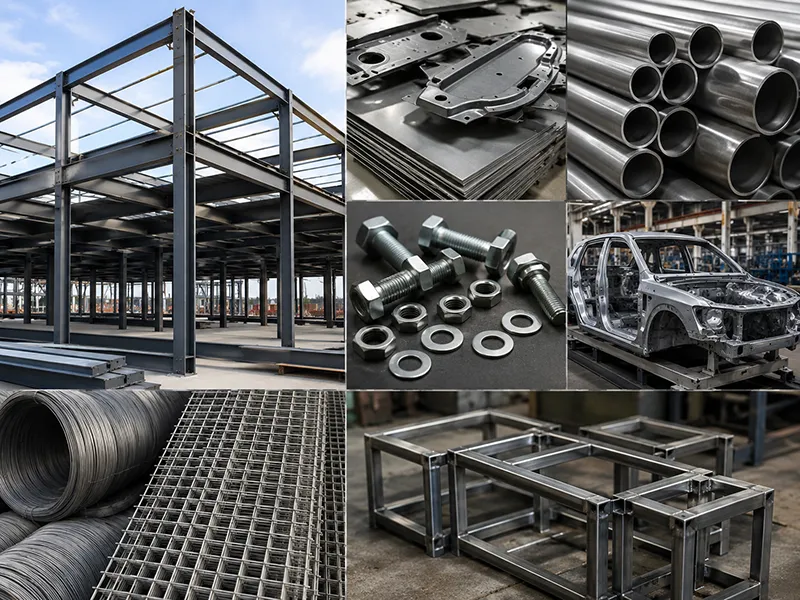
- Structural frames: Building structures, bridges, and supports (e.g. I-beams, columns, trusses). Engineers use mild steel for its strength and weldability in construction projects.
- Brackets and supports: General support brackets, mounting plates, and fixtures across machinery and furniture.
- Shafts and rods: Rotating shafts, axles, and pins where moderate strength and machinability are needed.
- Plates and sheet: Plate steel and sheet metal components for panels, enclosures, and bases.
- Machine parts: Gears, levers, housings, and other mechanical parts, especially those requiring welding and fabrication.
- Fasteners: Nuts, bolts, screws, and weld studs (often zinc-plated for corrosion resistance).
- Automotive components: Car chassis parts, frames, bumpers, and engine brackets, taking advantage of mild steel’s formability.
- Construction parts: Rebars, angles, and other reinforcement members in concrete and steel structures.
- Agricultural equipment: Frames, pivots, and implements for tractors and machinery.
- Fixtures and jigs: Shop fixtures and tooling components where custom shapes are needed.
- Pipes and tubes: Low-pressure plumbing and conduit pipes in construction and HVAC.
- Sheet metal parts: Fabricated panels for appliances, enclosures, and consumer goods.
These uses reflect how mild steel meets everyday needs for structural support and fabricated parts. Its strength and ductility are suited to heavy frames, while its machinability and weldability make it ideal for custom components.
Common Applications of Mild Steel by Industry
Automotive
The automotive industry relies heavily on mild steel for parts that require strength at low cost. Chassis components, body frames, bumpers, brackets, and engine mounts are often made from mild steel. For instance, car chassis and body panels are commonly stamped from mild steel sheets because the metal can absorb impacts and is easy to form and weld. Brackets, supports, and subframe parts in vehicles are also typical applications.
Construction
In construction, mild steel is used for beams, columns, girders, and plates in buildings and infrastructure. Structural shapes like I-beams, channels, and angles made of A36 or S235 steel form the framework of commercial buildings and bridges. Reinforcing bars (rebar) for concrete and steel decking plates also use mild steel. Welding shops frequently fabricate custom structural components out of mild steel due to its ease of welding and forming.
Industrial Machinery
Manufacturers of industrial equipment use mild steel for machine frames, bases, shafts, and guards. Its good strength-to-weight ratio and machinability make it a choice material for equipment bases, conveyor parts, and tooling. For example, machine tool bodies, conveyor supports, and heavy-duty frames are often mild steel so they can be welded together and machined to precise dimensions.
Electronics and Equipment
In electrical and consumer electronics, mild steel is often used for enclosures, cabinets, and brackets. Its easy formability and ability to be painted or powder-coated allow it to serve as housings for appliances, switchgear, and racks. Many control panels and equipment boxes are mild steel because the material is cost-effective and provides good shielding and durability. Small brackets and mounting plates in equipment also use mild steel where corrosion is not severe.
Custom CNC Parts
For custom machined parts, prototypes, and small batches, mild steel is a go-to material. CNC shops frequently cut mild steel to make custom brackets, prototype components, and one-off parts. Its ease of machining and low tooling cost make it practical for small runs. Because mild steel is readily available in stock sizes, it is convenient for custom jobs. As one source notes, mild steel provides “the right mix of strength, cost-effectiveness, and reliability” for everyday manufacturing needs.
How to Choose Mild Steel for Your Project
When selecting a mild steel grade or form, consider the following factors:
- Required strength and toughness: Determine the load conditions. Use structural grades (A36, S275, etc.) for high loads, or choose higher-carbon variants (like 1020, S355) if you need extra strength.
- Part size and geometry: Large, thick components may use hot-rolled plate (A36), whereas precision small parts may use cold-rolled or free-machining grades (1018).
- Machining requirements: For CNC or detailed machining, choose a grade known for good machinability (e.g. 1018 or free-cutting variants).
- Welding needs: All mild steels weld easily, but if extensive welding is planned, ensure the grade is weldable (most low-carbon steels are fine).
- Surface finish: If the part will be painted or plated, very high surface finish might not be critical. For visible parts, a smoother steel like 1018 or cold-rolled may be chosen.
- Corrosion environment: If the part will see moisture or chemicals, select a finish (galvanized, painted) or a more corrosion-resistant material (possibly stainless instead).
- Tolerance and precision: Cold-rolled mild steels have better dimensional tolerances and surface finish than hot-rolled.
- Production volume: For high-volume runs, specify a standardized grade to ease sourcing. For prototypes or low volume, common grades (A36, 1018) are usually fine.
- Budget: Mild steel is already low-cost, but higher-strength or specialty forms (cold-drawn, alloy variants) can add cost. Ensure the chosen grade meets requirements without unnecessary expense.
- Post-processing: Decide if heat treatment or plating will be needed. Mild steel is not typically hardened, but case-hardening (nitriding, carburizing) is possible if needed after machining.
In summary, match the mechanical and environmental requirements of your part to the grade of mild steel. Evaluate whether you need extra strength (and thus a slightly higher carbon content) or whether weldability and cost are the priority. Checking factors like required tensile strength, toughness, and corrosion protection helps guide the choice.
Conclusion
Mild steel, or low-carbon steel, is a ubiquitous and practical material in manufacturing. It consists mostly of iron with a small amount of carbon (roughly 0.05–0.25%). This composition gives it a valuable combination of moderate strength, high ductility, excellent machinability, and easy weldability. As Xometry summarizes, mild steel retains high ductility and weldability while providing sufficient tensile strength for load-bearing use. Because of these traits and its low cost, mild steel is widely used for structural frames, automotive components, machine parts, brackets, shafts, and many custom CNC machined parts. Its main drawback is its poor corrosion resistance – untreated mild steel will rust unless coated. Therefore, mild steel parts often receive paint, plating, or galvanizing for outdoor or humid use. Overall, for most general fabrication applications where extreme hardness or corrosion resistance are not required, mild steel is an economical, reliable choice. Its broad availability and ease of use make it a standard workhorse material in engineering and construction.
FAQ About Mild Steel
What is mild steel?
Mild steel is a low-carbon steel alloy (also called plain carbon steel) that typically contains less than 0.25% carbon. It is known for its good ductility and machinability. In other words, mild steel is softer and more formable than high-carbon steel, and it can be readily cut, welded, and shaped.
Is mild steel the same as carbon steel?
Mild steel is a subtype of carbon steel. Carbon steel simply means any steel with carbon as the main alloying element. Mild steel specifically refers to those carbon steels with the lowest carbon content (often around 0.05–0.25%). So yes, all mild steels are carbon steels, but with relatively low carbon compared to medium- or high-carbon steels.
Does mild steel rust?
Yes, mild steel will rust if exposed to moisture and oxygen. It has relatively poor corrosion resistance because it lacks protective alloy elements like chromium. Without a protective coating (paint, zinc plating, etc.), mild steel surfaces will form iron oxide (rust) fairly quickly. To prevent this, mild steel parts used outdoors or in humid environments are usually painted, powder-coated, or galvanized.
Is mild steel good for CNC machining?
Absolutely. Mild steel is one of the most common materials for CNC machining because it machines very easily. It can be cut, drilled, milled, and turned at high speeds with minimal tool wear. Shops often use mild steel for CNC parts precisely because “mild steel is a top choice for CNC machining and sheet metal work” – it offers a strong, affordable material that is easy to process.
What is mild steel used for?
Mild steel is used in countless applications. Common uses include construction components (beams, angles, frames) and automotive parts (chassis, body panels). It is also used for brackets, plates, shafts, fasteners, and general machine parts. Manufacturers use mild steel for fixtures, jigs, and enclosures. In short, any application requiring a strong but easily fabricated steel part is a likely candidate for mild steel.