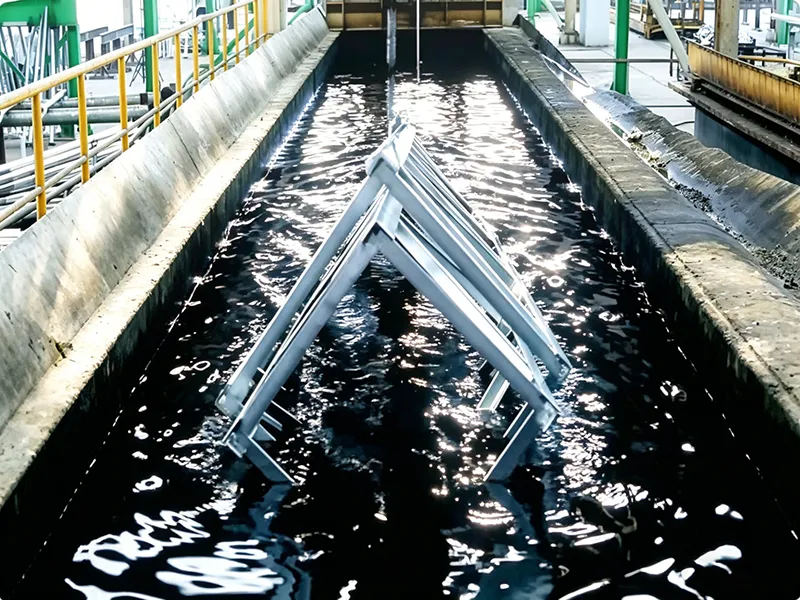
Galvanized metal is simply steel (or iron) that has been coated with a layer of zinc to improve its corrosion resistance. In practice, the steel is cleaned and dipped into molten zinc, which metallurgically bonds to the surface. This zinc coating acts as a protective barrier and even a sacrificial anode: if the coating is scratched, the surrounding zinc will corrode in place of the steel. The result is a material that combines steel’s strength and formability with the long-lasting rust protection of zinc. Galvanized metal is widely used in construction, automotive, appliance, agricultural, and outdoor applications because it provides low-cost, long-term corrosion protection with minimal maintenance.
Steel treated by galvanization takes on a dull gray, speckled surface (often with a “spangle” pattern) that distinguishes it from ordinary steel. Because the zinc coating is physically bonded to the steel, galvanized parts remain rugged and reliable in weather or harsh environments. In fact, well-galvanized steel structures routinely last for decades – many studies cite 50 years or more of service life in typical conditions.
What Is Galvanized Metal?
Definition: Galvanized metal refers to any steel or iron part whose surface has been coated with zinc. The zinc layer is applied most commonly by hot-dip galvanizing (immersing the steel in a bath of molten zinc) or by electroplating. The zinc chemically bonds to the base metal, forming a tough zinc-iron alloy layer and a pure zinc exterior that protect the steel from moisture and oxygen. Unlike plain carbon steel (which is iron-based and will rust quickly when exposed to moisture), galvanized steel has a built-in defense against rust. The zinc acts as a barrier and also corrodes preferentially. In simple terms, galvanized steel will not rust until its zinc coating is consumed, which usually takes decades.
Difference from Ordinary Steel: The key difference is the zinc coating. Ordinary (bare) steel has little corrosion resistance and oxidizes (rusts) readily. Galvanized steel, by contrast, is shielded by zinc. Even if a scratch exposes the steel underneath, the zinc around it will corrode first, “sacrificially” protecting the steel. This greatly increases durability. In practice, galvanized steel will last many times longer than uncoated steel under the same conditions. In fact, one source notes that properly galvanized steel will survive many decades before red rust ever appears. The zinc coating ultimately dissolves or oxidizes, but far more slowly than bare iron would corrode.
Corrosion Resistance: Galvanizing is effective because zinc provides multiple layers of defense. First, the coating itself is a physical barrier that seals the steel from water and oxygen. Second, zinc is more electrochemically reactive than iron, so if any steel is exposed, the zinc corrodes (oxidizes) in preference. Third, exposed zinc forms stable oxides and carbonates (a patina) that further slow down corrosion. In practice, this means galvanized steel corrodes roughly 30 times more slowly than bare steel. In fact, engineers often design hot-dip galvanized structures for 50–100 year lifespans, knowing that the zinc will protect the steel through much of that time.
How Is Galvanized Metal Made?
The two main galvanizing methods are hot-dip galvanizing and electro-galvanizing. In both cases, steel must be thoroughly cleaned (degreased and acid-pickled) so that zinc can bond well.
Hot-Dip Galvanizing
- Process Principle: The classic hot-dip galvanizing (HDG) process involves immersing pre-treated steel in a bath of molten zinc (around 440–460 °C). The zinc reacts with the steel surface to form a series of alloy layers, then cools to leave a metallurgically bonded zinc coating. Upon exposure to air, the zinc surface reacts to form zinc oxide and then zinc carbonate, which gives the coating additional hardness and corrosion resistance. The coating grows uniformly on all surfaces – even edges and corners get full coverage – and typically exhibits a textured gray finish called a spangle pattern. Hot-dip galvanizing yields a relatively thick zinc layer (often 50–100+ microns) that is very robust.
- Common Applications: Hot-dip galvanizing is used for structural and heavy-duty components. For example, highway guardrails, power transmission towers, bridge steel, bolts and nails, steel pipes and conduits, and large construction beams are often hot-dip galvanized. It is especially common in outdoor and industrial applications: for instance, many street lamp posts, railings, scaffolding, and fencing parts are galvanized. Components like industrial flooring gratings and safety barriers are frequently galvanized to ensure long life with minimal maintenance.
- Advantages: HDG provides complete, seamless coverage on complex parts, unlike paint which can be thin on edges. The zinc layer is metallurgically bonded – roughly 10 times stronger than a paint bond – making it extremely durable under impact or abrasion. Hot-dip coatings are maintenance-free for decades: a properly galvanized surface can go 50–75 years before needing any repair. The process is also economical for large or irregular shapes. It is fully factory-controlled (so not subject to weather delays) and can galvanize an entire structure in one piece.
- Limitations: The coating is thick and rigid, which may not be suitable if precise dimensions or very smooth aesthetics are needed. Also, galvanized steel should not be exposed to high temperatures: above about 200 °C (392 °F) the zinc layer can deteriorate or peel. For welding, the steel is usually welded before galvanizing (post-weld galvanizing) to avoid burning off the zinc. In summary, HDG is ideal for heavy-duty corrosion protection but involves handling molten zinc and may not be as smooth or thin as other methods.
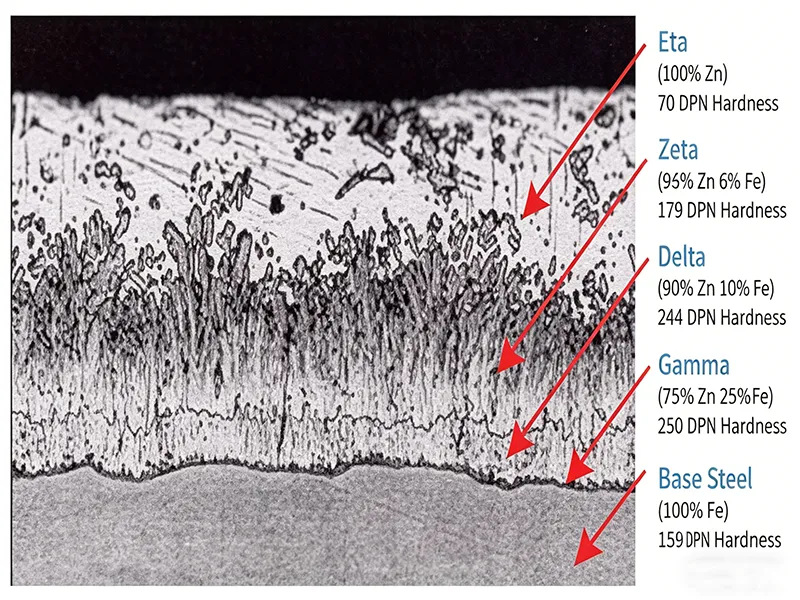
Figure: Cross-section of a hot-dip galvanized coating (schematic). Hot-dip galvanizing produces multiple zinc-iron alloy layers (eta, zeta, delta, gamma) which are tightly bonded to the steel, topped by a pure zinc layer for additional ductility and corrosion resistance. Hot-dip galvanizing yields a multi-layer coating: the innermost layers (nearest the steel) are hard zinc-iron alloys, and the outermost layer is pure zinc which can deform to absorb impacts. This graded structure makes galvanized steel extremely abrasion-resistant. In fact, tests show the zinc coating has a higher hardness than the base steel, so it resists scratches and wear. Unlike other coatings, the HDG process ensures uniform thickness even on corners and edges, eliminating corrosion-prone thin spots.
Electro-Galvanizing
- Process Characteristics: Electro-galvanizing (sometimes called electroplating) deposits zinc onto steel via an electrical current. The steel is submerged in an electrolyte bath containing zinc salts, and a current causes zinc ions to plate onto the surface. This method produces a thinner, more uniform coating (often just 5–20 microns) compared to hot-dip. The finish is very smooth and bright. Electro-galvanized steel is typically produced at the mill on sheet coils (as “pre-galvanized” or “electro-galv sheet”) and on smaller parts.
- Differences vs. Hot-Dip: Because the zinc layer is much thinner, electrogalvanized steel has less corrosion protection than hot-dip. It is best suited for mild environments or for parts that will be painted afterward. Its advantages are the fine surface finish and tight thickness control. For example, appliance panels, metal furniture, and some automotive body panels use electrogalvanized steel because it paints nicely and holds precise dimensions. In contrast, hot-dip parts (guardrails, poles, etc.) emphasize protection over finish.
- Typical Uses: Electro-galvanized steel is common in consumer and light industrial products. Electrical enclosures, heating and cooling equipment, metal furniture frames, and automotive body panels often use electro-plated steel. Anywhere a smooth, even surface is needed, or where high-volume coil coating is efficient, electrogalvanizing is chosen. It provides a good balance of corrosion resistance and cost for these applications, but it would not suffice for very harsh outdoor use where hot-dip is preferred.
Key Properties of Galvanized Metal
Corrosion Resistance: Galvanized metal offers exceptional resistance to rust. The zinc coating provides a true protective barrier plus cathodic protection. In effect, steel completely enclosed by zinc will not corrode, and even exposed edges or scratches remain protected by surrounding zinc. Over time, the zinc surface develops a stable patina (basic zinc carbonate) that further slows corrosion. In practical terms, hot-dip galvanized steel can last 50–70+ years in many environments before significant corrosion occurs. (By comparison, bare steel in the same setting might only last a couple of years.) One study estimates galvanized steel corrodes at roughly 1/30th the rate of uncoated steel. This performance comes from the three levels of protection: barrier (coating coverage), cathodic (sacrificial action), and patina (passivation).
Figure: Layers of zinc-based protection in hot-dip galvanizing. The zinc coating provides a barrier plus sacrificial (cathodic) protection, and eventually forms a zinc carbonate patina. This triple-action protection is why galvanized metal is so rust-resistant.
Surface Appearance: Galvanizing gives steel a characteristic gray, matte finish. After galvanizing, the surface often shows a “spangle” pattern – a crystalline, flecked texture resembling marble. The spangle may be large or barely visible depending on cooling conditions, but it always imparts a non-uniform gray tone (never shiny like polished steel). This differs from painted or bright stainless surfaces. The exact shade can range from light silver-gray to darker gray. The coated surface is generally rougher to the touch than bare steel, but this is cosmetic; it does not affect strength. In any case, the uniform zinc layer means the finish is consistent across the entire part (no thin spots), and it does not easily chip off under normal use.
Durability and Service Life: Galvanized coatings are extraordinarily durable. In real-world tests, galvanized steel remained intact for decades without maintenance. For example, steel structures in rural settings can last 50 years or more, while even in industrial or coastal environments a well-applied coating can persist 20–30 years. One galvanized component in a highly corrosive environment was projected to survive over 70 years before rust onset. By comparison, painted steel typically needs touch-ups every 10–15 years, whereas galvanized steel is essentially maintenance-free for the same span. The zinc layers are also tough: because the alloy layers are harder than plain steel, galvanized parts resist abrasion and impact better. In short, galvanized steel parts combine the longevity of high-grade steel with the corrosion life of the zinc layer, making them suitable for long-term outdoor and industrial use.
Strength and Formability: Galvanizing generally does not reduce the strength of the base steel – it only adds a thin metallic coating. Mechanically, galvanized steel is as strong and tough as the underlying steel alloy. The hot-dip process even adds slight compressive stress in the zinc layer, which can improve fatigue resistance. Moreover, galvanized steel can be bent, machined, and welded similarly to bare steel. (One caveat: bending a galvanized member will crack the zinc in the bend, exposing steel; those areas must later be coated or repaired.) According to one source, galvanized steel has “the strength and formability of steel plus the corrosion protection of the zinc-iron coating”. This makes it convenient for fabrication – you can drill, cut, punch, and shape galvanized components like any other steel part, then rely on the zinc for protection. However, note that welding or cutting (see below) may temporarily compromise the coating if fumes or heat burn off zinc, so additional precautions are used when fabricating galvanized steel.
Maintenance Requirements: One of the great advantages of galvanized metal is its low maintenance. In most atmospheres, a galvanized surface requires no repainting or special upkeep for many years. Unlike paint coatings that must be periodically renewed, galvanized steel typically only needs occasional cleaning or inspection. Minor scratches will “self-heal” as the surrounding zinc corrodes and builds its oxide, without exposing the steel underneath. In practice, simple visual inspection is usually enough to assess a galvanized structure. If a small area of steel ever does get exposed, a simple zinc-rich paint or cold galvanizing spray can be touched on to restore protection. But in general, the zinc coating eliminates the need for the frequent maintenance that painted steel or raw steel structures require. This makes galvanized metal especially attractive where inspection or repainting would be difficult or costly (e.g. remote infrastructure, bridges, etc.).
Benefits of Galvanized Metal
Galvanized metal offers several key benefits that make it a popular choice in engineering and construction:
- Extended Service Life: By protecting steel with zinc, galvanizing greatly extends the lifespan of the material. Studies show hot-dip galvanized steel can survive 50–70+ years in corrosive environments. In rural or mild settings, usable life often exceeds 50 years; even in industrial or marine settings it can be measured in decades (often 20–30 years). In comparison, bare steel might only last a few years to a decade under the same conditions. The long life means structures and components last longer before replacement is needed.
- Lower Maintenance and Lifecycle Cost: Because galvanized steel needs little to no maintenance, the lifecycle cost is much lower. There’s no need for periodic painting, sandblasting, or coatings upkeep. For example, hot-dip galvanized structures often go 75 years or more before any rust appears, whereas painted steel typically requires repainting every 10–15 years. This maintenance-free protection yields huge savings over time. One analysis notes that over a long term, galvanizing dramatically cuts repair and labor costs. In addition, galvanized steel is easy to inspect visually – any coating damage or rust is readily seen – so problems can be caught early with minimal effort. All these factors reduce downtime and maintenance expenses.
- Outdoor Reliability: The zinc coating makes galvanized metal ideal for harsh outdoor environments. It resists rain, snow, humidity, and pollution far better than uncoated steel. Many galvanizing standards are designed around long outdoor exposures (for example, major highway bridges are designed for 50+ years in service). Moreover, galvanized steel can be produced year-round without weather constraints, and it can be stored outdoors after galvanizing without rusting. The “three layers” of zinc protection (barrier, cathodic, patina) ensure that even in fluctuating climates or industrial atmospheres, the steel remains shielded. In other words, galvanized metal brings peace of mind for outdoor use: you can leave it exposed to the elements and expect decades of reliable performance.
- Ready for Large-Scale Industrial Use: Galvanizing processes are highly standardized and scalable. Large quantities of steel can be galvanized efficiently – for example, entire coils of sheet steel can be hot-dipped (pre-galvanized) or continuously electrogalvanized. Industry standards (ASTM, ISO, etc.) ensure consistent coating thickness and quality. This makes galvanized steel easy to source in large volumes. In fact, galvanized products are widely available through mills and galvanizing plants worldwide. Because the process is done in a factory, lead times are short and the output is uniform. Industries that need bulk metal parts – like construction companies, auto manufacturers, and utilities – can rely on the galvanizing supply chain to meet demand. As one industry guide puts it, galvanized steel is “readily available and sustainable,” providing the same corrosion protection whether sold as raw components or fabricated parts.
Common Uses of Galvanized Metal
Galvanized steel’s mix of strength, durability, and corrosion protection has made it ubiquitous across many sectors. Common applications include:
- Construction and Building Materials: Galvanized steel is everywhere in construction. Structural beams, columns, and framing systems are often fabricated from galvanized steel, especially in outdoor or corrosive settings. Metal roofing, gutters, flashing, and downspouts are typically galvanized to resist the weather. Fasteners and hardware – such as nails, screws, bolts, and brackets – are usually galvanized so that they don’t rust in exterior walls. Fencing, railings, stairs, and support posts are common galvanized components. In the building interior, HVAC ductwork and hangers are often made of galvanized sheet to prevent rust and prolong equipment life. Even decorative elements like lamp posts and sign brackets are galvanized, combining an industrial aesthetic with long-term reliability. The fact sheet from Xometry notes galvanized steel is used for handrails, canopies, street furniture, poles, and other outdoor elements.
- Automotive Parts: Modern vehicles make extensive use of galvanized steel. According to industry data, about 80% of an average car’s body is galvanized. This includes the chassis, frame, body panels, underbody parts, and brackets. Engines and exhaust systems often use galvanized components or coatings to prevent corrosion from heat and moisture. The corrosion protection helps vehicles last longer with minimal rusting in road conditions. Components like fuel tanks, brake lines, and suspension parts are also commonly galvanized. In short, galvanized steel provides long-term durability and safety in the automotive industry.
- Agricultural Equipment and Fencing: The agricultural sector frequently uses galvanized metal because of its durability in rural environments. Farm machinery, grain bins, silos, and storage tanks are often made from galvanized steel so they can endure moisture and chemicals in soil and fertilizer. Barbed wire and mesh fencing are usually galvanized to last through seasons of rain and sun without rusting. Galvanized steel is also used for farm buildings, barns, silos, and livestock fencing – basically any application where weather resistance is needed on the farm.
- Outdoor Structures and Fencing: Beyond farms, galvanized steel is ideal for all kinds of outdoor infrastructure. Common examples include chain-link fences, garden fences, and boundary rails, which rely on zinc to resist corrosion. Lamp posts, sign supports, and highway guardrails are galvanized to withstand constant exposure. Playground equipment, sports field bleachers, and park benches are often galvanized or galvanized and then painted. Utility poles, street light poles, and traffic signal masts are routinely galvanized because they must remain rust-free for decades high above the ground. In summary, any structural item exposed to weather – from bridges and towers to fences and playgrounds – often uses galvanized steel.
- Industrial Components and Fabrication: Many industrial systems incorporate galvanized parts. Common uses include structural steel for factories, staircases and handrails in manufacturing plants, walkways, ladders, and cable trays. Tanks and piping in water treatment or chemical plants are often hot-dip galvanized for corrosion resistance. In electrical work, galvanized conduits and wireways protect conductors. Even building sheets, clamps, fasteners, and connectors in industrial installations are typically galvanized. Essentially, galvanized steel is chosen for any fabricated component where long-term durability and minimal maintenance are required.
Galvanized Metal vs. Other Metal Finishes
When choosing a metal material, it’s useful to compare galvanized steel with other finishes like stainless steel, painted steel, or aluminum. The table below highlights the key differences:
| Finish/Material | Corrosion Resistance | Strength & Usage | Appearance & Maintenance | Cost |
|---|---|---|---|---|
| Galvanized Steel | High. Zinc coating provides barrier + cathodic protection. Designed for 50–100 years of outdoor use with minimal rust. | As strong as base steel (density ~7.85 g/cm³). Good abrasion resistance due to hard alloy layers. Used for heavy-duty structural parts. | Matte gray, speckled (spangle) finish. Maintenance-free for decades; rarely needs touch-ups. | Low (similar to plain steel, with affordable coating). |
| Stainless Steel | Very high. Alloy steel (Cr-Ni) forms a self-healing chromium oxide layer. 100% rust-proof in most environments (even saltwater). | High strength (depends on grade). Used where strength and hygiene are critical (marine, food, medical). | Smooth, shiny finish (various grades). Virtually maintenance-free (no coating needed). | High (about 4–5× cost of galvanized steel). |
| Painted Steel | Moderate. Plain steel with paint/coil coating. Initially rust-proof, but once scratched or weathered, underlying steel will corrode immediately. | Same strength as steel. Paint adds little strength but provides color and minor protection. | Can be glossy or colored. Requires regular repainting (every 10–15 years). Edges/undersides are prone to rust. | Lower upfront cost, but higher lifecycle cost (maintenance). |
| Aluminum | Good. Native aluminum oxide resists corrosion well (but not in strong acids/bases). In marine or corrosive use, aluminum often outperforms steel. | Lower density (2.7 g/cm³) – roughly 1/3 weight of steel; excellent strength-to-weight ratio. Not as hard as steel; fatigue may be lower. | Silver-white, can be polished or anodized. Very low maintenance; no rust (but can corrode to white oxide under certain conditions). | Moderate to high (more expensive than steel; raw cost ~$1.50–3.00/lb vs steel $0.50–1.50/lb). |
Galvanized vs. Stainless Steel: Stainless steels (with high chromium) offer the best corrosion resistance and strength, but at a premium cost. Galvanized steel, being ordinary carbon steel plus zinc, is cheaper and more ductile. Crossroads Galvanizing notes that “stainless steel is stronger and more corrosion-resistant” whereas galvanized steel is more ductile and economical. In practice, stainless is chosen for very aggressive or sanitary environments (e.g. marine applications, food processing), while galvanized is ideal for general outdoor use where ultra-long life is needed but budget is limited. (For example, an ocean submersible or a space rocket would use stainless or specialty alloys, but for land-based bridges and fences, galvanized steel is usually the pragmatic choice.)
Galvanized vs. Painted Steel: Hot-dip galvanizing provides a much more durable coating than paint. Unlike paint (a purely surface barrier), zinc is metallurgically bonded and offers cathodic protection. AGA studies show galvanized steel can last 75 years or more maintenance-free in atmosphere, whereas even the best paint system usually needs repainting every 10–15 years. Galvanized coatings are thicker and harder than typical paint, and coat edges uniformly. If scratched, paint fails immediately, but zinc will slowly corrode while keeping the steel safe. Thus, although paint allows color flexibility, galvanized steel is far more reliable long-term with lower total cost.
Galvanized vs. Aluminum: Aluminum naturally resists corrosion and is lightweight, so it’s often compared to galvanized steel. Galvanized steel generally outperforms aluminum in outdoor corrosion resistance under normal conditions, because the zinc sacrificial layer remains effective. Both can survive moist climates well, but galvanizing gives steel an advantage in rust resistance (red rust versus white oxide). Aluminum has a better strength-to-weight ratio (about 1/3 the weight of steel), so aluminum is used where weight is critical (aircraft, light frames). However, aluminum is more expensive per pound than steel. In summary, galvanized steel is heavier but typically cheaper and tougher, whereas aluminum is light and naturally oxidation-resistant. Either can be “good” for outdoors, but cost and weight will guide the choice.
Can Galvanized Metal Rust?
Galvanized steel is highly rust-resistant but not entirely rust-proof. Over time and under extreme conditions, it can corrode in two forms: white rust and red rust.
- White Rust: This is a whitish, powdery zinc corrosion product (mainly zinc hydroxide) that forms on newly galvanized steel when it is exposed to moisture in a low-oxygen environment. For example, if galvanized sheets or bundles are stored wet under plastic wrap (trapped water), a white, chalky stain develops. This “white rust” only affects the zinc coating; it does not immediately attack the steel. In fact, Conklin Metal explains that white rust is merely a superficial storage stain and does not signify coating failure. Over time, normal exposure to air and rain will wash or convert the white corrosion into a stable zinc carbonate patina. White rust can reduce the aesthetic quality and slightly thin the zinc, but it usually does not impair long-term protection. To avoid it, keep galvanized parts dry and well-ventilated during storage.
- Red Rust: This is ordinary iron oxide, the type of rust that forms when bare steel corrodes. Galvanized steel only develops red rust after the zinc layer is completely consumed in that area. In practice, that takes a very long time. Conklin Metal notes that even a standard G90 zinc coating will eventually red-rust, “but it will take many decades for the metal to deteriorate”. In other words, under normal use you will likely never see red rust on well-galvanized metal during its intended service life. If severe abrasion or chemical attack removes the zinc entirely, the bare steel underneath can rust just like plain steel.
Rust-Prevention Tips: To maximize the anti-corrosion effect, handle and store galvanized metal properly. Avoid trapping moisture – for example, remove shrink-wrap promptly and stack materials to allow drainage. Keep the metal clean (salt or dirt can accelerate corrosion). If scratches or white rust appear, brush off loose corrosion, and apply a small amount of zinc-rich (cold galvanizing) paint to the exposed area if aesthetics or extra protection are needed. With these precautions, a galvanized steel product will enjoy its full design life with virtually no rust issues.
Is Galvanized Metal Easy to Cut, Weld, or Machine?
Cutting: Yes – galvanized steel can be cut, drilled, punched, or sawed just like ordinary steel. Standard tools (saws, angle grinders, plasma cutters, etc.) work well. However, when you cut or grind galvanized metal, zinc dust and fumes are generated. Zinc oxide fumes can be harmful if inhaled, so use proper personal protective equipment (PPE). Wear a dust mask or respirator if you are grinding or sanding galvanizing. Cutting outdoors with good airflow is also advisable. One safety guide specifically advises wearing gloves, safety glasses, and a mask when cutting or sanding galvanized sheet, to avoid breathing metal dust. Otherwise, there are no particular difficulties: just clamp the work securely and use a blade rated for steel. After cutting, smooth any sharp edges with a file (taking care of any remaining burrs) and, if needed, touch up the cut edge with a zinc coating or primer to seal the steel.
Welding: Galvanized steel can be welded, but with caution. The welding process immediately vaporizes the zinc coating at the weld seam, producing toxic zinc oxide fumes (a yellow-green smoke). These fumes can cause “metal fume fever” if inhaled. To work safely, welders should remove as much of the zinc coating as practical from the weld area before welding (e.g. by grinding or chemically stripping). Good ventilation or local exhaust is essential to keep fumes away from the breathing zone. In industry, welders often wear fume extractors or respirators when welding galvanized steel. Aside from fume safety, welding galvanized steel is the same as welding any carbon steel. After welding, the steel can be re-galvanized or touched up with zinc paste if the coating has been burned away. In short, galvanized steel welds well like regular steel, but always ventilate and prepare to manage the zinc fume.
Machining: Machining operations (drilling, milling, CNC work, etc.) on galvanized steel are similar to machining plain steel. Because the zinc layer is thin, machining simply cuts through it and then through the steel, with any exposed areas behaving like bare steel. The main consideration is that machining generates metal chips that may contain zinc. Appropriate PPE is needed to avoid inhaling dust when brushing or blowing off chips. No special tooling is required beyond what one would use for normal steel. It’s worth noting that cutting or machining will remove the zinc from those cut surfaces, so after machining, you may need to reapply a protective zinc-rich paint to prevent corrosion at exposed edges. Overall, galvanized steel machines easily, but keep in mind the coating is sacrificed wherever metal is cut away.
How to Maintain Galvanized Metal
Galvanized steel is renowned for being low-maintenance, but a few simple practices will maximize its longevity:
- Cleaning: Periodically clean galvanized surfaces to remove dirt, salt, or industrial pollutants that might accumulate. Typically, a mild detergent with water and a soft brush or low-pressure wash is sufficient. Harsh chemicals or abrasive cleaners should be avoided as they can damage the zinc. After cleaning, always rinse thoroughly with fresh water. In coastal or polluted areas, more frequent cleaning is advisable to remove salt or sulfur compounds.
- Inspection: Even though galvanized steel rarely needs fixing, inspect it regularly (at least once a year, or more often in severe environments) for any signs of damage or corrosion. Look for white rust, scratches, dents, or flaking, especially on horizontal or concealed surfaces. Small spots of white rust (zinc hydroxide) can occur; if found, simply brush or wash them off and ensure the area dries. If you see deep scratches or bare steel spots, note these for possible touch-up.
- Storage and Environment: Store galvanized parts in a dry, well-ventilated area. Do not leave them covered in damp plastic or stacked tightly, as trapped moisture promotes white rust. If galvanized parts must be stored outdoors, it’s fine – the coating can weather in the open – but be mindful of corrosive environments. For example, avoid direct contact with acidic substances or corrosive soils. If piping is in contact with soil, use wrapping or isolation to prevent galvanic corrosion. Also minimize contact with dissimilar metals (like copper or steel without zinc) unless insulated by paint or gaskets.
- Repair and Touch-Up: If after many years any areas of steel do begin to rust (or if the zinc has been scratched off by impact), you can restore protection by using a zinc-rich primer or cold galvanizing spray. For minor damage, thoroughly clean the area, apply a zinc-based paint, and let it cure. For example, Bakrie Pipe Industries advises for small scratches: “clean, apply zinc-rich primer and a topcoat”. If damage is severe or widespread, replacement or re-galvanizing of the affected part may be considered.
- When to Recoat or Replace: In practice, you rarely need to re-galvanize an existing structure except in extreme cases. Typical maintenance is just cleaning and spot repairs. However, if after many decades you find pervasive corrosion, it could be time for a new galvanized component. Manufacturers often design for “time to first maintenance” of 50–75 years, meaning by then you might evaluate recoating needs. Most of the time, galvanized metal simply outlasts the intended life of the project with minimal care.
Summary
Galvanized metal is steel coated with zinc to make it corrosion-resistant. This alloyed zinc coating acts sacrificially and forms a protective patina, giving the part a long service life and low maintenance. In essence, galvanized steel combines the strength and workability of steel with the weatherproofing of zinc. This unique combination makes it ideal for construction, industrial, and outdoor applications. Galvanized structures can safely last 25–75+ years without painting, dramatically reducing upkeep. The net result is reliable, durable performance for fences, buildings, vehicles, farm equipment, and more – while costing only slightly more upfront than plain steel. For these reasons, galvanized metal remains one of the most popular and cost-effective corrosion-prevention methods in engineering today.
FAQ
What is galvanized metal used for?
Galvanized metal is used anywhere corrosion resistance and strength are needed. Common applications include outdoor structures (fences, guardrails, poles, playground equipment), building components (roofs, gutters, fasteners), automotive parts (car bodies, frames), agricultural equipment (silos, farm machinery, fencing), and industrial fabrications (storage tanks, utility towers, scaffolding). In short, if steel is exposed to weather or moisture, it’s often galvanized to protect it.
Is galvanized metal rust-proof?
Not entirely. Galvanized steel resists rust very effectively, but it is not absolutely rust-proof. If the zinc coating is removed or entirely consumed (which normally takes decades), the underlying steel can rust (forming red rust). Before that happens, you may see a white, powdery zinc oxide stain (white rust) on new galvanized steel exposed to moisture. White rust is not harmful in the long run (it often washes or converts to harmless carbonates). Proper handling (keeping parts dry when new) will prevent noticeable rust. In practice, galvanized steel remains rust-free under normal conditions for the life of most projects.
How long does galvanized metal last?
Typically many decades. Under most conditions, a hot-dip galvanized coating will give 25–50 years of protection, often longer. For example, in rural or mild climates, useful life can exceed 50 years. Even in industrial or coastal environments, it’s common to get 20–30 years without major corrosion. Some sources cite design lives of 50–100 years for galvanized structures. So you can expect decades of service; actual life depends on environment and coating thickness.
Can galvanized metal be welded?
Yes, galvanized steel can be welded just like any steel. The weld will be as strong as the base metal. However, welding vaporizes the zinc coating, producing toxic zinc oxide fumes. Welders should grind off the galvanizing at the joint before welding and wear proper ventilation or respirators. Aside from fume precautions, welding procedure is the same as for bare steel. After welding, the exposed steel can be re-galvanized or painted with zinc primer to restore protection if needed.
What is the difference between galvanized metal and stainless steel?
Galvanized steel is carbon steel with a zinc coating, whereas stainless steel is an alloy steel (usually containing chromium, nickel, etc.) that inherently resists corrosion. Stainless steel outperforms galvanized steel in corrosion resistance and strength, especially in very harsh conditions. However, stainless is much more expensive (roughly 4–5 times the cost). Galvanized steel is more cost-effective for general outdoor use and is easier to work with (e.g. it’s easier to cut or fabricate). Stainless is chosen for extremely demanding environments (marine, chemical, medical), while galvanized is chosen for large-scale or budget-sensitive projects on land.
Is galvanized metal good for outdoor use?
Absolutely. Galvanized metal was essentially designed for outdoor exposure. Its zinc coating is formulated to withstand the elements, and as noted, it can often last 50+ years outside. Practically every tall outdoor steel structure (bridges, towers, poles) is galvanized for this reason. The material is weather-independent – hot-dip galvanizing can be done in any weather, and the coated steel can be left outdoors with no harm. Thus, galvanized steel is highly recommended for fences, signs, decks, roofing, or any use where the material is exposed to rain, snow, or sun.