Stainless steel polishing is the controlled refinement of a stainless steel surface to improve its look, reduce irregularities, remove fabrication damage, and produce a finish that fits the part’s real service conditions. In manufacturing, architecture, medical devices, food equipment, transport hardware, and industrial machinery, polishing matters because the surface is not just cosmetic: it affects how easily a part can be cleaned, how much residue it tends to hold, and how well the stainless surface performs once scratches, heat tint, contamination, or embedded particles from fabrication are removed or minimized.
A good polished finish can make a product look premium, but that is only part of the story. Surface condition also influences the passive, chromium-rich outer layer that gives stainless steel its corrosion resistance, and hygienic applications often care as much about smoothness, defect control, and cleanability as they do about shine. That is why the right stainless steel polishing method depends on the grade, the geometry, the end-use environment, and the exact finish the customer expects.
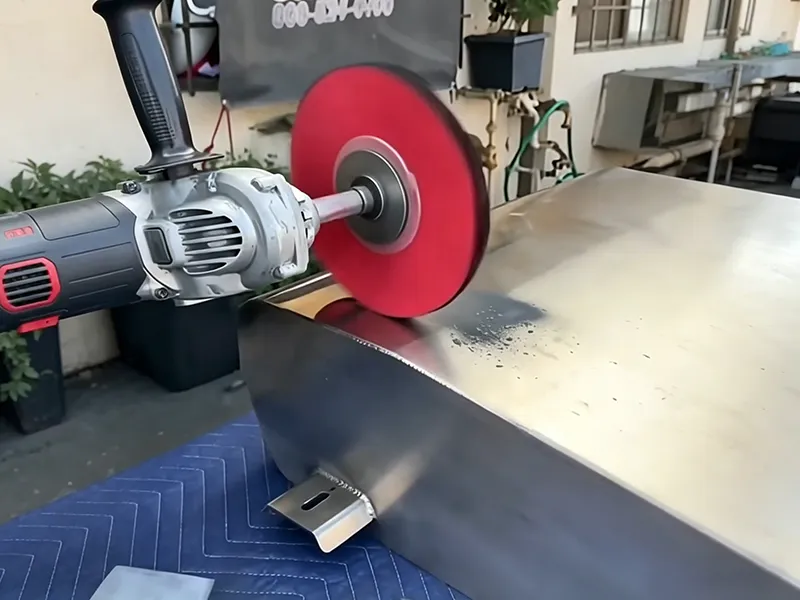
What Is Stainless Steel Polishing?
In practical terms, stainless steel polishing means removing or refining a very thin layer of the surface so the part becomes smoother, more uniform, and more visually consistent. It is different from ordinary cleaning, which removes dirt or grease without intentionally changing surface texture; it is different from grinding, which is usually used to remove weld seams, oxide layers, or deeper defects; and it is also different from broad “surface finishing,” which is the umbrella term that can include polishing, brushing, buffing, passivation, electropolishing, blasting, and other post-processing methods.
A polished stainless steel surface may be used to remove scratches, weld discoloration, oxide scale, embedded iron contamination, and visible handling marks, while also refining gloss and roughness. Done well, polishing improves appearance and can support cleanliness and corrosion performance; done poorly, it can introduce excessive heat, smear the surface, trap contamination, or leave behind coarse lines that still show through the final finish.
Why Stainless Steel Polishing Is Important
Improves surface appearance. Polishing gives stainless steel a smoother, brighter, and more even look, whether the target is a subtle brushed pattern, a satin sheen, a bright decorative finish, or a mirror-like surface. The finer the abrasive sequence and the more controlled the process, the higher the gloss and the more uniform the visual result usually becomes.
Enhances corrosion resistance. Stainless steel protects itself through a thin passive surface film, but fabrication defects, heat tint, embedded iron particles, and rough or damaged areas can disturb that protection and create initiation points for localized corrosion. A cleaner, smoother, defect-controlled surface generally performs better than a rough, contaminated one, especially after welding or aggressive fabrication.
Improves cleanability and hygiene. Hygienic industries specify smooth, cleanable surfaces because micro-roughness, scratches, and trapped contamination make residues harder to remove. Electropolishing is widely used where cleanability and corrosion resistance are especially important, and in food-contact design guidance, roughness limits around 0.8 µm Ra are common benchmarks for sanitary surfaces. At the same time, research also shows that bacterial adhesion is not controlled by Ra alone, which is why surface defects, chemistry, and cleanliness of fabrication matter as much as a single roughness number.
Reduces surface roughness. Surface roughness is commonly expressed as Ra, the arithmetic mean roughness. Lower Ra usually means a smoother surface, but it does not describe the full shape of the surface profile by itself. Even so, in real manufacturing, lowering roughness usually helps parts feel more refined, reduces places for residue to sit, and makes it easier to meet functional or hygienic finish requirements.
Common Stainless Steel Polishing Methods
Mechanical polishing is the most common route for stainless steel parts. It uses abrasive papers, belts, flap wheels, discs, and related tools to remove a controlled amount of material and progressively refine the finish. It is well suited to removing weld marks, machining lines, scratches, and visible surface defects, and it can produce everything from line-polished decorative finishes to near-mirror results when the grit sequence is handled correctly.
Electropolishing is an electrochemical process in which metal is removed ion by ion from the surface. Its main purpose is to reduce micro-roughness, improve cleanability, brighten the surface, and help expose a cleaner, chromium-enriched outer layer. It is especially common in pharmaceutical, biochemical, medical, dairy, and food-processing applications, and it is valuable for fragile parts or shapes that are difficult to polish uniformly by hand. For a practical technical reference, see this guide to electropolishing of stainless steel
Chemical polishing uses controlled chemical dissolution rather than abrasive contact. It is often chosen when parts have complicated geometry or internal passages that are hard to reach mechanically. In published studies on 316 steel components with complex internal surfaces, chempolishing has proved effective at reducing both internal and external roughness, but the process is highly sensitive to chemistry, temperature, time, and part geometry, so control is critical.
Buffing is different from grinding or polishing because it is not mainly intended to remove a meaningful layer of stainless steel. Instead, it is a smoothing and brightening step that uses cotton or felt mops, often with buffing compounds, to make a prepared surface brighter and more reflective. It is commonly used at the final stage of high-gloss finishing and is not a substitute for proper pre-polishing.
Brushing uses milder abrasive media to texture the surface rather than aggressively cut it. That is why brushed stainless steel gets its familiar linear, industrial look. It is popular for appliance panels, enclosures, architectural trim, and decorative parts because it looks refined without being overly glossy, and the directional texture can make day-to-day wear less visually obvious.
Stainless Steel Polishing Process Step by Step
A reliable stainless steel polishing process is really a sequence, not a single action. The exact route changes with the part and finish target, but the logic stays the same: inspect, clean, level, refine, brighten, then clean and protect again.
Surface inspection. Before any abrasive or electrochemical work starts, the surface should be checked for welds, heat tint, oxide scale, iron contamination, deep scratches, dents, and visible waviness. This early inspection determines whether the part needs defect removal, decorative finishing, sanitary polishing, or a true mirror build-up. It also helps align the polishing route with the finished sample the customer actually wants.
Cleaning and degreasing. Oils, grease, shop dirt, and previous-process residues interfere with polishing consistency and with later passivation or electropolishing. Standard cleaning guidance for new stainless parts calls for precleaning before descaling or passivation, and electropolishing guidance likewise treats metal preparation as a separate, essential stage.
Grinding or sanding. If the part has weld seams, oxide, or heavy scratches, leveling begins with grinding or sanding using the lowest grit that removes the defect efficiently without creating unnecessary damage. Good practice is to progress through finer abrasive stages rather than making giant grit jumps, because deep coarse scratches that remain beneath the next stage are one of the most common reasons a final finish still looks flawed.
Intermediate polishing. Once major defects are gone, finer abrasives are used to reduce the depth of the previous lines and create a more uniform texture. This stage is where consistency matters most: direction, pressure, speed, abrasive condition, and surface temperature all influence whether the surface becomes truly even or merely looks better from a distance.
Final buffing or mirror polishing. For bright decorative finishes and true mirror work, the surface is then brought up with very fine polishing stages and buffing compounds. Buffing can create high gloss, but it cannot hide poor preparation underneath. If earlier scratches were not fully removed, a final buff will usually make the defects more obvious, not less.
Final cleaning and protection. The last stage removes polishing compounds, particles, drag-out chemicals, and shop contamination. Depending on the application, the part may then be passivated, electropolished, hot rinsed, dried, or protected for shipment with clean packaging and handling controls so the fresh finish is not damaged before it reaches the customer.
Types of Polished Finishes and Surface Roughness
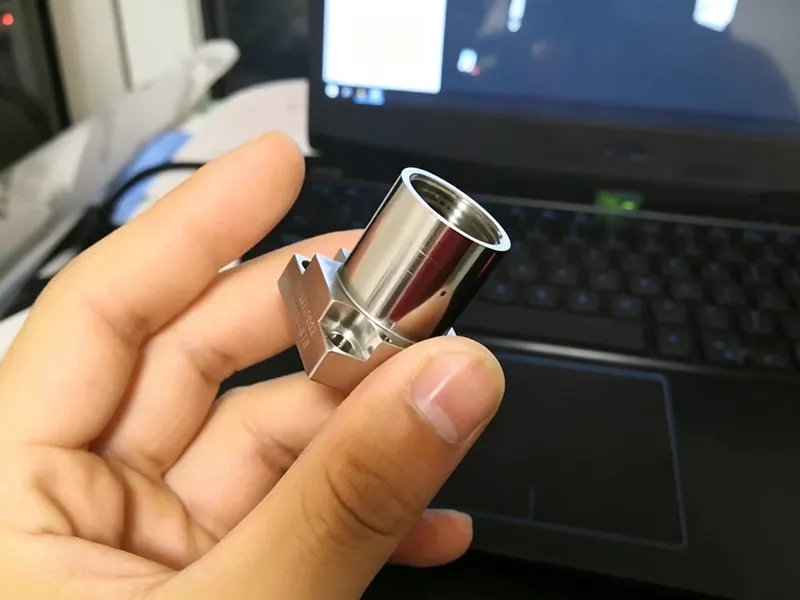
Finish names in stainless steel can be confusing because market language and formal standards do not always line up perfectly. Two parts can both be called “polished,” yet one has a visible line pattern and the other reflects like glass. That is why experienced buyers usually specify both a visual reference and, where function matters, a roughness target instead of relying on finish names alone. Published guidance on mechanically polished, brushed and buffed stainless steel finishes is explicit that written descriptions or Ra values by themselves are not always enough to define a decorative stainless finish.
Common commercial finish families can be summarized like this, although exact naming can vary by standard and supplier.
| Finish Type | Appearance | Common Use |
|---|---|---|
| Brushed Finish | Linear texture | Panels, housings, kitchen equipment |
| Satin Finish | Soft matte shine | Industrial parts, architectural parts |
| Bright Polish | Reflective surface | Decorative and visible parts |
| Mirror Finish | Highly reflective | Premium decorative parts |
| Electropolished | Smooth and clean | Medical, food, pharmaceutical parts |
In practice, a brushed finish gives a controlled linear texture and a lower-glare industrial look; a satin finish has a soft sheen and often balances appearance with practicality; a bright polish is more reflective and more decorative; a mirror finish is the highest-reflectivity option and usually needs careful multi-stage preparation; and an electropolished finish is valued less for “showroom shine” than for micro-smoothness, cleanliness, and corrosion performance in demanding service. Depending on the standard system used, these families may map to designations such as 2J, 2K, 2P, 2R/BA, No. 4, No. 6, or No. 8-style descriptions.
Ra is the most common roughness metric, and lower Ra usually means a smoother surface, but a lower number is not automatically “better” for every part. A decorative interior panel may only need visual consistency, while food-contact equipment may be specified near or below 0.8 µm Ra, and high-purity or medical systems may demand tighter finish control plus electropolishing. The key idea is simple: the brightest surface is not always the most suitable one; the right finish is the one that matches appearance, environment, cleanability, and cost.
Stainless Grades, Tools, Applications, and Method Selection
Not every stainless grade behaves the same during polishing. The alloy affects corrosion resistance, how forgiving the surface is, what finish it can hold in service, and whether spending more on polishing is actually worth it for the job.
304 stainless steel is one of the most widely used grades for polished parts. It has balanced corrosion resistance, good formability, and broad availability in many surface-finish conditions, which is why it appears so often in food equipment, kitchen hardware, cladding, handrails, tanks, housings, and general industrial parts. For many indoor and general-purpose applications, 304 is the practical baseline.
316 stainless steel adds molybdenum and offers higher corrosion resistance than 304, especially in chloride-containing media and harsher process environments. Low-carbon 316L is widely used in food, pharmaceutical, chemical, and medical applications, and it is often the better choice when the part will operate in washdown, marine, coastal, or chemically aggressive service.
430 stainless steel is a common ferritic grade for mildly corrosive indoor use. It is widely used for kitchen equipment, sinks, and household appliances, where appearance still matters but the environment is usually less aggressive than in marine or chemical service. It can be polished effectively, but the finish you get still depends on incoming material quality and the exact process route.
201 stainless steel is a lower-nickel austenitic option used in appliances, restaurant equipment, cooking utensils, sinks, trim, and architectural products. It can be polished for decorative use, but 200-series guidance also warns that lower-nickel, lower-chromium versions generally have lower corrosion resistance than 304, so finish selection should be matched carefully to service environment rather than appearance alone.
The tools used for stainless steel polishing range from abrasive papers and sanding belts to angle grinders, belt grinders, straight grinders, polishing wheels, cotton or felt buffing mops, polishing compounds, brushing media, electropolishing tanks, and batch-finishing systems such as vibratory equipment. The right tool depends on three things more than anything else: part shape, required finish, and production volume. Flat sheet, tubes, handrails, and external faces are usually easiest to handle mechanically; complex internal features, delicate parts, or high-volume small components may benefit from electropolishing or mass-finishing processes.
This is why polished stainless steel shows up in so many sectors. Medical and surgical equipment use it for cleanability and surface quality. Food and beverage systems use it for tanks, tubes, valves, and product-contact hardware. Consumer products use it for cookware, appliances, trim, watches, and visible hardware. Industrial machinery uses it for enclosures, CNC parts, welded assemblies, and process equipment. Transport applications range from automotive trim to rail and aerospace components where corrosion resistance, temperature resistance, strength, and finish control all matter.
When choosing a polishing method, four questions usually decide the answer. First, what finish do you actually need: brushed, satin, bright, mirror, or electropolished? Second, what environment will the part live in: dry indoor service, outdoor exposure, washdown, chloride-bearing conditions, or sanitary processing? Third, can the geometry be reached mechanically, or is it full of internal passages, threads, holes, or fragile features? And fourth, is this a one-off sample, a small CNC run, or a repeat production job? The best method is the one that balances these factors without over-processing the part.
Stainless Steel Polishing vs Passivation and Brushing
Polishing and passivation are related, but they are not the same thing. Polishing changes surface topography and appearance by smoothing, brightening, or texturing the metal. Passivation is a chemical treatment used to remove free iron and help ensure a clean, corrosion-resistant passive surface forms under controlled conditions. A part can be polished without passivation, passivated without decorative polishing, or treated with both when appearance and corrosion reliability are both important. For more technical background, see this reference on post-fabrication treatment of stainless steel.
Polishing and brushing are also different even though the terms are often mixed together. Polishing removes material to refine gloss and smoothness; brushing uses milder abrasives to create a controlled texture with minimal metal removal. If the goal is mirror or bright reflectivity, polishing is the better path. If the goal is a directional, understated, industrial look that is easier to blend and aesthetically forgiving, brushing is usually the better choice.
Common Problems, Better Results, FAQs, and How Sincere Machining Can Help
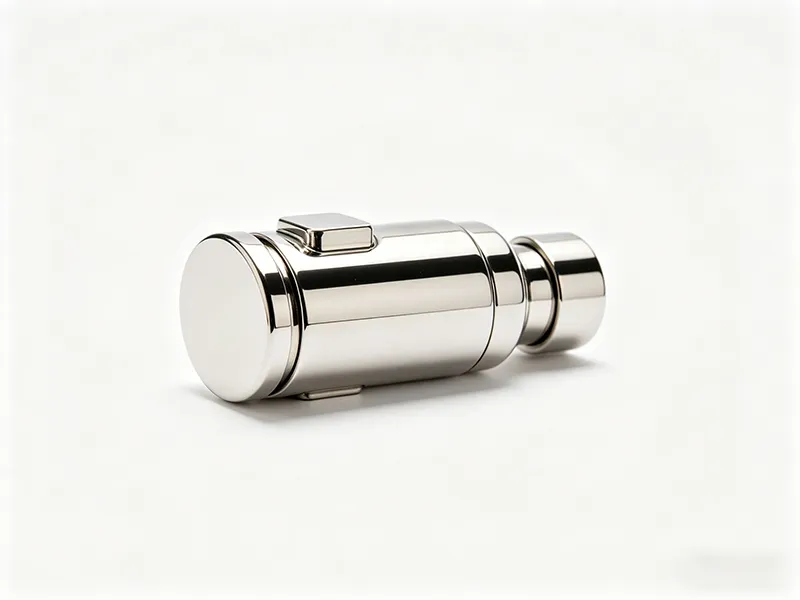
The most common polishing failures are surprisingly predictable. Uneven finish often comes from poor pressure control, excessive temperature, or a grit sequence that was too aggressive or inconsistent. Scratches after polishing usually mean coarse lines were never fully removed, or the finished part was contaminated or damaged during handling and packaging. Overheating and burn marks happen when grinding creates too much heat and oxide forms. Contamination is a classic stainless mistake: using tools or abrasives that were also used on carbon steel can leave iron behind and trigger rust staining later.
Better results usually come from a few disciplined habits rather than one secret trick. Start with the lowest grit that can actually remove the defect, but do not go coarser than necessary. Do not skip too many abrasive stages. Keep tooling dedicated to stainless steel. Control pressure, speed, and heat so the abrasive cuts cleanly instead of digging in or smearing the surface. Clean between stages, and protect the final finish during storage, transport, and packing. For high-spec work, approve a surface sample and state both the visual target and any functional roughness requirement on the drawing.
How Sincere Machining Can Help
Alongside CNC machining, the company’s official materials show support for stainless steel parts, surface-finishing guidance, in-process and final inspection, and quote workflows that let customers send technical requirements directly. That makes it a sensible partner for projects where machining, deburring, polishing, and inspection need to work together instead of being split across multiple suppliers.
If you need brushed, satin, bright, or mirror-polished stainless steel parts, the practical next step is to send the drawing, material grade, finish target, and any Ra requirement up front. The company’s own contact and service pages indicate support for custom CNC manufacturing, uploaded quote requests, and dimensional as well as surface inspection, which is exactly the kind of information flow polished stainless projects usually need.
Conclusion
Stainless steel polishing matters because it changes more than appearance. The right finish can improve how a part looks, how easily it can be cleaned, how reliably it resists corrosion, and how well it performs in real service. Mechanical polishing, electropolishing, chemical polishing, brushing, and buffing all have their place, but the best result always comes from matching the process to the alloy, geometry, environment, and finish requirement. If you are sourcing custom stainless steel parts, the most efficient next move is to send your drawing, material grade, target finish, and any surface roughness requirement with the quote request so the polishing route can be chosen correctly from the start.
FAQs About Stainless Steel Polishing
What is stainless steel polishing?
Stainless steel polishing is the controlled refinement of the surface to improve smoothness, appearance, and consistency, using mechanical, chemical, or electrochemical methods depending on the finish target and application.
Can stainless steel be polished to a mirror finish?
Yes. Mirror finishing is achievable through careful multi-stage abrasive preparation followed by fine polishing and buffing, and some standard finish systems describe highly reflective or mirror-like stainless surfaces explicitly.
What is the best polishing method for stainless steel?
There is no single best method for every job. Mechanical polishing is usually the default for visible external surfaces, electropolishing is often best for cleanability and difficult geometry, and chemical polishing becomes attractive when internal or complex surfaces are hard to reach with abrasives.
Does polishing improve stainless steel corrosion resistance?
In many cases, yes, because smooth, clean, defect-free surfaces are better for corrosion performance than rough, heat-tinted, or contaminated ones. But the improvement depends on the grade, the environment, and whether the process avoids overheating or iron contamination.
What is the difference between brushed and polished stainless steel?
Brushed stainless has a directional texture and lower reflectivity, while polished stainless is smoother and usually brighter. Brushing is more about controlled texture; polishing is more about smoothness, gloss, and reflectivity.
Is 304 stainless steel easy to polish?
Generally, yes. 304 is one of the most common grades for polished parts because it is versatile, widely available, and supplied in many surface-finish conditions, although achieving a premium finish still depends on material quality, prior fabrication, and process control.
Is 316 stainless steel better for polished parts?
It is better when the polished part will face chlorides, washdown chemicals, marine exposure, or demanding hygienic service. It is not automatically necessary for every indoor decorative part, but it is often the preferred upgrade when corrosion risk is higher.
How do you remove scratches from polished stainless steel?
The right approach is to go back to an abrasive stage coarse enough to remove the deepest scratch completely, then work forward again through progressively finer stages before final buffing. Trying to buff over a scratch that was never leveled first rarely works.
What industries use polished stainless steel parts?
Common examples include food and beverage processing, pharmaceuticals, medical devices, architecture, consumer appliances, automotive trim, industrial process equipment, rail, and aerospace applications.
How do I choose the right finish for stainless steel parts?
Start with the environment and function, then work back to the appearance. If the part must be sanitary or easy to clean, prioritize roughness control and possibly electropolishing; if it is decorative, confirm the exact visual sample; if it will live in chloride-rich service, combine the right finish with the right alloy, often 316 or 316L rather than a lower-resistance option.