Lightweight metals are engineered alloys with high strength-to-weight ratios and low density (typically well below that of steel). By dramatically reducing component mass without sacrificing strength or performance, they enable lighter, more efficient designs. These metals are crucial in industries where weight savings translate to better fuel economy, payload capacity, speed, or portability. Common lightweight metals used as CNC machining materials include aluminum, magnesium, titanium, and various specialized alloys such as aluminum-lithium and scandium-containing alloys. Each offers a unique balance of density, corrosion resistance, stiffness, manufacturability, and cost. We explore their key properties, advantages, applications, manufacturing methods, and design considerations below, backed by authoritative data.
What Are Lightweight Metals?
Lightweight metals are metallic materials with significantly lower density than typical structural steels (around 7.85 g/cm³). By definition, the most-used lightweight alloys have densities below about 5000 kg/m³ (5.0 g/cm³). For example, magnesium is ~1.74 g/cm³ and aluminum ~2.70 g/cm³, versus steel at ~7.8 g/cm³. While low density is the defining feature, engineers also require adequate strength, stiffness, corrosion resistance, and manufacturability. In practice, lightweight metals are always alloys (not pure elements) engineered for optimal strength-to-weight (specific strength) and other performance traits. Key terms include strength-to-weight ratio, specific stiffness, and alloy. Good lightweight metals achieve useful strength or stiffness while keeping mass to a minimum.
| Material | Approx. Density (g/cm³) | Strength-to-Weight | Main Characteristics | Common Uses |
|---|---|---|---|---|
| Aluminum | ~2.70 | Moderate–High | Excellent corrosion resistance; easy machining; good conductivity | Aerospace structures, automotive parts, housings, heat sinks |
| Magnesium | ~1.74 | High | Lightest structural metal; good damping and machinability; needs protective coatings | High-performance housings, automotive parts, aerospace |
| Titanium | ~4.51 | Very High | Exceptional strength-to-weight; excellent corrosion and heat resistance | Aircraft components, medical implants, chemical equipment |
| Others | Beryllium (ρ~1.85, very stiff, but toxic), Al–Li, Sc alloys etc. | Niche: aerospace optics (Be), advanced airframe (Al–Li), military |
Table: Approximate densities and uses of key lightweight metals. Steel density ~7.85 g/cm³ for reference.
Common Types of Lightweight Metals
Aluminum and Aluminum Alloys
Aluminum is the most widely used lightweight metal. With a density of about 2.7 g/cm³ (roughly one-third that of steel) and natural corrosion resistance (from a passive oxide layer), aluminum offers a great balance of properties. Its alloys cover a broad spectrum: 2xxx (Al–Cu) and 7xxx (Al–Zn–Mg) series provide very high strength (used in aerospace) at some cost to corrosion resistance, while 6xxx (Al–Mg–Si) series (e.g. 6061) are moderately strong, very formable, and easily welded. Aluminum alloys are easily machined, cast, extruded, and recycled, making them cost-effective. Common machining grades include 6061-T6 and 7075-T6. Aluminum is widely used in aircraft frames, automotive body panels, electronic enclosures, heat sinks, and consumer products.
Magnesium and Magnesium Alloys
Magnesium is one of the lightest commercially used structural metals and offers useful specific strength, vibration damping, and machinability. Magnesium alloys are used in transportation, electronics, power tools, and aerospace components where weight reduction is important. The International Magnesium Association provides further technical and application information about magnesium and its alloys. However, magnesium is highly reactive: it corrodes easily in galvanic contact with other metals and its fine chips are flammable. Therefore, it usually requires protective coatings or anodizing (e.g. PEO coatings) for durability. Typical uses include lightweight automotive components (seat frames, steering wheels), laptop frames, camera bodies, and aerospace gearbox housings.
Titanium and Titanium Alloys
Titanium has a lower density than steel and is valued for its high strength-to-weight ratio, corrosion resistance, fatigue performance, and ability to operate in demanding environments. Alloys such as Ti-6Al-4V are used in aerospace structures, engine components, medical implants, marine equipment, and chemical-processing systems. NASA research on titanium alloys provides an example of how titanium materials have been evaluated for weight-sensitive rocket-engine applications.
Other Lightweight Metals and Alloys
A few specialty metals deserve mention:
- Beryllium (Be) – Very low density (~1.85 g/cm³) and extremely stiff (50% higher modulus than steel), but toxic and brittle. Its use is limited to aerospace gyroscopes, X-ray windows, and specialized alloys (e.g. beryllium-copper springs) where its unique properties justify the cost and hazards.
- Aluminum–Lithium (Al–Li) alloys – Slightly heavier (~2.54 g/cm³) than pure Al but stronger and stiffer. Al–Li alloys (2–3% Li) can reduce weight by 10–15% versus traditional alloys, with improved fatigue life. They are used in advanced aircraft fuselages and space structures despite challenging fabrication.
- Scandium-containing Al alloys – Very strong and weldable, offering performance gains in aerospace, though extremely expensive.
- Zinc and Zinc-Aluminum – Heavier (ρ ~7.1), but die-cast zinc alloys are often used as “quasi-lightweight” when cost is crucial.
Each specialty alloy trades cost or toxicity for specific advantages.

Key Properties of Lightweight Metals
Engineers evaluate several properties beyond density. Key metrics include:
- Strength-to-Weight Ratio – The most important factor. High-performance alloys (e.g. Ti-6Al-4V, 7075 Al, high-grade Mg) can match or exceed steel’s strength at a fraction of the weight.
- Stiffness (Specific Modulus) – Some lightweight metals (notably magnesium and beryllium) have high stiffness per unit weight, useful for vibration-sensitive parts. Titanium and Al have lower modulus than steel, so designers must account for deflection.
- Fatigue Resistance – Metals that can withstand cyclic loads without cracking are crucial. High-strength alloys often have lower fatigue life than ductile steel, so adequate design margins and post-processing (shot peening, polishing) may be needed.
- Corrosion Resistance – Corrosion performance varies among lightweight metal families. Aluminum develops a naturally protective oxide surface, while titanium is selected for many demanding corrosive environments. Magnesium usually requires additional surface protection. The Aluminum Association’s aluminum overview provides additional information about aluminum’s lightweight properties, durability, corrosion resistance, recyclability, and industrial applications.
- Thermal Conductivity – Aluminum and magnesium conduct heat well, making them ideal for heat sinks and cooling components. Titanium conducts less heat but performs well at high temperature.
- Machinability and Weldability – Aluminum and magnesium machine and form easily, lowering production cost. Titanium is much harder on tools and requires slower cutting and inert-gas welding, increasing cost.
- Cost and Availability – Raw material and processing cost vary widely. Aluminum is plentiful and cheap; titanium is expensive; magnesium is moderately priced but tricky to handle safely.
- Other Properties – Electrical conductivity (Al and Cu are good conductors, Ti and Mg are not), ductility (some alloys are quite brittle), and heat resistance all factor into material selection.
Advantages and Limitations of Lightweight Metals
Lightweight metals offer many advantages, but also trade-offs:
Advantages:
- Reduced Weight: Lowering mass improves fuel/electric efficiency, acceleration, and reduces wear. For example, swapping steel parts for Al/Mg in vehicles and aircraft cuts fuel usage.
- High Strength-to-Weight: As noted, Al/Mg/Ti can be as strong as steel by weight, enabling lighter structural parts in aerospace, automotive, and machinery.
- Corrosion Resistance: Many alloys (Al, Ti) resist rust and oxidizing environments, extending service life with minimal coating.
- Good Machinability: Except for titanium, these alloys are easy to machine or cast. Aluminum, magnesium, and their alloys allow complex geometries with low tooling cost.
- Thermal Management: Excellent heat conductivity (especially Al, Mg) makes them ideal for heat sinks and cooling systems.
- Recyclability: They can be recycled with little loss of properties, aiding sustainability.
- Performance: In robotics or electronics, lower inertia enables faster motion and easier handling.
Limitations:
- Cost: High-performance alloys (Ti, Al–Li) are expensive to produce. Materials like titanium incur much higher cost than common steel.
- Lower Stiffness: On equal volume, light metals often deflect more than steel (except beryllium). Designs may need thicker sections, partially offsetting weight savings.
- Corrosion (Mg): Bare magnesium corrodes quickly in salt environments and can ignite when machined. It needs plating or coatings.
- Wear and Fatigue: Soft lightweight alloys (especially Al) wear faster than steel and fatigue strength can be limited under cyclic loading.
- Machining Challenges: Titanium causes high tool wear and demands specialized cutting speeds. Welding Ti or Al requires skill to avoid defects.
- Thermal Expansion: Some light metals (e.g. aluminum ~23 µm/m°C) expand more than steel, which can be an issue in precision assemblies or thermal cycling.
- Brittleness (some grades): Certain high-strength alloys are less ductile, increasing cracking risk in sharp corners or notches.
- Fire Risk (Mg chips): Machining magnesium requires fire-safe setups because thin magnesium shavings can ignite.
No material is perfect. Engineers must weigh these factors: for instance, use titanium only where its strength or temperature performance justifies its cost and machining difficulty.
Applications of Lightweight Metals
Lightweight metals are ubiquitous across industries:
Aerospace
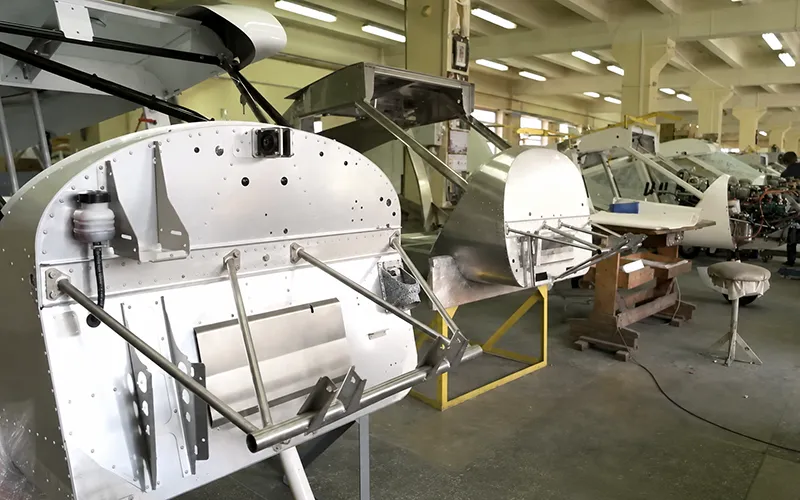
The aerospace industry extensively uses aluminum, titanium, and magnesium alloys because reducing structural weight can improve aircraft efficiency and payload capacity. Aluminum sheet and extrusions are used for fuselages, wings, and structural ribs, while titanium alloys are used for engine parts, landing gear, fasteners, and high-temperature components. Aluminum-lithium alloys are also used in selected aircraft and spacecraft structures.
Automotive and Transportation
The automotive industry uses aluminum for engine blocks, wheels, body panels, suspension components, chassis structures, and battery enclosures. Magnesium is also used in instrument panels, steering wheels, seat structures, and transmission housings where further weight reduction is required. Titanium may be selected for specialized exhaust components, valves, and other high-performance parts.
Electronics
Portable devices demand lightweight, compact components. Aluminum and magnesium alloys are popular for laptop, smartphone, and tablet housings, offering a premium feel and dissipating heat. Magnesium, being lighter than aluminum, is used in high-end laptops and cameras. Both Al and Mg serve as heat sink materials thanks to their thermal conductivity. Titanium and its alloys appear in durable, lightweight cases and medical electronics enclosures for biocompatibility.
Medical Devices
Corrosion resistance and biocompatibility make titanium the material of choice for surgical implants (hip/knee replacements, bone screws, dental implants). Surgical tools and instrumentation often use stainless steel for strength, but aluminum or magnesium may be used for lightweight handles and housings. In lightweight assistive devices (e.g. prosthetics, wheelchairs), aluminum frames help reduce patient fatigue. Electronics in medical equipment (imaging, monitors) may use aluminum chassis.
Robotics & Industrial Automation
Robotic arms and automated machines benefit from lighter structural components to enable faster acceleration and precise control. CNC-machined aluminum parts (plates, brackets) and tube assemblies are common. Magnesium is sometimes used for interior housings in lightweight drones or equipment to lower inertia. Aluminum extrusions provide lightweight machine frames and enclosures. By lowering part weight, cycle times improve and motors can be downsized.
(Also see Aerospace, Automotive, Electronics, Medical in Additional References.)
Manufacturing Processes for Lightweight Metals
Light metals can be formed by most conventional metalworking processes, though each has considerations:
- CNC machining is widely used to manufacture precision aluminum, magnesium, and titanium parts. Aluminum and magnesium generally support efficient material removal, while titanium requires lower cutting speeds, rigid setups, suitable tooling, and careful heat control. CNC milling and turning can produce complex lightweight components with tight dimensional tolerances.
- Casting: Aluminum and magnesium are often cast when high volumes or complex shapes are needed. Die casting (high-pressure injection into steel molds) is used extensively for Al and Mg parts (engine blocks, housings). Gravity, sand, or investment casting suit lower volumes or large parts. Titanium casting is possible but difficult (high melting point, reactive), requiring vacuum or special molds.
- Forging: Critical parts (titanium compressor disks, aluminum landing gear struts) are often forged to refine grain structure and maximize strength. Forging aluminum or magnesium alloys yields very high strength components. Titanium alloys are frequently forged (usually at elevated temperature) for airframe fittings and shafts.
- Extrusion and Rolling: Aluminum (and some titanium) is extruded into long profiles (beams, heat sink fins, frames) and rolled into sheets/plates. Magnesium alloys can be extrusion-formed at controlled temperatures for rods and shapes. These processes produce consistent cross-sections for structural components.
- Sheet Metal Forming: Lightweight metal sheets are bent, stamped, or deep-drawn into brackets, panels, and housings. Aluminum 5xxx and 6xxx series are commonly formed by stamping for car body panels and enclosures. Magnesium sheet forming is less common but used for electronics housings and instrument panels.
- Additive manufacturing, or 3D printing, can produce aluminum and titanium components using processes such as powder bed fusion and directed energy deposition. It is particularly useful for complex internal channels, lattice structures, and topology-optimized parts that may be difficult to manufacture through conventional machining.
Each process selection depends on metal/alloy, part geometry, tolerances, quantity, and cost. For example, die casting is efficient for many aluminum auto parts, whereas CNC machining may be best for low-volume aerospace prototypes.

Surface Finishing and Corrosion Protection
Surface treatments are crucial for longevity and performance:
- Aluminum: Common finishes include anodizing (forms a hard, corrosion-resistant oxide with color options), powder coating/painting (durable colored finishes), and metal plating (Ni, Zn, etc.). Raw aluminum naturally resists corrosion via its oxide layer, but anodizing significantly improves wear resistance and surface hardness. Properly masked threads or critical fits must account for coating thickness.
- Magnesium: Must be protected aggressively. Typical approaches include chromate or silane conversion coatings, anodizing/PEO (plasma electrolytic oxidation) which produces a dense ceramic-like surface, and powder coating or epoxy paint. PEO coatings have been shown to drastically improve Mg’s corrosion and wear resistance. Special plating (e.g. nickel) is also used for high-profile applications.
- Titanium: Rarely needs corrosion protection, but surfaces are often passivated or cleaned. Decorative anodizing can color titanium (but does not seal it). For wear resistance, titanium nitride (TiN) or diamond-like coatings can be applied. Polishing and blasting are common to improve surface finish or fatigue life.
- General: All light metal parts often include machining deburring, polishing, or blasting steps to remove imperfections. Chamfers and fillets are added during design to eliminate stress risers. Sealing or potting joints may be used in moist or salt environments.
Selecting the right finish depends on the environment and function. For example, marine applications may require hard anodizing on aluminum or thick composite coatings on magnesium. Aerospace parts often use anodizing and primer paint for Al, while medical devices might be electropolished and passivated for Ti.
How to Choose the Right Lightweight Metal
Material selection hinges on multiple factors, not just density:
- Load and Strength: Evaluate stresses. For low-to-moderate strength needs, standard aluminum (e.g. 6061) suffices. For very high loads, consider 7075 aluminum or titanium.
- Weight Target: If minimal weight is key (e.g. handheld electronics), magnesium or aluminum-lithium alloys might be best. For moderate reduction, aluminum is typically optimal.
- Environment: Corrosive or high-temperature environments favor titanium or treated aluminum. In saltwater, Ti or marine-grade Al (5xxx series) are preferred. Magnesium alloys are avoided in seawater unless sealed.
- Operating Temperature: Aluminum softens above ~150°C, whereas titanium remains strong much higher (up to ~500°C). Choose Ti or Ni-based alloys for heat-intensive parts.
- Fatigue and Impact: For cyclic loading or vibration, alloys with good fatigue life (certain Ti or Al alloys) are better. Brittle high-strength alloys may crack under shock.
- Manufacturing: Consider feasibility. Aluminum is easiest and cheapest to form/machine. Magnesium requires special handling (spark-resistant equipment). Titanium is hardest on tools.
- Finishing and Assembly: Some designs need highly polished or painted surfaces. Also think about joint design: welding aluminum is simpler than welding Mg or Ti.
- Production Volume and Cost: High-volume may justify expensive alloys or die-cast processes. Prototyping often uses 6061-Al because of its ease and low tooling cost.
In practice, engineers weigh strength-to-weight, cost, and manufacturing ease. A good rule: use the loosest (lowest-precision) material that meets the functional requirements. For example:
- General machined brackets or frames: Aluminum (6061 or 7075) offers excellent balance of strength, machinability, and price.
- Extreme weight savings: Magnesium alloy is an option if you can manage corrosion protection and safety.
- High-end aerospace/medical: Titanium (Ti-6Al-4V) for critical structural or high-temp parts, or aluminum-lithium for primary structures.
- Harsh environment: Titanium or stainless aluminum alloy.
Often the choice is refined via DFM review and prototypes to verify performance. Factors like material availability, budget, and supplier capability also play roles.
Conclusion
Lightweight metals offer a powerful way to reduce part weight while keeping strength and functionality. Aluminum, magnesium, and titanium (and some specialty alloys) lead the field in combining low density with useful mechanical properties. Each metal family has unique benefits: aluminum is economical and versatile, magnesium is exceptionally light, and titanium is extraordinarily strong and corrosion-resistant. Applications span aerospace, automotive, electronics, medical, and more, where lighter components mean better efficiency or performance.
However, they also come with trade-offs (cost, stiffness, corrosion needs) and must be chosen carefully based on the full operating environment and manufacturing process. Key considerations include strength-to-weight requirements, corrosion environment, fatigue life, machining and joining methods, and cost. Good design practice includes adding adequate material thickness, avoiding sharp corners, and specifying proper finishes to harness the advantages of the chosen alloy.
In summary, while density is the headline feature, successful use of lightweight metals relies on matching the right alloy and processes to the application’s demands. Early material selection, prototyping, and design-for-manufacturing review can ensure the final component is as light as possible without compromising safety or performance.
FAQs About Lightweight Metals
What are lightweight metals?
Lightweight metals are alloys with low density and high strength-to-weight ratios. Common examples are aluminum, magnesium, and titanium alloys. They are used to reduce component weight while maintaining strength.
What are the most common lightweight metals?
The most widely used are aluminum alloys (density ~2.7 g/cm³), magnesium alloys (~1.74 g/cm³), and titanium alloys (~4.5 g/cm³). Specialty alloys include aluminum–lithium, beryllium alloys, and some scandium/aluminum mixes.
What is the lightest structural metal?
Magnesium is the lightest structural metal in common use at about 1.74 g/cm³. It is 36% lighter than aluminum and 78% lighter than steel, making it ideal for extreme weight reduction.
Are lightweight metals as strong as steel?
Some lightweight alloys (especially titanium and high-strength aluminum) have comparable strength-to-weight to steel. However, steel generally has higher absolute stiffness and yield strength. Designers choose lightweight metals when weight savings and specific strength (strength per unit weight) are more critical than sheer stiffness.
Which lightweight metals are good for CNC machining?
Aluminum, magnesium, and titanium are commonly machined. Aluminum alloys (like 6061, 7075) offer excellent machinability. Magnesium also machines quickly but requires fire-safe precautions. Titanium is machinable but much slower and uses special tooling due to heat buildup.
Do lightweight metals resist corrosion?
Corrosion resistance varies. Aluminum and titanium naturally form protective oxides and perform well outdoors and in marine air. Magnesium is very reactive and must be coated or alloyed to resist corrosion. Each alloy has specific resistance (e.g. 5xxx Al series for marine use).
Where are lightweight metals commonly used?
They are everywhere lighter parts are needed: aerospace structures and engines, automotive bodies and engines, electronics enclosures and heat sinks, medical implants and instruments, robotics components, and lightweight machinery. In all these, lightweight metals replace heavier steels to improve efficiency and performance.