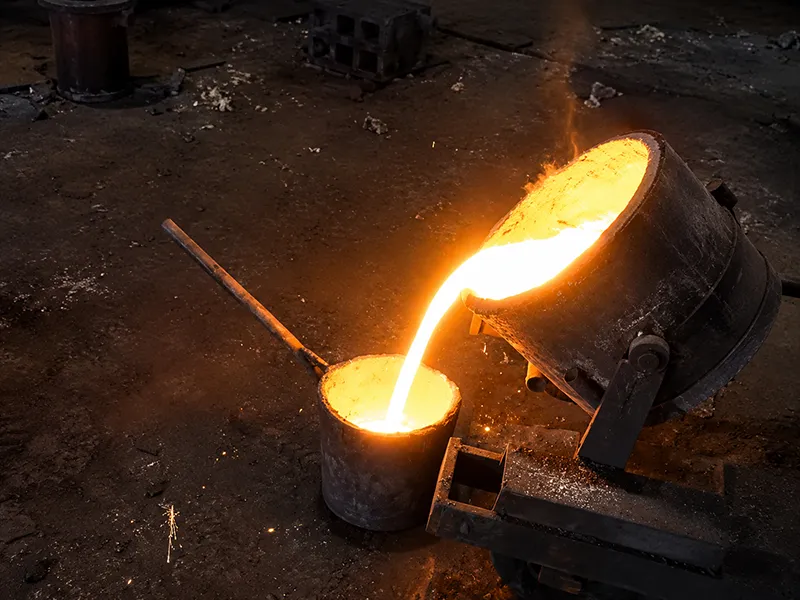
The melting point of iron is one of the most important basic facts in metalworking, casting, welding, and materials engineering because it tells you how iron behaves when exposed to extreme heat. That matters in real manufacturing: iron-based materials sit behind structural products, machinery, appliances, transport equipment, pipelines, tools, and countless industrial parts, while steel is still described by the World Steel Association as the world’s most important engineering and construction material.
For beginners, the key idea is simple: if you know the iron melting point, you can better understand when iron stays solid, when it begins to soften or change structure, and when it finally becomes liquid enough for high-temperature processes. It is also important to remember that iron is not the same thing as steel. Pure iron is a chemical element, while steel is mainly iron combined with carbon and sometimes other alloying elements. To understand how iron fits into the broader material family, you can also read our guide to Types of Metals.
What Is the Melting Point of Iron
The direct answer is this: the melting point of pure iron is about 1,538°C, which is 2,800°F or 1,811 K. That is the temperature at which solid pure iron changes into liquid under standard conditions. The Royal Society of Chemistry lists these values for elemental iron.
In everyday language, the melting temperature of iron is the point where it stops being a solid metal block and becomes molten metal. That sounds straightforward, but in real manufacturing the picture can be more complicated. Pure iron has a well-defined melting point, while commercial materials often contain carbon, silicon, manganese, chromium, nickel, phosphorus, sulfur, or other elements that shift the temperature at which melting begins and finishes.
It also helps to separate melting point from boiling point. Melting point is where a solid becomes a liquid. Boiling point is where a liquid becomes a gas. For iron, the boiling point is about 2,861°C or 5,182°F, which is much higher than its melting point.
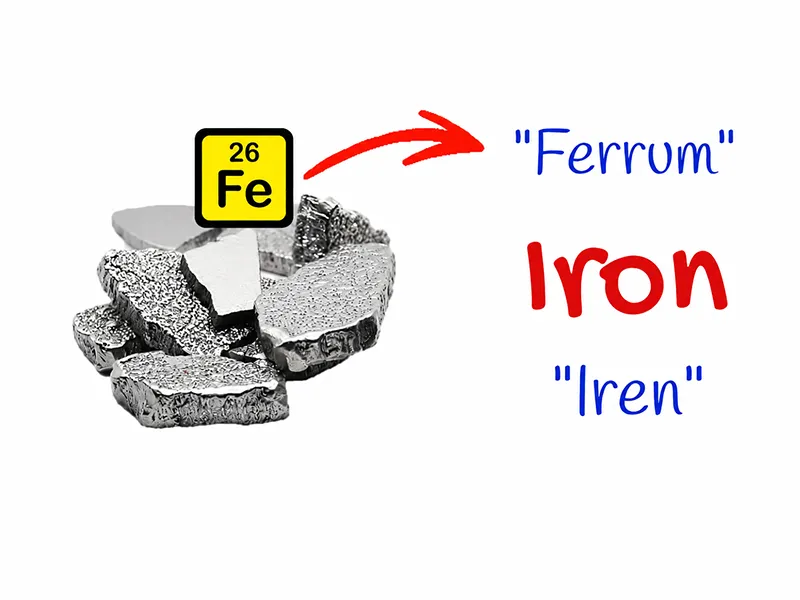
Why Iron Has a High Melting Point
Iron has a high melting point because its atoms are held together by strong metallic bonding. In simple terms, metals consist of positively charged metal ions held together by a “sea” of delocalized electrons, and overcoming that attraction takes a large amount of heat energy. The Royal Society of Chemistry’s teaching materials describe metallic bonds as strong electrostatic attractions, and other chemistry references note that stronger metallic bonding is reflected in higher melting points.
That strong bonding is one reason iron and iron-based alloys are so useful in structural and industrial settings. Materials built around iron can handle demanding service conditions, which is why steel and related ferrous materials are widely used in buildings, transport equipment, machinery, tools, and infrastructure.
There is another beginner-friendly detail worth knowing: iron does not keep the same crystal structure at every temperature. Training materials from the International Atomic Energy Agency note that iron exists in multiple allotropic forms, including body-centered cubic forms at lower and very high temperatures and a face-centered cubic form at intermediate temperatures, with another transformation occurring close to the melting point. That means iron’s high-temperature behavior is more complex than a single number, even though 1,538°C remains the standard answer for pure iron.
Iron vs Steel Melting Point
This is one of the most common areas of confusion. Iron is a pure element. Steel is an alloy made mainly from iron and carbon, usually with less than 2% carbon plus small amounts of other elements such as manganese, silicon, phosphorus, sulfur, and sometimes alloying additions like chromium or nickel. Because steel is an alloy rather than a pure element, it often melts over a range instead of at one exact temperature.
Pure iron melts at 1,538°C, but steels often melt lower or across a broader interval depending on composition. For a deeper comparison, see our dedicated guide to Steel Melting Point. Engineering Toolbox lists carbon steel at roughly 1,425–1,540°C, AZoM lists mild steel at roughly 1,450–1,520°C, and example alloyed grades such as 304 stainless steel and AISI 4140 alloy steel are listed at about 1,450°C and 1,416°C respectively. If you are new to low-carbon steel materials, you can also read our article on What Is Mild Steel. These examples show why “steel melting point” is usually better treated as a range than a single universal value.
The reason steels often have a melting range is that alloys usually have both a solidus and a liquidus. Below the solidus, the material is fully solid. Above the liquidus, it is fully liquid. Between those two temperatures, part of the alloy can be solid while another part is liquid. That is normal for many engineering alloys and one of the main practical differences between pure iron and most steels.
Carbon content is especially important here. Steel usually contains up to about 2.1% carbon, while cast irons are much higher in carbon, often around 2–4% or even 2.5–4% depending on the grade discussed. Higher carbon changes phase behavior and generally lowers the temperature needed for melting compared with pure iron, which is why cast irons are much easier to cast than elemental iron.
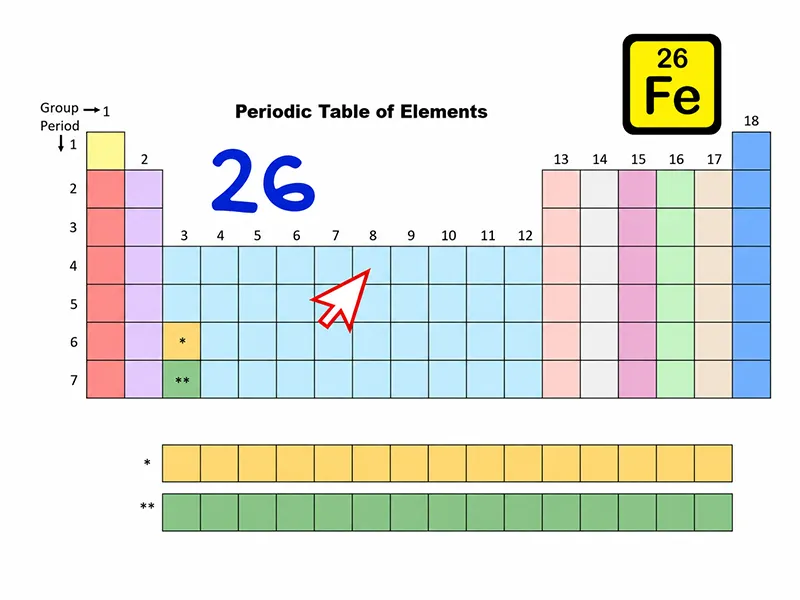
Factors That Affect the Melting Behavior of Iron
If you ask, “What is the melting point of iron?”, the correct answer for pure iron is still 1,538°C. But if you ask how iron behaves in a real workshop or factory, several practical factors matter.
| Factor | How it affects melting behavior |
|---|---|
| Purity | Pure iron has a sharper, more clearly defined melting point. |
| Carbon content | Adding carbon turns iron into steel or cast iron and changes the melting range. |
| Alloying elements | Chromium, nickel, manganese, molybdenum, and others can raise or lower the range and change phase behavior. |
| Contamination and oxidation | Rust, grease, coatings, dampness, and other contamination can interfere with heating, remelting, and welding quality. |
| Processing conditions | Section thickness, heating rate, cooling rate, arc energy, and furnace practice all influence real industrial behavior. |
Sources for the table: pure iron point from RSC; steel and alloy behavior from worldsteel, AZoM, and Engineering Toolbox; contamination and process effects from TWI.
Purity matters because a pure substance behaves more cleanly than a mixed one. Carbon matters because even small changes in carbon content alter the structure and category of the metal, shifting it from pure iron toward steel or cast iron. Alloying elements matter because they are intentionally added to manipulate performance, and those chemistry changes also affect thermal behavior.
Contamination is also important, but in a practical way rather than a purely textbook way. Rust, grease, paint, scale, dirt, or damp contamination do not redefine the elemental melting point of iron, but they can create problems during remelting and joining. TWI notes that surface contaminants can cause porosity in welds, and contamination can also increase spatter or reduce fusion quality in hot processes.
Finally, industrial conditions matter because metals are processed in real furnaces and real parts, not in ideal lab samples. TWI notes that steel composition, section thickness, arc energy, and cooling rate all affect heat-affected-zone behavior and cracking risk, while annealing outcomes depend on heating and cooling rates as well as phase composition.
Why the Melting Point of Iron Matters in Manufacturing
In casting, iron-based materials must be heated until they are molten enough to fill a mold and then solidify into the desired shape. The American Foundry Society defines metalcasting as a process in which high-temperature molten metal is poured into a mold to form complex parts. That is why melting temperature is not just a chemistry fact; it is a process-control requirement.
In welding, the melting point matters because many welding methods rely on local melting. TWI defines fusion welding as joining materials by heating them to melting point, and for steels the right heat input, preheat strategy, and cooling rate are critical because carbon content, alloy content, and cooling rate affect hardness and cracking risk in the heat-affected zone.
In heat treatment, iron-based materials are often heated to carefully selected temperatures below their melting point so their microstructure can be changed without losing shape. TWI explains that annealing involves heating above the recrystallization temperature but below the melting point, and that the resulting grain size and phase composition depend on heating and cooling rates. This is why understanding iron properties is essential for annealing, normalizing, hardening, and related thermal processes.
In CNC machining, the workpiece does not come close to melting, but temperature still matters a lot. Heat at the cutting zone can cause thermal expansion, dimensional error, and faster tool wear. Machining Doctor notes that excessive heat can make a part measure correctly while warm and then shrink out of tolerance after cooling, and it also warns that inconsistent coolant supply can cause thermal cracking in carbide inserts. That is why tool material, cutting speed, feed, and coolant strategy all matter when machining iron-based materials.
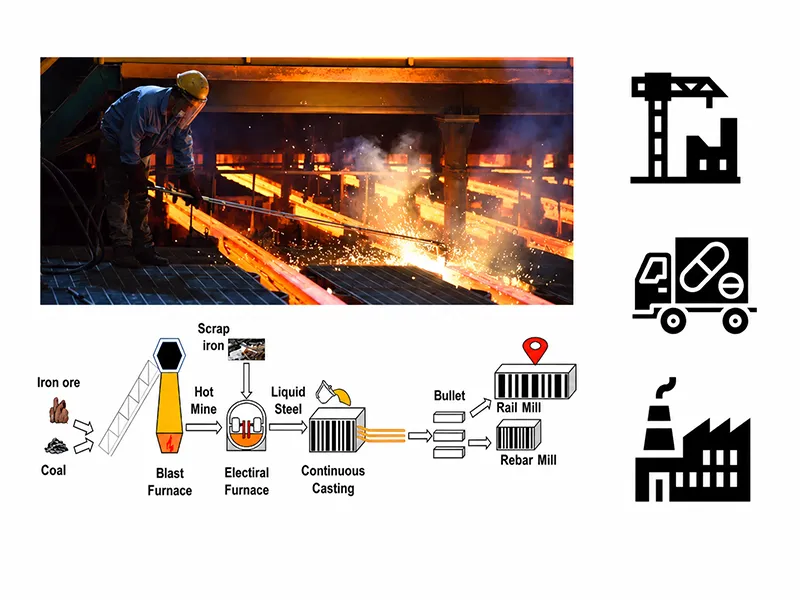
Common Applications of Iron and Iron-Based Materials
Iron-based materials are used almost everywhere because they combine strength, processability, cost-effectiveness, and a wide range of tunable properties. The World Steel Association says steel is used in every aspect of modern life, including cars, construction products, appliances, ships, and medical tools.
For day-to-day manufacturing examples, mild steel is commonly used in structural elements, pipelines, poles, machinery, and automobile manufacturing. Low-carbon steel is also widely used for automotive body components, pipes, structural shapes, and construction or bridge components. These examples help explain why people searching for the melting point of iron are often really trying to understand the behavior of iron-based engineering materials in practical applications.
Cast iron remains especially important for components where wear resistance, vibration damping, and castability matter. TWI notes that cast iron is widely used for items such as engines, machine tools, manhole covers, and water pipes, while AZoM highlights engine and machine parts, pipes, and machine bases as typical grey iron uses.
Conclusion
The short answer is still the most important one: the melting point of pure iron is about 1,538°C (2,800°F). Iron has a high melting point because of strong metallic bonding, and its behavior at high temperature is shaped further by crystal-structure changes, carbon content, alloying, contamination, and process conditions. That is why iron vs steel melting point is not a trivial comparison: steel and cast iron usually melt across ranges that depend on their chemistry, while pure iron has a single standard melting point. Understanding this helps with casting, welding, heat treatment, material selection, and machining decisions. If you need custom iron, steel, or other metal parts, a capable machining and manufacturing partner can help with both material choice and process planning.
FAQ About Melting Point of Iron
What is the melting point of iron?
Pure iron melts at about 1,538°C, which is 2,800°F or 1,811 K.
Is the melting point of iron higher than steel?
Usually, yes. Pure iron has a specific melting point at 1,538°C, while many steels melt over a range that is often somewhat lower or broader depending on carbon content and alloying elements. Examples include carbon steel at roughly 1,425–1,540°C, mild steel at 1,450–1,520°C, and common stainless grades around 1,450°C.
Why does iron have a high melting point?
Iron atoms are held together by strong metallic bonds, so a large amount of heat energy is needed to overcome those attractions and turn solid iron into liquid metal.
What is the difference between iron, steel, and cast iron?
Iron is a pure element. Steel is mainly iron plus carbon, usually with less than 2% carbon and small amounts of other elements. Cast iron has much higher carbon content, commonly around 2–4% or more depending on the grade, which changes its melting behavior and makes it especially suitable for casting.
Does iron melt easily?
No. Iron needs very high temperatures to melt, which is why industrial furnaces and tightly controlled thermal processes are normally required for iron melting, casting, and steelmaking.
Why is the melting point of iron important in manufacturing?
It helps manufacturers choose the right process window for casting, welding, heat treatment, and machining. In casting it determines when the metal can be poured; in welding it affects local melting and crack risk; in heat treatment it sets the upper limit below which structure can be changed without melting; and in machining it reminds engineers that even sub-melting heat can still damage tools or reduce dimensional accuracy.