CNC QUOTE COMPARISON GUIDE
CNC machining quotes differ because suppliers evaluate material, equipment, setup, tolerances, inspection, finishing, capacity, and delivery requirements differently. Even with the same CAD model, they may plan different manufacturing routes or include different services in the quoted price.
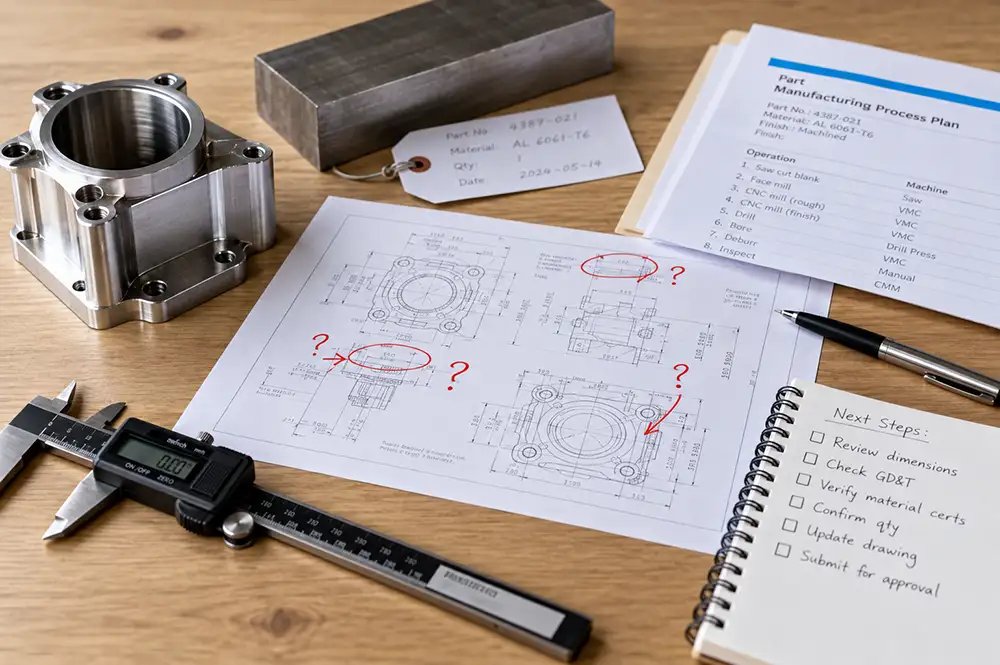
Understanding CNC machining quote differences helps you compare the complete order. A lower quote can leave essential services unpriced, while a higher quote does not automatically guarantee better quality.
This guide explains why CNC machining quotes differ and how to check the assumptions behind each offer. Start with these cost factors, then use the comparison checklist before selecting a supplier.
WHY QUOTES DIFFER — AT A GLANCE
| Quote Factor | Why It Can Change the Price |
|---|---|
| Material | Alloy, stock size, availability, and certificates |
| Machining strategy | Machine choice, setups, tooling, and cycle time |
| Tolerances | Additional process control and measurement |
| Quantity | Setup costs shared across more parts |
| Finishing | Processing, masking, transport, and minimum charges |
| Inspection | Measurement methods, sampling, and documentation |
| Lead time | Priority scheduling and expedited services |
| Supplier capacity | Equipment availability and production efficiency |
IN THIS GUIDE
Same Part, Different Quotes · Machines and Strategy · Tolerances and Inspection · Material and Finish · Quantity and Lead Time · Included and Missing Costs · Buyer’s Comparison Checklist · FAQ
Why Can the Same CNC Part Receive Very Different Quotes?
A CAD model defines geometry, but it does not establish every manufacturing decision. Suppliers still choose stock dimensions, cutting tools, workholding, setup sequences, and inspection methods. Unclear drawing requirements can also lead to different assumptions. Suppliers may include different allowances for scrap, difficult features, or uncertain requirements, which is another reason to clarify specifications before comparing prices.
For a hypothetical component, one supplier might propose three setups on a 3-axis mill, while another could use one or two setups on a 5-axis machine. Actual setup requirements depend on the geometry and available equipment. These approaches create different programming, fixture, labor, and machining costs.
A CNC quote reflects the supplier’s manufacturing plan, not just the geometry of the part. Ask which assumptions explain a substantial price difference.
How Do Machine Choice and Manufacturing Strategy Affect the Quote?
Machine hourly rates matter, but total processing time matters too. Depending on the part, the appropriate route may involve 3-axis milling, 4-axis indexing, CNC turning, mill-turn operations, or 5-axis CNC machining. Available capacity and experience with similar components can improve scheduling and estimating accuracy. A supplier facing a full schedule or unfamiliar features may allow more time and cost, contributing to a higher quotation.
A higher-rate machine can sometimes reduce the total quote by eliminating repositioning and simplifying fixtures. For a straightforward part, however, simpler equipment may be more economical. Machine sophistication alone does not determine value. A fixture that saves handling time on hundreds of parts may also be harder to justify for a single prototype.
Ask whether the quote includes soft jaws, custom fixtures, special tools, or secondary operations. These CNC machining cost factors can be significant for small batches. Also confirm whether tooling charges are one-time costs and whether existing tooling can be reused for repeat orders.
How Do Tolerances and Inspection Requirements Change Pricing?
Tight tolerances can require additional finishing passes, closer tool monitoring, controlled measurement conditions, and more frequent inspection. As an illustrative comparison, a ±0.01 mm requirement may involve more work than ±0.10 mm; the actual impact depends on the feature, material, size, and process.
Identify dimensions that affect fit and function instead of applying the tightest tolerance everywhere. Where GD&T requirements are used, ASME Y14.5 provides standardized symbols, rules, definitions, and practices for communicating dimensional and geometric requirements. Then align the CNC quality control requirements across suppliers. State whether critical measurements must meet requirements before or after surface finishing to avoid ambiguity.
- Specify critical dimensions, sampling, and measurement methods.
- Request coordinate measuring machine (CMM) results, a dimensional report, or first article inspection when needed.
- Confirm material certificates, certificates of conformity, and traceability requirements.
Always confirm what level of inspection is included in the quoted price. Basic dimensional checks and a documented inspection package cover different scopes.
How Do Material and Surface Finish Affect CNC Quotes?
Material descriptions must be specific. “Aluminum” leaves more uncertainty than a specified alloy and temper such as 6061-T6. Stock availability, minimum purchase quantities, required certificates, and machining behavior all affect pricing. Suppliers may also obtain different purchase prices for the same specified material.
Finishing introduces another layer of variation. Anodizing, hard anodizing, electroless nickel plating, powder coating, bead blasting, and passivation involve different requirements. Depending on the finish, clarify thickness, color, masking, surface preparation, and relevant acceptance criteria.
Ask whether finishing is performed internally or subcontracted, and whether minimum lot charges apply. Every supplier should quote the same material grade and finishing specification. Any proposed material substitution should be identified separately and approved against the part’s functional requirements.
Why Do Quantity, Setup, and Lead Time Change the Unit Price?
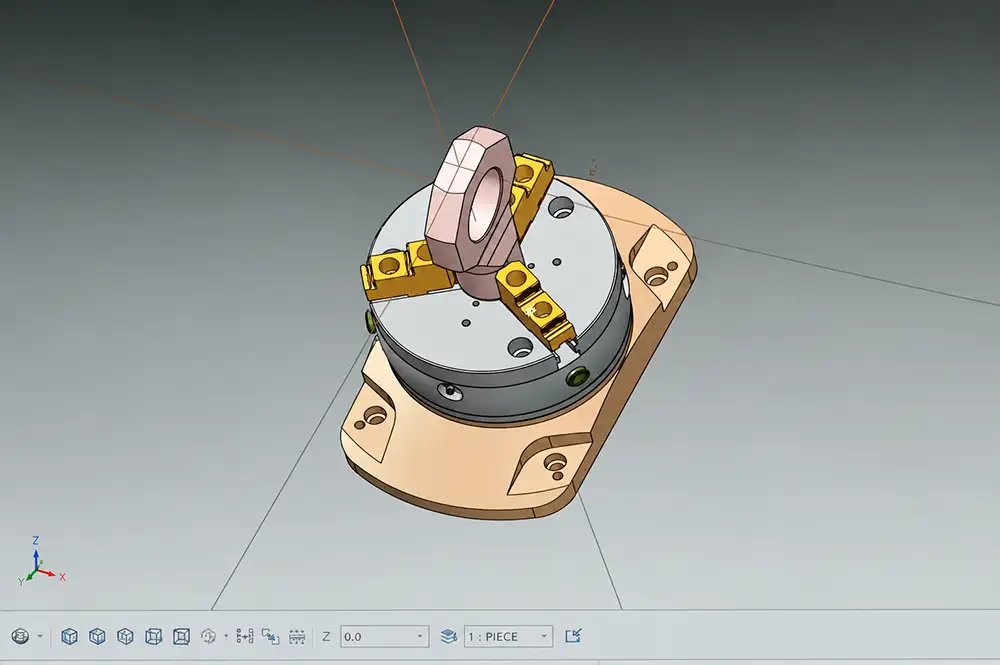
Programming, machine setup, fixturing, and first-piece inspection create costs before a batch is complete. Spreading these costs across more parts can reduce the unit price, although savings depend on the production route and capacity.
If demand is uncertain, request several quantity breaks. An illustrative request might cover 5, 50, 200, and 500 pieces. Ask whether each price assumes a single production release or separate orders; the cost allocation may differ. Check minimum order charges before assuming a repeat order will retain the same unit price.
An urgent deadline can add overtime, schedule changes, expedited finishing, or faster freight. Compare quotations against the same required arrival date. Confirm whether the stated lead time includes engineering review, material procurement, finishing, inspection, and transport, and what event starts the schedule.
What Is Included—or Missing—in the CNC Machining Quote?
Some CNC supplier pricing differences come from scope rather than machining efficiency. A quotation may show a low unit price while listing required services as additional charges or leaving them undefined. Check currency, payment terms, and quotation validity too, especially when offers were issued at different times.
- Material, certificates, programming, setup, tooling, and fixtures.
- Surface finishing, inspection, CMM reports, and first article documentation.
- Packaging, freight, applicable import charges, and expedited processing.
In a hypothetical comparison, a $45 part could cost more overall than a $55 part if required finishing, inspection, and delivery are excluded from the lower price. These figures illustrate quote structure, not market rates.
Compare the total delivered cost of parts that meet your acceptance requirements. Check exclusions and the agreed process for resolving nonconforming parts.
How Should You Compare CNC Machining Quotes From Different Suppliers?
A useful CNC machining quote comparison starts with identical inputs. Send every supplier the same request package; the CNC machining RFQ checklist can help organize your files and specifications.
- Same CAD and drawing revisions, with conflicting information resolved.
- Same material, quantity, tolerances, and surface finish.
- Same inspection scope, certificates, and traceability requirements.
- Same delivery deadline, destination, and shipping terms.
Request written clarification of assumptions, exclusions, subcontracted processes, and inspection methods. Ask suppliers to revise their quotations when requirements change. Record answers in a comparison sheet so later revisions do not erase important scope differences. Your CNC machining supplier comparison should establish who understands the complete requirement and can explain how it will be fulfilled, alongside the final price and schedule.
Have Multiple CNC Quotes to Compare?
Send Sincere Machining your CAD model, engineering drawing, material, quantity, and inspection requirements to request a quotation for your project.
FAQ About CNC Machining Quote Differences
Why can two CNC suppliers quote very different prices for the same part?
They may use different machines, setups, tooling, purchasing arrangements, or inspection plans. They may also interpret missing requirements differently. Ask both suppliers to explain their manufacturing assumptions and included services.
Should I always choose the lowest CNC machining quote?
No. First confirm that it covers the specified material, tolerances, finish, inspection, certificates, and delivery. A complete low quote may offer good value; an incomplete one needs clarification before comparison.
How can I make CNC machining quotes easier to compare?
Provide identical CAD files, drawings, quantities, specifications, and delivery requirements. Request separate identification of one-time charges and exclusions, then compare CNC machining quotes using the same scope and acceptance criteria.
CNC machining quote differences usually reflect manufacturing choices, purchasing conditions, inspection scope, scheduling, and the services included. Treat a large price gap as a reason to investigate assumptions. Clear requirements make the comparison more useful and reduce the chance of unexpected charges or preventable misunderstandings after ordering.
The best quote accurately covers the complete requirements of your part. Send your CAD files, engineering drawing, material, quantity, and inspection needs to Sincere Machining to request a project-specific CNC machining quote.