CNC TOLERANCE & COST GUIDE
Tight tolerances can increase CNC machining cost because they leave less room for process variation. Meeting them may require additional finishing operations, more stable workholding, closer tool monitoring, and more detailed inspection. The price impact depends on the feature, material, geometry, part size, quantity, and measurement requirements.
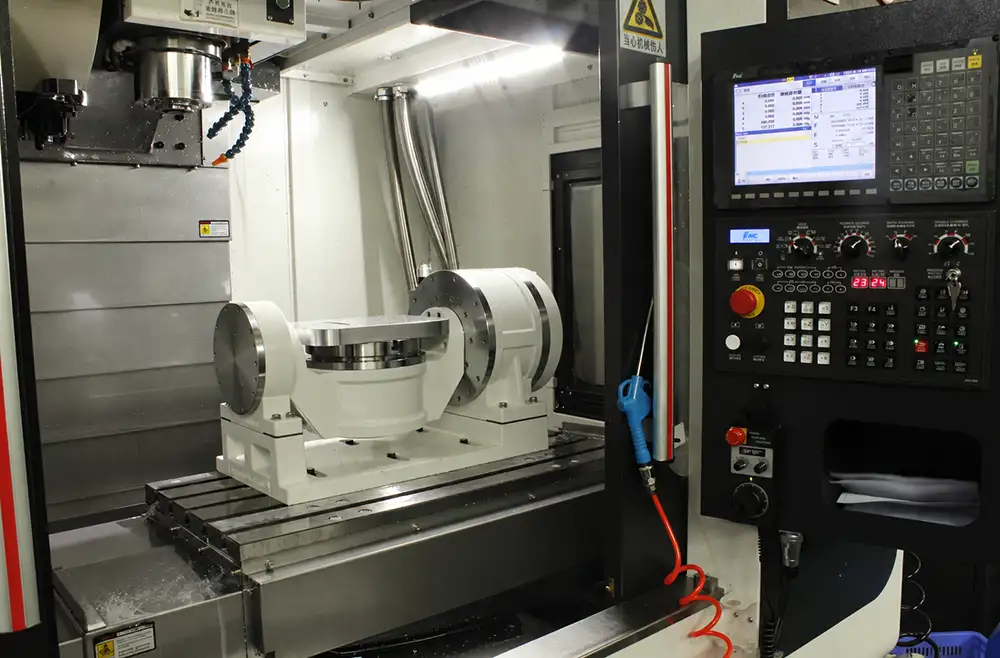
A ±0.01 mm tolerance on one critical bore is very different from applying ±0.01 mm to every dimension on a drawing. The same number can also present different manufacturing challenges on different features.
If your quotation is higher than expected, this guide explains where tolerance-related costs arise and how to review them without compromising part function.
WHERE TIGHT TOLERANCES ADD COST
| Cost Factor | How Tight Tolerances Can Increase Cost |
|---|---|
| Machining | Additional controlled finishing operations |
| Setup | More precise alignment and stable workholding |
| Tooling | Closer monitoring of tool wear |
| Inspection | More frequent or specialized measurement |
| Scrap risk | Less room for process variation |
| Geometry | Difficult access, deflection, or distortion |
| Documentation | Inspection reports and traceability records |
The actual cost impact is project-specific; tolerance alone does not determine the final machining price.
IN THIS GUIDE
Why Costs Increase · Where Costs Arise · Tolerance and Difficulty · Geometry and Material · Inspection Costs · Reduce Unnecessary Cost · Prepare Your RFQ · FAQ
Why Do Tight Tolerances Increase CNC Machining Cost?
Every machining process has variation from equipment, tool wear, material movement, and setup. A narrower tolerance zone reduces the available process window, so the supplier must control these sources more closely. Measurement uncertainty also matters when deciding whether a feature meets its requirement.
The solution may involve a different cutting strategy, dedicated finishing tools, intermediate checks, or another process step. Simply reducing feed rates is not a universal answer. Batch size matters too: developing fixtures and proving a process adds initial cost, while ongoing control affects every production run. A successful first piece does not establish that the entire batch will conform as tools wear and machining conditions change. That repeatability must also be planned.
The cost increase comes from controlling variation, not simply entering a smaller tolerance value on the drawing.
Which Parts of the CNC Machining Process Become More Expensive?
- Machining: Roughing, semi-finishing, and finishing may need separate operations, with checks between stages.
- Workholding: Custom soft jaws or fixtures can improve support, datum control, and repeatability while limiting distortion.
- Tooling: Wear-sensitive features may need dedicated finishing tools, more frequent checks, or planned tool replacement.
- Quality risk: An undersize external feature or oversize bore may be impossible to recover by removing more material.
A nominal dimension specified at ±0.01 mm has a total tolerance zone of 0.02 mm. A supplier must plan to keep production within that zone, including variation across the batch. Its quotation can therefore include engineering, fixtures, verification, and anticipated scrap risk, alongside cutting time. Ask which charges are initial setup costs and which recur with each batch. This distinction helps explain why prototype and production unit prices can differ substantially.
Does a Tighter Tolerance Always Mean a Higher CNC Price?
Not always. If an existing stable process already meets a tighter requirement and inspection scope stays unchanged, the price for that feature may remain the same. Consider a hypothetical Ø20 mm bore at ±0.01 mm in a rigid aluminum block, with good tool access and an established boring process. It may be relatively straightforward to control and measure.
By comparison, holding a 300 mm length to ±0.03 mm on a thin-walled component in the same alloy may be harder if clamping, residual stress, or temperature changes alter its shape or length. This is an illustration, not a price prediction.
Tolerance difficulty is feature-specific. Evaluate geometry, rigidity, datums, access, and inspection together. Our CNC machining tolerance guide provides further context for reviewing drawing requirements.
How Do Part Geometry and Material Change the Cost of Tight Tolerances?
Thin walls can deflect during cutting or distort after unclamping. Deep bores introduce challenges with tool reach, rigidity, chip evacuation, and measurement access. Long, slender features may need additional support to limit bending.
Material machinability, hardness, residual stress, and thermal behavior also affect process stability. A requirement achievable before heat treatment or coating may need a different manufacturing sequence if acceptance applies afterward. For flexible parts, clarify the inspection condition: a component held in a fixture may measure differently after release. The agreed condition should represent the drawing’s intended functional requirement.
Temperature deserves attention, especially on larger dimensions. Different materials expand at different rates, and temperature-related effects contribute to measurement uncertainty, as explained in NIST’s dimensional metrology guidance. This helps explain why the same absolute tolerance can become more demanding as part size increases.
How Much Does Inspection Add to Tight-Tolerance Machining Cost?
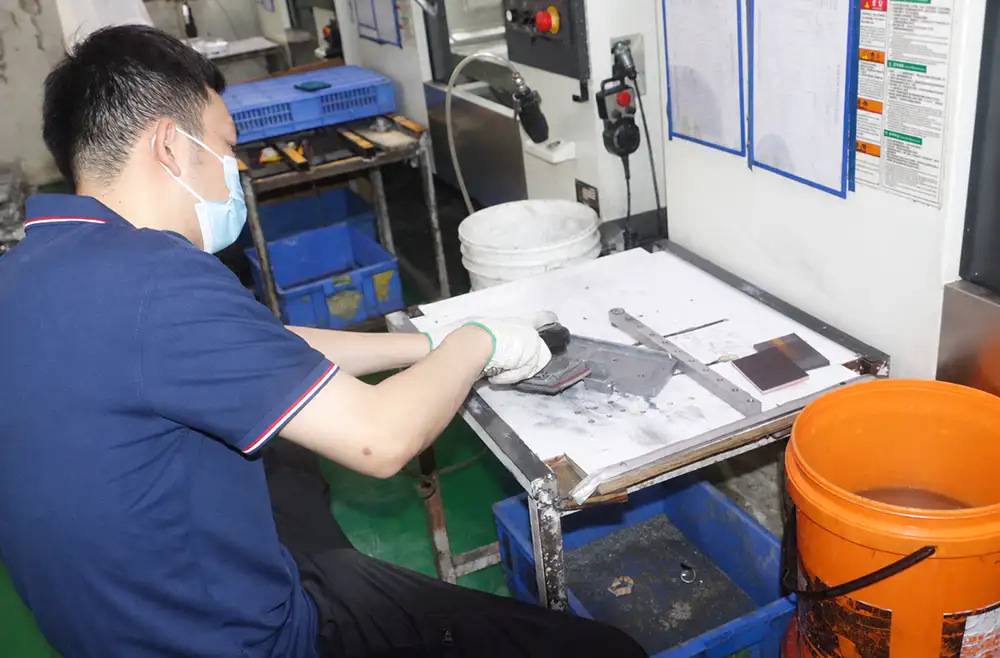
Making a feature and demonstrating conformity are separate tasks. Inspection cost depends on critical dimensions, access, sampling frequency, measurement uncertainty, and required records.
A calibrated micrometer, bore gauge, or dedicated gauge may suit a particular requirement. Complex geometry may call for a coordinate measuring machine (CMM) or another method. CMM inspection is not automatically necessary or sufficient for every tight tolerance; the measurement approach must suit the feature and acceptance criteria.
Requesting 100% inspection, CMM programming, first article inspection, dimensional reports, or traceability can add work. Review CNC quality control services and specify the required scope before quoting. A documented inspection package differs from basic checks at the same nominal tolerance. State which dimensions need recorded results and whether those records cover a first article, a sample, or every delivered part. These are distinct inspection commitments.
How Can You Reduce CNC Machining Cost Without Relaxing Critical Function?
Start with fit, sealing, alignment, and assembly requirements. Identify which dimensions actually need close control, then validate any proposed changes against mating components and the tolerance stack-up.
| Feature | Targeted Drawing Approach |
|---|---|
| Critical bearing bore | Keep ±0.01 mm only if validated fit requirements support it. |
| Mating surface | Specify functional flatness and any needed orientation or location controls. |
| Noncritical exterior dimensions | Use suitable general tolerances after checking clearance and stack-up. |
This example replaces blanket tolerancing with functional requirements; it is not a universal specification. Flatness alone does not control a surface’s orientation or location. Appropriate GD&T and datums communicate those requirements; ASME Y14.5 provides an established framework for expressing that design intent.
Confirm whether dimensions apply before or after finishing. Request a design-for-manufacturability review before releasing the drawing, and approve changes through your engineering process. Where an alternative is functionally acceptable, ask the supplier to quote it separately. This reveals the actual commercial impact before you commit to a drawing revision.
Specify precision where the part needs it, with changes supported by functional validation.
What Tolerance Information Should You Send When Requesting a CNC Quote?
Use the CNC quote checklist to prepare consistent inputs:
- Matching 3D CAD and 2D drawing revisions.
- Critical dimensions, tolerances, GD&T, and datum references.
- Material grade, condition, quantity, and surface finish.
- Inspection methods, sampling, reports, and traceability needs.
- Acceptance requirements before or after finishing.
A STEP file alone may omit critical tolerances unless it contains usable product and manufacturing information (PMI). Unstated requirements invite assumptions and make quotations harder to compare. Highlight uncertain features and request clarification of the proposed process and inspection scope.
Need a Tolerance Review Before CNC Machining?
Send Sincere Machining your CAD model and drawing to request a review of critical tolerances, difficult features, inspection requirements, and potential cost drivers before quotation.
FAQ About Tight Tolerance CNC Machining Cost
Is ±0.01 mm considered a tight CNC machining tolerance?
It can be tight for many features, but difficulty depends on feature size, geometry, material, rigidity, process, and measurement method. The number alone does not establish manufacturing difficulty.
How much more does tight-tolerance CNC machining cost?
There is no universal percentage. Additional cost depends on the manufacturing route, feature difficulty, inspection scope, quantity, and scrap risk. Request a quotation based on your actual drawing.
Should every dimension have the tightest possible tolerance?
No. Reserve tight tolerances for requirements affecting fit, function, sealing, alignment, motion, or assembly. Validate any relaxation against the design and tolerance stack-up.
The cost of tight tolerances comes from controlling manufacturing variation and proving conformity. A useful quotation therefore reflects the specific feature, material, workholding, process, and inspection requirements. Comparing tolerance values alone misses these differences and can lead to unsuitable purchasing decisions.
For a more economical design, preserve critical requirements and review unnecessary precision before production. Clear drawings and an agreed inspection scope help suppliers quote the same requirement. Send your CAD files to Sincere Machining for a tolerance review.