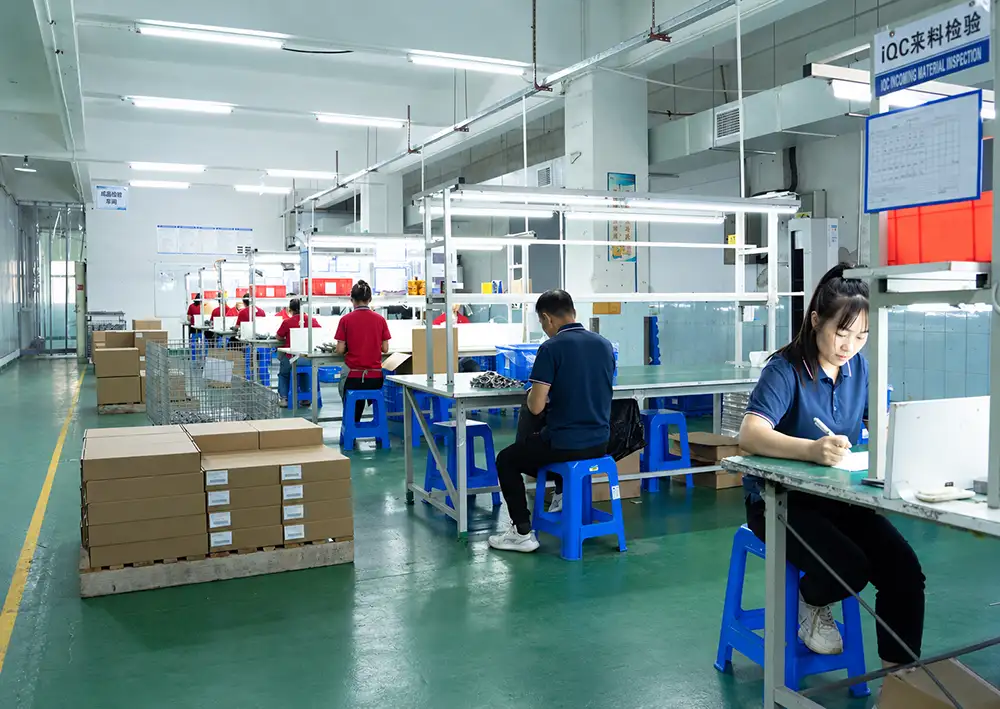
You have part drawings and a project deadline. Before ordering, you need to know when the parts can be finished, what the quoted schedule includes, and which requirements must be confirmed first. CNC machining lead time involves more than time spent cutting metal.
Material availability, design details, finishing, inspection, and purchasing information can all affect the schedule. This guide explains how to evaluate a supplier’s estimate, identify the steps limiting delivery, and reduce avoidable delays while preserving the requirements your parts need to meet.
IN THIS GUIDE
What lead time includes · Factors affecting the schedule · Actions to reduce delays · Standard vs. expedited · Compare supplier estimates · RFQ checklist · Get an Estimate · FAQs
What Does CNC Machining Lead Time Include?
Here, manufacturing lead time runs from confirmed order and technical requirements, with production release conditions satisfied, until the agreed operations are complete and parts are ready to ship. Transit and arrival are considered separately. The quotation and purchase order should establish the actual start and finish conditions. Ask which approvals or inputs must be complete before the quoted clock starts.
A project’s schedule may cover technical approval and release → material preparation and scheduling → programming and fixtures → machining → agreed finishing and inspection → packing and dispatch preparation. Individual projects can combine or overlap stages.
| Term | What to confirm |
|---|---|
| Machining cycle time | Machine time for one part or operation; this does not represent the complete order schedule. |
| Manufacturing lead time | Whether material preparation, scheduling, finishing, and inspection are included. |
| Delivery time | Whether the date means ready to ship, dispatched, or received at your destination. |
Before comparing days: Confirm the starting event, ending event, and whether the estimate uses working days or calendar days.
What Factors Affect CNC Machining Lead Time?
Material availability and stock requirements. Grade, temper or condition, stock size, and required material documents influence purchasing. Even a common aluminum alloy may need ordering in a particular thickness. Ask the supplier to verify stock and procurement arrangements for your exact specification.
Part complexity, tool access, and setups. Deep holes, small features, thin walls, and multiple machining faces can require additional preparation, tooling, or setups. The design must suit the available process. Protolabs’ machining design guidance discusses features such as hole depth and wall geometry that can affect production time.
Tolerances and inspection requirements. Define functional fits and geometric requirements early. Depending on the feature, demanding specifications may introduce grinding, EDM, or additional measurement. Review CNC machining tolerances against assembly needs; excessive precision can add work, while unsuitable limits can prevent correct assembly.
Order quantity and available capacity. Prototype, batch, and repeat orders need different scheduling discussions. Machine availability, fixtures, batch arrangements, and first-article approval can influence completion. A small order still needs an available production slot; doubling quantity does not automatically double lead time.
Finishing and secondary operations. Anodizing, plating, painting, marking, and assembly extend the work beyond machining. Confirm processing, handling, and any subsequent checks in the estimate. A machined part may still require several agreed operations before it is ready for shipment.
Drawing revisions and approval delays. Conflicting models and drawings, undecided specifications, and late changes can pause preparation or require rework. First-article approval also needs a clear decision deadline. Identify the specific step restricting delivery before asking the supplier to accelerate it.

How to Reduce CNC Machining Lead Time Without Compromising Quality
Review manufacturability before release. Use a DFM review to resolve difficult features, tool access, and workholding. Addressing these questions before scheduling can prevent production interruptions.
Illustrative design example: A blind hole extends deeper than its assembly function requires. The supplier can discuss a shallower option with the designer to simplify tool access. Any change requires design approval before manufacture.
Confirm materials and approved alternatives early. Ask which compliant grades, conditions, and stock sizes are available. Identify whether alternatives may be evaluated. A stocked substitute can only be adopted after the responsible designer confirms its suitability and authorizes the change.
Finalize requirements and control revisions. Release one consistent model and drawing revision with critical dimensions, finishing, and inspection documents defined. Appoint a contact who can resolve questions promptly. Adjust tolerances only after confirming functional and assembly requirements remain satisfied.
Discuss batch priorities and delivery options. Identify components needed first for assembly or testing and whether agreed partial shipments would help. Receiving some accepted parts earlier can support your project even when the full order’s manufacturing period remains unchanged.
PLAN YOUR PROJECT
Working Toward a Fixed Deadline?
Share your drawings, required quantity, and target arrival date with Sincere Machining to discuss your project’s manufacturing requirements and scheduling options. Include any parts needed first so the review can consider your assembly or testing priorities.
Standard vs. Expedited CNC Machining: What Can Be Shortened?
Which stage can move sooner? Ask whether the proposal involves earlier scheduling, faster material procurement, finishing coordination, or shipping. Faster transport changes transit time; it does not shorten the manufacturing operations themselves.
Which conditions must be satisfied? Confirm drawing approval, material availability, coordination of necessary operations, and sample approval requirements. Fast service has a defined scope: Protolabs distinguishes its factory offering from network options with different materials, tolerances, and finishing choices.
What does the extra cost secure? Compare expected dispatch and arrival dates, covered quantities, operation scope, and additional charges. Ask for the feasible expedited route and its conditions in writing so that a shorter estimate can be assessed against your actual deadline. An expedite charge should correspond to an identified scheduling or logistics change; necessary inspections and acceptance criteria still apply.
How to Compare Lead Time Quotes from Different Suppliers
Use the same project requirements when comparing CNC machining turnaround time. Check these conditions alongside the quoted number of days:
| Comparison point | Question for the supplier |
|---|---|
| Starting conditions | Does timing begin at order confirmation or after all production release conditions are met? |
| Operation scope | Are agreed finishing, inspection reports, and packaging included? |
| Time basis | Working or calendar days? Dispatch or arrival? |
| Quantity covered | Does the estimate cover samples, the first batch, or the whole order? |
| Changes and approvals | How do revisions, added inspections, or delayed approvals affect the schedule? |
Hypothetical comparison: One quotation ends at machining completion; another includes surface treatment and final inspection. Their day counts cover different scopes. Request a comparable ready-to-ship estimate before deciding which better supports your deadline.
What to Include in an RFQ for an Accurate Lead Time Estimate
For a project-specific estimate from our CNC machining services team, provide:
| Information | Why it matters |
|---|---|
| 3D model, applicable 2D drawings, and revision | Defines the part and machining requirements. |
| Material grade, condition, and finish | Establishes procurement needs and the complete processing scope. |
| Critical dimensions and inspection documents | Identifies verification work to schedule. |
| Sample, first-batch, and total quantities | Supports batch and delivery planning. |
| Target arrival date and destination | Separates production timing from transportation needs. |
| Open requirements | Identifies assumptions needing clarification before schedule confirmation. |
Use our guide to files needed for a CNC machining quote to check drawing completeness before sending your request.
Tell the supplier when the parts need to arrive, not just that the order is urgent. Identify unfinished requirements explicitly so an initial estimate is not mistaken for a confirmed schedule.
Conclusion: Get a Realistic Lead Time for Your CNC Machining Project
A useful CNC machining lead time estimate starts with an agreed scope and clear release conditions. Identify the limiting operation, then reduce avoidable waiting through design clarification, material planning, and production coordination. Confirm both manufacturing completion and transportation arrangements against your required arrival date.
GET A PROJECT-SPECIFIC ESTIMATE
Need CNC-Machined Parts for an Upcoming Deadline?
Send Sincere Machining your part drawings, material and finishing requirements, quantity, and target arrival date. Include the destination and required inspection documents so our team can review your requirements and provide a project-specific quotation with an estimated lead time.
Some details still open? Share your current files and identify what needs clarification before the schedule can be confirmed.
HAVE THESE READY
01 · Your part
Drawings, material & finish
02 · Your schedule
Quantity & target arrival date
03 · Your delivery
Destination & inspection needs
FAQs About CNC Machining Lead Time
How long does CNC machining usually take?
Request a supplier-confirmed schedule for your drawings, quantity, materials, and complete processing scope. Samples, production batches, and parts requiring finishing or additional inspection can follow different timelines. Confirm when the estimate starts, what approvals remain, and whether it ends at dispatch or arrival.
Does a larger order always take longer to complete?
Quantity alone does not determine completion time. Fixtures, machine allocation, batch planning, and available capacity also matter. Specify whether your deadline applies to an initial delivery or the entire order, then ask the supplier to evaluate the corresponding production arrangement.
Can repeat CNC machining orders be completed faster?
Reusing approved programs, fixtures, and inspection plans may reduce preparation. Ask the supplier what can be reused for the current revision. Material availability, machine scheduling, and any changed requirements still need confirmation before a faster repeat-order schedule can be agreed.
Does anodizing add to CNC machining lead time?
Anodizing is an additional finishing operation that needs scheduling, although the quotation may already include it. Confirm the treatment specification, relevant fits or masked surfaces, and planned completion point. The added time varies with the project and processing arrangements.
Can I get a lead time estimate before my drawings are finalized?
You can request a preliminary estimate using current files, quantities, and known specifications. List open tolerances, material decisions, finishing, and inspection requirements. The supplier should identify assumptions and reassess the schedule when drawings are released or requirements change.