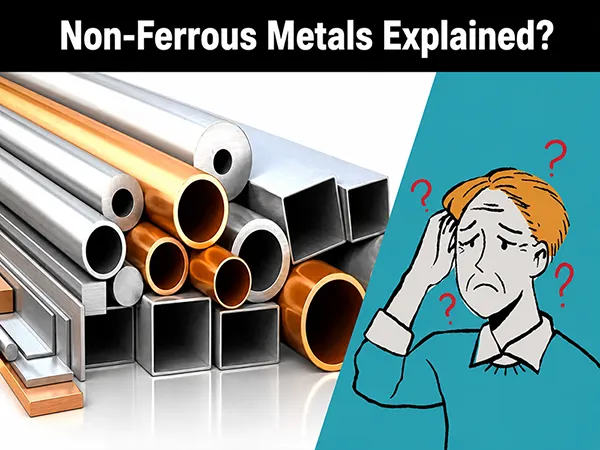
Non-ferrous metal refers to a metal or alloy whose base chemistry is not iron. In manufacturing, that matters because material choice directly affects corrosion performance, part weight, conductivity, machinability, finishing, and total production value. Common CNC machining materials in the non-ferrous category include aluminum, copper, brass, bronze, titanium, zinc, magnesium, and nickel alloys. This guide explains the non-ferrous metal definition, the difference from ferrous metals, the most important properties, common production methods, CNC machining behavior, applications, and practical selection tips for manufacturing teams.
What Non-Ferrous Metal Means
In manufacturing usage, non-ferrous metal usually means a metal or alloy that is not iron-based. By contrast, ferrous metals are iron-containing materials such as carbon steel, cast iron, and stainless steel. That distinction matters because iron-based and non-iron-based materials often behave very differently in corrosion, magnetism, weight, conductivity, machining, and finishing.
The most common non-ferrous metal examples in production are aluminum, copper, brass, bronze, titanium, zinc, magnesium, and nickel alloys. These materials are widely used in CNC machining, sheet metal work, electrical products, transportation, marine hardware, aerospace parts, medical components, and chemical-processing equipment, depending on the property the design needs most.
A simple way to explain it is this: ferrous metals are usually chosen when low cost and structural strength dominate, while non-ferrous metals are often chosen when corrosion resistance, lower weight, conductivity, appearance, or specialized performance matter more. That does not make one category universally better than the other; it makes them suitable for different manufacturing problems.
Ferrous and Non-Ferrous Compared
The difference between ferrous vs non-ferrous metals starts with iron content, but in practice the real manufacturing difference is performance profile. Ferrous metals are generally associated with high tensile strength and structural use, while many non-ferrous metals offer better corrosion resistance, lower weight, better conductivity, or non-magnetic behavior.
| Factor | Ferrous metals | Non-ferrous metals |
|---|---|---|
| Main composition | Iron is the main constituent | Base chemistry is not iron |
| Common examples | Carbon steel, cast iron, stainless steel | Aluminum, copper, brass, bronze, titanium, zinc, magnesium, nickel alloys |
| Corrosion behavior | Many grades can rust; stainless steel is a major exception | Many grades offer better natural corrosion resistance |
| Weight trend | Often heavier | Often lighter, though not always |
| Magnetic behavior | Many are magnetic | Many commonly used grades are not magnetic |
| Electrical conductivity | Usually lower | Often better, especially copper and aluminum |
| Typical use direction | Structures, machinery, tools, heavy-duty parts | Electrical systems, lightweight parts, marine, aerospace, medical, chemical service |
This comparison is synthesized from TWI’s ferrous and non-ferrous metals guide together with published property and use data from major metal-industry organizations.
Two cautions matter. First, not all ferrous metals rust easily: stainless steel is specifically identified by TWI as an important exception. Second, non-ferrous does not automatically mean lightweight: copper, for example, has a density of 8.96 g/cm³, so a non-ferrous material can still be relatively heavy. In other words, material selection should be based on the actual property set required by the part, not only on whether the metal contains iron.
Common Types of Non-Ferrous Metals
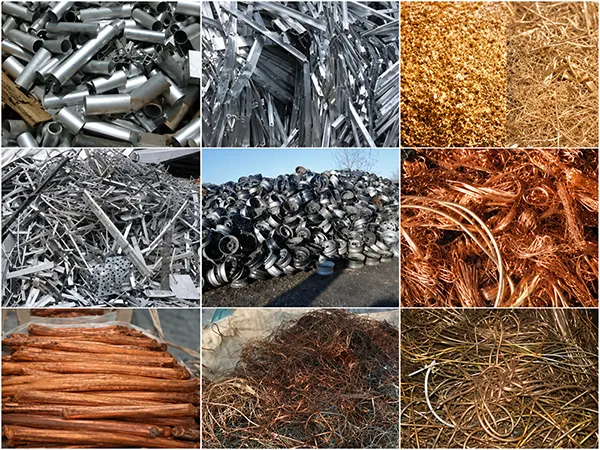
In manufacturing, some non-ferrous metals dominate because they solve very different design problems. Aluminum is a default choice for lightweight general parts, copper for conductivity, brass for easy precision machining, bronze for wear and marine service, titanium for high-value strength-to-weight applications, zinc for die casting and coatings, magnesium for extreme lightweighting, and nickel alloys for severe heat and corrosion environments.
| Material | Key properties | Common manufacturing uses |
|---|---|---|
| Aluminum | Lightweight, corrosion resistant, formable, conductive | Housings, brackets, panels, frames, transportation and aerospace parts |
| Copper | Excellent electrical and thermal conductivity | Busbars, terminals, wiring, heat exchangers, cooling parts |
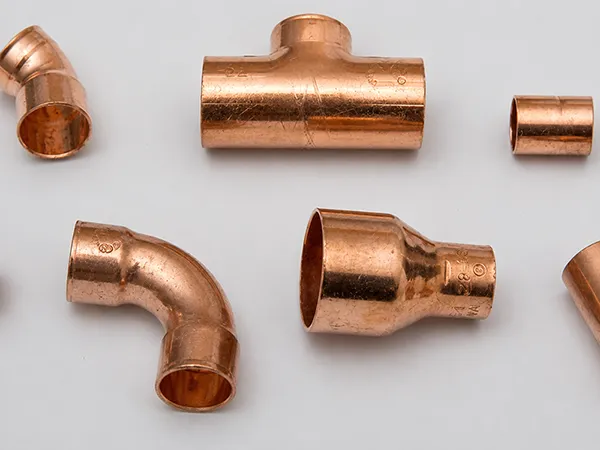
| Brass | Copper-zinc alloy with strong machinability and good appearance | Fittings, valves, connectors, fasteners, turned precision parts |
| Bronze | Good wear, friction, and corrosion performance | Bushings, bearings, gears, marine components, wear plates |
| Titanium | High strength-to-weight ratio, corrosion resistance, biocompatibility | Aerospace parts, medical components, corrosive-service equipment |
| Magnesium | Very low weight | Automotive and machinery structural parts where mass reduction matters |
| Zinc | Good casting fluidity and corrosion protection | Die-cast housings, hardware, coatings, near-net-shape parts |
| Nickel alloys | Strong resistance to heat and corrosion | Energy, petrochemical, chemical-processing, marine and power components |
The table summarizes data from the Aluminum Association, European Aluminium, the Copper Development Association, Nippon Steel, the International Magnesium Association and USGS, the zinc die-casting industry body, and the Nickel Institute.
Aluminum
Aluminum is one of the most important non-ferrous metals in modern manufacturing because it combines low weight, corrosion resistance, conductivity, and easy formability. European Aluminium notes that aluminum has about one-third the density of steel, develops a natural oxide layer that protects against corrosion, and is easy to form and join. The Aluminum Association also highlights its strong conductivity-to-weight ratio in electrical use.
Common wrought families include 5xxx, 6xxx, and 7xxx series alloys. The Aluminum Association’s alloy classification guide identifies 6061 as the most widely used alloy in the 6xxx family and notes that 7075 is widely used in aircraft applications; it also highlights the corrosion resistance of 5xxx-series aluminum-magnesium alloys in marine and construction service. In practical manufacturing terms, that makes aluminum a leading choice for CNC housings, brackets, panels, heat-dissipation parts, and lightweight structural components.
Copper, Brass, and Bronze
Copper is used when electrical conductivity or thermal conductivity is the top priority. The Copper Development Association states that copper has the highest electrical conductivity of any engineering metal and the highest thermal conductivity of any engineering metal, which is why it appears so often in wiring, motors, busbars, and heat exchangers.
Brass is a copper-zinc alloy. CDA describes brasses as copper-zinc alloys with good strength and corrosion resistance, and notes that many brass grades are easy to machine and widely used in fittings, valves, plumbing fixtures, and decorative hardware. CDA also reports that brass offers major high-speed machining productivity advantages over common steel alternatives in rod-machining applications, which is why brass remains a top material for precision turned components.
Bronze is strongly associated with bearing and wear service. CDA’s bearing-material guidance describes bronze as offering broad combinations of wear resistance, low friction, anti-seizing behavior, and corrosion resistance, with common uses including bearings, bushings, and marine hardware. Aluminum bronzes are specifically noted for strong corrosion resistance in marine propellers and pump impellers.
Titanium, Magnesium, Zinc, and Nickel Alloys
Titanium is used where manufacturers need high specific strength, corrosion resistance, and, in many cases, biocompatibility. Nippon Steel describes titanium as a metal known for lightness, strength, and high corrosion resistance, while International Titanium Association materials describe titanium as highly bio-compatible and widely used in medical and aerospace contexts. That combination explains its importance in aerospace structures, medical implants, and corrosion-critical industrial systems.
Magnesium is attractive when mass reduction is the main goal. USGS reports that magnesium alloys are used as structural components in automobiles and machinery, and International Magnesium Association materials describe magnesium as the lightest structural metal, roughly 33% lighter than aluminum and 75% lighter than steel. At the same time, official hazard references warn that fine magnesium shavings and powder can ignite more easily than bulk stock, so machining and chip handling require special safety control.
Zinc is a major die-casting and corrosion-protection metal. The zinc die-casting industry body notes that zinc alloys offer strong casting fluidity, thin-wall capability, wear behavior, and reduced machining compared with many other casting alloys. Nickel alloys, meanwhile, are specialty non-ferrous materials used when heat and corrosion resistance are critical; the Nickel Institute identifies major use in chemical, petrochemical, oil and gas, and power-generation environments.
Key Properties, Advantages, and Limits
The reason non-ferrous metals matter so much in manufacturing is not that they all behave the same, but that they offer a wide palette of useful property combinations. Aluminum provides light weight and corrosion resistance; copper provides conductivity; brass adds machinability; bronze contributes wear performance; titanium combines strength-to-weight and corrosion resistance; nickel alloys extend performance into aggressive or high-temperature service.
That leads to the main advantages of non-ferrous metals in production: better corrosion resistance than many plain steels, lower weight in many alloys, good electrical and thermal performance, frequent non-magnetic behavior, better cosmetic appearance in visible components, and strong suitability for machining, casting, extrusion, and forming depending on grade. These benefits are why non-ferrous materials appear so often in aerospace, automotive electrification, electronics, marine hardware, and medical manufacturing.
The limitations are just as important. Many non-ferrous metals cost more than mild steel, and several important grades are harder to machine or control. Sandvik notes that gummy ISO-N non-ferrous materials tend to create built-up edge, smearing, burr formation, and surface-finish issues during cutting, while Makino highlights titanium’s low thermal conductivity, heat concentration at the cutting edge, and severe effect on tool life and cutting speed. For magnesium, official hazard guidance shows why chip control and fire prevention are critical.
The practical takeaway is simple: non-ferrous metals are not one material family in the performance sense. Property, cost, formability, and machinability can change dramatically with the base metal, alloy family, temper, surface condition, and manufacturing route.
How Non-Ferrous Metals Are Manufactured and Machined
Non-ferrous metals are produced through the same broad manufacturing families used elsewhere in metalworking, but with material-specific strengths. Britannica defines founding as pouring molten metal into a shaped cavity to produce a casting; extrusion as forcing metal through a die to create a uniform cross-section; forging as shaping metal by hammering or pressing; and sheet-metal forming as bending, stretching, shearing, and drawing sheet into finished geometry. These routes are especially important for non-ferrous materials such as cast zinc, extruded aluminum, forged titanium, and formed aluminum, copper, or brass sheet.
CNC machining remains one of the most common ways to make precise non-ferrous components from bar, plate, billet, or preformed stock. Britannica describes machining as a process in which metal is removed by a cutting or shaping tool to leave the desired form. In practice, aluminum, brass, copper alloys, bronze, and titanium are frequently processed through precision CNC milling, turning, drilling, and threading to create finished parts.
| Material | CNC machining tendency | Typical CNC parts | Main manufacturing consideration |
|---|---|---|---|
| Aluminum | Generally easy and productive | Housings, brackets, fixtures, lightweight frames | Alloy family and finish requirements |
| Brass | Excellent for high-speed machined parts | Fittings, connectors, screw-machine parts, threaded parts | Best results depend on alloy selection |
| Copper | Machinable but more sensitive to burrs/smearing | Busbars, conductive blocks, heat-transfer parts | Surface finish and chip/burr control |
| Bronze | Good for wear components | Bushings, wear plates, bearing parts | Grade must match friction and load conditions |
| Titanium | Difficult and heat-sensitive | Aerospace, medical, corrosive-service precision parts | Tool life, coolant strategy, rigidity, and heat control |
This comparison is based on metal-association property data together with tooling and machining guidance from CDA, Sandvik, and Makino.
Machining behavior strongly affects total manufacturing value. Brass can reduce cost per part through high-speed machining, while titanium can drive cost upward because heat concentration, vibration sensitivity, coolant demand, and shortened tool life force slower and more controlled machining. That is why the “best” non-ferrous metal for CNC machining is not the cheapest stock price on paper; it is the metal that aligns with the geometry, tolerance, finish, and performance target of the part.
Surface Finishing and Where Non-Ferrous Metals Are Used
Surface finishing is a major part of non-ferrous manufacturing because it affects appearance, corrosion behavior, wear life, and maintenance. For aluminum, anodizing or painting can improve durability and corrosion resistance while providing different appearance options; anodizing industry guidance likewise describes anodizing as a decorative, durable, corrosion-resistant oxide finish especially suited to aluminum. Zinc die castings are routinely passivated, painted, or plated, while copper alloys can be clear-coated when designers want to preserve natural color and slow tarnish development. Titanium can also be anodized or color-treated through surface-oxide control.
Application patterns follow properties very closely. Aerospace relies heavily on aluminum and titanium for low weight and high specific strength. Automotive uses aluminum and magnesium for lightweighting, copper for electrification and thermal management, brass for fittings, and zinc for complex die-cast hardware. Electronics and electrical equipment depend on copper busbars and terminals plus aluminum conductors and heat-management parts. Medical manufacturing values titanium for biocompatibility and corrosion resistance. Marine and industrial equipment frequently uses bronze, copper alloys, zinc-coated systems, and corrosion-resistant nickel alloys where water, salt, chemicals, or heat make ordinary steel less attractive.
Choosing the Right Non-Ferrous Metal for a Manufacturing Project
A DFM review for metal parts should start with the part’s real requirements: strength and stiffness, weight target, corrosion environment, conductivity, wear exposure, finish needs, temperature, inspection level, and the manufacturing process you plan to use. A CNC-milled aerospace bracket, a die-cast consumer housing, a busbar, and a marine bearing may all be “non-ferrous,” but they should not be made from the same material.
| Manufacturing need | Material direction |
|---|---|
| Lightweight general CNC parts | Aluminum |
| High electrical conductivity | Copper |
| Easy precision turning and threaded parts | Brass |
| Bearings, bushings, and wear plates | Bronze |
| High strength with low weight | Titanium |
| Maximum lightweighting in selected structural parts | Magnesium |
| Thin-wall die-cast shapes and corrosion-protected hardware | Zinc |
| Severe heat and corrosion service | Nickel alloys |
This selection matrix reflects the primary use directions documented by the Aluminum Association, CDA, Nippon Steel and the titanium industry, USGS and IMA, Zinc Die Casting, and the Nickel Institute.
Cost should be evaluated as total manufacturing cost, not just material price. Protolabs summarizes CNC cost around three broad buckets—raw material, manufacturing time, and other fixed costs—while Hubs points out that material price, machinability, tolerances, and waste influence cost. The metal itself then changes those drivers: brass can improve productivity and reduce cost per part in machining, titanium can increase tooling and cycle-time costs, and finishing or corrosion-control steps can materially change the total quote. Designers should also watch for galvanic compatibility in mixed-metal assemblies; NASA specifically warns that nickel-plated aluminum forms a strong galvanic couple if the interface is exposed to corrosive environments.
Conclusion
Non-ferrous metal is any metal or alloy used in manufacturing with a base chemistry that is not iron. That category includes some of the most important engineering materials in industry, especially aluminum, copper, brass, bronze, titanium, zinc, magnesium, and nickel alloys. Their value comes from property combinations that ferrous metals often cannot match as efficiently, including corrosion resistance, low mass, conductivity, non-magnetic behavior, machinability, surface appearance, or high-value performance in aggressive service. In practice, the right choice depends on the part’s environment, manufacturing route, tolerance, finish, and total cost to produce—not on the metal category alone.
FAQ About Non-Ferrous Metals
What is non-ferrous metal?
Non-ferrous metal is a metal or alloy that is not iron-based. In manufacturing, the term usually refers to materials such as aluminum, copper, brass, bronze, titanium, zinc, magnesium, and nickel alloys that are selected for corrosion resistance, conductivity, lower weight, or specialized service performance.
What are the most common non-ferrous metals?
The most common non-ferrous metals in manufacturing are aluminum, copper, brass, bronze, titanium, zinc, magnesium, and nickel alloys. Those materials cover a wide range of uses, from lightweight fabricated parts and CNC components to electrical conductors, bearings, medical parts, die-cast housings, and chemical-service hardware.
What is the difference between ferrous and non-ferrous metals?
Ferrous metals are iron-based; non-ferrous metals are not. Ferrous materials are commonly associated with structural strength and lower cost, while many non-ferrous materials offer better natural corrosion resistance, lower weight, higher conductivity, or non-magnetic behavior. Stainless steel is an important ferrous exception to the “rusts easily” rule.
Is aluminum a non-ferrous metal?
Yes. Aluminum is one of the most widely used non-ferrous metals because it is light, corrosion resistant, conductive, and easy to form, join, and machine. Common manufacturing families include 5xxx, 6xxx, and 7xxx series alloys, with 6061 and 7075 among the best-known grades for engineering use.
Are non-ferrous metals suitable for CNC machining?
Yes. Many are excellent CNC materials, but they do not machine the same way. Aluminum and brass are generally highly productive, copper alloys may need closer control of burrs and surface condition, bronze is strong for wear parts, and titanium requires much tighter heat and tool-life management. The best non-ferrous metal machining result comes from matching alloy choice to part geometry, tolerance, finish, and service duty.