Anyone searching for the strongest metal usually wants one simple winner. Engineering rarely gives that kind of answer. The material that wins on ultimate tensile strength is not automatically the winner on hardness, impact toughness, or high-temperature strength retention. In practice, those properties are measured separately: room-temperature tensile behavior is standardized under tension-test methods, hardness under indentation methods, impact toughness under notched-bar testing, and elevated-temperature strength under hot tensile testing. That is why the answer changes depending on what “strongest” really means.
For a broad, consumer-style answer, tungsten is the strongest metal headline most readers expect, because it combines exceptional hardness with the highest melting point of any metal. For strength-to-weight ratio, titanium alloys are the better answer. For many real structural applications, advanced steels and high-strength nickel superalloys often lead the room-temperature load-carrying discussion. Because actual engineering selection is dominated by alloy systems, this guide includes pure metallic elements and major alloy families such as steel, stainless steel, and INCONEL—exactly the way many searchers use the phrase “top ten strongest metals.”

Why the strongest metal is a tricky question
The first thing to understand is that “strong” is not one property. Ultimate tensile strength tells you the maximum pulling stress a material can withstand before fracture. Yield strength tells you when permanent deformation starts. A material can have a high tensile number and still bend too easily in service if its yield strength is not high enough.
Hardness is different again. It is a surface resistance measure, usually taken by indentation methods such as Rockwell. Hardness often correlates with wear resistance and sometimes with tensile strength, but it is not the same as structural load-carrying ability. A very hard material can still be brittle.
Impact toughness matters when loads are sudden, not slow and steady. ASTM’s Charpy and Izod methods exist because a metal that looks strong in a slow tensile pull can still fail badly under a notched, high-rate impact. This is one reason engineers avoid using hardness alone as a stand-in for “the strongest metal.”
Then there is heat resistance. Many metals that look excellent at room temperature lose too much strength when temperature rises. Elevated-temperature test methods exist precisely because service in turbines, furnaces, rockets, and exhaust systems is a different problem from static room-temperature loading.
There is also a practical complication: form, heat treatment, and processing change the numbers. Even standardized tensile tests do not always represent the full end product, and the same nominal material can look very different as annealed plate, bar, sheet, or aged forging. In other words, the strongest metal is always a question about a property, a condition, and an application—not just a name on the periodic table.
How engineers measure metal strength
When engineers compare metals, they usually start with tensile data published under methods from ASTM International. Those methods define how specimens are prepared, how pulling loads are applied, and how yield strength, tensile strength, elongation, and reduction of area are reported. The important point is not just the number itself, but the fact that like is being compared with like.
Hardness testing adds a different lens. The Rockwell method measures resistance to localized plastic deformation, and the standard itself notes that hardness data can be useful for evaluating tensile strength, wear resistance, ductility, and commercial acceptance testing. That is why hardness shows up in discussions of chromium, tool steels, and surface engineering, even when it is not the full strength story.
Toughness is measured separately because brittle fracture is a different failure mode. The impact-test standard emphasizes behavior under a single force application, high loading rate, and notch sensitivity. That matters enormously in cold service, crash loading, pressure equipment, and aerospace applications, where a metal that looks “strong” on paper may still be dangerous if it lacks notch toughness.
For hot service, temperature reshuffles the leader board. Elevated-temperature tensile methods measure how yield and tensile properties drop as temperature rises. This is the reason nickel superalloys, refractory metals, and certain cobalt alloys seem to outperform other options in turbines and furnaces even when they are not always the cheapest or easiest materials to process.
Ranked guide to the strongest metals
The ranking below is a practical rather than purely academic ranking. It weighs room-temperature strength, hardness, heat resistance, and real engineering usefulness. It is not a single-metric laboratory league table.
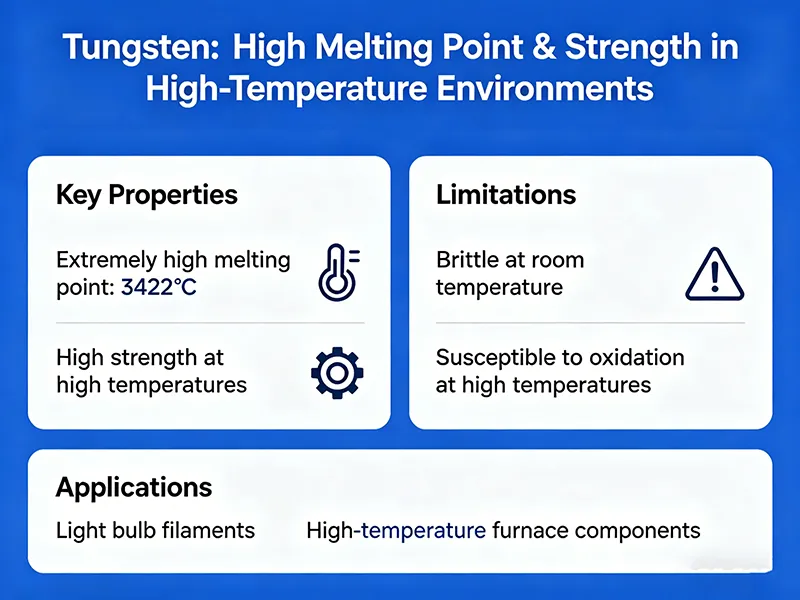
Tungsten
sits at the top because it is the benchmark refractory metal. The Royal Society of Chemistry lists a melting point of about 3414°C and a density of 19.3 g/cm³, while industrial tungsten producers emphasize its creep resistance and use in very high-temperature environments. Tungsten also contributes to high-speed steels, and when combined with carbon it becomes the basis of much harder tungsten carbide tooling, which is why many people blur the line between pure tungsten and carbide-based cutting materials.
Titanium
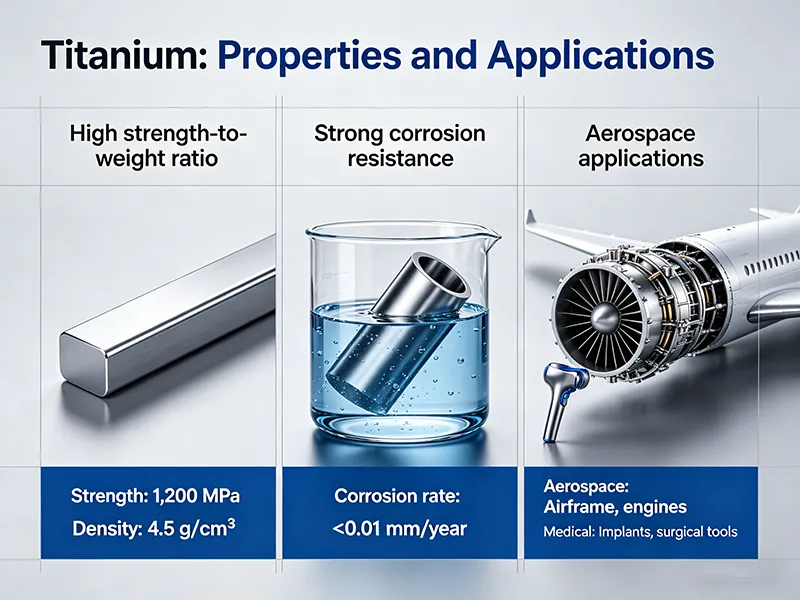
ranks extremely high because its specific strength is outstanding. Representative Ti-6Al-4V data show about 1100 MPa ultimate tensile strength at a density of 4.43 g/cm³, which is why titanium remains central in aerospace structures and other weight-sensitive designs. Titanium is not always the absolute strongest in raw tensile terms, but few metals combine low density, high strength, corrosion resistance, and biocompatible medical utility as effectively. In orthopedic practice, the American Academy of Orthopaedic Surgeons notes that fracture-fixation implants are often made from stainless steel or titanium, and the U.S. Food and Drug Administration recognizes Ti-6Al-4V implant standards for surgical use.
Chromium
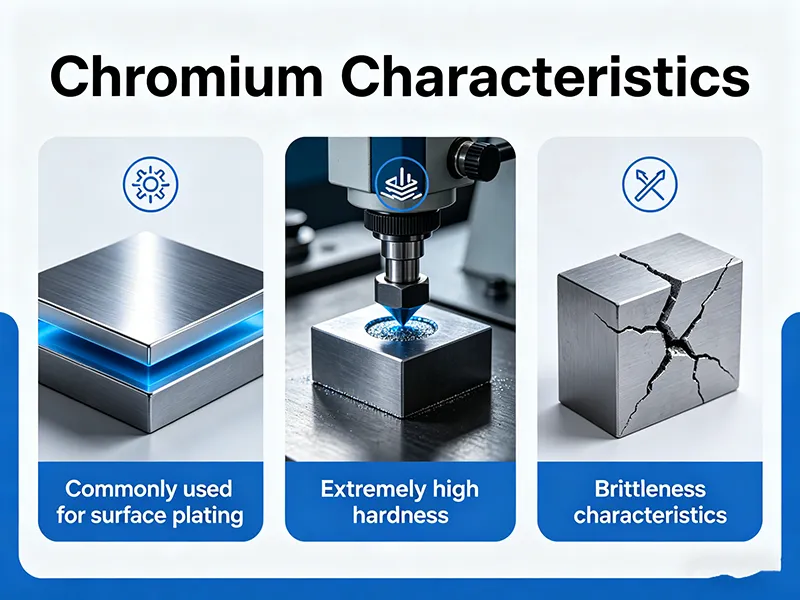
belongs on the list because hardness and wear resistance are legitimate forms of strength, even though bulk chromium is not a preferred structural metal. The Royal Society of Chemistry notes that less than 0.5% of chromium production is elemental chromium and highlights its role in stainless steels and chrome surfaces. On the surface-engineering side, relevant government work documents hard chromium deposits used specifically for wear-resistant coatings, with hardness often in the 700–900 kg/mm² range. That makes chromium more important as a hard, protective system than as a bulk load-bearing material.
Steel
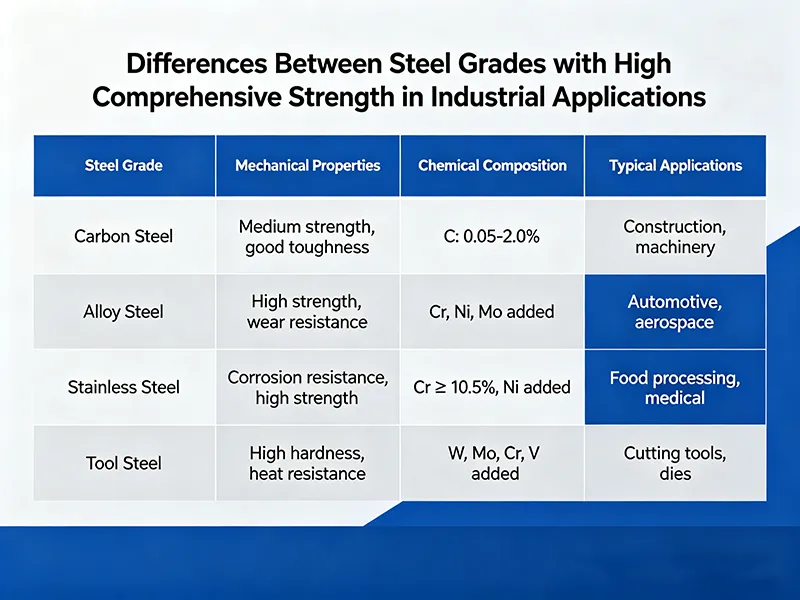
is probably the most important answer in the whole article, because it wins more real engineering decisions than any other candidate. The World Steel Association calls steel the most commonly used metal in the world, while automotive steel guidance defines advanced high-strength steels as grades with minimum specified tensile strength of at least 440 MPa and worldsteel notes innovative grades reaching 1500 MPa. Nickel-containing alloy steel comparisons also show how quenched-and-tempered grades such as AISI 4340 can substantially outperform plain-carbon steels like AISI 1045.
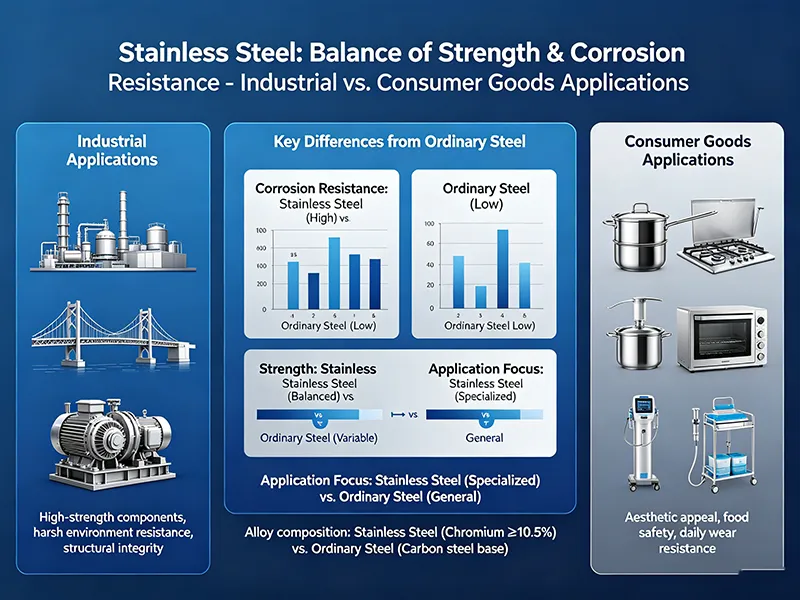
Stainless steel
deserves a high rank because modern grades can deliver much more than corrosion resistance. Outokumpu lists common 304 at a minimum 230 MPa yield strength and 304LN at 290 MPa, while duplex stainless data show S32101 at roughly 600 MPa yield and 820 MPa ultimate tensile strength. Outokumpu also positions duplex 2205 as a high-mechanical-strength, corrosion-resistant material for bridges, chemical tankers, and oil and gas service. In other words, stainless steel is not one weak family; it spans everyday kitchen-grade material all the way to serious structural and process-duty alloys.
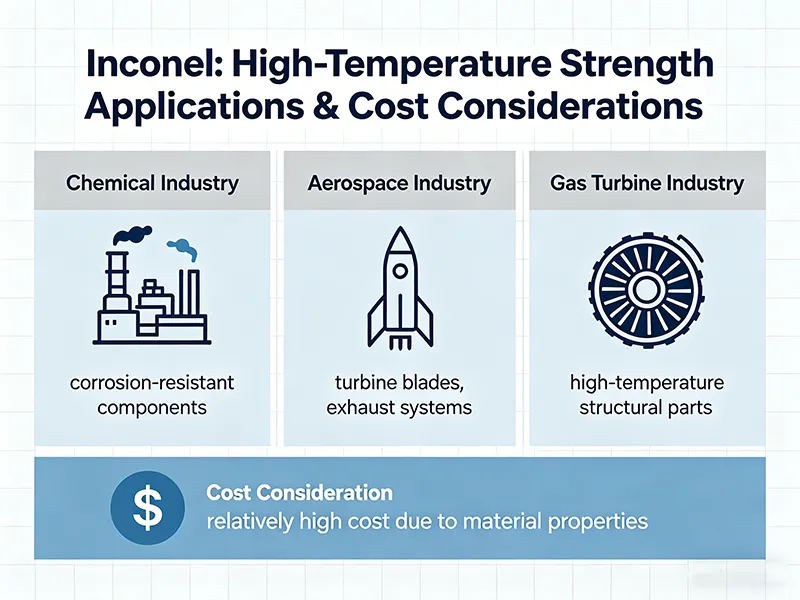
INCONEL
earns its place because it keeps mechanical integrity where many metals fade. Special Metals reports aged INCONEL 718 plate around 198 ksi tensile and 163 ksi yield at room temperature, while still carrying about 146 ksi tensile and 135 ksi yield at 1300°F. The same source and related nickel-alloy guidance associate this family with gas turbines, spacecraft, rocket motors, and nuclear equipment. That makes INCONEL one of the clearest answers when the question is not just “what is the strongest metal?” but “what keeps being strong when it gets hot?”
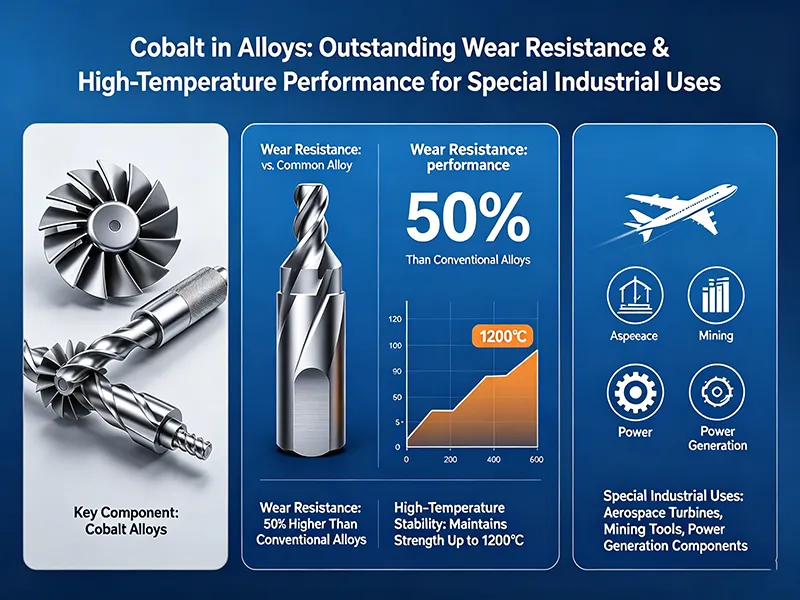
Cobalt
matters because cobalt-based alloys are outstanding in wear, hot corrosion, oxidation resistance, and bearing duty. Haynes International lists HAYNES 25 at roughly 996–1015 MPa ultimate tensile strength at room temperature depending product form, with oxidation resistance to 1800°F (980°C). Haynes also describes it as suitable for gas turbine engine components and as a significant bearing material. So while cobalt is not the universal first choice for general structures, it is an elite answer in severe heat-and-wear service.
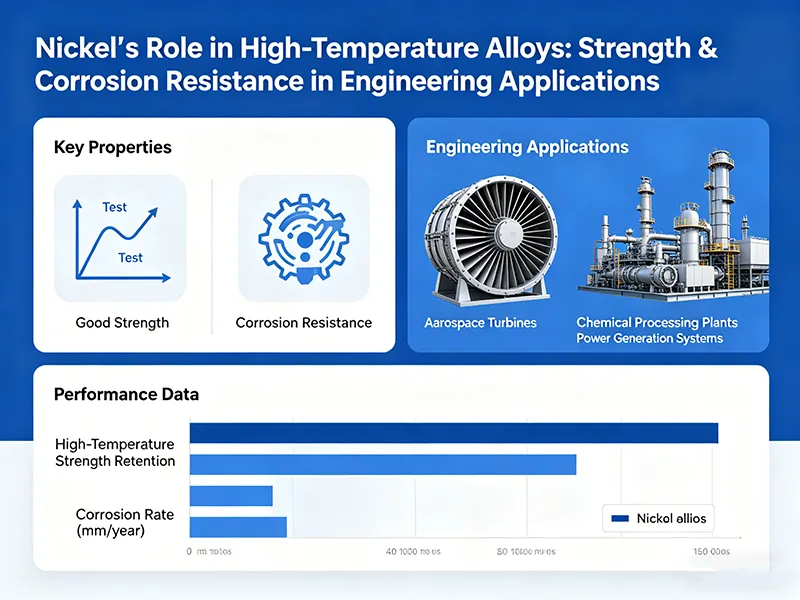
Nickel
is not a room-temperature record-setter in the same way as ultrahigh-strength steel, but it is one of the most strategically important strong metals in engineering. Special Metals lists Nickel 200 tensile strength in the rough band of 380–760 MPa depending condition and product form, while the Nickel Institute emphasizes that nickel’s biggest use is alloying—especially for stainless and heat-resisting steels. That is the real story: nickel is a platform metal for corrosion resistance, oxidation resistance, ductility, and high-temperature alloy design.
Vanadium
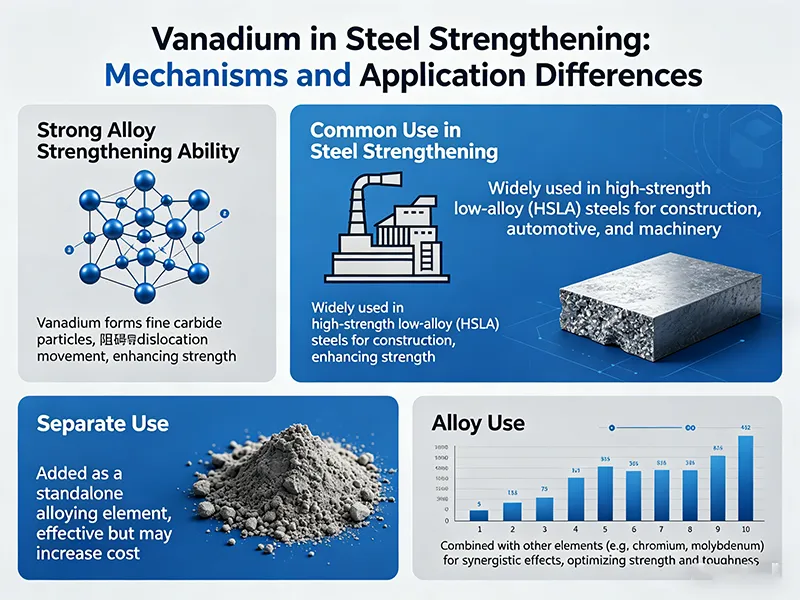
makes the list because tiny additions can create much stronger steels. Periodic-table data note that vanadium in metallic state strengthens stainless steel, and Vanitec reports that microalloying steel with around 0.05% vanadium can increase yield strength by roughly 30–100% while also supporting ductility and seismic performance. Vanadium is therefore less important as a stand-alone structural choice than as a powerful strength multiplier inside alloy systems.
Iron
rounds out the list because it is the indispensable base metal behind steel. On its own, iron is not the modern world’s final answer to the strongest metal question. But the World Steel Association explicitly notes that all steel is originally made from iron, and that foundational role is why iron still matters in every serious strength discussion. Without iron, most of the engineering-strength winners most people actually use would not exist.

Which metal is strongest by category
If you want one headline answer, tungsten is the cleanest choice. It has the highest melting point among metals and remains the reference point for refractory service. If you want the best strength-to-weight answer, titanium alloys are the better pick. If you want the best practical room-temperature structural answer, advanced steels and some nickel superalloys usually come out ahead. That is why the strongest metal answer changes the moment you specify the category.
For tensile strength in mainstream engineering families, advanced steels and age-hardened nickel alloys are especially formidable. Worldsteel documents steel grades up to 1500 MPa, and aged INCONEL 718 data sit in the same elite range at room temperature. Titanium remains outstanding, but its real superpower is not absolute tensile dominance across all categories; it is combining high strength with much lower density.
For hardness and wear, chromium and tungsten-based systems dominate the conversation. Hard chromium coatings exist precisely because indentation hardness and wear resistance matter, and tungsten gets even harder in carbide form. This also shows why “hardest metal” and “strongest metal” are not interchangeable search terms, even though people use them that way every day.
For heat resistance, tungsten and nickel or cobalt hot-section alloys are the true specialists. Tungsten is the refractory champion by melting point, while nickel- and cobalt-based alloys keep meaningful yield and tensile properties far into the high-temperature range where ordinary steels and aluminum alloys would drop off sharply.
For strength-to-weight ratio, titanium alloys are the standout. Ti-6Al-4V combines about 1100 MPa ultimate tensile strength with a density of 4.43 g/cm³, and Haynes notes that Ti-3Al-2.5V tubing can reduce weight by as much as 43% compared with stainless steel in aircraft hydraulic and fuel systems. That is why titanium is so often the “best” strong metal even when it is not the maximum-strength answer in absolute terms.
For all-around industrial use, steel remains the dominant answer. It is not the top specialist in every metric, but its range is unmatched: mild steels, HSLA steels, AHSS, tool steels, maraging steels, and countless heat-treated variants. When engineers need strong, available, processable, and cost-effective material at scale, steel keeps winning.
This is also where the distinction between metal and alloy matters. In strict materials science, many of the materials that top practical performance charts are alloys, not pure elements. Nickel Institute guidance describes maraging steel as an Fe-Ni alloy built for ultra-high strength and fracture toughness, while nickel and cobalt aerospace alloys are explicitly engineered for creep resistance, oxidation resistance, weldability, and heat retention. In short, the strongest materials used in engineering are very often alloy systems, not single pure metals.
Strong metals compared with common engineering materials
Against aluminum, the gap between “high strength” and “ultra-high strength” becomes obvious. Kaiser Aluminum lists 7075-T6 at about 572 MPa ultimate tensile strength and 503 MPa yield strength with density around 2.8 Mg/m³. That is extremely good for aluminum and explains its aircraft use, but it still sits below titanium alloys and well below the upper end of steel and nickel-superalloy performance. Aluminum wins when low mass and good corrosion behavior matter more than maximum load capacity.
Against copper, the difference is even clearer. Copper Development Association data show cold-rolled copper with minimum tensile strength around 32,000 psi and yield around 20,000 psi, while pure copper density sits near 8.94 specific gravity. Copper is selected for conductivity and thermal performance first, not for being among the strongest metals. It is a superb engineering material, but not a contender for the strongest metal title.
Against carbon steel, the phrase “steel” itself needs unpacking. Nickel Institute values show ASTM A36 structural steel at minimum 400 MPa tensile and 250 MPa yield, while A588 Grade C improves that to about 485 MPa tensile and 345 MPa yield. Move to alloy steel and the numbers jump again: properly treated AISI 4340 sits far above normalized 1045 carbon steel. So when someone says steel is the strongest metal, the statement is imprecise but not foolish; steel is a family with an enormous performance envelope.
Against stainless steel, the same family effect appears. Standard 304 stainless is useful and versatile, but duplex grades can be dramatically stronger. Outokumpu’s S32101 example at 600 MPa yield and 820 MPa UTS is far ahead of ordinary 304. That is why the more accurate question is never simply “steel or stainless?” but “which steel, which stainless, which condition, and which environment?”
The comparison also explains why the strongest metal is not always the best metal. Aluminum may lose on absolute strength and still win a lightweighting project. Copper may never appear on a strongest-metal list and still be irreplaceable in electrical systems. Duplex stainless may lose to some alloy steels in dry indoor loading and still be the correct choice in chlorides or corrosive process service. Engineering material selection is a balance problem, not a beauty contest.
How to choose the right strong metal for your application
The most useful way to choose is to start with the load case. If the part is mainly a room-temperature structural member and cost matters, steel is usually the first place to look because the strength range is enormous and supply chains are mature. That is exactly why worldsteel describes steel as indispensable and why advanced high-strength grades keep expanding into automotive, infrastructure, and energy applications.
If the design is weight-limited, titanium moves up the list very quickly. Aerospace parts, hydraulic tubing, and medical devices often justify titanium’s premium because high specific strength and corrosion resistance can outperform heavier steel or stainless alternatives on system-level performance.
If the environment is corrosive, stainless steel and nickel alloys become much more attractive. Outokumpu positions duplex grades such as 2205 for chloride-bearing service, bridges, chemical tankers, and oil and gas components, while Special Metals documents INCONEL and related nickel-alloy families for chemical, aerospace, and nuclear environments where strength must coexist with oxidation and corrosion resistance.
If the service temperature is very high, you should think in terms of refractory metals and superalloys, not only room-temperature tensile tables. Tungsten exists precisely because some applications demand extreme heat resistance, while nickel- and cobalt-based hot-section alloys are engineered to retain useful strength, oxidation resistance, and stability far above the temperature range comfortable for conventional structural metals.
If the real problem is wear, galling, or surface damage, bulk-metal strength may not be the right answer at all. Hard chromium coatings, cobalt bearing alloys, and tungsten-based tooling systems often solve wear problems better than simply specifying a “stronger” base metal. That is one of the biggest reasons strongest-metal content can mislead readers who are actually facing a tribology problem rather than a structural one.
Finally, do not ignore availability and budget stability. Outokumpu explicitly markets lean duplex grades partly on low nickel content and easier budgeting, and steel’s market dominance comes from a powerful mix of performance, processability, and scale. The strongest metal in a laboratory sense is often not the best purchase decision.
Myths, summary, and FAQ
A few myths create most of the confusion around the strongest metal question. The first is that the hardest metal must be the strongest metal. Hardness is its own property and does not replace impact toughness or tensile performance. The second is that the heaviest metal must be the strongest. Tungsten is extremely dense, but titanium often wins the more useful strength-to-weight contest. The third is that stainless steel is always stronger than ordinary steel. Some stainless grades are stronger than some carbon steels, but many are not; duplex and martensitic grades behave very differently from common austenitic grades like 304. The fourth is that titanium is always the strongest. Titanium is extraordinary, but ultrahigh-strength steels and some nickel superalloys can surpass it in absolute tensile terms.
The cleanest summary is this: there is no universal strongest metal, only the strongest metal for the property and service condition that matter most. Tungsten is the strongest headline answer for refractory and extreme-heat performance. Titanium alloys are the standout for strength-to-weight ratio. Advanced steels are the most important practical structural answer. Nickel and cobalt superalloys dominate hot, corrosive, mission-critical service. Chromium, vanadium, and iron earn their place because they transform hardness, corrosion resistance, and alloy strength in systems that industry actually uses every day.
What is the strongest metal in the world?
There is no single winner for every definition of strength. If you want the broadest one-word answer, tungsten is the most defensible choice because of its unmatched melting point and refractory reputation. If you mean room-temperature structural performance, advanced steels and high-strength nickel alloys are often stronger in tensile terms. If you mean specific strength, titanium alloys usually win.
Is titanium stronger than steel?
Sometimes yes, sometimes no. Ti-6Al-4V is much stronger than mild structural steels and far lighter, but the strongest steels can exceed titanium in absolute tensile strength. Titanium’s main advantage is that it delivers very high strength at much lower density.
Is tungsten the strongest metal?
It is the best broad answer when the discussion is about refractory performance, extreme heat, and overall “heavy-duty” reputation. But tungsten is not the winner for every metric. If your problem is room-temperature structural loading, advanced steels or superalloys may be better answers.
What is the hardest metal?
Hardness is a separate property from overall strength. In practical engineering talk, chromium is strongly associated with very hard metallic surfaces, especially hard-chrome coatings used for wear resistance. Tungsten becomes even harder in tungsten carbide form, but tungsten carbide is not a pure metal.
Which metal has the best strength-to-weight ratio?
For mainstream engineering use, titanium alloys are the standard answer. Ti-6Al-4V combines very high tensile strength with far lower density than steel, and titanium tubing is widely prized in aerospace for the same reason.
What is the strongest metal used in engineering?
In terms of broad real-world use, steel is the strongest and most important workhorse family because it spans everything from mild structural grade to ultrahigh-strength and maraging systems. In the hottest and most demanding environments, engineers shift to nickel and cobalt superalloys. In weight-critical environments, titanium alloys often become the best answer.