CNC (Computer Numerical Control) machines are automated, computer-controlled machining tools that shape parts by precisely moving cutting tools or the workpiece according to programmed instructions. By running CAD/CAM-generated programs (often G-code), CNC machines can mill, turn, drill, cut, or grind metals, plastics, wood and composite parts with high repeatability. Different CNC machine types exist because workpiece geometries and materials vary greatly. Choosing the right machine for a given CNC machining project affects precision, throughput, tooling cost and surface finish. This article reviews 12 common CNC machine types, their best applications, and guidance on selecting the right one.
What Is a CNC Machine?
A CNC machine is a motorized tool (and often a motorized platform) controlled by a computer, using specific input instructions (G-code) to execute precise motion and cutting paths. In essence, CNC stands for Computer Numerical Control – an evolution of earlier numerical controls where punched tape controlled machines. CNC allows the computer to manage movements, speeds, feeds and toolpaths in real time, making machining faster, more precise and easier to program. CNC machines can work on a wide range of materials (metals like steel, aluminum, titanium; plastics; wood; composites; etc.) and perform many processes: milling, turning, drilling, cutting, grinding, and EDM (electrical discharge machining), among others. They excel at producing parts with high repeatability and tight tolerances in medium to high volumes, far beyond what manual machining can efficiently achieve.
Why Are There Different Types of CNC Machines?
Because workpieces come in many shapes and requirements, CNC tools are specialized. A machine designed to rotate the workpiece (a turning center or lathe) is ideal for cylindrical parts (shafts, pins, bushings) with OD/ID turning, threading and grooving. In contrast, a milling machine with a rotating cutter is better for prismatic blocks and flat parts, producing flat surfaces, slots, pockets and 3D contours. Sheet-metal parts require cutting processes: laser cutters and plasma cutters cut sheet metal quickly, while waterjets slice thick or heat-sensitive plates without distortion. Very hard or complex geometries (hard tool steel, carbide dies, tiny internal corners) often need EDM (spark erosion) instead of mechanical cutting. Each machine’s kinematics and rigidity influence achievable tolerance, surface finish, material compatibility, speed and cost. For example, a 5‑axis mill can machine complex multi-face parts in one setup (reducing runout errors), whereas a 3‑axis mill would require multiple setups. Thus, shops use the right CNC type to optimize precision, speed and budget for each part’s shape and material.
Overview of the 12 Types of CNC Machines
The following table summarizes each CNC machine type, its best use cases, and common applications:
| CNC Machine Type | Best For | Common Applications |
|---|---|---|
| CNC Milling Machine | 3D shapes, flat surfaces, pockets, slots, holes | Brackets, housings, plates, fixtures, mold components |
| CNC Turning Machine | Cylindrical (round) parts | Shafts, pins, bushings, collars, threaded parts |
| CNC Lathe | Same as turning (round parts) | Threads, grooves, collars, spindles; high-volume turning |
| CNC Router | Wood, plastic, foam, soft metals, large panels | Furniture panels, signage, prototypes, wood molds |
| CNC Plasma Cutter | Thick conductive metal sheets | Steel frames, structural plates, heavy equipment parts |
| CNC Laser Cutting Machine | Thin-to-medium metal sheets with fine detail | Sheet metal enclosures, brackets, covers, panels |
| CNC Waterjet Cutter | Thick or heat-sensitive materials (metal, stone, glass) | Aerospace panels, stone art, composite parts |
| CNC EDM Machine | Hard conductive materials and intricate cavities | Tooling, molds, dies, hardened steel parts |
| CNC Wire EDM Machine | Precise 2D profiles and fine slots in conductive materials | Precision dies, punches, wires, gear profiles |
| CNC Grinding Machine | High-precision surface finishing | Shafts, bearing races, precision molds, cutting tools |
| 5-Axis CNC Machine | Complex multi-face, high-precision parts | Aerospace impellers/blisks, medical implants, complex housings |
| Swiss-Type CNC Machine | Small, slender turned parts | Medical screws, pins, connectors, micro shafts |
CNC Milling Machine
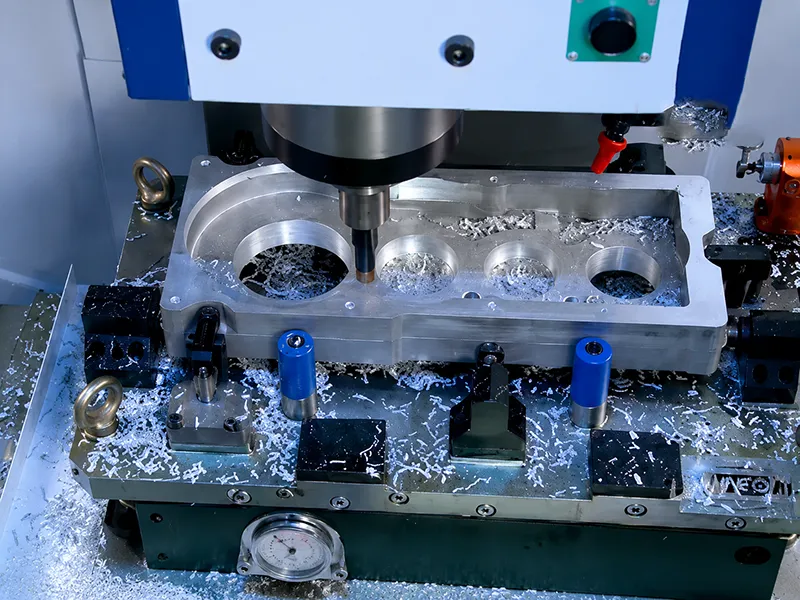
CNC milling uses a rotating multi-edge cutter to remove material from a fixed workpiece. It produces flat surfaces, slots, pockets, holes and complex 3D contours on non-rotating parts. In practice, CNC mills often hold an aluminum or steel workpiece on a table, and the cutter moves along X, Y and Z axes. Milling machines are the workhorse for prismatic metal parts: aluminum or steel brackets, housings, plates, fixtures, and mold components. They excel at carving features like boss faces, dovetails, complex pockets or curved surfaces. CNC mills handle a range of materials (metals and plastics) and are favored for parts that require machining on multiple faces (with or without fourth/fifth axes). These machines deliver high precision (often ±0.01 mm or better) and are suited to both prototypes and medium-volume production.
CNC Turning Machine
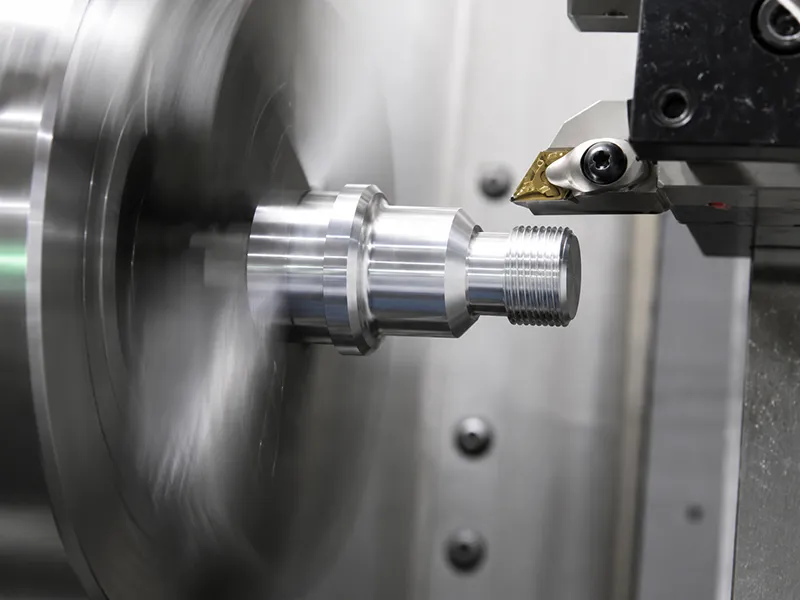
A CNC turning machine (or turning center) rotates the workpiece against a fixed or moving cutting tool. It’s ideal for parts with rotational symmetry. As the workpiece spins, tools cut the OD (outer diameter), bore ID (inner diameter), face off ends, cut threads and form tapers or grooves. CNC turners efficiently produce shafts, pins, spacers, bushings, and threaded rods. They achieve very good surface finish and can be equipped with bar feeders and part catchers for lights-out, high-volume production (e.g. thousands of identical shafts). Typical tolerances are on the order of ±0.01–0.03 mm, making turning centers economical for cylindrical parts. In summary, CNC turning is the best choice when a part can be rotated about an axis – any component resembling a rod, cylinder or cone (like bolts, rollers, pistons) is a turning candidate.
CNC Lathe
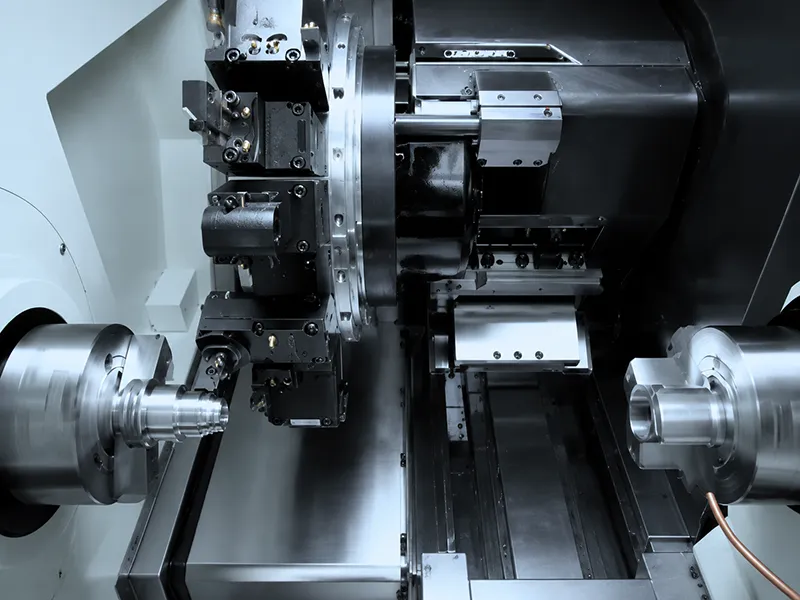
A CNC lathe is essentially a turning machine; in fact, “lathe” and “turning center” are often used interchangeably. CNC lathes specialize in facing, turning, boring, threading, grooving and parting operations. Modern lathes often include an automatic turret (tool changer) and even live tooling (rotating tools) that allow milling, drilling or slotting without removing the workpiece. This means a CNC lathe can face off ends, cut external and internal features, and even mill flats or holes in one setup. CNC lathes excel at rapid, precise production of round parts like collars, bushings, fittings and pulleys. They are ubiquitous in automotive and machinery shops for making journals, bearing housings, and threaded connectors. In many factories, CNC lathes with bar feed are the fastest way (best dollars-per-hour) to make long runs of identical cylindrical parts.
CNC Router
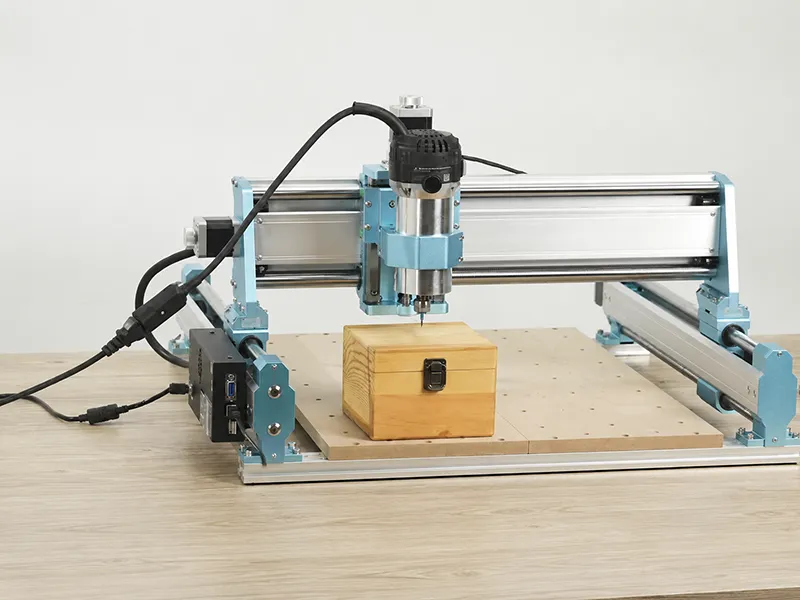
A CNC router resembles a large gantry mill and is designed primarily for cutting softer materials. It uses a high-speed spindle with router bits and often has a large work envelope and vacuum table to hold sheet material. Routers are optimized for wood, plastics, foam, composites and light metals. They are used extensively in woodworking, signage and furniture manufacturing. Typical router jobs include cutting and engraving cabinet panels, decorative signs, plastic molds and foam prototypes. While routers can sometimes cut thin aluminum or soft metals, they lack the rigidity of metalworking mills; as a result, their accuracy and material hardness capacity is lower. Routers are very fast at handling large sheet parts (nested machining of plywood, MDF, plastics) but cannot handle hardened steels or ultra-precision metal components. In short, use a CNC router for large-format, lower-precision parts in wood/plastic, not for fine steel parts.
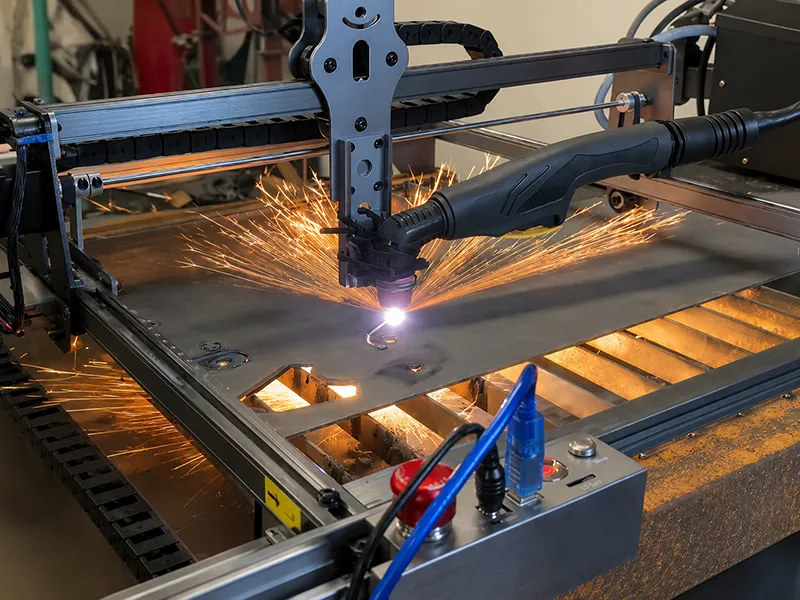
CNC Plasma Cutter
A CNC plasma cutter uses a high-temperature ionized gas (plasma) jet to cut electrically conductive sheet and plate. It is ideal for medium-thick steel, stainless steel, and aluminum plates. Plasma cutting is much faster than manual oxy-fuel cutting and is very cost-effective for parts like frames, structural gussets, and fabrication parts. Because plasma has a wider kerf and generates heat, the edge finish is rougher and precision is lower than laser cutting. However, it is significantly cheaper and faster on thick plates (e.g. 10–50 mm steel). CNC plasma tables are common in metal fabrication shops for cutting shapes out of plates: for example, cutting beam flanges, industrial equipment bases, or shop jigs. If tolerances are moderate (a few tenths of mm) and the material is conductive, plasma cutting offers high speed and low cost.
CNC Laser Cutting Machine
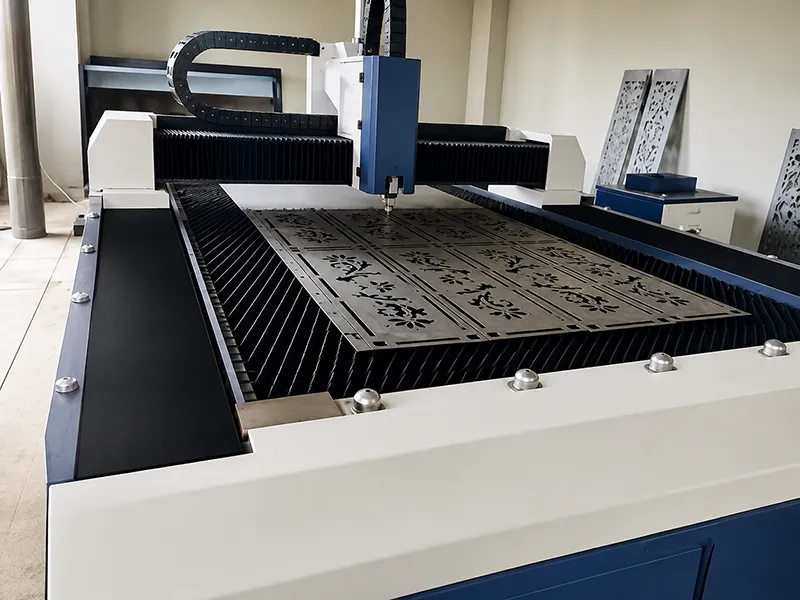
A CNC laser cutting machine focuses a high-power laser beam to cut sheet metal (and some non-metals). Laser cutters have a very narrow kerf and produce extremely clean edges. They are used for precise sheet metal fabrication: thin to medium gauge steel, stainless, aluminum, and even plastics. Fiber lasers excel on metal; CO₂ lasers cut non-metallics well. On typical mild steel up to ~6 mm thick, a fiber laser can cut at very high speeds (tens of meters per minute) while maintaining ±0.1 mm accuracy. Laser cutting is common for making electrical enclosures, brackets, panels, covers and housings where tight features and fine details are needed. Because the beam is non-contact, it works well on many sheet materials. For flat parts that need accurate profiles and smooth edges, laser cutting is often the best combination of speed and precision.
CNC Waterjet Cutter
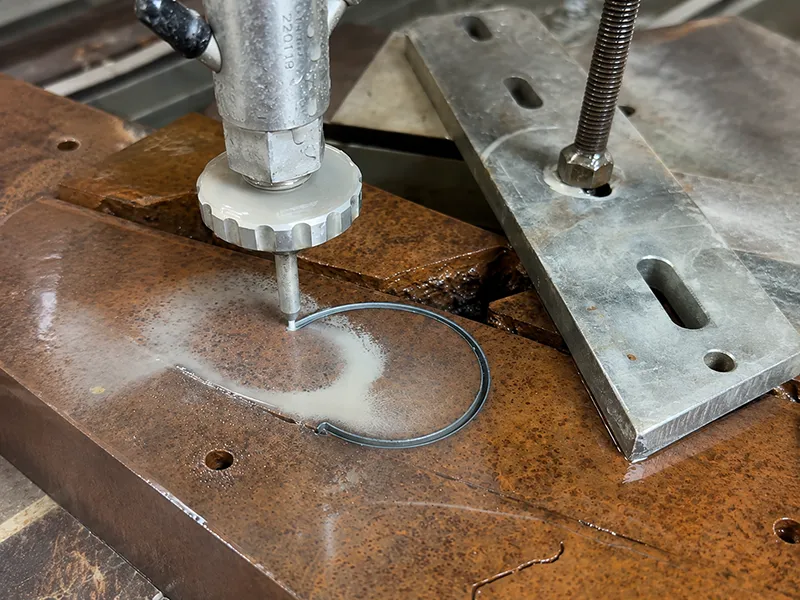
A CNC waterjet cutter uses a high-pressure jet of water (with or without abrasive grit) to slice materials. Its key advantage is that it is cold-cutting with no heat-affected zone. Waterjets can cut virtually any material (metals, glass, stone, composites, rubber) – especially those that cannot tolerate heat (like titanium alloys, stone, ceramics). It is ideal for thick metal plate (tens of millimeters up to 150+ mm) or layered materials. The trade-offs are speed and cost: waterjet is slower than laser on thin sheet and the abrasive (garnet) is a consumable. But when you must avoid thermal distortion or cut very thick material with good edge quality, waterjet is unmatched. Typical uses include large aerospace panels, granite or glass parts, thick composite blanks, and metal parts that require very smooth edges without recast.
CNC EDM Machine
EDM (Electrical Discharge Machining) uses electrical sparks to erode material from a conductive workpiece. A CNC EDM machine (sinker or die-sinker type) uses a shaped electrode submerged in dielectric fluid. It “burns” away metal with tiny discharges, no mechanical cutting forces are involved. EDM is used for hard, tough metals (tool steels, tungsten carbide, hardened alloys) that are difficult to machine conventionally. It produces very high precision and fine detail: tolerances on the order of ±0.005–±0.02 mm are common. EDM excels at features like very sharp internal corners, deep narrow slots, or complex cavities that end-mills can’t reach. Common applications include mold and die making, production of precision tooling, and tiny aerospace or medical parts with intricate shapes. In short, use CNC sinker EDM when the part is conductive, very hard, and requires extremely precise internal features.
CNC Wire EDM Machine
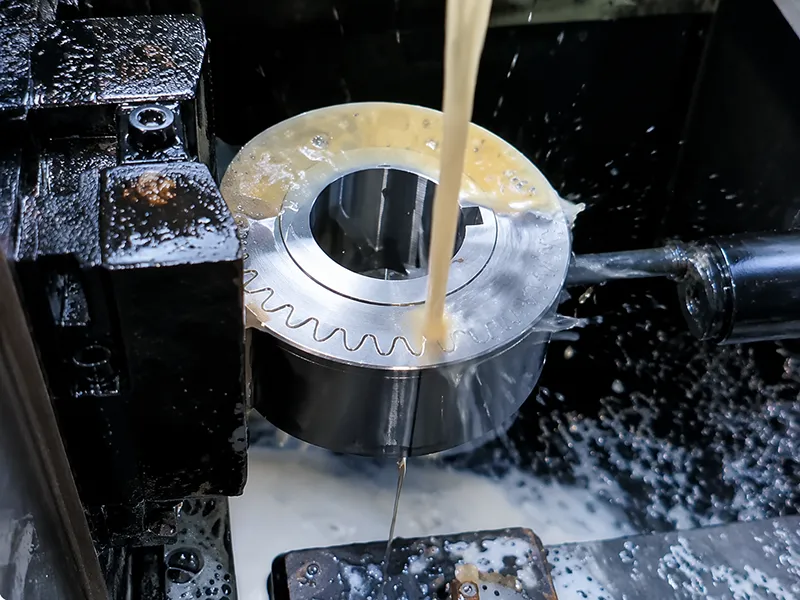
Wire EDM is a type of electrical discharge machining that uses a thin, continuously-fed wire (usually brass or copper) as the electrode. It cuts conductive materials by spark erosion along a programmed path. Wire EDM is ideal for making precise 2D profiles and thin slots with razor-sharp corners (90°) in hardened steel or exotic metals. It is commonly used for tool and die components, punches, blades, and fine gear profiles. Because the wire is small (as thin as 0.1 mm), wire EDM can achieve extremely tight tolerances (often ±0.002–±0.010 mm) without distorting thin walls (no cutting forces). It is slower than traditional cutting and limited to essentially “prismatic” slices of 2D geometry, but for precision contours (e.g. forming punches, progressive-die steel, intricate medical dies) it’s unmatched.
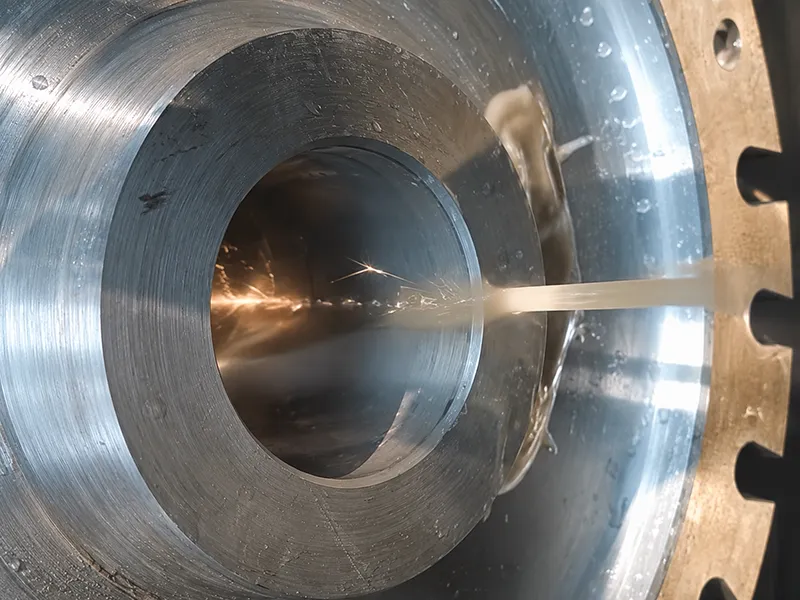
CNC Grinding Machine
A CNC grinding machine uses an abrasive wheel to achieve ultra-precise surfaces and dimensions. Grinding machines include surface grinders, cylindrical grinders and centerless grinders. They are normally used as a finishing process rather than for heavy stock removal. CNC grinding is employed when very tight tolerances (often down to ±0.002 mm), excellent roundness or flatness, and super-smooth surface finish are required. Typical applications are finishing hardened parts after rough milling/turning: for example, grinding shafts for high-precision spindles, honing bearing races, or fine-tuning cutting-tool shapes. In many toolrooms, grinding is the last step to achieve design tolerances on dies, molds and precision mechanical components. In short, if a part needs razor-like accuracy or polished flatness, CNC grinding machines are the tool of choice.
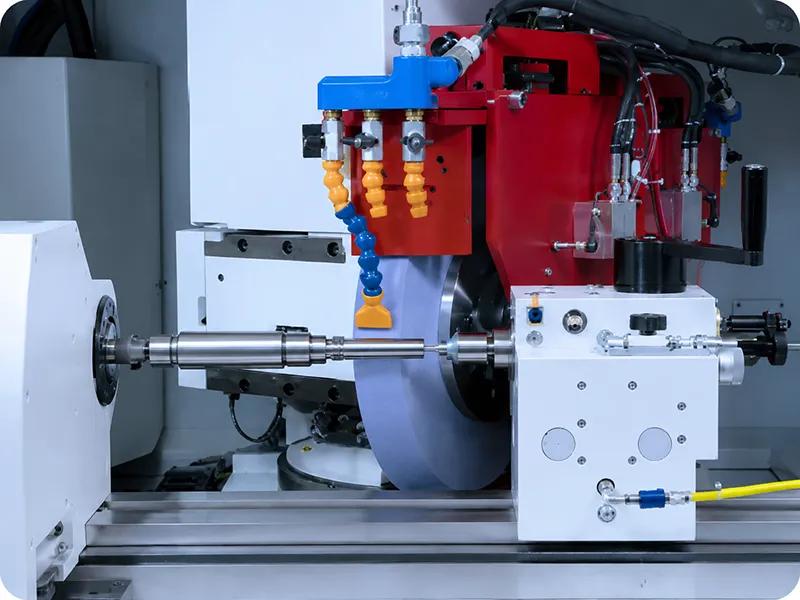
5-Axis CNC Machine
A 5-axis CNC machine can move the tool (and/or workpiece) along three linear axes (X, Y, Z) plus two rotational axes simultaneously. This allows the cutter to approach the part from virtually any direction without multiple setups. 5-axis machining is key for complex shapes and surfaces, such as aerospace impellers, turbine blades, orthopedic implants or complex sculpted molds. By tilting and rotating, the tool can reach undercuts and multi-faced features in a single operation. This reduces setup errors and delivers tighter positional accuracy across faces. For example, a jet engine airfoil or a sculpted medical implant with undercuts can often be done in one 5-axis setup instead of many fixtures on a 3-axis mill. The downsides are cost and programming complexity. But for multi-face, high-value parts where time is money, 5-axis offers unbeatable capability.
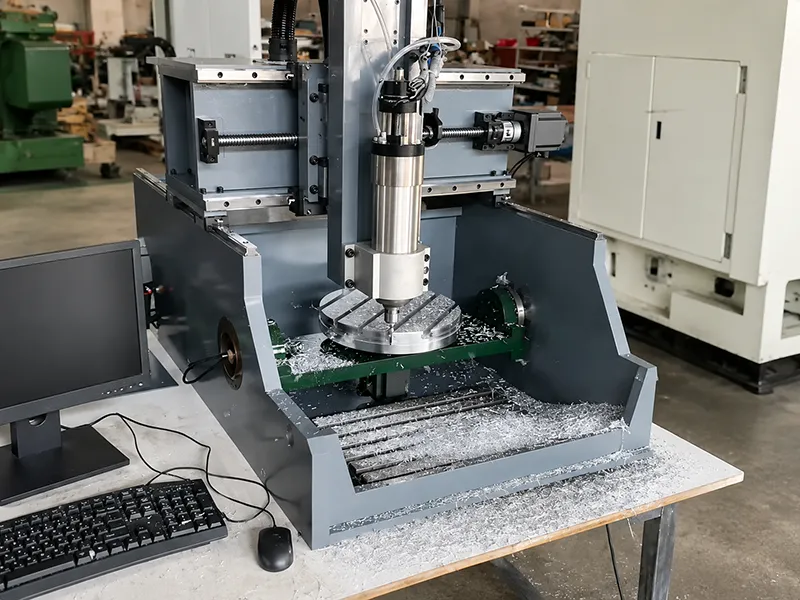
Swiss-Type CNC Machine
Swiss-type CNC lathes (also called Swiss automatic lathes) are specialized turning machines for very small, slender, high-precision parts. In a Swiss lathe, the workpiece is guided through a support bushing close to the cutting zone, which minimizes deflection in long thin parts. Swiss CNC machines are perfect for tiny turned components: think medical screws, dental pins, micro connectors, watch parts or miniature shafts. They often have multiple gang slides and live tooling too. Swiss-type machines can run bar stock continuously, delivering tight tolerances (often ±0.005 mm or better) on long, slender parts in high volumes. Common users are medical device makers (micro screws, implants), electronics (tiny connectors), and any industry needing precise small turned parts. In short, if your part is a long, thin pin or screw under a few millimeters thick, a Swiss lathe is likely the most efficient option.
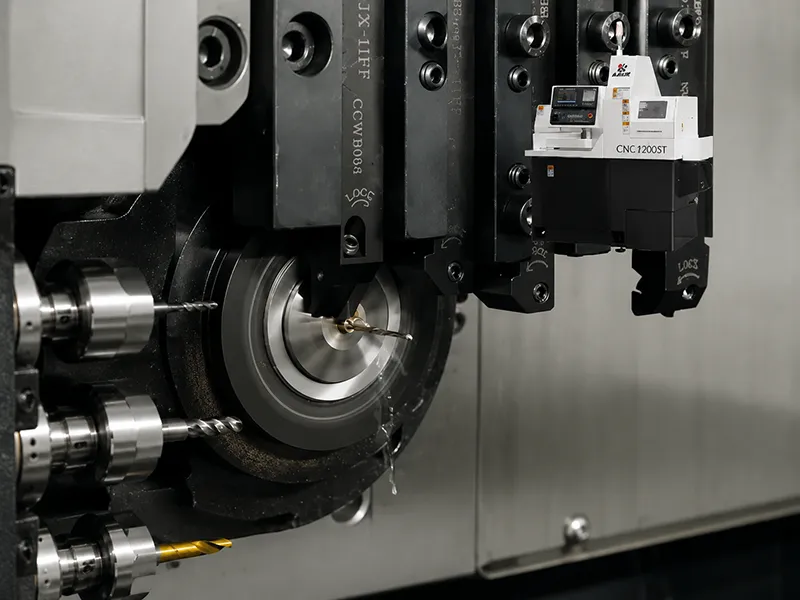
CNC Machine Types Compared
| Machine Type | Precision | Speed | Best Material | Best Part Type |
|---|---|---|---|---|
| CNC Milling | High | Medium | Metals, plastics | Prismatic blocks, brackets |
| CNC Turning | High | High | Metals, plastics | Round shafts, pins |
| CNC Router | Medium | High | Wood, plastic, composites | Large panels |
| CNC Plasma Cutter | Medium | High | Conductive metals | Thick plates, frames |
| CNC Laser Cutter | High | High | Sheet metals | Thin-to-medium sheet parts |
| CNC Waterjet Cutter | Medium–High | Medium | Many (metals, stone) | Thick/heat-sensitive parts |
| CNC EDM | Very High | Slow | Conductive hard metals | Molds, dies, die cavities |
| CNC Grinding | Very High | Slow | Hardened steels | Precision surfaces |
| 5-Axis CNC | Very High | Medium | Metals, plastics | Complex aerospace/medical parts |
| Swiss-Type CNC | Very High | High | Metals (bar stock) | Small precision turned parts |
Each row above is elaborated in the sections above – every machine has trade-offs in precision, speed, materials, and part geometry.
Which CNC Machine Is Best for Your Project?
Choosing the right CNC machine depends on part geometry, material, tolerance, finish requirements, volume and cost. Here are general guidelines:
- Sheet metal parts such as flat panels or profiles usually need laser cutting, plasma cutting, or waterjet cutting. Laser cutters excel at thin-to-medium sheets with high precision. Plasma cutters are cost-effective for thicker steel with moderate tolerances. Waterjet cutters handle very thick or heat-sensitive materials (e.g. titanium, stone) without warping.
- Round/Cylindrical Parts: For shafts, pins and bushings, a CNC lathe/turning center is ideal. For small high-volume bars, a Swiss-type lathe is best.
- Blocks, Brackets, Housings: Use a CNC milling machine. 3‑axis mills handle most prismatic parts. If the part has many faces or complicated curves, consider a 5-axis mill to reduce setups.
- Complex Aerospace/Medical Parts: High-value, multi-face parts (impellers, implants) often require a 5-axis CNC to machine all surfaces accurately in one setup.
- Hard or Precision Molds/Tools: Use EDM (wire or sinker) when machining hardened steels or very fine internal features that cutting tools cannot reach.
- Smooth, Tight-Finish Parts: For ultra-smooth surfaces and tight tolerances, add a grinding operation at the end.
- Wood or Plastic Panels: Use a CNC router – it’s fast for large, low-tolerance work like cabinetry or signage.
In sum, the best CNC machine is not necessarily the most advanced one, but the one that matches the part’s shape, material, tolerance and production volume. By evaluating those requirements, you can pick the machine with the right axes, rigidity, and tooling to hit your cost and lead-time targets.
How Material Affects CNC Machine Selection
Machining materials dictate tooling and machine choice. Metal blocks (aluminum, steel, brass) are typically machined on mills or lathes. Thin metal sheets are cut on laser, plasma or waterjet machines depending on thickness and precision needed. Soft woods, plastics and composites use routers for large panels. Extremely hard or conductive materials (tool steel, carbide) often require EDM rather than cutting. Materials that are heat-sensitive or brittle (glass, ceramics) can only be cut cold via waterjet. For example, aerospace alloys (titanium, Inconel) can be milled or ground if tolerances allow, but often require slow, rigid setups or even specialized tools. In short, always consider material hardness, conductivity and thickness: it narrows the list of suitable CNC processes early.
How Tolerance and Surface Finish Affect the Choice
The tighter the tolerance and the better the surface finish required, the more specialized or rigid the machine must be. For very tight tolerances (on the order of ±0.005 mm or better), machines like CNC grinding, EDM or a finely tuned 5-axis mill/turning center are necessary. Standard 3‑axis mills or lathes usually hold around ±0.01–0.05 mm. Routers, plasma and standard waterjet setups typically can’t match super-fine tolerances. Likewise, if a part needs mirror-like finish (low Ra), grinding or super-finishing is often required after machining. Laser cutting yields very smooth edges on sheet parts but would not produce a final tolerance on a bearing surface. In practice, the machine choice must ensure the part meets its tolerance and finish specs with minimal secondary operations.
CNC Machine Selection by Industry
- Automotive: Highly utilizes turning machines (shafts, pins, bushings) and milling (engine blocks, brackets). Large sheet parts (body panels, frames) are often cut by laser or plasma. Grinding is used for gears and precision fits.
- Aerospace CNC machining relies on 5-axis machining for structural components and blisks, EDM/grinding for hardened tooling and turbine parts, and waterjet for thick composite or titanium panels.
- Medical Devices: Uses Swiss-type lathes for small screws and pins, 5-axis mills for complex implants, and grinders for final smooth surfaces on precision instruments.
- Electronics: CNC machines make cases and enclosures. Milling is common for housings and heat sinks, turning (including Swiss) for small connectors and pin assemblies, and laser cutting for thin metal shields or brackets.
- Industrial Machinery: Machine builders use milling for heavy plates, fixtures and housings; turning for pump shafts, rollers and couplings; and plasma/laser cutting for large structural components.
These patterns reflect how industry needs (size, volume, material) drive the mix of CNC equipment on a shop floor.
Common Mistakes When Choosing a CNC Machine
- Over-specifying – buying a multi-axis or expensive machine “just in case,” driving up cost when a simpler 3‑axis mill would suffice.
- Mixing up processes – e.g. using a milling machine for a part that should be turned (round shaft), or milling sheet metal instead of using a laser or plasma cutter.
- Ignoring material/hardness – selecting a machine without considering material, leading to tool wear or inability to cut (e.g. hard steel on a basic mill, which may need EDM).
- Not considering finish/tolerance – expecting a plasma or router to meet tight tolerances needed for a precision fit.
- Neglecting volume and fixturing – failing to account for production quantity, fixturing needs or bar-feeding (important for high-volume turning).
- Incomplete part information – giving vendors vague requirements without drawings, CAD files, material grade, or tolerances. This leads to wrong machine choice.
Avoid these by matching the machine’s capabilities to the part’s true requirements, not just its most demanding feature.
What Information Should You Provide to a CNC Supplier?
To ensure your CNC supplier picks the right equipment and process, provide as much detail as possible:
- 2D Drawings and 3D CAD Files: Complete geometry, dimensions, and tolerances. Highlight any critical features.
- Material Specification: Exact material grade (aluminum 6061-T6, stainless 304L, etc.) and condition (annealed, hardened).
- Quantity: Prototype vs. batch vs. large production run – this affects whether you use quick setups or automated loading.
- Tolerance Requirements: Specify key tolerances (e.g. ±0.01 mm) and surface finish (Ra) needs.
- Surface Finish / Post-Processing: Any polishing, plating or coating requirements.
- Heat Treatment: If the part is heat-treated, note this (affects machining strategy).
- Critical Dimensions or Features: Identify features that cannot change (holes, shafts, etc).
- Application/Industry: Aerospace, automotive, medical etc., as this hints at regulatory or finish standards.
- Delivery Schedule: When you need prototypes vs. production.
- Special Requirements: For example, bilateral symmetry, mirror lines, or inspection data needed.
Providing complete information (drawings, material, tolerances, quantities) allows the supplier to recommend the right CNC machine type and process for optimal cost and quality.
Conclusion
CNC machines come in a wide variety of configurations, each optimized for certain materials and part geometries. CNC milling and turning (lathes) are the workhorses for metal blocks and shafts, routers, lasers and plasma cutters excel on wood panels and sheet metal, and waterjets cut thick/heat-sensitive materials. EDM (sinker and wire) and grinding machines serve ultra-precision needs on hard materials. 5-axis CNC centers and Swiss-type lathes handle the most complex aerospace or miniature parts, respectively. In the end, the best CNC machine is the one that matches your part’s shape, material, tolerance, finish and volume – not necessarily the newest or most expensive. By understanding the strengths of each of the 12 CNC types above, engineers and buyers can choose the right machine for their project’s success.
FAQ About 12 Types of CNC Machines
What are the main types of CNC machines?
Common CNC machine types include CNC milling machines, CNC lathes/turning centers, CNC routers, laser cutters, plasma cutters, waterjet cutters, EDM machines (both sinker and wire), and grinders. Advanced machines include 5-axis machining centers and Swiss-type (Swiss-lathe) machines. In practice, most shops use a mix of these types to cover different materials and part shapes.
Which CNC machine is best for metal parts?
It depends on the part’s shape. For solid metal blocks with prismatic features (blocks, flanges, brackets), CNC milling is best. For round metal parts (shafts, pins, tubes), CNC turning (lathe) is ideal. Thin metal sheets are usually handled by sheet-metal machines: laser cutting for precision thin-to-medium sheets, plasma cutting for thicker plates, or waterjet when heat must be avoided. For extremely hard metal parts or fine internal contours (dies, molds), EDM is the go-to process.
What is the difference between CNC milling and CNC turning?
CNC milling uses a rotating cutting tool to remove material from a stationary (fixed) workpiece. It can carve pockets, surfaces, and complex 3D shapes on blocks. In contrast, CNC turning spins the workpiece on a chuck while a stationary tool cuts its outer or inner diameter. In other words, milling rotates the cutter; turning rotates the part. Turning is ideal for cylindrical shapes, while milling is used for flat or irregular shapes.
When should I choose 5-axis CNC machining?
Choose a 5-axis CNC machine when the part has multiple faces or complex geometries that would require many setups on a 3-axis mill. If the part has angled surfaces, compound curves, undercuts or tight positional tolerances across faces, a 5-axis machine can often complete it in a single setup. For example, aerospace brackets with holes on many faces or medical implants with organic contours benefit from 5-axis machining. It is also chosen when you want to reduce setup time or use shorter tools for better accuracy.
Which CNC machine is best for small precision parts?
Swiss-type CNC machines are typically best for very small, slender precision parts (on the order of millimeters or less). They guide and support long thin parts to prevent deflection, achieving high accuracy on tiny components like medical pins, watch screws, micro connectors or precision electronic pins. For slightly larger small parts, a multi-axis CNC mill or mill-turn center can also be used. In general, for miniature high-precision turned parts, the Swiss lathe is the first choice.