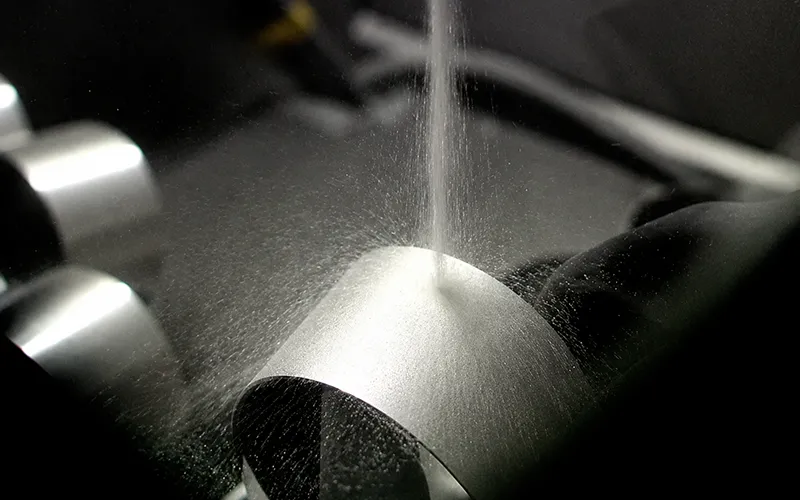
A bead blast finish is a widely used surface treatment for machined and fabricated parts because it can quickly turn a reflective, tool-marked surface into a more uniform matte or satin finish without adding a separate coating layer. In the process, fine spherical media—most commonly glass beads—are propelled at the part with compressed air or similar blasting equipment, creating countless small impact marks that scatter light more evenly across the surface. That is why bead blasting is commonly used to reduce the visibility of light machining marks, minor scratches, oxidation, and cosmetic inconsistency on aluminum, stainless steel, titanium, brass, and selected plastics. The exact appearance depends on media type, bead size, pressure, stand-off distance, nozzle angle, exposure time, and the starting condition of the part. In practice, bead blasting is often chosen either as a final cosmetic finish or as a pre-treatment before anodizing, painting, powder coating, or adhesive bonding.
What Is a Bead Blast Finish
A bead blast finish is a mechanical surface-treatment process in which small spherical media are accelerated toward a component to clean, blend, deburr lightly, and create a controlled surface texture. Repeated impacts leave a fine, evenly textured surface that is typically described as matte, satin, or low-gloss. Unlike polishing, which increases reflectivity, or brushing, which creates visible linear grain, bead blasting usually produces a non-directional appearance that looks more uniform from different viewing angles.
It is important to distinguish bead blasting from a coating. The process does not add paint, powder, plating, or another deposited layer. Instead, it changes the texture and optical behavior of the existing substrate by peening or lightly abrading the outermost surface. That is also why bead blasting is commonly specified before anodizing on aluminum: the later anodic layer follows the texture already created by the mechanical finish rather than hiding it.
Bead blasting can be used as a final surface finishing process when the goal is a clean cosmetic matte look, but it is just as often used as a preparatory step before anodizing, chromate conversion coating, painting, powder coating, or adhesive bonding. Surface roughening can improve downstream adhesion and consistency, but bead blasting by itself should be treated primarily as an appearance and texturing process, not as a guaranteed corrosion-protection method. Stainless steel still depends on a clean, uncontaminated passive layer, and aluminum still benefits from anodizing or another protective treatment when long-term appearance or corrosion performance matters.
How the Bead Blasting Process Works
Part Inspection
A good bead blasting process starts with inspection, not with the blast gun. The finisher first confirms the base material, inspects the starting surface, identifies critical dimensions and functional areas, and compares the required outcome against a drawing note or approved appearance sample. This matters because bead blasting blends light imperfections well, but it does not reliably erase deep scratches, gouges, major burrs, or poor machining. If the part will later be anodized, plated, or coated, the starting condition becomes even more important because later finishes generally follow the prepared surface rather than covering it.
Cleaning and Preparation
Before blasting, parts are normally degreased and dried so oil, coolant, dirt, and loose contamination do not shield areas from the media stream or contaminate the cabinet. Pre-cleaning is one of the easiest ways to avoid patchy cosmetic results. If needed, obvious burrs are removed first, because bead blasting is best at softening very small burrs and visual sharpness rather than replacing proper deburring. Clean media segregation also matters here: stainless parts should not be blasted with media or equipment contaminated by carbon steel, because embedded iron contamination can show up later as staining or corrosion.
Masking Critical Areas
Masking protects surfaces where even light texturing is unacceptable. In practice, this often includes threads, precision bores, bearing seats, sealing faces, electrical contact zones, datum features, critical fits, engraved markings, and mating surfaces. Masking labor is a major part of the real process cost, but it is often the difference between a cosmetic success and a functional problem. Shops commonly recommend that tight-tolerance holes and other critical features be clearly called out on the drawing rather than assuming the operator will infer them from the model alone.
Bead Blasting
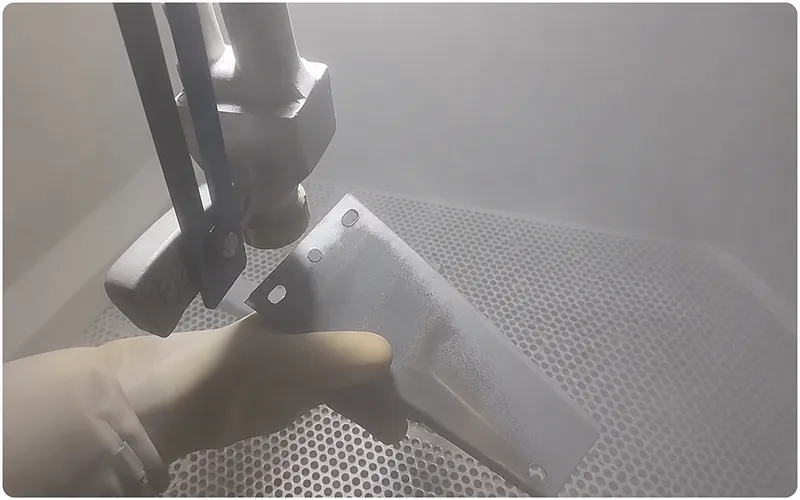
During blasting, the operator directs the media stream toward the part in overlapping passes while controlling pressure, nozzle angle, stand-off distance, media flow, and travel speed. These variables must stay stable if the finish is expected to look even from edge to edge or from batch to batch. Robotic blasting systems are valued in production precisely because they can hold angle, distance, and surface speed repeatably, while manual operators rely on process discipline and reference samples. Excess dwell in one area can over-texture the surface, round small edges, or make local patches visibly darker or rougher.
Cleaning and Final Inspection
After blasting, the part is cleaned again to remove loose beads and dust, with special attention to holes, pockets, threads, grooves, and internal passages where media can remain trapped. Final inspection typically checks texture uniformity, color consistency, complete coverage, contamination, and masking quality; where function is critical, dimensions are rechecked as well. This last step is important because even when material removal is very small, the combination of light surface change and added texture can still matter on fits, threads, and sealing interfaces.
Types of Bead Blasting Media and Key Process Parameters
Common Bead Blasting Media
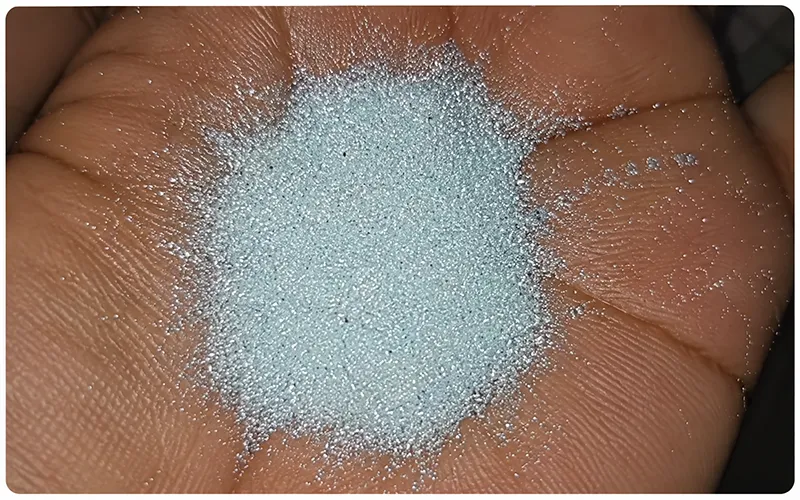
The blasting media largely determines whether the result looks like a soft satin cosmetic finish, a brighter peened surface, or a more aggressive prep for later coating. Glass beads remain the most common choice for metal cosmetic finishing because they are spherical, relatively gentle, chemically inert, and well suited to blending minor machining marks without the sharp cutting action associated with angular abrasives. Ceramic beads are typically harder and more durable than glass, which makes them attractive for repeated production where media life and tightly controlled texture matter. Stainless steel shot or beads can create a denser, smoother peened effect on selected metals, while dedicated stainless media help avoid the contamination risks associated with ordinary carbon-steel media. Plastic media are softer and are often chosen when substrate protection matters more than cutting speed, especially on delicate surfaces or some plastic and composite parts.
The most important distinction is between spherical bead media and angular abrasives. Materials such as aluminum oxide, garnet, silicon carbide, crushed glass, and steel grit are widely used in abrasive blasting, but they do not produce the same finish as true bead blasting because they cut or etch the surface more aggressively. That sharper action is useful for stripping coatings, removing heavier corrosion, and creating tooth for paint adhesion, but it usually leaves a rougher profile than glass or ceramic beads. Walnut shells and other organic media are also used in special cases where gentle cleaning is needed.
The comparison below summarizes the practical behavior of common media.
| Media type | Relative aggressiveness | Typical texture | Suitable materials | Common uses |
|---|---|---|---|---|
| Glass beads | Low to moderate | Clean satin or matte | Aluminum, stainless steel, titanium, brass, many machined metals | Cosmetic finishing, light cleaning, gentle deburring, peening-like texture |
| Ceramic beads | Moderate | Fine, controlled matte | Metals where consistency and media longevity matter | Repeated production, controlled texture, contamination-sensitive work |
| Stainless steel beads or shot | Moderate to high | Dense, smoother peened look | Selected steels and harder metals | Special cleaning and peening applications where ferrous contamination control matters |
| Plastic media | Low | Gentle cleaning or light texture | Delicate metals, composites, selected plastics | Coating removal and delicate substrate cleaning with lower substrate damage risk |
| Angular abrasives such as aluminum oxide or steel grit | High | Rougher etched profile | Steel, aluminum, hard metals needing stronger prep | Rust removal, coating prep, heavier cleaning, stronger anchor profile |
Bead Size
Bead size has a direct influence on finish appearance. Smaller beads tend to create a finer, lighter satin texture, while larger beads make the texture more visible and usually rougher. That is why the same nominal process on the same alloy can look very different if the media size changes. In practice, shops often test bead size on sample parts before full production for cosmetic work.
Air Pressure
Higher pressure increases impact energy, which can increase cleaning action and surface deformation, but it also raises the risk of a rougher finish, broken media, edge erosion, or thin-part distortion. Lower pressure is gentler, yet if it is too low the finish may be patchy or incomplete. Process windows therefore need to be matched to both the material and the target look rather than treated as universal.
Blasting Distance and Angle
Stand-off distance and nozzle angle change how concentrated the media stream is when it strikes the surface. Shorter distance generally concentrates impact, while a larger distance spreads the pattern. A more direct angle increases intensity; a more oblique angle softens it. On simple flat parts this is straightforward, but on deep pockets, ribs, undercuts, and complex contours the operator may need multiple angles to avoid shadowing and visible variation.
Treatment Time and Travel Speed
Blasting is cumulative. Longer exposure and slower travel usually deepen the texture, while uneven travel speed creates visible patches or streak-like differences in tone. For cosmetic parts, uniform overlapping passes matter more than marginal increases in cleaning speed. Repeatedly dwelling on one area is a common cause of over-blasted spots.
Original Surface Condition
Two parts made from the same material can still finish differently if their starting surfaces are different. Light tool marks often blend well, but deep machining lines, weld areas, cast skin, and previous surface damage may still telegraph through the blasted finish because bead blasting modifies the substrate instead of covering it. The same principle explains why anodizing later preserves the look of a pre-blasted surface: mechanical texture and irregularities remain part of the visible surface system.
Materials Suitable for Bead Blast Finishing
Aluminum
Aluminum is one of the most common materials used for CNC parts with a bead blast finish because glass beads can reduce the visual contrast of tool marks and create a clean matte or satin appearance. For visible consumer and industrial parts, bead blasting is frequently followed by clear or dyed anodizing, since the anodic oxide adds corrosion and wear protection while preserving the underlying texture created by the mechanical finish. Because anodized appearance depends on the alloy, pretreatment, and process specification, cosmetic aluminum parts are often qualified with a reference sample rather than relying on text alone. The Aluminum Anodizers Council provides additional anodized aluminum specification guidance.
Stainless Steel
On stainless steel, bead blasting is widely used to reduce reflectivity and create a uniform low-gloss appearance for housings, panels, brackets, and equipment components. However, corrosion performance still depends on surface cleanliness, blasting media, surface condition, and passivity, so contamination control is critical. The British Stainless Steel Association provides additional guidance on bead-blasted stainless steel finishes. Industry guidance for stainless fabrication consistently warns against carbon-steel contamination and notes that passivation, pickling, or other chemical treatment may still be required when corrosion resistance is important, especially after fabrication or welding.
Titanium
Titanium can also be bead blasted to produce a clean matte appearance, and the process is common on high-value aerospace, medical, and premium consumer parts. The material is suitable for bead blasting, but media selection and cleanliness still matter because blasting can change surface chemistry as well as texture. For demanding applications, controlled process qualification is preferred over assuming that a generic “bead blast” callout will be enough.
Brass and Copper
Bead blasting can soften the bright reflective appearance of brass and copper and replace it with a more subdued matte finish. These alloys can still tarnish or change color naturally in service, so a clear protective coating may be used when long-term appearance retention is important. That is especially relevant for decorative hardware or visible architectural details.
Carbon Steel
Carbon steel, including common mild steel, can be blasted for cleaning and texture generation, but the freshly cleaned surface is vulnerable to visible rust if left unprotected. In practical terms, blasted carbon steel is usually a preparation stage before painting, plating, black oxide, or another protective finish rather than the final state. Coating standards and paint guidance both emphasize prompt protection after blast cleaning to avoid flash rust.
Engineering Plastics
Selected plastics can be bead blasted lightly, and blasting is also used in additive manufacturing post-processing to remove residual powder and create a more consistent overall texture. But plastics are more sensitive than metals, so aggressive pressure or the wrong media can roughen, haze, or deform the surface, especially on thin features. Sampling is strongly recommended before writing a production specification for cosmetic plastic parts.
Advantages, Limitations, and Comparison with Other Finishes
Advantages
The main advantage of a bead blast finish is visual consistency. The process creates a uniform matte or satin surface, reduces glare, and makes light machining marks and minor scratches less obvious. Because the finish is non-directional, it works well on complex shapes that would be difficult to brush in a consistent grain direction. It can also help prepare a surface for later anodizing, chromate conversion coating, paint, powder coating, or bonding, making it useful as both a cosmetic and process-integration step.
Another practical advantage is production flexibility. Bead blasting can be applied across many common manufacturing materials and is available for both cosmetic-only and downstream-finish workflows. It is also relatively low cost compared with more labor-intensive mirror polishing or highly controlled multi-step decorative systems. For many machined parts, it is the fastest way to move from “functional but visibly machined” to “production-ready appearance.”
Limitations
The main limitation is that bead blasting does not automatically provide corrosion protection. Stainless steel still depends on a clean passive film; aluminum often needs anodizing, chromate, or another protective process for long-term appearance and corrosion performance; and carbon steel normally needs coating soon after blasting. A bead-blasted surface can look cleaner and more uniform while still lacking the chemical protection needed for service.
Bead blasting can also affect edge condition, surface roughness, and very tight tolerances. The effect is usually small, but it is real enough that holes, fits, sealing surfaces, and critical bores are commonly masked or rechecked after blasting. Deep defects may remain visible, thin parts can be distorted under poor process control, and trapped media in holes or internal passages can create downstream cleanliness problems. This is why bead blasting should never be used as a substitute for sound machining, deburring, and cleaning practice.
Bead Blasting Compared With Other Surface Finishes
The comparison below shows how bead blasting differs from several common alternatives.
| Finish | Surface appearance | Added layer | Corrosion protection | Dimensional effect | Typical use |
|---|---|---|---|---|---|
| Bead blasting | Uniform matte or satin, usually non-directional | No | No inherent protection | Usually small, but critical features may need masking | Cosmetic blending, glare reduction, prep before anodizing or coating |
| Sandblasting or abrasive blasting with angular media | Rougher, more strongly etched profile | No | No inherent protection | Can be more aggressive than bead blasting | Heavy cleaning, rust/coating removal, stronger paint prep |
| Brushed finish | Visible linear grain | No | No inherent protection by itself | Small, process dependent | Decorative linear metal finish, directional appearance |
| Polishing | Smooth to reflective or mirror-like | No | No inherent protection by itself | Process dependent, often labor intensive | High reflectivity and decorative appearance |
| Anodizing | Appearance depends on pre-finish; can be matte or glossy | Yes, oxide layer | Yes on aluminum or titanium | Adds/changes controlled oxide thickness | Corrosion and wear protection with decorative or functional finish |
| Powder coating | Colored coating, matte to glossy | Yes, polymer coating | Yes | Adds measurable film thickness | Environmental protection plus color and cosmetic coverage |
Bead blasting and sandblasting are often confused, but they are not the same finish. “Sandblasting” is now often used as a broad shop term for abrasive blasting, especially with sharper particles. Bead blasting is a more specific subset that uses spherical media and generally leaves a smoother, more cosmetic satin profile.
Compared with a brushed finish, bead blasting is better when uniform low reflectivity is the goal, because there is no dominant grain direction. Compared with polishing, bead blasting intentionally reduces gloss instead of increasing it. Compared with anodizing or powder coating, bead blasting is best understood as a surface preparation or texturing method, while anodizing and powder coating are protective finishing systems that add new functional layers.
Design Considerations, Roughness, Tolerances, and Inspection
Specify the Required Texture Clearly
“Bead blasted” by itself is often too vague for production. A stronger specification identifies the surfaces to be treated, the media family if it matters, the visual expectation, any roughness requirement if function depends on it, and whether a cosmetic approval sample governs acceptance. This is especially important because bead blasting appearance depends on bead size, pressure, angle, distance, and operator technique. For visible products, an approved physical sample is often more effective than trying to control appearance only through text.
Protect Critical Dimensions and Functional Features
Precision bores, shaft fits, sealing faces, bearing seats, threads, and electrically functional contact areas should be reviewed before blasting and masked where needed. Service guidance from major suppliers consistently notes that bead blasting is generally safe for ordinary geometries but can affect holes and very tight tolerances, with special caution around features tighter than about ±0.02 mm in common job-shop workflows. Even when the size change is minimal, the added texture can still be unacceptable on sliding, sealing, or bearing surfaces.
Consider Geometry and Wall Thickness
Part geometry strongly affects finish uniformity. Complex contours may need multiple passes or multiple blasting angles, while deep pockets, closely spaced fins, and re-entrant features can create shadowed areas that are hard to finish consistently. Thin or unsupported walls are more vulnerable to damage under excessive pressure, so fragile parts may need lower settings or dedicated fixturing. Design for access and support is often more important than media selection alone.
Surface Roughness and Dimensional Effects
Bead blasting often increases roughness relative to a finely machined surface, even when it improves the visual uniformity of the part. Roughness is influenced by bead size, pressure, exposure, material response, and starting condition, so it is risky to treat one generic Ra value as universally representative. Where the finish is mainly visual, a reference sample is often more useful than a roughness number alone. Where function matters, roughness and dimensions should both be checked after blasting.
Visual Inspection and Measurement
Inspection usually combines visual review with selective measurement. Typical checks include uniform texture, color consistency, full coverage, absence of dark spots or streaks, over-blasted patches, embedded contamination, and masking-line quality. Depending on the program, QA may also include profilometer measurements, dimensional inspection, cleanliness verification, and approved master samples for cosmetic review; where blasting is followed by coating or bonding, downstream adhesion validation may also be part of the control plan.
Applications, Cost Factors, Selection, and FAQs
Applications of Bead Blast Finishes
Bead blasting is common wherever parts need a cleaner cosmetic look, reduced glare, and a consistent engineered texture. In aerospace and aviation CNC work, it is commonly associated with mounts, housings, and cosmetic panels in aluminum, titanium, and steel. In automotive development and motorsport, engineers use CNC plus post-finishing for custom mounts, housings, and visible hardware. In electronics, bead-blasted-and-anodized aluminum enclosures are a familiar combination because they deliver both a refined matte appearance and later corrosion protection. Medical and industrial sectors use the process on housings, brackets, jigs, frames, and precision components where a low-gloss cleanable surface is preferred over a bright reflective one.
The finish also appears frequently in consumer-facing products because matte surfaces photograph well, reduce fingerprints and glare compared with high-polish surfaces, and communicate a more premium “machined” look. That helps explain why manufacturers often pair bead blasting with anodizing on aluminum consumer products and visible industrial equipment.
Cost Factors for Bead Blast Finishing
Bead blasting is usually considered a relatively economical finish, but real cost depends on more than just part size. Large surface area, difficult geometry, cosmetic classification, media choice, masking complexity, manual handling, post-blast cleaning, and inspection intensity all affect price. Batch production of similar parts is normally more efficient than one-off cosmetic work, while extensive masking can add significant labor time and materially change the quote. Deep pockets, blind features, and internal passages also increase both blasting time and cleanout time.
If the part also needs anodizing, painting, chromate conversion coating, or powder coating, cost and lead time rise because the workflow now includes more than one process step and often more than one inspection gate. Combined finishing can deliver a better final result, but it should be estimated as a system rather than treating bead blasting as an isolated line item.
How to Choose the Right Bead Blast Finish
A practical selection workflow starts with appearance. Decide whether the part needs a fine matte, stronger grain, or a cosmetic match to an existing product. Then confirm the base material and whether corrosion protection, electrical conductivity, sterilization resistance, or later coating adhesion matter. Next, choose the media family, define bead size and process limits, and flag every surface that must be masked. For appearance-critical programs, finalize the callout with an approved sample assessed under controlled lighting.
The table below summarizes common decision paths.
| Project requirement | Recommended direction | Main reason |
|---|---|---|
| Consumer-facing aluminum part needing uniform matte look and durability | Glass bead blast followed by anodizing, with approved sample | Bead blasting creates the matte texture; anodizing adds corrosion and wear protection while preserving the pre-finish appearance |
| Stainless housing needing low reflectivity in service | Bead blast with dedicated clean media; review passivation or pickling if corrosion performance matters | Stainless appearance can be improved mechanically, but contamination control and passive-layer restoration still matter |
| Carbon steel part needing paint | Use more aggressive prep only if needed, then coat promptly | Freshly blasted steel is vulnerable to visible rust and is usually a prep stage before protection |
| Delicate substrate or selected plastic part | Use the softest workable media and low-energy settings; sample first | Plastics and delicate substrates can be damaged by overly aggressive blasting |
| Tolerance-critical mechanical part | Mask critical fits, bores, seals, and threads, or avoid blasting those surfaces | Even light blasting can change texture and affect very tight functional surfaces |
Conclusion
A bead blast finish creates a uniform, non-directional matte or satin surface by propelling spherical media against a component under controlled conditions. Glass beads are the most familiar option, but ceramic, stainless, and plastic media are also used when durability, contamination control, or substrate sensitivity changes the requirements. In production, the final look is governed by media shape and size, air pressure, nozzle distance, angle, exposure time, material response, and the starting condition of the surface. That is why bead blasting works best when it is specified clearly and validated with a reference sample rather than described only as “bead blasted.” The process can significantly improve cosmetic consistency and can prepare parts for anodizing, painting, coating, or bonding, but it should not be mistaken for corrosion protection on its own. Critical bores, threads, sealing faces, and thin features still need masking or inspection, and corrosion-sensitive materials may require passivation, anodizing, or protective coating after blasting.
FAQs About Bead Blast Finish
What is a bead blast finish?
A bead blast finish is a matte or satin surface created by propelling spherical blasting media—most commonly glass beads—against a component to clean, blend, and texture the existing material. It is a mechanical finish, not a coating.
What materials can be bead blasted?
Common bead-blasted materials include aluminum, stainless steel, titanium, carbon steel, brass, copper, and selected engineering plastics. The exact settings and media should be matched to the substrate and the cosmetic or functional goal.
Does bead blasting remove material?
Usually only a very small amount, depending on the media and process settings. Bead blasting is generally gentler than angular abrasive blasting because spherical media tend to peen and blend the surface rather than cut it as aggressively.
Does bead blasting prevent corrosion?
Not by itself. Stainless steel may still require passivation or pickling, aluminum often benefits from anodizing or chromate conversion coating, and carbon steel usually needs a protective finish soon after blasting.
What is the difference between bead blasting and sandblasting?
Bead blasting specifically uses spherical media to create a smoother satin or matte texture. “Sandblasting” is often used more broadly for abrasive blasting with sharper particles, which usually cut the surface more aggressively and create a rougher profile.
Can bead blasting affect tolerances?
Yes, especially on holes, threads, sealing faces, precision bores, and other tight-tolerance features. The effect is often small, but critical functional surfaces should be masked or inspected after blasting.
Can aluminum be anodized after bead blasting?
Yes. In fact, bead blasting is commonly performed before anodizing when a uniform matte anodized look is desired. The anodic oxide follows the preexisting surface texture, so blasting consistency strongly affects the final appearance.
How do you specify a bead blast finish on a drawing?
A strong callout identifies the surfaces to be blasted, the media family when important, any masking or no-blast zones, roughness requirements where function depends on them, and an approved visual sample for cosmetic acceptance. For critical features, separate masking notes are better than relying on a generic finish note.