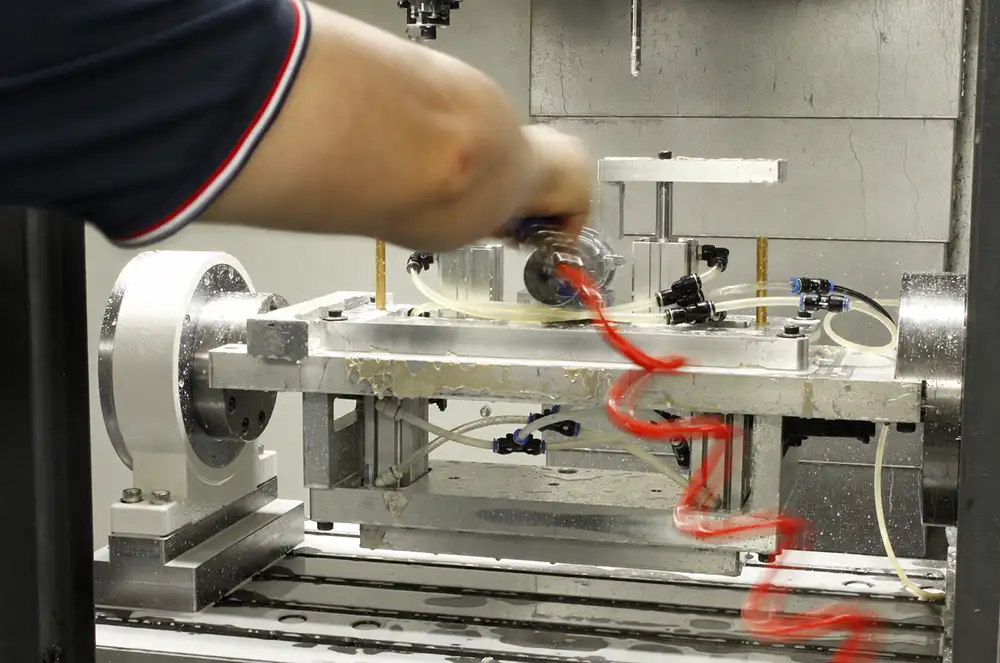
Machinability describes how easily a material can be cut under specified machining conditions, considering tool life, chip formation, and machining performance. It depends on the tools and process as well as the material itself. Being possible to cut is only the starting point.
For buyers comparing custom metal parts, the practical question is how much work it takes to produce an accepted component. Raw material price alone cannot answer that. This guide explains how machinability affects CNC machining cost, surface quality, and material selection, and what to include when requesting a quotation.
IN THIS GUIDE
What machinability means · Factors affecting machinability · Machining cost · Part quality · Compare common materials · Turn requirements into a quote · Get a Quote · FAQs
What Is Machinability in CNC Machining?
Machinability concerns how effectively a material can be processed into the required part. A supplier considers several related measures rather than relying on one hardness value or a material’s name. Sandvik Coromant’s workpiece material guide likewise relates machinability to the material, cutting tool, and machining conditions.
| Evaluation factor | What it tells the buyer |
|---|---|
| Tool life | How long a tool maintains effective cutting performance. |
| Chip control | How readily chips form, break, and leave the cutting area. |
| Cutting forces | The forces involved and their implications for stable machining. |
| Surface quality | How readily the required machined surface can be achieved. |
These measures interact. A setting that improves output may increase tool wear, for example. Good machinability can simplify production, but it does not establish suitability for every application or guarantee finished-part quality.
What Factors Affect Material Machinability?
Material grade, composition, and condition. Alloy composition, microstructure, heat treatment, and cold working influence cutting behavior. Specify the grade and supplied condition instead of requesting only “aluminum” or “stainless steel.” A change from one temper or delivery condition to another should be treated as a specification change, even when the alloy number stays the same.
Work hardening, heat, and chip formation. Some materials harden locally during cutting, making subsequent passes more demanding. Heat concentrated near the cutting edge, material adhering to the tool, and chips that resist breaking can also complicate the operation. Buyers should expect the process review to address wear and chip evacuation where relevant.
Tooling and machining conditions. Tool material, edge geometry, cutting parameters, coolant or lubrication, and setup stability all affect performance. The same grade can behave differently with another tool or operation. A meaningful machinability comparison therefore needs defined conditions; a universal speed or feed recommendation cannot represent every part.
How Does Machinability Affect CNC Machining Cost?
Machining time and production efficiency. Cutting time depends on material behavior, stock removal, features, and feasible cutting conditions. A low price per kilogram may be offset by longer roughing or finishing operations. Compare the price of the completed component, including preparation, rather than treating blank cost as the purchase decision. Ask suppliers to separate material assumptions from processing assumptions when evaluating alternatives, especially for parts with substantial material removal.
Tool wear, tool changes, and interruptions. A quotation can account for tool consumption, planned replacement, and measures needed to clear chips or maintain stable cutting. These requirements vary by operation. A demanding material does not inevitably cause broken tools, but its processing needs should be included in the estimate.
Finishing, rework, and cost per accepted part. Finishing passes, deburring, inspection, and any necessary corrective work affect the cost of meeting acceptance requirements. Completing the cutting program does not by itself make a part ready for delivery. Ask what the quoted scope includes.
Hypothetical comparison: Two materials approved by the designer have different blank prices. Compare each route’s machining time, tooling, subsequent treatments, and inspection before choosing. The useful comparison is the complete cost of meeting the same functional and acceptance requirements. For a fair comparison, keep the drawing revision, quantity, finish, and required inspection documents consistent across both quotations.
How Does Machinability Affect Part Quality?
Surface finish and burr formation. Material buildup on the cutting edge, chip interference, tool condition, and cutting parameters can affect surface texture and burrs. Separate functional surface requirements from cosmetic expectations. Our surface roughness chart can help frame a specific drawing requirement instead of “make it smooth.” Mark visible faces separately and specify where burrs could interfere with assembly or handling.
Dimensional accuracy and stability. Critical bores, mating faces, and thin walls require suitable process control. Workholding, part rigidity, heat, and residual stress can contribute to dimensional changes alongside cutting behavior. Define CNC machining tolerances around function and assembly, with the relevant datums and inspection conditions identified. Where heat treatment or coating follows cutting, also clarify the stage at which critical dimensions must be accepted.
Consistency across production batches. Confirmed material condition, managed tool replacement, and appropriate process inspection help maintain repeatable results. A difficult-to-machine material can still produce conforming parts with a suitable, verified process. Its machining challenges call for control; they do not make it inherently a poor-quality material. For repeat orders, confirm that the incoming material specification and agreed inspection plan still match the approved version.
How Does Machinability Compare Across Common CNC Materials?
Our CNC machining services cover material families including aluminum, stainless steel, brass, and titanium. Use specific grades as the starting point for a project review:
| Material examples | Comparison focus | Buyer confirmation |
|---|---|---|
| Aluminum: 6061-T6, 7075-T6 | Compare the alloy and temper. | Required properties and finish? |
| Stainless steel: 303, 304, 316 | Consider grade-specific behavior. | Corrosion or welding requirements? |
| Brass and copper alloys | Identify the exact copper alloy. | Is an alternative grade allowed? |
| Titanium: Ti-6Al-4V | Review material and process together. | Is the grade already mandatory? |
Concast’s copper-alloy machinability table lists different values for specific grades and material conditions. This illustrates why a broad label such as “copper” is insufficient: no single easy-cutting alloy represents the entire family.
Using a machinability rating: Record its source, reference material, and applicable test conditions. Treat it as comparative information within that framework, not a direct conversion into price, lead time, or acceptance rate.
MAKE AN INFORMED MATERIAL CHOICE
Comparing Materials for a Custom CNC Part?
Share your drawings, application requirements, and candidate materials with Sincere Machining to discuss machining considerations and request a project-specific quotation. Identify any material or performance requirements that must remain unchanged.
How to Balance Machinability, Cost, and Part Requirements
Start with the requirements the part must meet. Establish the operating environment, mechanical properties, assembly interfaces, and finishing needs before comparing eligible materials. If a grade and condition are already specified, discuss the machining plan around them. Substitutions require approval from the responsible designer.
Review geometry and specifications before production. A DFM review can address tool access, deep pockets, thin walls, internal corners, and critical tolerances. Approved geometry changes may simplify manufacture while retaining function. This improves the part’s manufacturability; it does not change the material’s composition or supplied condition.
Request a material-specific machining quote. Provide the drawing revision, grade and condition, critical dimensions, surface requirements, quantity, and inspection needs. Check the files needed for a CNC machining quote before submitting. If material selection remains open, include the application and candidate grades; identify specifications that must remain unchanged. Open decisions should be listed explicitly so the supplier can distinguish an initial estimate from a quotation based on confirmed requirements.
Conclusion: Get a Quote Based on Your Material and Part Requirements
Machinability connects material behavior with the effort required to produce an accepted part. Evaluate cutting performance alongside tooling, finishing, and quality control, then compare complete manufacturing routes. Clear material conditions and acceptance requirements give a supplier a stronger basis for a useful quotation.
TURN YOUR REQUIREMENTS INTO A QUOTE
Planning a Custom CNC Machining Project?
Send Sincere Machining your part drawings, material grade and condition, order quantity, and required surface finish. Identify critical dimensions and inspection requirements so our team can review the manufacturing needs and prepare a project-specific quotation.
Still comparing materials? Share your application requirements and candidate grades, and tell us which specifications must remain unchanged.
FOR A USEFUL REVIEW
01 · Material
Grade & supply condition
02 · Part requirements
Drawings, fits & surface finish
03 · Order scope
Quantity & inspection needs
FAQs About Machinability
Does a softer material always have better machinability?
No. Hardness is only one factor. Some softer materials can adhere to the tool, form a built-up edge, or produce difficult-to-break chips. Evaluate the specific grade, condition, tooling, and operation instead of assuming that lower hardness always means easier machining.
Can machinability ratings predict CNC machining prices?
Ratings can support comparisons under their stated reference conditions, but they are not quotation multipliers. A price also reflects material condition, geometry, stock removal, quantity, tooling, finishing, and inspection. Request comparable quotations for your actual drawings and acceptance requirements.
Can difficult-to-machine materials still meet tight tolerances?
They can meet demanding requirements when an appropriate process can be established, but feasibility must be checked against the specific drawing. Share critical features, datums, material condition, and inspection requirements. Material difficulty alone neither rules out compliance nor guarantees that every tolerance is achievable.
Does heat treatment change machinability?
Heat treatment can change material structure and hardness, affecting cutting behavior. The effect depends on the grade and treatment. Specify the material condition during machining and the required final condition, including the agreed process sequence and any dimensional checks needed after treatment.
Can CNC machining cost be reduced without changing the material?
Potential options include approved geometry changes, improved tool access, suitable machining routes, and clearer specifications. Functional and assembly requirements must remain satisfied. Ask for a project review to identify feasible changes; the resulting quotation should establish whether savings are available.